

Introduction to Natural‑Look Porcelain Veneers
Porcelain veneers are ultra‑thin, custom‑made shells of dental‑grade ceramic that bond to the front of a tooth. Because the material mimics the translucency and light‑reflecting qualities of natural enamel, it can conceal chips, stains, gaps, and mild misalignment while preserving most of the tooth structure (typically only 0.3–0.7 mm of enamel is removed). The key aesthetic benefits include a lifelike color match, individualized translucency, and a smooth surface texture that blends seamlessly with adjacent teeth, creating a smile that looks and feels natural. Before deciding on veneers, patients should ensure optimal oral health—no active decay, healthy gums, and sufficient enamel. A skilled cosmetic dentist will perform a digital smile design, match the shade to the patient’s natural teeth and skin tone, and discuss any bite or grinding issues that may require a night guard. With proper care, porcelain veneers can last 10–15 years or longer, delivering a durable, beautiful result.
Understanding Veneer Options and Costs
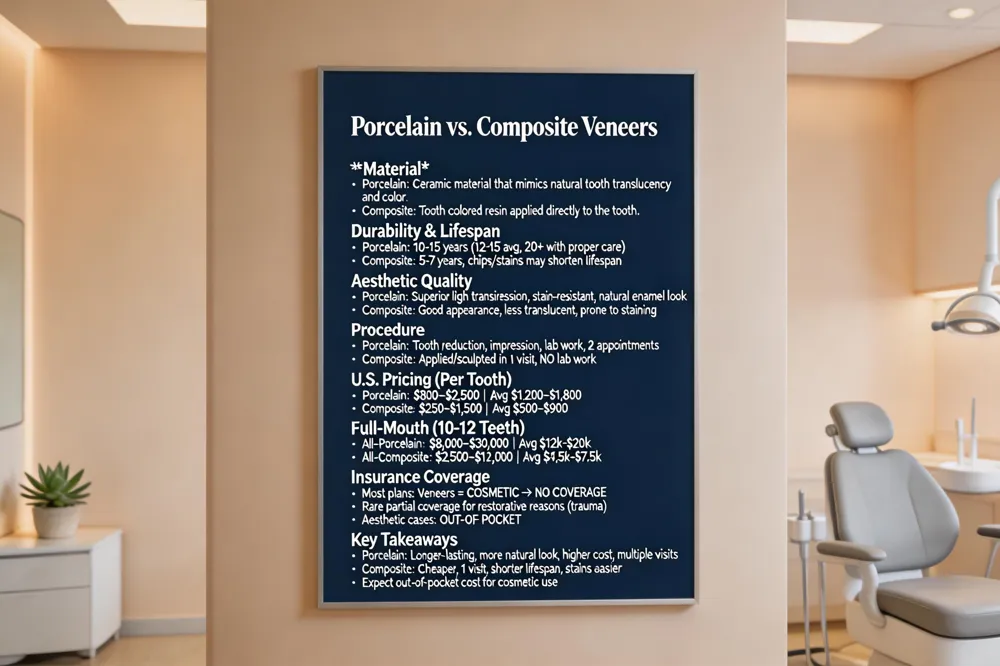 Veneers come in two primary materials: porcelain, which offers superior translucency, stain resistance and a lifespan of 10‑15 years, and composite resin, a more affordable option that usually lasts 5‑7 years and may stain more quickly. In the United States, a single porcelain veneer typically costs $990‑$2,169 (average $1,350), while composite veneers range from $500‑$2,000. A full‑mouth makeover of six‑to‑eight veneers can therefore run $3,000‑$12,000, depending on material and extra cosmetic work. Most dental insurance plans consider veneers cosmetic and do not provide coverage, but many practices offer financing such as CareCredit or in‑house payment plans to spread the expense. During a consultation, the dentist will assess your oral health, discuss shade matching and digital smile design, and provide a detailed, itemized estimate tailored to your smile goals.
Choosing the Right Dentist and Treatment Process
 Start by searching for a qualified cosmetic dentist in Rio Rancho—e.g., Southern Boulevard Dental—using online dental‑finder tools or the query “porcelain veneers near Rio Rancho NM.” Schedule a consultation to discuss your smile goals, have a digital smile design mock‑up created, and receive a personalized treatment plan and cost estimate. The step‑by‑step process includes minimal enamel removal (0.3–0.5 mm), digital impressions, laboratory fabrication of custom porcelain shells, and final bonding with light‑cured resin.
How to get porcelain veneers near me? Follow the five‑step pathway above, from online search to post‑procedure care.
Are veneers permanent? No; they last 10‑15 years (often 15‑20 years with good care) because enamel is irreversibly removed and the bond may weaken over time.
Why veneers are bad? They require permanent enamel loss, are costly ($900‑$2,500 per tooth), are not covered by most insurance, and can chip if you grind or bite hard foods.
Will insurance pay for veneers? Generally no; only medically necessary cases (fractured teeth) may receive limited coverage.
What is the most feared dental procedure? The root canal, followed by extractions and implants.
Porcelain veneer cost USA without insurance: $900‑$2,500 per tooth, $5,000‑$20,000 for a full smile makeover.
What happens after 20 years of having veneers? Minor chips, staining, or edge exposure may occur; regular check‑ups allow polishing, re‑bonding, or replacement to maintain a natural look.
Achieving a Natural Look – Design, Shade, and Results
 A natural‑looking smile starts with personalized shade matching and translucency. Using a universal shade guide and digital color‑matching, the dentist selects a hue two to three shades lighter than the patient's teeth, then layers porcelain to mimic the light‑reflecting properties of enamel. Digital smile design technology creates a 3‑D mock‑up of the proposed smile, allowing adjustments to shape, size, and texture before any tooth reduction. This preview shows the before‑and‑after transformation and ensures the final veneers blend seamlessly with facial features.
Natural looking veneers before and after – High‑quality porcelain or composite shells are fabricated from precise digital scans, bonded after minimal enamel removal (0.3–0.5 mm) so the result is smooth, texture‑rich, and indistinguishable from natural teeth.
Fake‑looking veneers – Over‑bright, uniform, or bulky restorations lack translucency and surface texture; they may irritate gums if placed too close to the margin.
Composite veneers – Directly sculpted resin placed in a single visit offers a cost‑effective, minimally invasive option, though they are less durable and translucent than porcelain.
Natural‑looking veneers cost – Prices range $500–$2,895 per tooth (national average $1,765), reflecting premium material and custom lab work.
Best veneers for bruxism – High‑strength lithium disilicate (IPS e.max®) or zirconia‑based porcelain, paired with a nightguard, provides the durability needed for grinding patients.
4‑8‑10 rule – Determines whether four, eight, or ten veneers give balanced aesthetics while preserving natural dentition.
Long‑Term Care, Maintenance, and Longevity
 Maintaining a natural‑looking smile starts with diligent daily oral hygiene: brush twice a day with a soft‑bristled brush and non‑abrasive fluoride toothpaste, floss daily, and use an alcohol‑free mouthwash if recommended. Protect the restorations by avoiding hard foods such as ice or hard candies, and wear a custom night‑guard if you grind or clench your teeth. Regular dental check‑ups allow the dentist to monitor veneer wear, polish surface stains, and detect early loosening of the bonding material.
How long do veneers last? Porcelain veneers are the most durable, typically lasting 10‑15 years and often longer with excellent care; composite resin veneers usually last 5‑7 years, up to about 10 years if you avoid staining foods and practice gentle brushing.
What happens after 20 years of having veneers? After two decades, porcelain veneers may show minor chips, surface discoloration, or reduced translucency, and the underlying tooth may experience slight enamel thinning or gum recession that exposes veneer edges. Bonding agents can weaken, leading to occasional loosening or marginal gaps. Routine visits enable the dentist to polish, re‑bond, or replace veneers before functional or aesthetic issues become pronounced, preserving a healthy, natural‑looking smile.
Financing, Insurance, and Frequently Asked Questions
 Payment plans and CareCredit – Southern Boulevard Dental offers flexible financing, including third‑party CareCredit and in‑office monthly payment plans, to make the upfront expense of veneers more manageable.
Insurance limitations – Veneers are cosmetic and usually not covered by dental insurance. A single porcelain veneer typically costs $1,300‑$2,200, while composite options range $500‑$1,200. Full‑mouth estimates run $7,800‑$17,600 for porcelain or $3,000‑$9,600 for composite, depending on material, tooth count, and preparation.
Common myths and celebrity cases – Modern porcelain veneers are engineered to mimic natural enamel translucency, giving a lifelike appearance when shade‑matched and sculpted to individual anatomy. When placed correctly, they are virtually indistinguishable from natural teeth. High‑profile smiles such as Kim Kardashian’s are believed to use high‑quality porcelain veneers for a uniform, brilliant look.
FAQ:
• Full set of veneers cost: 6‑8 teeth at $1,300‑$2,200 each = $7,800‑$17,600 (porcelain) or $3,000‑$9,600 (composite).
• Do veneers look natural? Yes—custom shade, translucency, and shape create a seamless, natural‑looking smile.
• What veneers does Kim Kardashian have? Likely premium porcelain veneers for consistent brightness and alignment.
• How much do veneers cost with insurance? Generally not covered; patients pay out‑of‑pocket, though occasional restorative cases may receive partial reimbursement.
Your Path to a Natural, Confident Smile
Veneers provide a quick way to improve a smile while preserving most of the natural tooth. Porcelain veneers offer high translucency, stain resistance and durability that can last 10‑15 years, covering chips, cracks and stubborn stains. In the United States a porcelain veneer costs $800‑$2,500, and a six‑to‑eight‑tooth smile makeover averages $4,800‑$20,000; composite options are cheaper but need more upkeep.
Start with a free consultation to assess oral health, define aesthetic goals and view a digital smile design. Using intra‑oral scanning and CAD‑CAM, we capture precise impressions; the lab then creates custom, shade‑matched veneers. After a brief 0.3‑0.5 mm enamel removal we bond the veneers with light‑cured resin and schedule a follow‑up for final tweaks.
Our practice prioritizes quality care: board‑certified cosmetic dentists use biocompatible materials, provide clear education, regular check‑ups and personalized maintenance plans to keep your new smile healthy and natural‑looking.