Understanding the Journey of Dental Implant Restoration
Overview of the Dental Implant Restoration Process
Dental implant restoration is a multi-stage procedure designed to replace missing teeth with a natural-looking and long-lasting solution. The process typically begins with a thorough consultation including oral examination, X-rays, and 3D scans to assess jawbone health and plan treatment. If necessary, preparatory treatments such as bone grafting or periodontal therapies are performed to ensure a stable foundation.
The next phase involves surgically placing a titanium implant into the jawbone under local anesthesia. Following surgery, a healing period of three to six months allows osseointegration—where the implant fuses securely with the bone—ensuring long-term stability. Afterward, an abutment is attached to the implant, serving as a connector to the custom-made crown, bridge, or denture that restores natural function and appearance.
Importance of Structured Stages for Successful Outcomes
Each stage of the dental implant journey plays a critical role in the overall success and longevity of the restoration. Careful assessment prior to surgery identifies any health factors that might impact healing, while advanced imaging and guided surgical techniques improve precision during placement. The osseointegration period is essential for firm integration with the jawbone, and good healing practices along with postoperative care help prevent complications.
With regular dental check-ups and meticulous oral hygiene, patients can preserve their implants for many years, often decades.
Benefits of Dental Implants Compared to Traditional Options
Dental implants offer significant advantages over dentures or bridges. Unlike dentures, implants are securely anchored to the jawbone and do not slip, providing greater comfort and confidence during eating and speaking. They also help stimulate and preserve jawbone density, preventing bone loss and facial structure change often seen with conventional dentures. Additionally, implants do not require alteration of adjacent healthy teeth, unlike bridges, helping to maintain overall oral health.
Overall, dental implants provide a durable, functional, and aesthetically pleasing alternative that enhances both oral health and quality of life.
Key Facts About Dental Implant Process
- The initial consultation involves comprehensive medical and dental history review, advanced imaging, and treatment planning with digital tools.
- Surgical placement of implant posts is a minimally invasive procedure performed under local anesthesia, involving precise drilling and insertion into the jawbone.
- The healing phase, known as osseointegration, lasts 3 to 6 months during which the implant fuses with the jawbone for stability.
- Abutments are attached after healing, serving as connectors between the implant and the final prosthetic crown or bridge.
- Final restoration involves attaching a custom-made crown, bridge, or denture, restoring function and aesthetics while stimulating the jawbone.
- Proper post-operative care, hygiene, and regular check-ups are essential for implant longevity, which can exceed 15 years with proper maintenance.
- Dental implants vary, including endosteal, subperiosteal, and zygomatic, chosen based on bone condition and treatment needs.
- Costs depend on implant type, number, need for preparatory procedures like grafting, geographic location, and insurance coverage.
- Recovery involves managing discomfort, swelling, and maintaining soft foods and good oral hygiene during healing.
- A dental implant is ready for restoration once it is securely integrated with the bone, confirmed through clinical stability and radiographs.
1. Stage 1: Initial Consultation and Comprehensive Treatment Planning
What happens during the initial consultation for dental implants?
The initial consultation is a critical first step in the dental implant process timeline. During this appointment, your dentist or oral surgeon conducts a thorough review of your medical and dental history to identify any health conditions affecting implants, such as diabetes or gum disease.
How is your oral health assessed?
An oral examination is performed alongside advanced imaging techniques, including diagnostic imaging for implants and cone beam CT scans. These images provide detailed views of your jawbone and gums to assess bone density, jaw structure, and periodontal health.
How is candidacy for dental implants determined?
Based on the imaging and examinations, your provider evaluates whether you have sufficient bone to support an implant. If bone loss is detected, preparatory treatments such as bone grafting for implant success may be recommended to rebuild bone volume. Gum health is also evaluated, and any active periodontal disease must be treated before implant placement to minimize complications.
What technologies support treatment planning?
Computer-guided implant surgery and digital planning software help create a personalized, precise surgical plan. These technologies improve placement accuracy and surgical safety.
What can patients expect regarding education and timeline?
During this consultation, your dental team will explain the entire implant process, including the expected timeline, healing stages, and aftercare instructions. This helps patients prepare mentally and physically, ensuring they understand the importance of oral hygiene for implant success and regular follow-up for implants.
In summary, the initial consultation establishes a foundation for successful implant treatment through comprehensive assessment and tailored planning, leveraging modern imaging and surgical planning tools to optimize outcome and patient confidence.
2. Stage 2: Surgical Placement of the Implant Post
What is involved in the surgical placement of the dental implant?
The dental implant surgical procedure is typically a minor outpatient procedure performed under local anesthesia or sedation to ensure patient comfort. This stage involves making a small incision in the gum tissue to expose the underlying jawbone.
Using advanced surgical guides and precise drilling techniques, the dentist or oral surgeon carefully inserts a titanium post dental implants into the jawbone. These guides help ensure accurate placement, maximizing stability and long-term success.
Are other procedures performed during implant surgery?
Depending on individual patient needs, the implant surgery may also include simultaneous procedures. For example, if a tooth is damaged or unrestorable, it can be extracted during the same appointment. Likewise, if there is insufficient bone density to support the implant, a bone graft procedure may be performed either prior to or at the time of implant placement to strengthen the jawbone.
How long does the surgical placement typically take?
Generally, the surgical procedure for placing a single dental implant lasts about 1 to 2 hours. The exact duration depends on factors such as the number of implants being placed and whether any additional procedures like extractions or grafting are necessary.
What happens immediately after implant placement?
After the implant is inserted, the gum tissue is sutured to promote healing. The initial healing phase involves managing common symptoms such as swelling, minor bleeding, bruising, and discomfort, which usually subside within a week. Patients are advised to follow Proper post-surgery care for dental implants instructions to support proper healing.
The entire implant process includes a healing period lasting approximately 3 to 6 months, during which the implant integrates with the bone — a critical step known as Osseointegration process for implants. After successful osseointegration, further steps involve attaching the abutment and final prosthetic restoration to complete the restoration of function and aesthetics.
3. Stage 3: Osseointegration and Healing
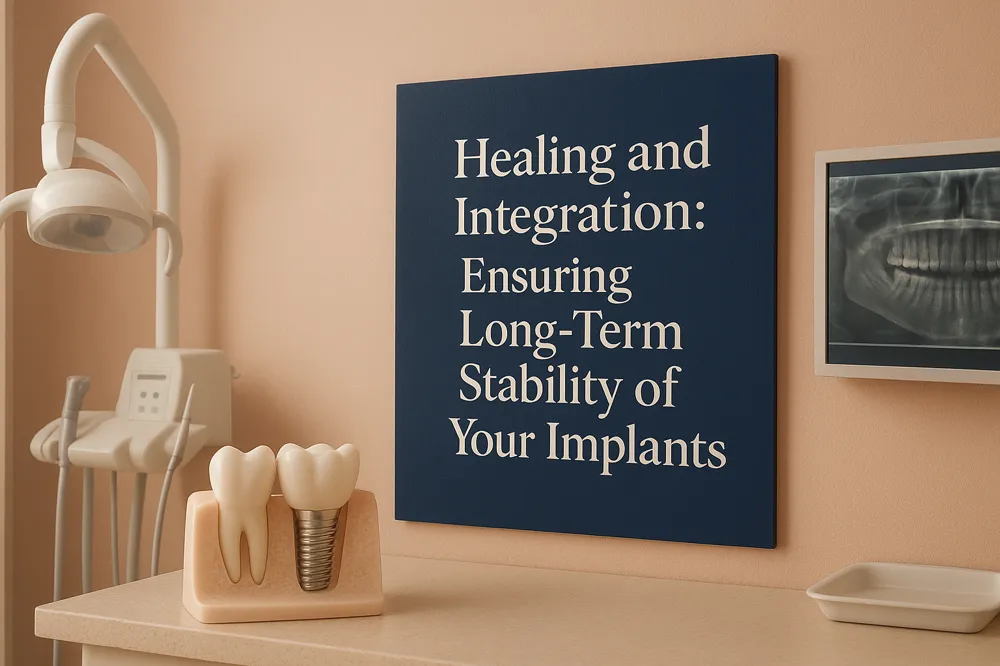
How long does stage 2 of a dental implant take?
Stage 2 of the dental implant procedure which includes the surgical placement of dental implants of the titanium implant into the jawbone generally takes about 1 to 2 hours. However, this is just the beginning of a critical healing period known as osseointegration process, where the implant fuses with the bone.
What happens during the osseointegration and healing phase?
This healing phase typically lasts between 3 to 6 months, sometimes longer depending on factors like bone density, location of the implant, and the patient's overall health. During osseointegration process for implants, new bone cells grow around and integrate with the titanium implant, providing a strong and stable foundation for the permanent restoration.
Why is post-operative care important during this phase?
Proper care is essential for successful healing. Patients are advised to eat soft foods to avoid putting stress on the implant. Maintaining good oral hygiene for implant success by gently brushing and flossing keeps the area clean and reduces the risk of infection. Additionally, avoiding smoking is strongly recommended, as it can impede bone healing and increase the risk of implant failure.
Can patients use temporary restorations during healing?
To maintain function and appearance while the implant integrates with the bone, temporary prostheses after surgery may be placed. These temporary restorations help preserve chewing ability and aesthetics without disrupting the healing process.
How is the progress of osseointegration monitored?
Dental professionals monitor healing through regular clinical exams and diagnostic imaging such as X-rays. These checkups confirm that the implant is stable and properly integrating with the jawbone before moving on to the next stage of treatment. For more on this, see dental implant consultation and evaluation.
4. Stage 4: Abutment Placement and Preparation for Restoration
What is involved in the restorative phase of dental implants?
The restorative phase of dental implants focuses on creating and attaching the final replacement tooth or teeth to the implants through the abutments. After the implant has fully integrated with the jawbone—typically during the earlier healing stages—a minor surgical procedure is performed to expose the underlying implant. At this stage, an abutment, a small connector post, is securely attached to the implant. This abutment serves as the critical bridge between the implanted post and the artificial tooth restoration.
Following the attachment of the abutment, the surrounding gum tissue is allowed to heal and adapt over a period of approximately two to four weeks. This healing process ensures that the gums form a natural seal around the abutment, mimicking the contour of a natural tooth.
Once healed, precise impressions or digital scans of the abutment and adjacent teeth are taken. These help dental technicians fabricate a custom crown that matches the patient’s bite and aesthetic needs. The custom crown is designed to provide a proper functional bite and blend seamlessly in appearance with the surrounding natural teeth, ensuring both comfort and a natural-looking smile.
This stage culminates with the secure placement of the final crown onto the abutment, completing the restoration process and restoring the tooth’s appearance, strength, and function.
5. Stage 5: Final Restoration Placement and Lifelong Maintenance

What is the process of dental implant restoration?
Dental implant restoration involves attaching a custom-made crown, bridge, or denture securely to an abutment that connects to the titanium implant placed in the jawbone. This final stage follows a careful healing period called osseointegration, where the implant fuses with the bone to provide a stable foundation for the restoration.
Once the abutment is attached, impressions or digital scans are taken to design restorations that match your natural teeth in size, shape, and color. These restorations are then fitted and adjusted to ensure comfort, natural appearance, and full function in chewing and speech. For a comprehensive explanation of this process, see this dental implant restoration process.
How do dental implants benefit jawbone and facial structure?
Unlike traditional dentures or bridges, dental implants stimulate the jawbone, preventing bone loss and preserving facial contours. This helps maintain your natural smile and overall oral health by supporting healthy bone density and facial structure. You can learn more about preserving facial structure with implants and preventing bone deterioration with implants.
What maintenance is necessary to ensure implant longevity?
Maintaining dental implants requires diligent oral hygiene: brushing twice daily, flossing around implants, and using antimicrobial mouthwash as recommended. Regular dental check-ups are essential to monitor implant health and address any concerns early. These maintenance tips are detailed in oral hygiene for implant success and implant care and maintenance.
Avoiding harmful habits like smoking or consuming very hard or sticky foods further protects your implant. Smoking can negatively impact healing and increase the risk of implant failure, as described under smoking cessation for implant health.
How long do dental implants last and what are success rates?
With proper care, dental implants can last a lifetime, with crowns and bridges often lasting 15 years or more. Success rates are impressively high—typically above 95%, especially when care instructions and regular dental visits are followed diligently. More on the longevity of dental implants and dental implant success rates can be found online.
Southern Boulevard Dental emphasizes personalized care through every phase of treatment to provide you with a confident, natural-looking smile you can enjoy for many years.
Types of Dental Implants and Their Applications
What are the different types of dental implants?
Dental implants vary to meet different patient needs and anatomical conditions. The most common type is endosteal dental implants, which are screw-like titanium posts inserted directly into the jawbone, providing a strong and stable foundation for crowns, bridges, or dentures.
For patients with insufficient bone height, subperiosteal implants are placed on top of the jawbone but beneath the gum tissue. These implants avoid the need for extensive bone grafting.
When upper jawbone quality is poor, zygomatic implants anchor into the cheekbone (zygoma), offering a viable alternative without requiring bone augmentation.
Specialized implant systems include All-on-4®, which uses four strategically placed implants to support a full arch of teeth. These implants often allow for immediate load, meaning patients can receive functional teeth quickly after surgery. Similarly, 3-on-6 implants refer to full-arch restorations supported by six implants for enhanced stability.
What influences the choice of implant type?
The decision on implant type depends on several factors:
- Bone quality and quantity: Patients with strong jawbones generally receive endosteal implants, while compromised bone conditions may require subperiosteal or zygomatic implants.
- Treatment goals: Single-tooth replacements versus full-arch restorations guide the selection of implant design and number, such as All-on-4® or 3-on-6 implants.
- Patient health and preferences: Overall health, healing capacity, and desire for immediate restoration influence implant options.
Professional consultation involving detailed imaging and evaluation ensures selection of the most suitable implant tailored to individual anatomy and needs. This personalized planning is critical for long-term implant success and patient satisfaction.
Factors Influencing the Cost of Dental Implants
What factors influence the cost of dental implants?
The cost of dental implants depends on several important factors that can vary widely from patient to patient. One primary consideration is the type and number of implants needed. For example, a single tooth implant typically costs less than full-arch restorations which may require multiple implants, such as the popular All-on-4® technique.
Another major influence is the need for preparatory procedures. Many patients require imaging like CT scans or digital X-rays for precise treatment planning. Bone grafting is often necessary if there is insufficient jawbone to securely anchor the implant. These additional procedures add to the overall expense.
Geographic location and specific dental practice pricing also affect cost. Prices can vary significantly across regions in the United States, and different providers may have varying fees based on expertise, technology used, and customized care approaches.
Lastly, insurance coverage and out-of-pocket expenses play a crucial role in the financial aspect. Many dental insurance plans offer limited coverage for implants or none at all, which means patients may incur higher personal costs. However, some practices offer financing options to help manage the investment.
During an initial consultation, your dentist will evaluate your unique situation and provide a detailed estimate so you can understand all financial considerations clearly.
| Cost Factor | Description | Impact on Cost |
|---|---|---|
| Number and Type of Implants | Single tooth vs. multiple, standard vs. All-on-4® | Significant variation |
| Preparatory Procedures | Bone grafts, imaging techniques (CT scans) | Adds to overall cost |
| Geographic Location | Regional price differences across the US | Can increase or decrease |
| Insurance Coverage | Limited or no coverage for implants | Influences out-of-pocket |
Recovery and Post-Surgery Care After Dental Implant Placement
What is the typical recovery process after dental implant surgery?
Recovery after Dental implant surgery unfolds over several stages, starting immediately post-procedure and extending through months-long healing. Right after surgery, patients generally experience some swelling, minor bleeding, and discomfort. To manage these symptoms, it's recommended to rest, apply ice packs sparingly within the first 24-48 hours, and maintain a soft food recommendation post-implant for about a week. Avoiding vigorous rinsing or spitting helps protect the forming blood clot.
Over the first week, swelling peaks around day two and gradually subsides by day four, with discomfort similarly easing. Patients should adopt gentle Oral hygiene for implant success habits — such as careful brushing and flossing away from the surgical site — to prevent infection while promoting healing.
Following the initial phase, the jawbone begins Osseointegration process—a crucial biological process where the titanium implant fuses with the bone. This can take 3 to 6 months depending on individual factors. Patients should avoid smoking, which can impair blood flow and delay healing, and maintain consistent dental visits for professional monitoring.
Regular Regular dental check-ups are vital to assess implant integration and detect any potential complications early. Maintaining excellent Oral hygiene for implant care and avoiding harmful habits like smoking and consuming hard or sticky foods support long-term implant health and function.
By committing to this carefully guided recovery and maintaining oral care protocols, patients can expect a successful integration of their dental implants, leading to a durable, natural-feeling tooth replacement.
Understanding When a Dental Implant Is Ready for Restoration
How to Check if a Dental Implant Is Ready for Restoration?
Determining readiness for dental implant restoration process is a vital step that ensures long-term success. The implant must first achieve stable integration with the jawbone, a process called osseointegration, which usually takes 3 to 6 months depending on factors like bone quality and patient health.
Criteria for Implant Stability and Osseointegration
- The implant should show no movement during clinical testing.
- Radiographic imaging such as X-rays or 3D scans must confirm the implant is securely fused with the surrounding bone.
Assessment via Clinical Testing and Radiographic Imaging
Your dental professional will perform careful examinations and use diagnostic images to assess bone bonding and implant stability.
Checking Gum Health and Absence of Infection
Healthy gums around the implant site are essential. The tissue should be free from inflammation, swelling, or infection to support restoration placement.
Importance of Proper Bite Alignment Before Restoration Placement
Before attaching the abutment and final crown, the dentist ensures your bite is properly aligned. This avoids excessive stress on the implant and surrounding teeth, promoting durability and comfortable function.
Final Steps Before Restoration
Once all conditions are met, the abutment is attached, impressions or digital scans are taken to fabricate a custom crown, and the final restoration is securely placed.
Remember, rushing restoration before full healing can jeopardize implant success. Trust in your dental professional’s careful evaluation to achieve the best outcome for a natural, durable smile.
Ensuring Success and Longevity in Dental Implant Restoration
The dental implant process involves five essential stages: an initial consultation and planning, surgical placement of the titanium implant, a healing period called osseointegration where the implant fuses with the jawbone, attachment of the abutment, and finally the placement of a custom-made crown or prosthetic.
Patient commitment to maintaining excellent oral hygiene and following professional advice throughout these stages is critical for success. Experienced dental professionals use advanced imaging and surgical guides to ensure precise implant placement and optimal outcomes.
Proper care, including regular brushing, flossing, and dental check-ups, supports the long-term durability and natural function of implants, which can last a lifetime.
For personalized dental implant solutions delivered with expertise and care, consider consulting Southern Boulevard Dental, where patient comfort and lasting results are priorities.