A New Era in Periodontal Health
Laser dentistry is rapidly reshaping how we treat gum disease. By focusing light energy instead of using drills or scalpels, modern lasers precisely remove diseased tissue while preserving healthy gum, often with little or no anesthesia. This minimally invasive approach translates into quieter, vibration‑free procedures, reduced bleeding, and faster healing—key benefits that ease patient anxiety and cut recovery time.
Because the laser can sterilize pockets in real time, bacterial load drops dramatically, and low‑level laser therapy promotes tissue regeneration, giving patients a more comfortable experience and a quicker return to normal activities. These patient‑centered advantages have spurred widespread adoption: dental offices from New York to Texas now offer adjunctive laser periodontal therapy, and many practices integrate it with traditional scaling and root planing. As insurance plans increasingly recognize laser procedures, more Americans can access this technology, making advanced, gentle gum care a standard part of comprehensive dental health.
Understanding Laser Periodontal Therapy
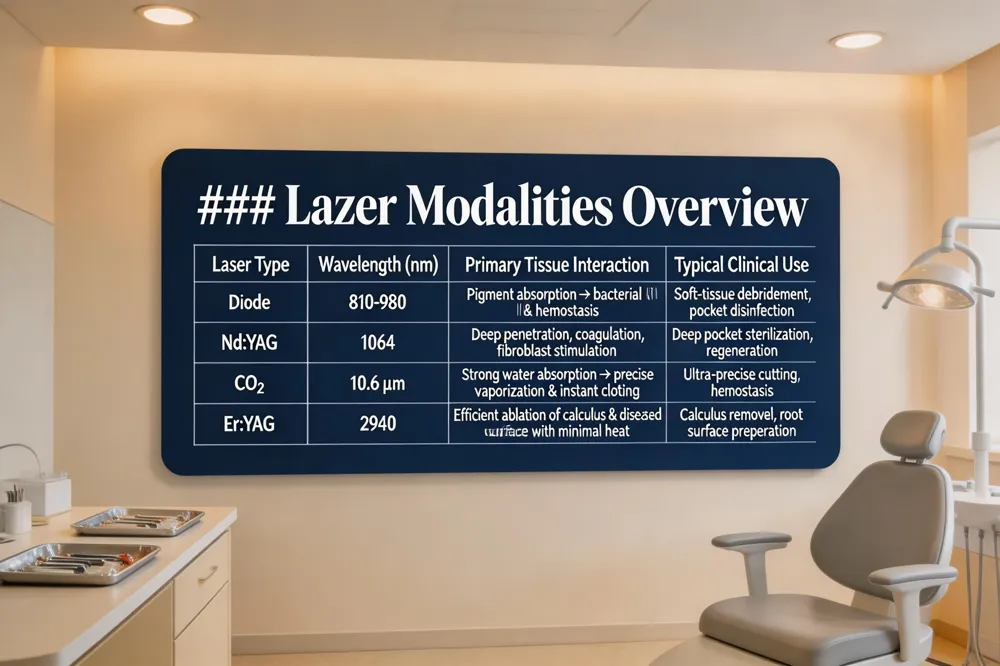
Laser Modalities Overview
| Laser Type | Wavelength (nm) | Primary Tissue Interaction | Typical Clinical Use |
|---|---|---|---|
| Diode | 810‑980 | Pigment absorption → bacterial kill & hemostasis | Soft‑tissue debridement, pocket disinfection |
| Nd:YAG | 1064 | Deep penetration, coagulation, fibroblast stimulation | Deep pocket sterilization, regeneration |
| CO₂ | 10.6 µm | Strong water absorption → precise vaporization & instant clotting | Ultra‑precise cutting, hemostasis |
| Er:YAG | 2940 | Efficient ablation of calculus & diseased root surface with minimal heat | Calculus removal, root surface preparation |
 Laser periodontal therapy uses focused light energy to target diseased gum tissue while sparing healthy structures. By converting light into heat, a laser vaporizes inflamed tissue, seals blood vessels, and sterilizes the pocket, reducing bleeding, swelling and bacterial load.
Key laser modalities
- Diode lasers (810‑980 nm) are absorbed by pigmented bacteria, providing precise soft‑tissue debridement and hemostasis.
- Nd:YAG lasers (1064 nm) penetrate deeper, coagulating vessels and stimulating fibroblast activity for tissue regeneration.
- CO₂ lasers (10.6 µm) vaporize soft tissue with excellent water absorption, offering ultra‑precise cutting and instant clotting.
- Er:YAG lasers (2940 nm) efficiently ablate calculus and diseased root surfaces with minimal thermal damage.
Precision and tissue preservation – The selective photothermolysis of lasers allows clinicians to remove only infected tissue, preserving connective tissue, bone and tooth structure, which leads to faster healing and less postoperative discomfort.
LANAP (Laser‑Assisted New Attachment Procedure) – LANAP employs a PerioLase MVP‑7 or Nd:YAG tip to eradicate up to 99.9 % of pathogenic bacteria, create a fibrin clot, and re‑attach gum tissue to the tooth. Patients typically resume normal activities the next day with minimal pain.
Laser curettage periodontal treatment – This minimally invasive adjunct removes inflamed tissue and biofilm from deep pockets after scaling, often without anesthesia, improving probing depths and attachment levels, especially in diabetic or heavy‑plaque patients.
Effectiveness of laser treatment for gum disease – Clinical studies show laser therapy can significantly reduce pocket depth, halt disease progression and achieve success rates above 90 % when combined with diligent oral hygiene.
Effectiveness of soft laser treatment in periodontal surgery – Evidence is mixed; some studies report modest healing benefits, while others find no significant difference compared with placebo.
CO₂ laser periodontal treatment – CO₂ lasers provide precise tissue removal, excellent hemostasis and reduced postoperative swelling, delivering outcomes comparable or superior to traditional scaling with enhanced patient comfort.
Benefits, Recovery and Patient Experience
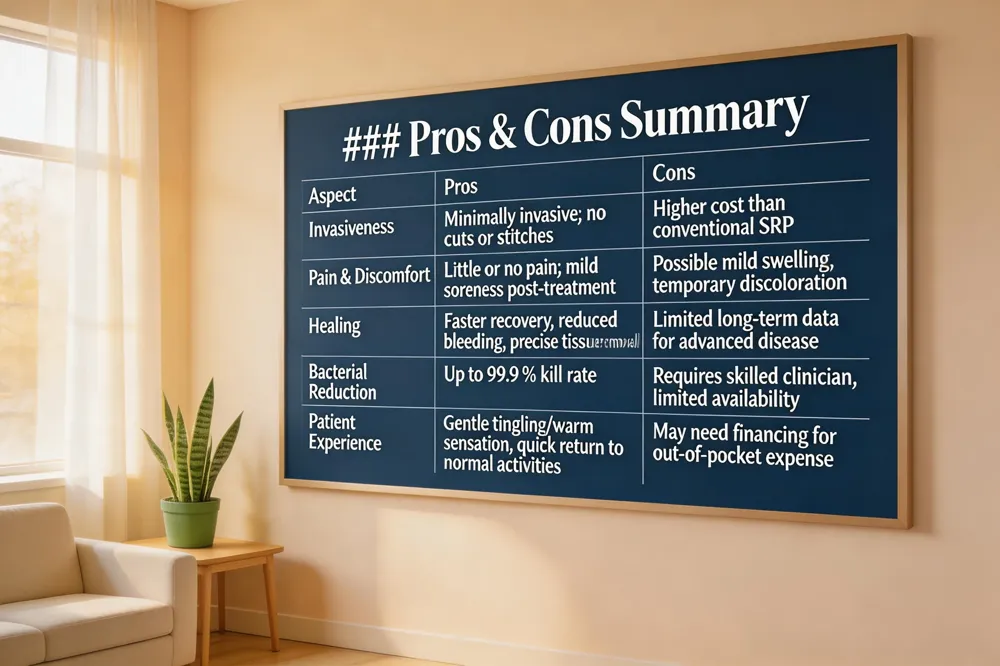
Pros & Cons Summary
| Aspect | Pros | Cons |
|---|---|---|
| Invasiveness | Minimally invasive; no cuts or stitches | Higher cost than conventional SRP |
| Pain & Discomfort | Little or no pain during procedure; mild soreness post‑treatment | Possible mild swelling, temporary discoloration |
| Healing | Faster recovery, reduced bleeding, precise tissue removal | Limited long‑term data for advanced disease |
| Bacterial Reduction | Up to 99.9 % kill rate | Requires skilled clinician, limited availability |
| Patient Experience | Gentle tingling/warm sensation, quick return to normal activities | May need financing for out‑of‑pocket expense |
 During the procedure, patients typically experience little or no pain. A local anesthetic or light sedation numbs the area, and the laser may feel like a gentle tingling or warm sensation as it removes diseased tissue. Post‑treatment, mild soreness, swelling, or sensitivity is common but usually resolves within a few days and can be managed with over‑the‑counter pain relievers and a soft‑food diet.
Side effects are generally mild and brief: light bleeding, slight swelling, occasional partial gum discoloration, or a brief itching/burning sensation while the laser is active. These symptoms usually resolve within 24 hours.
Pros: minimally invasive, no cuts or stitches, reduced bleeding, faster healing, precise removal of diseased tissue, and up to a 99.9 % bacterial kill rate. Cons: higher cost than conventional scaling and root planing, limited availability of trained clinicians, and still‑emerging long‑term evidence for very advanced disease. Patients should balance the gentler, quicker recovery against cost and the current evidence base when considering laser therapy.
Laser Therapy vs. Conventional Care
Comparison Table
| Feature | Laser Periodontal Therapy | Scaling & Root Planing (SRP) |
|---|---|---|
| Technique | Focused light energy for disinfection & tissue removal | Mechanical removal of plaque/tartar |
| Pain/Discomfort | Minimal; often only local anesthesia | May require multiple anesthetic injections |
| Bleeding | Excellent hemostasis, less bleeding | More bleeding during deep cleaning |
| Healing Time | Faster, less swelling | Longer postoperative discomfort |
| Cost | $1,250‑$3,000 per quadrant (out‑of‑pocket) | Generally lower, often covered by insurance |
| Availability | Limited to trained providers | Widely available in most dental offices |
| Long‑Term Evidence | Emerging, especially for advanced disease | Well‑established evidence base |
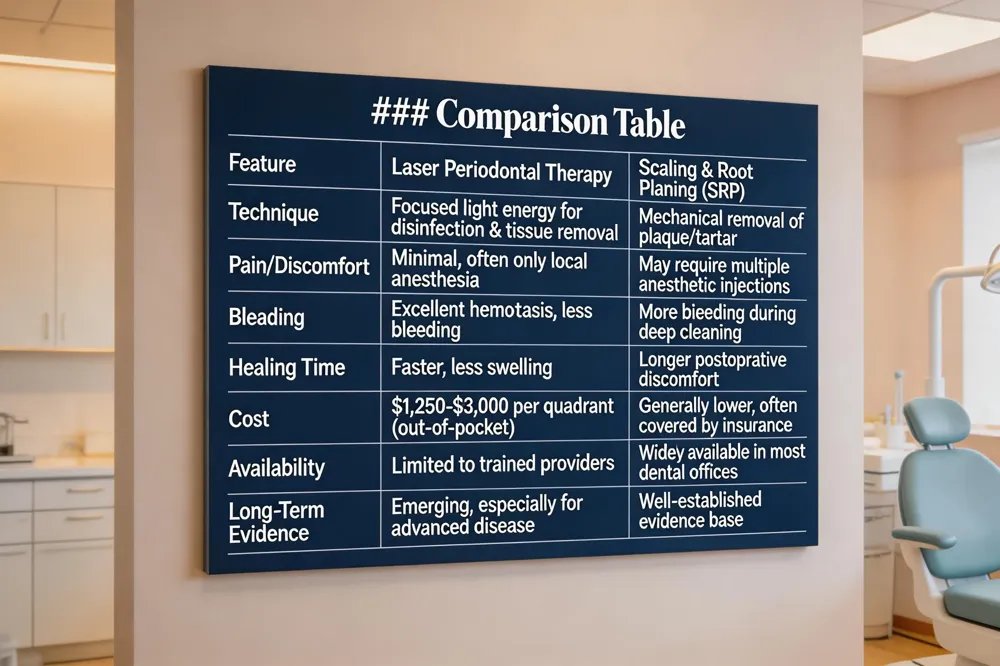 Laser periodontal therapy and traditional deep cleaning (scaling and root planing) both aim to control gum disease, but they differ in technique, patient experience, and cost.
Deep cleaning versus laser – Scaling and root planing manually removes plaque and tartar below the gumline, often requiring multiple visits and local anesthesia. Laser gum treatment uses a focused light beam to disinfect, seal blood vessels, and precisely remove inflamed tissue. The laser is minimally invasive, causing less bleeding, swelling, and pain, and it can reach deeper pockets for more thorough bacterial reduction.
Cost considerations – Conventional deep cleaning is generally more affordable and widely covered by insurance. Laser therapy, especially protocols like LANAP, tends to be higher priced—ranging from $1,250 to $3,000 per quadrant (or $5,000‑$12,000 for a full‑mouth case) when paid out‑of‑pocket. Many offices offer financing plans to ease the expense.
Local availability – In the Rio Rancho area, Southern Boulevard Dental provides state‑of‑the‑art laser gum treatment and LASAP® therapy. Their team evaluates each case during a routine exam and creates a personalized, minimally invasive plan that reduces recovery time and improves comfort.
Quick answers –
- [Laser gum treatment] vs deep cleaning: Laser offers precise, less painful tissue removal and faster healing; deep cleaning is more economical and broadly accessible.
- [LANAP] cost without insurance: $1,250‑$3,000 per quadrant, $5,000‑$12,000 for the whole mouth.
- [Laser gum treatment] near me: Southern Boulevard Dental, Rio Rancho, NM.
- [Laser gum disease treatment] near me: Same practice, using FDA‑approved lasers for effective, gentle care.
- [Laser gingivitis treatment]: Removes inflamed tissue, kills bacteria, seals vessels, and promotes rapid, pain‑free healing in a single visit.
Choosing the right approach depends on disease severity, budget, and personal comfort preferences. A consultation with a qualified periodontist will help determine the best option for your oral health.
Patient Guidance, Safety and Education
Post‑Treatment Care Checklist
| Day | Recommended Action |
|---|---|
| 0‑1 | Soft‑food diet; avoid hot, spicy, crunchy foods; no smoking |
| 1‑2 | Gentle brushing with soft‑bristled brush; use antimicrobial mouth‑rinse |
| 3‑7 | Continue soft diet as needed; monitor for swelling or bleeding; take OTC pain relievers if required |
| 7‑10 | Schedule follow‑up visit to assess tissue re‑attachment and adjust care |
| Ongoing | Twice‑daily brushing, daily flossing or water‑flosser, regular dental check‑ups |
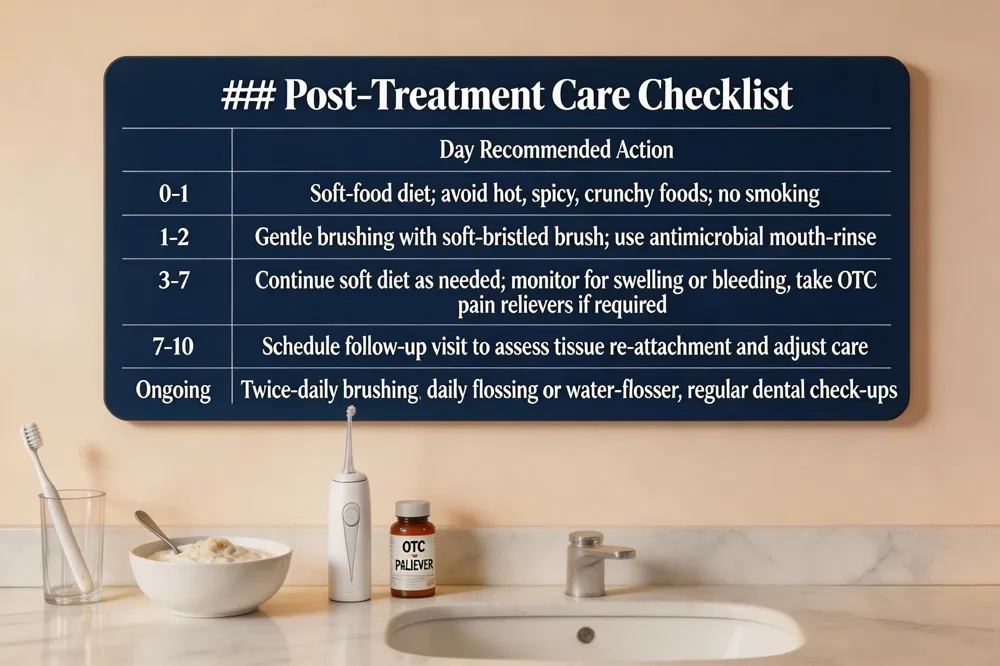 After‑care recommendations are essential for a smooth recovery from laser periodontal therapy. Patients should stick to a soft‑food diet for the first 24‑48 hours, avoid very hot, spicy, or crunchy items, and refrain from smoking, which can delay healing. Gentle oral‑hygiene measures—brushing twice daily with a soft‑bristled brush, daily flossing or water‑flosser use, and an antimicrobial mouth‑rinse—help keep the treated sites clean and reduce the risk of reinfection. Follow‑up visits are typically scheduled within 7‑10 days to assess tissue re‑attachment and adjust care as needed.
Professional training standards ensure clinicians use lasers safely and effectively. The Curriculum Guidelines and Standards for Dental Laser Education outline a four‑tiered framework: Introductory courses covering laser physics and safety; Standard Proficiency courses requiring didactic learning, hands‑on labs, and supervised clinical practice; Advanced Proficiency courses that add complex case studies; and Educator courses that certify instructors. This structured training guarantees that providers stay current with evolving technology and regulatory requirements.
Common FAQs and myths: Laser therapy is a powerful adjunct for gum disease but not a stand‑alone cure—successful long‑term health still relies on diligent oral hygiene and regular dental visits. The procedure is minimally invasive, often performed with only local anesthesia, and offers reduced bleeding, pain, and faster healing. While laser treatment can dramatically improve outcomes, suitability depends on disease severity and a thorough clinical evaluation. Finally, gum disease can be transmitted through saliva, so kissing with active gingivitis may spread bacteria.
Overall, laser periodontal therapy combines advanced technology with evidence‑based protocols to deliver comfortable, efficient care while emphasizing patient education and after‑care compliance.
Embracing a Gentle, High‑Tech Future for Gum Health
Modern laser dentistry has transformed gum‑disease care. Focused light beams selectively remove inflamed tissue, seal blood vessels, and sterilize pockets, delivering less bleeding, reduced pain, and faster healing—often within 24‑48 hours. Low‑level laser therapy further accelerates tissue repair, while precise wavelengths (diode, Nd:YAG, Er:YAG) achieve bacterial reductions of up to 99.9 %.
Why choose Southern Boulevard Dental? Our team of board‑certified periodontists combines decades of experience with FDA‑cleared laser systems, offering minimally invasive, suture‑free procedures that often require only a light anesthetic spray. Patients benefit from a quiet, vibration‑free environment, quicker return to normal activities, and a treatment plan tailored to their medical history and gum‑disease severity.
Ready to take the next step? Schedule a comprehensive exam to assess your periodontal health. If laser therapy is appropriate, we’ll outline a personalized schedule—typically 2‑4 sessions spaced a week apart—along with post‑procedure care instructions (soft diet, gentle oral‑hygiene routine, and follow‑up visits). Contact Southern Boulevard Dental today to start a comfortable, high‑tech journey toward lasting gum health.