Introducing Gentle Laser Therapy for Gum Health
Gentle laser therapy uses focused, low‑intensity light to remove inflamed or infected gum tissue while sparing healthy structures. By vaporizing diseased tissue and simultaneously cauterizing blood vessels, the laser sterilizes the pocket, cuts bleeding, and reduces postoperative swelling. Modern dentistry embraces this technology because it offers precise, customizable treatment that can be adjusted in real time to match each patient’s periodontal condition. The patient‑centered advantages are notable: procedures are minimally invasive, often requiring no incisions, stitches, or extensive anesthesia, which translates to less pain, lower infection risk, and a quicker return to daily activities—typically within a week. Patients also appreciate the quiet, vibration‑free environment and the reduced need for pain medication. Overall, gentle laser therapy aligns with a family‑focused, comfort‑first approach, delivering effective gum disease management while enhancing the dental experience.
Cost, Insurance and Finding a Provider
 What is the cost of laser treatment for teeth?
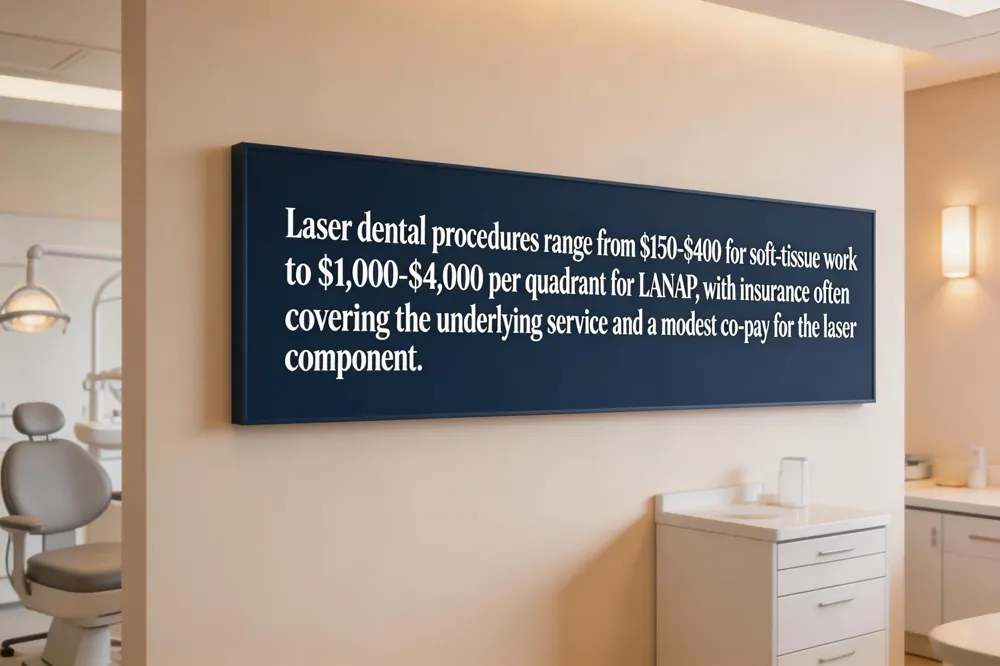
Laser treatment for teeth varies by procedure. Basic soft‑tissue work such as laser cleaning or gingivectomy typically costs $150‑$400 per quadrant. When a laser is added to routine work (fillings, root canals) the fee ranges $200‑$400 per visit. More extensive periodontal therapy like LANAP runs $1,000‑$4,000 per quadrant, with severe cases reaching $2,500‑$4,000 per quadrant. Prices can rise to $500‑$1,200 per session in high‑cost markets. Most insurers reimburse the underlying procedure, so the laser component may be covered or result in a modest co‑pay. Verify with your dentist and insurer for a precise estimate.
What is the cost of laser treatment for teeth?
Laser treatment for teeth varies by procedure. Basic soft‑tissue work such as laser cleaning or gingivectomy typically costs $150‑$400 per quadrant. When a laser is added to routine work (fillings, root canals) the fee ranges $200‑$400 per visit. More extensive periodontal therapy like LANAP runs $1,000‑$4,000 per quadrant, with severe cases reaching $2,500‑$4,000 per quadrant. Prices can rise to $500‑$1,200 per session in high‑cost markets. Most insurers reimburse the underlying procedure, so the laser component may be covered or result in a modest co‑pay. Verify with your dentist and insurer for a precise estimate.
How much does gum laser treatment cost? A full‑mouth laser gum‑disease procedure (e.g., LANAP) generally falls between $2,000 and $8,000, depending on the number of sites, case complexity, and the practice’s fee schedule. Many offices provide a detailed estimate after an initial consultation, and some insurance plans cover part of the cost if deemed medically necessary. Financing plans or payment‑schedule options can spread the expense over several months.
Is laser teeth cleaning covered by insurance? Most dental plans cover routine preventive cleanings and often treat laser‑assisted cleanings as the same service, resulting in partial reimbursement. Coverage varies by carrier and coding; some insurers may require pre‑authorization or label the laser technique as experimental. Review your policy’s preventive‑care benefits and confirm coverage before the appointment.
Where can I find laser treatment for gum disease near me? In Rio Rancho, NM, Southern Boulevard Dental offers FDA‑approved LANAP therapy. Call (555) 123‑4567 or visit their website for a consultation. Nearby alternatives include Inland Periodontics (Upland, CA), King House Dental Group (Redlands, CA), and Arrowhead Dental Specialties (San Bernardino, CA), all providing minimally invasive laser gum therapy.
Effectiveness, Longevity and Patient Comfort
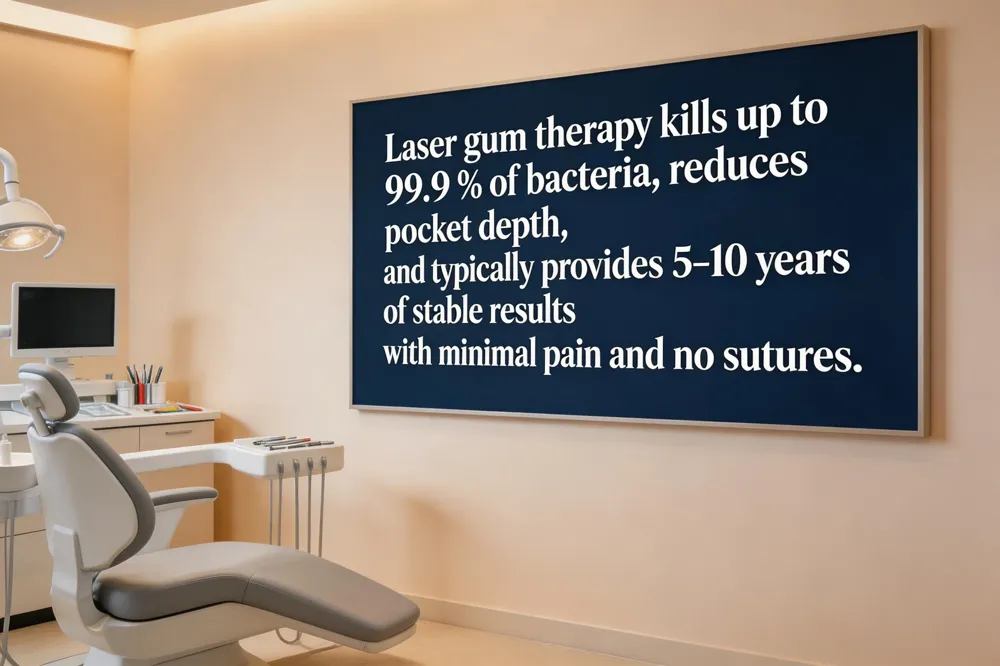 Laser gum therapy has been shown to work effectively for treating gum disease. Clinical studies of protocols such as LANAP report a 99.9 % kill rate of harmful oral bacteria, dramatically reducing pocket depth and bacterial load. By precisely removing only diseased tissue while preserving healthy gum the laser promotes faster healing, less bleeding, and usually eliminates the need for sutures. When combined with diligent oral‑hygiene habits, the results are reliable and long‑lasting.
Most patients experience results clinical improvements for 5‑10 years, and many enjoy healthy, well‑contoured gums for a decade or more. Longevity depends on regular professional cleanings, daily brushing and flossing, and avoiding irritants such as tobacco.
Pain during the procedure is minimal. A local anesthetic provides a warm tingling sensation rather than sharp pain, and the laser’s sealing of nerve endings reduces postoperative swelling. After treatment, only mild soreness or tenderness is typical, resolving within a few days with over‑the‑counter pain relievers.
Side effects are generally mild and short‑lived: temporary swelling, slight bruising, brief gum discoloration, and fleeting sensitivity to hot or cold temperatures. Rarely, superficial thermal irritation may cause a small ulcer that heals quickly. Serious complications such as infection are uncommon when the procedure is performed by a trained dentist. Overall, laser gum therapy offers a comfortable, minimally invasive alternative to traditional gum surgery, delivering effective, durable results with far fewer side effects.
Laser Therapy vs. Traditional Deep Cleaning
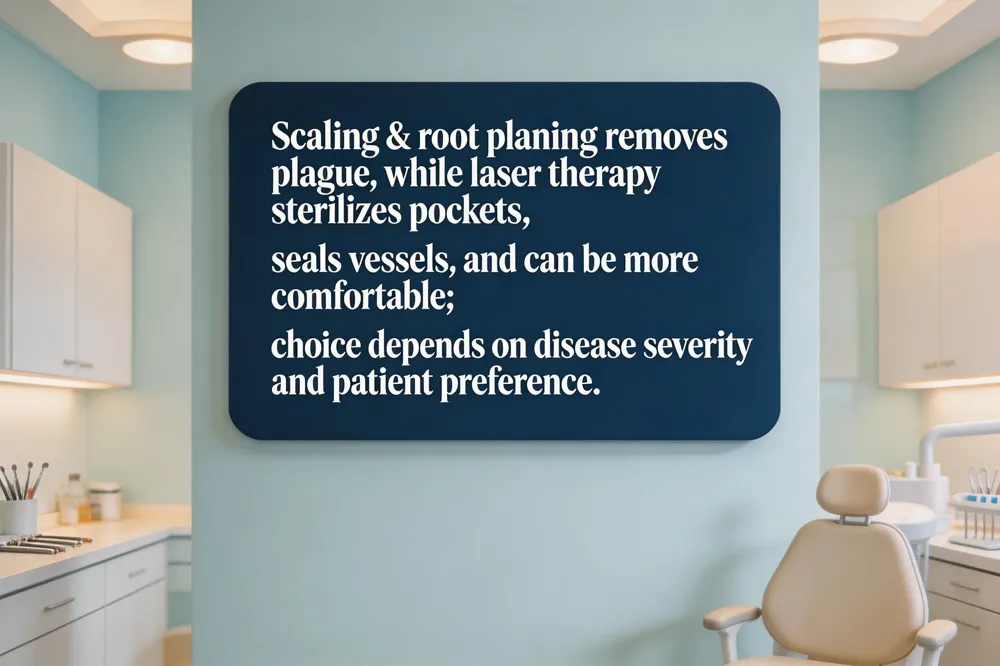 Laser gum treatment vs deep cleaning: which is better?
scaling and root planing (SRP) removes plaque, calculus and diseased tissue from tooth and root surfaces. Standard for mild‑to‑moderate pockets.
Laser‑assisted periodontal therapy (e.g., LANAP) uses a focused light to vaporize inflamed tissue, sterilize pockets and coagulate blood vessels, reducing bleeding and swelling.
Choice depends on disease severity. Early‑stage disease responds to SRP; deeper pockets, high sensitivity or minimally invasive care favor laser therapy. SRP‑laser approach can be used.
Laser therapy costs more than scaling, but fewer visits and faster healing may offset expense; insurers may cover it.
Q: Laser gum treatment vs deep cleaning: which is better? A: Both work; SRP removes plaque and calculus, laser therapy kills bacteria, seals vessels and eases pain—choice depends on severity.
Q: Is laser dental cleaning worth it? A: Yes for patients with periodontal concerns or anxiety, as it offers less bleeding, quicker healing and sterilization, though pricier than routine cleanings.
Q: Is laser treatment worth it for gums? A: For moderate periodontitis, laser therapy precisely removes disease, reduces discomfort and aids regeneration, making it cost‑effective.
Q: What is laser dental treatment for gum disease? A: A minimally invasive (often LANAP) procedure that uses a focused laser to remove infected tissue, sterilize pockets, coagulate vessels and promote attachment without incisions.
Healing Timeline and After‑Care Guidance
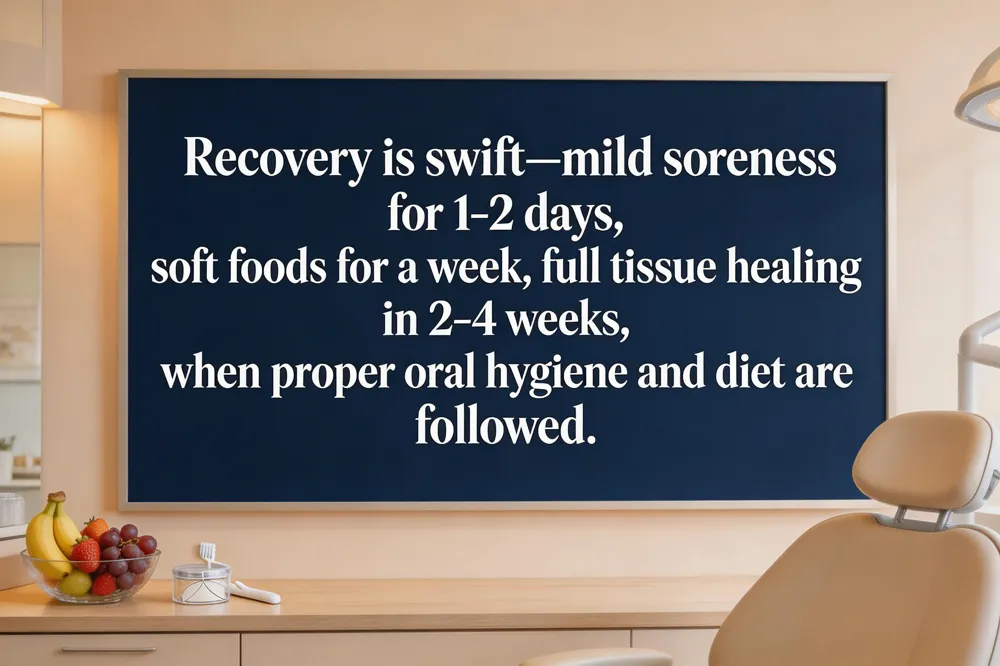 Typical recovery after laser gum treatment is remarkably swift. Most patients feel only mild soreness and can return to normal daily activities within 1‑2 days. The first three days are limited to liquids and gentle oral rinses; from day 4 to day 7 a soft‑food diet (e.g., yogurt, scrambled eggs, mashed potatoes) is recommended. By the end of the first week you may begin eating soft solids, and around day 10 regular brushing and a normal diet can resume. Full tissue regeneration and complete gum healing usually occur within 2‑4 weeks, provided the area stays clean and smoking is avoided.
Dietary recommendations – Stick to cool, non‑acidic, soft foods for the initial 2‑3 days. Avoid crunchy, hard, or spicy items that could disturb the blood clot or irritate the site. Hydration is important; sip water but do not use a straw.
Oral‑hygiene measures – After the first 24 hours, rinse gently with an antimicrobial or salt‑water solution 2‑3 times daily. Use a soft‑bristled toothbrush or a Q‑tip dipped in the rinse to clean the treated area very gently. Normal flossing and brushing can resume about one week post‑procedure.
Managing occasional side effects – Mild swelling, light bleeding, or temporary discoloration are normal and typically subside within a few days. Over‑the‑counter ibuprofen can control discomfort if needed. If pain worsens, bleeding persists, or you notice fever, contact your dentist promptly. Follow‑up appointments are essential to confirm proper healing and to address any concerns.
Note on laser fillings – While laser‑assisted cavity removal offers precision, it can be time‑consuming, is best for small to moderate lesions, may cost more due to specialized equipment, and cannot be used on teeth with existing fillings or interproximal cavities.
Systemic Health Connections
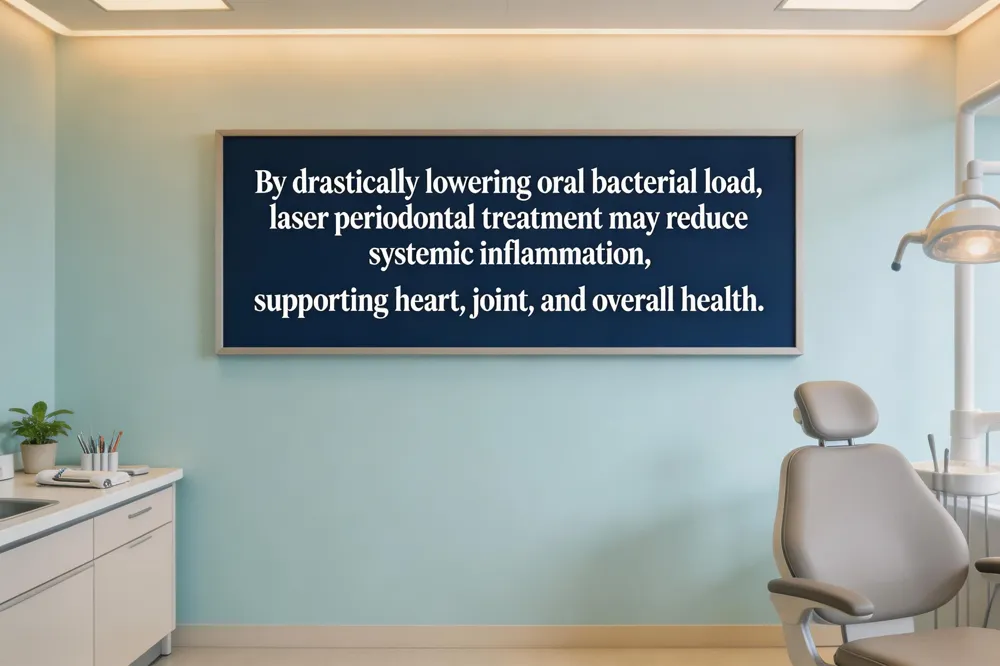 The CDC reports that over 70% of U.S. adults aged 65 and older have some form of periodontal disease, and inflammatory pathogens from infected gums can enter the bloodstream, potentially damaging heart valves, artificial joints, and other vulnerable tissues.
Laser gum therapy addresses this root cause by precisely removing diseased tissue while sterilizing the treatment site. The focused laser beam kills up to 99.9 % of harmful bacteria in deep pockets, dramatically lowering bacterial load and the associated inflammatory response. By sealing blood vessels and nerve endings, the laser reduces postoperative swelling and pain, allowing faster tissue regeneration and a quicker return to normal oral hygiene routines.
Clinical research and reports from the American Academy of Periodontology suggest that adjunctive laser treatment can modestly improve probing depths and attachment levels, which translates into better long‑term gum health and a reduced systemic inflammatory burden. In short, laser‑assisted periodontal therapy not only preserves the gums but also helps protect the heart, metabolic health, and overall well‑being.
Patient Comfort, Anxiety Reduction and Overall Benefits
 Laser dental treatment is designed to be as gentle and quiet as possible. The focused light beam operates without the high‑pitched whine of traditional drills, creating a noise‑free environment that eases the anxiety of patients who are nervous about dental visits. Because the laser simultaneously cuts and cauterizes tissue, bleeding and swelling are dramatically reduced, and the procedure often eliminates the need for sutures.
One of the most significant comfort advantages is the minimal requirement for anesthesia. Many patients tolerate the mild warmth of the laser with little or no local anesthetic, which is especially beneficial for those who fear needles or have medical conditions that limit the use of strong sedatives. The laser’s ability to sterilize the treatment area in real time lowers infection risk and promotes faster tissue regeneration, meaning recovery is quicker and post‑procedure pain is usually mild.
Overall, laser dentistry offers a precise, efficient, and patient‑friendly alternative to conventional surgery. It preserves more healthy gum tissue, reduces postoperative discomfort, shortens healing time, and supports long‑term oral health—all while providing a calm, reassuring experience that helps patients feel confident and comfortable during and after treatment.
Conclusion – Embracing Laser Technology for a Healthier Smile
 Laser‑assisted periodontal therapy delivers a combination of precision, comfort, and rapid healing that traditional gum surgery simply cannot match. By using a focused beam of light, the laser removes only diseased tissue while preserving healthy gum structures, coagulates blood vessels to minimize bleeding, and sterilizes the treatment site to dramatically lower the risk of infection. Patients consistently report less postoperative pain, reduced swelling, and a recovery period that often allows a return to normal activities within a day or two—far shorter than the weeks‑long downtime associated with scalpel‑based procedures.
In addition to the immediate benefits, laser therapy promotes long‑term oral health by eradicating hard‑to‑reach bacteria, supporting tissue regeneration, and decreasing the likelihood of gum disease recurrence, which can also lessen systemic inflammation linked to heart disease, diabetes and other serious conditions.
If you are living with, to gum disease, consider discussing laser options with your Southern Boulevard Dental team. Our experienced clinicians are trained in the latest FDA‑cleared laser protocols, such as LANAP, and can tailor a treatment plan that fits your specific needs and budget. Schedule a consultation today to explore how gentle laser gum therapy can help you achieve a healthier, more confident smile while enjoying a comfortable, patient‑centered dental experience.
Your Path to Healthier Gums Starts with Gentle Laser Therapy
Laser‑assisted periodontal therapy combines modern technology with a patient‑focused approach, delivering three core benefits that set it apart from conventional gum surgery. First, the precision of a focused laser beam allows the clinician to eradicate only diseased tissue while preserving the surrounding healthy gum structure. This selective removal minimizes trauma, reduces intra‑operative bleeding, and eliminates the need for sutures. Second, because the laser simultaneously cauterizes blood vessels and seals nerve endings, patients experience markedly less pain, swelling, and postoperative discomfort—often without the need for extensive anesthesia. The gentle, quiet nature of the procedure also eases dental anxiety, making it an ideal choice for families and individuals with needle phobia. Third, the sterilizing effect of laser energy dramatically lowers bacterial load in periodontal pockets, supporting faster tissue regeneration and a reduced risk of disease recurrence. Over the long term, these advantages translate into healthier gums, stronger tooth‑to‑bone attachment, and a lower systemic inflammatory burden that is linked to conditions such as heart disease and diabetes. If you are ready to experience a faster, more comfortable path to periodontal health, we invite you to schedule a consultation at Southern Boulevard Dental. Our experienced team will assess your needs, discuss personalized laser‑therapy options, and guide you toward a brighter, healthier smile.