Introduction to 3D CBCT Imaging in Modern Dentistry
Overview of 3D CBCT Technology
Cone Beam Computed Tomography (CBCT) is an advanced dental imaging technology that produces detailed three-dimensional (3D) images of teeth, bone, nerve pathways, and soft tissues in the oral and maxillofacial region. Unlike traditional two-dimensional (2D) X-rays, CBCT uses a cone-shaped X-ray beam rotating around the patient’s head to capture multiple images within seconds, which are then reconstructed into a precise 3D model.
Importance in Modern Dental Diagnostics and Treatment
3D CBCT imaging enhances diagnostic accuracy and treatment planning by offering comprehensive views of dental structures. It is especially invaluable in complex cases such as dental implant placement, root canal treatments, TMJ disorder assessments, and evaluation of impacted teeth or jaw tumors. This targeted imaging technology allows dentists to visualize internal details without invasive procedures, improving patient safety and outcomes.
Comparison with Traditional Dental X-rays
Compared to conventional 2D dental X-rays, CBCT provides richer diagnostic information with less distortion or overlap of structures. Additionally, CBCT systems expose patients to significantly lower radiation doses than traditional medical CT scans, while offering far superior detail compared to standard dental X-rays. This combination of high resolution, 3D visualization, and minimized radiation makes CBCT an essential tool in contemporary dental care.
Understanding CBCT: How It Works and Its Applications
What is a CBCT scan and what is it used for?
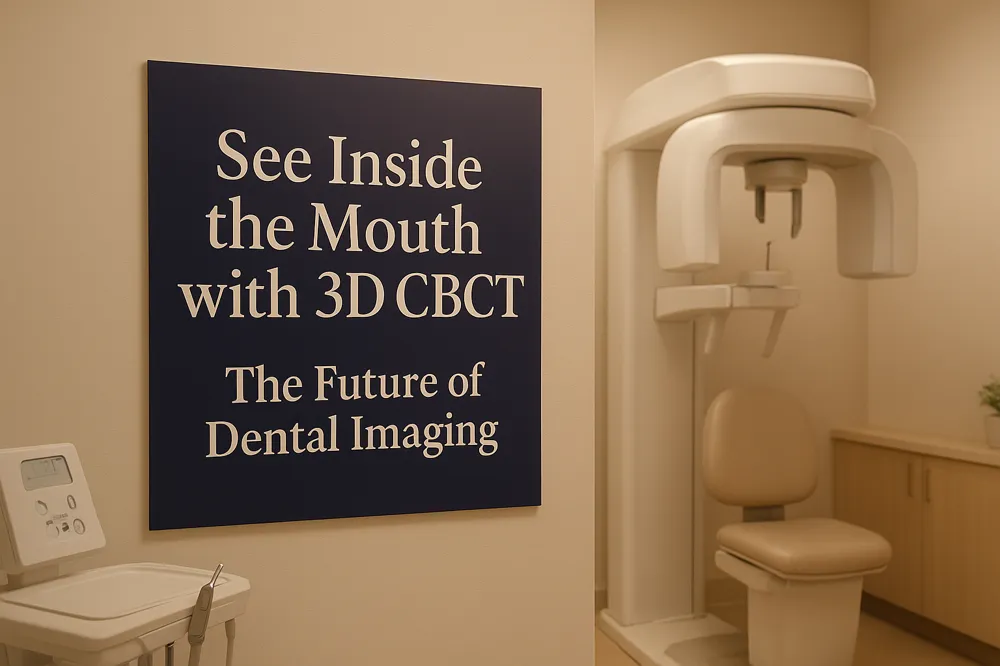
A CBCT scan, or cone-beam computed tomography, is an advanced imaging technology that produces detailed three-dimensional images of the teeth, soft tissues, nerve pathways, and bones. Unlike traditional dental X-rays, CBCT offers a comprehensive 3D model that provides clarity in complex cases. It is commonly used for planning dental implants, orthodontic treatments, assessing impacted teeth, diagnosing TMJ disorders, and detecting jaw tumors. The scan allows dentists and specialists to see inside the mouth and jaw with exceptional precision, supporting better treatment decisions.
How does a CBCT scan work?
The CBCT procedure involves a cone-shaped X-ray beam rotating 360 degrees around the patient's head, capturing numerous two-dimensional images from various angles—sometimes as many as 600. These images are then compiled by sophisticated software into a highly detailed 3D representation of oral and maxillofacial structures. The cone-shaped beam requires less radiation compared to traditional CT scans, making it a safer imaging alternative. The scan itself is non-invasive, quick (usually 10 to 40 seconds), and painless, requiring the patient to remain still during the process.
What are the three views of a CBCT scan?
CBCT scans deliver three essential views to aid diagnosis and treatment:
- Panoramic View: Offers a wide-angle 2D overview of the entire jaw and teeth, helpful for initial assessments.
- Axial View: Horizontal slices of the jaw allow detailed inspection of bone and teeth in cross-section.
- Cross-Sectional/Sagittal View: Vertical slices provide insight into bone density, root structure, and pathology, essential for precise implant placement or surgical planning.
Together, these views enable clinicians to evaluate dental anatomy comprehensively and tailor treatments effectively.
What are the technical advantages over traditional imaging?
CBCT provides superior 3D images with minimal distortion and magnification errors common in traditional 2D X-rays. The compact design of CBCT machines and cone-shaped X-ray beams reduce radiation exposure significantly—often by 6 to 15 times less than medical CT scans—while maintaining high-resolution imaging. Additionally, the speed of the scan and immediate availability of images improve workflow efficiency and patient convenience.
What are the primary dental and medical uses of CBCT?
Dentists use CBCT to guide implant placements, evaluate sinus health, diagnose root canal infections, assess TMJ disorders, detect jaw tumors and cysts, and plan oral surgeries such as wisdom tooth removal. Beyond dentistry, CBCT also assists in ENT evaluations, sleep apnea assessments, and orthopedics by providing detailed bone and soft tissue imaging.
How safe is CBCT in terms of radiation exposure?
CBCT exposes patients to considerably less radiation compared to conventional CT scans—typically similar to or slightly higher than traditional dental X-rays but with far greater diagnostic value. Ultra-low dose protocols exist, especially for children who are more sensitive to radiation. Adhering to the ALARA (As Low As Reasonably Achievable) principle, CBCT is used only when necessary, ensuring patient safety.
| Aspect | CBCT Scan | Traditional X-rays/C.T. |
|---|---|---|
| Imaging Type | 3D volumetric images | 2D or higher radiation 3D CT |
| Radiation Dose | Low; up to 15x less than medical CT | Higher; more radiation exposure |
| Scan Time | 10–40 seconds | Several minutes |
| Diagnostic Capability | Detailed bone, teeth, nerve, and soft tissue imaging | Limited to 2D views; less detail |
| Uses | Implants, orthodontics, TMJ, tumors, airway | Standard diagnostic X-rays, medical CT |
| Patient Comfort | Non-invasive, no protective gear needed | May require more preparation and protective shielding |
This comprehensive imaging technology elevates dental diagnostics and treatment planning, enhancing outcomes while maintaining patient safety and comfort.
Advantages of 3D CBCT Imaging in Dental Practice
What is the new technology for dental imaging?
The newest advancement in dental imaging is 3D Cone Beam Computed Tomography (CBCT). This technology creates high-resolution, 3D images that display detailed views of teeth, gums, bones, and nerves. Unlike traditional 2D X-rays, CBCT captures the entire oral and maxillofacial region in a single quick scan lasting less than a minute. It’s a painless and non-invasive procedure providing comprehensive diagnostic data.
What are the benefits over traditional 2D X-rays?
3D CBCT imaging offers several benefits over standard 2D X-rays:
- Enhanced diagnostic accuracy: The volumetric 3D images reveal fine details such as root fractures, hidden infections, impacted teeth, and cysts that 2D images may miss.
- True-to-scale measurements: This helps dentists in precise implant planning, orthodontic evaluation, and oral surgery, reducing surprises during treatment.
- Multi-angle views: Dentists can examine cross-sections and multiple planes (axial, sagittal, coronal) to fully understand complex anatomy.
- Better patient communication: The 3D visuals help explain diagnoses and treatment plans clearly to patients.
How does 3D CBCT improve patient safety through lower radiation exposure?
Although CBCT uses ionizing radiation, it is designed to emit significantly lower doses than conventional medical CT scans. Radiation from CBCT scans is often comparable to or slightly higher than standard dental X-rays but remains within safe diagnostic limits. Advances like ultra-low dose protocols and focused cone-shaped X-ray beam technology limit exposure only to the areas of interest. For more details on Radiation dose reduction in dental imaging and Dental CBCT radiation safety.
What are the applications of 3D CBCT in complex dental procedures?
3D CBCT is indispensable for various advanced dental applications including:
- Dental implant planning: Accurately assesses bone density, nerve pathways, and sinus cavities for safe implant placement.
- Orthodontics: Provides detailed images to plan tooth movement and evaluate airway spaces.
- TMJ disorders: Helps visualize joint structures and diagnose dysfunction.
- Endodontics: Enhances detection of root fractures, canal anatomy, and infections.
- Oral surgery: Facilitates extraction of impacted teeth and evaluation of tumors or cysts.
By integrating CBCT imaging, dental practitioners can deliver safer, faster, and more effective patient care with enhanced treatment outcomes and reduced complications. For comprehensive insights on Applications in surgical planning and 3D cone beam imaging for dental safety.
Safety and Radiation Concerns with CBCT Scans
How much radiation does a dental cone beam CT scan involve?
Dental Cone Beam Computed Tomography (CBCT) scans involve a low level of radiation compared to traditional medical CT scans but a higher dose than conventional dental X-rays. The effective radiation dose typically ranges from 29 to 477 microsieverts (µSv) depending on the field of view and machine settings, which is significantly lower than medical CT scans that deliver doses up to 2 millisieverts (mSv).
Radiation exposure comparison with other imaging
CBCT scans use a focused cone-shaped X-ray beam technology, which minimizes radiation exposure. The dose from CBCT is roughly 6 to 15 times less than that of conventional CT scans and about 70% less than a standard chest X-ray. Digital X-rays have even lower radiation levels—approximately 80-90% less than traditional film X-rays. Modern ultra-low dose CBCT protocols reduce radiation further while maintaining image quality, supporting the ALARA principle and CBCT scans.
Guidelines for radiation dose reduction
Regulatory bodies like the FDA recommend that CBCT scans should only be used when necessary and after careful clinical evaluation. Radiation dose reduction techniques include selecting an appropriate CBCT Field of View selection (smaller FOV reduces exposure), using low-dose protocols especially for children, and limiting the number of scans per patient. Dental professionals ensure justification and optimization to avoid unnecessary imaging.
Suitability for children and vulnerable populations
Children and other sensitive groups, such as pregnant women and cancer patients, require special consideration. Pediatric patients are more radiosensitive and have a longer lifetime risk from radiation exposure. As such, CBCT scans for children are employed only when essential and done with low-dose settings and shielding when possible, adhering to Dental CBCT radiation safety.
Safety protocols and regulatory oversight
Dental CBCT systems in the U.S. are regulated as medical devices by the FDA, which sets safety and efficacy standards. Practices use equipment designed to limit radiation exposure and employ trained professionals to interpret scans appropriately. Manufacturers are encouraged to develop pediatric-friendly devices and protocols. The overall goal is to balance diagnostic benefits with patient safety.
Through adherence to these safety measures and advances in technology, CBCT remains a vital diagnostic tool offering detailed 3D dental imaging with minimized radiation risks, supporting effective and safe dental care.
Cost Considerations and Insurance for 3D CBCT Imaging
How much does a 3D CBCT scan cost?
The cost of a 3D Scan (CBCT) Conebeam can vary widely, generally ranging from about $99 at some dental offices to between $300 and $900 depending on the complexity and scope of the scan. While some practices offer affordable pricing for targeted scans, a full Dental CBCT overview session—especially when used for detailed assessments like dental implant planning with 3D scans—typically costs more to reflect the comprehensive nature of this diagnostic tool.
What factors influence the pricing?
Several elements impact the cost of a CBCT scan overview:
- Scope of the scan: Larger field-of-view scans covering the entire jaw and surrounding structures cost more than localized scans.
- Technology used: Ultra-low-dose and advanced imaging systems with rapid acquisition times often carry higher fees.
- Practice location and expertise: Costs vary depending on geographical area and the level of specialization at the dental office.
- Additional services: Interpretation by specialists, surgical guides, or integration with CAD/CAM technology can increase overall expenses.
Is a CBCT scan typically covered by dental insurance?
In the United States, insurance coverage for 3D dental imaging is not uniform and often depends on:
- Medical necessity: Scans prescribed for complex treatments such as Dental implants and cone beam CT, root canal evaluation, or pathology detection are more likely to qualify.
- Insurance plan specifics: Some plans offer partial or full coverage, while others exclude CBCT imaging or require prior authorization.
- Documentation and coding: Proper claim submission with detailed justification is essential for reimbursement. Patients are advised to check their insurance policy and discuss coverage options with their dental provider before undergoing a scan.
What is the value proposition of 3D imaging for patients?
3D imaging for dental health offers significant benefits beyond traditional X-rays, including:
- Enhanced diagnostic accuracy for complex dental procedures, reducing risks and potential complications.
- Early detection of hidden dental problems, which can prevent costly and invasive treatments later.
- Personalized treatment planning with precise visualization of bone, tissues, and nerve pathways.
- Minimally invasive procedure with quick scan times and low radiation exposure. While the upfront cost may be higher than traditional imaging, the diagnostic precision and improved treatment outcomes present a strong value for patients seeking Advanced Dental Technology.
Integrating CBCT with Other Cutting-Edge Dental Technologies
What is cutting-edge technology and what are some examples related to dentistry?
Cutting-edge technology involves the most advanced and innovative developments across industries, dentistry included. These innovations significantly improve diagnostic precision, treatment effectiveness, and patient comfort. For more details, see Cutting Edge Dental Technology.
Digital impressions and CAD/CAM integration
Modern dental practices combine 3D Scan (CBCT) Conebeam with digital impression systems and CAD/CAM technology. Digital impressions capture accurate 3D oral images without traditional molds, enhancing patient comfort. When paired with CAD/CAM, these digital models enable dentists to design and manufacture precise restorations like crowns and bridges in a single visit, often the same day. This integration reduces treatment time and enhances restoration accuracy.
3D printing applications in dentistry
Utilizing CBCT scans with 3D printing, dental offices produce custom prosthetics, surgical guides, and orthodontic appliances. This technology allows for rapid fabrication with exceptional detail and fit, boosting clinical outcomes and reducing patient wait times. Explore more about CEREC CAD/CAM technology.
Laser dentistry and intraoral cameras
Lasers enable minimally invasive procedures such as soft tissue recontouring and decay removal, reducing discomfort and promoting faster healing. Intraoral cameras provide magnified, high-resolution views of oral structures, supplementing CBCT images to improve diagnostics and patient education by clearly visualizing issues like fractures or plaque.
Overall impact on patient care and treatment outcomes
Integrating CBCT with these advanced technologies results in more comprehensive treatment planning, improved accuracy, and quicker procedures. Patients experience less discomfort and shorter appointments, while dental professionals gain detailed insights for precision care, leading to better, lasting treatment results. Learn about the 3D dental imaging benefits.
The Future of Dentistry with 3D CBCT Imaging
Enhanced Diagnostic Precision and Patient Safety
3D Cone Beam Computed Tomography (CBCT) imaging offers high-resolution, three-dimensional views of teeth, jawbones, and soft tissues, far surpassing traditional 2D X-rays. This technology delivers detailed images with significantly reduced radiation exposure, ensuring greater safety, particularly for pediatric and sensitive patients.
Growing Adoption and Technological Advances in U.S. Practices
The U.S. dental field is rapidly embracing CBCT due to its precision and efficiency. Increasingly accessible ultra-low dose protocols and compact scanners allow more practices to integrate this imaging, enhancing treatment for implants, root canals, TMJ disorders, and complex surgeries.
Positive Impact on Patient Outcomes and Comfort
Patients benefit from faster, non-invasive scans that provide immediate and accurate diagnostic information. This leads to personalized treatment plans, fewer surgical complications, reduced recovery times, and an overall improved dental care experience.