Understanding Modern Implant Success
Statistical data provide the foundation for realistic expectations and transparent communication. By aggregating large‑scale survival rates—typically 95‑98 % at five years and 90‑95 % at ten years—clinicians can identify trends, quantify risk, and benchmark outcomes. Key factors that consistently affect implant success include patient health (non‑smoking, controlled diabetes, absence of parafunctional habits), bone quality and ridge dimensions, surgical protocol (delayed loading, guided placement), implant design (roughened surfaces, appropriate diameter/length), and prosthetic choice (cement‑retained vs. screw‑retained). At Southern Boulevard Dental we translate this evidence into practice: comprehensive medical‑dental screening, CBCT‑guided planning, use of proven surface‑modified titanium systems, and personalized maintenance schedules. This evidence‑based approach maximizes longevity and patient confidence.
Dental Implant Survival Facts
- Five‑year implant survival is approximately 95‑98 %, with non‑smokers at 98.6 % and females having an odds ratio of ~11 for success.
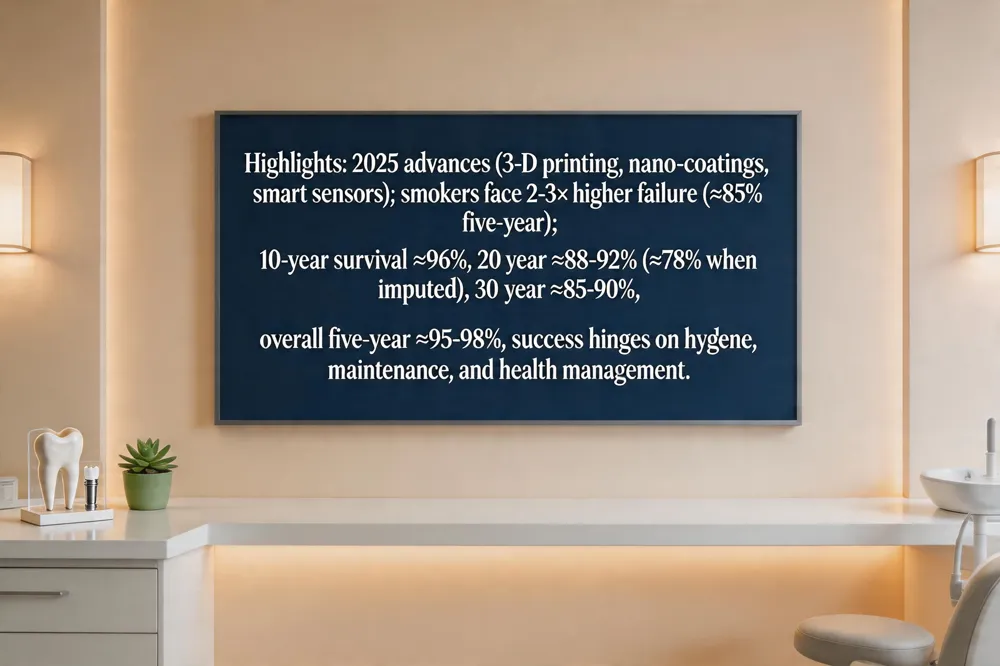
- Smoking increases implant failure risk 2‑3‑fold; smokers' five‑year survival drops to about 85 %.
- Cement‑retained restorations outperform screw‑retained ones (p = 0.03) in survival.
- Ten‑year implant survival is around 96 % (95 % CI 92‑98 %).
- Surface modifications (SLA, nano‑coatings) and digital planning reduce marginal bone loss by 0.2‑0.3 mm.
- Peri‑implantitis occurs in 10‑50 % of implants and is the main cause of late failures.
- Twenty‑year survival rates are 92 % (prospective) / 88 % (retrospective), with an imputed estimate of ~78 % when accounting for loss to follow‑up.
- Thirty‑year survival for well‑selected patients is 85‑90 %, but prosthetic components fail in 20‑30 % after two decades.
- Emerging technologies (3‑D printed guides, nano‑textured surfaces, smart implants) further improve outcomes.
- Regular biannual maintenance and good oral hygiene can reduce peri‑implantitis risk by ~30 %.
1. Five‑Year Survival: The Benchmark for Most Patients
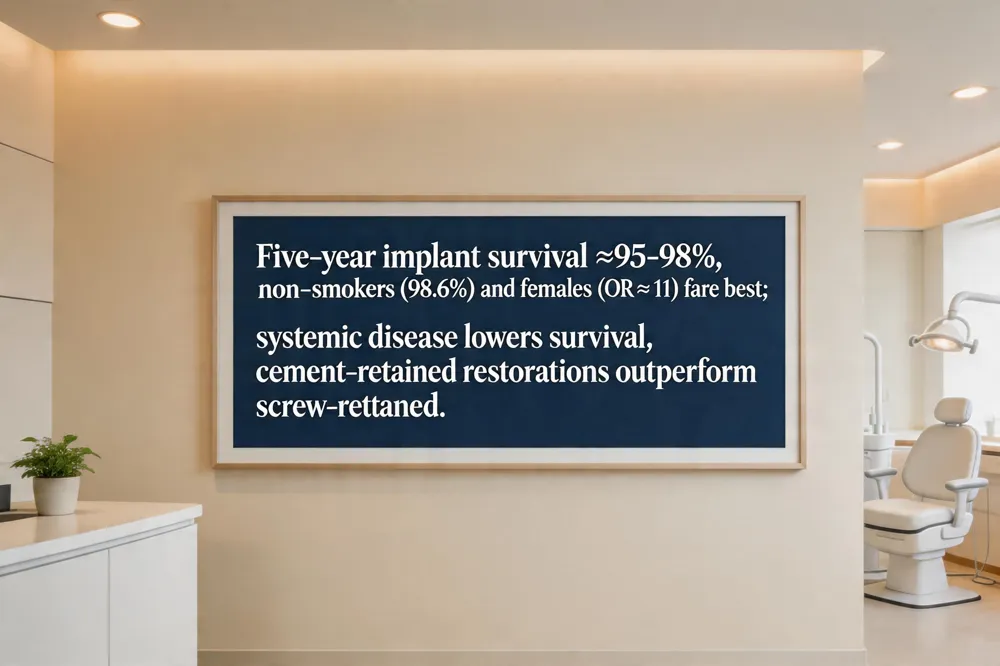 Key patient‑related factors markedly influence these outcomes. Non‑smokers showed higher survival (98.6%) than smokers (p = 0.04), and Implant success is significantly higher in non‑smokers; smokers experience a 2‑ to 3‑fold increase in implant failure risk compared with non‑smokers. Gender also matters: Female patients had significantly higher survival than males (p = 0.01), with logistic regression indicating that Females were over 11 times more likely to experience success (OR = 11.27, p = 0.02). Systemic conditions (diabetes, hypertension, prior periodontitis) reduced survival (p < 0.05), while well‑controlled diabetes does not appear to diminish outcomes.
Restorative design influences longevity, too. Cement‑retained restorations outperformed screw‑retained restorations (p = 0.03) in the same cohort, suggesting that prosthetic choice can affect peri‑implant tissue health and mechanical stability. Overall, maintaining good oral hygiene, managing systemic health, and choosing appropriate prosthetic designs are essential steps for patients aiming to achieve the high five‑year survival rates that modern implant therapy reliably provides.
2. Ten‑Year Longevity: When Implants Prove Their Durability
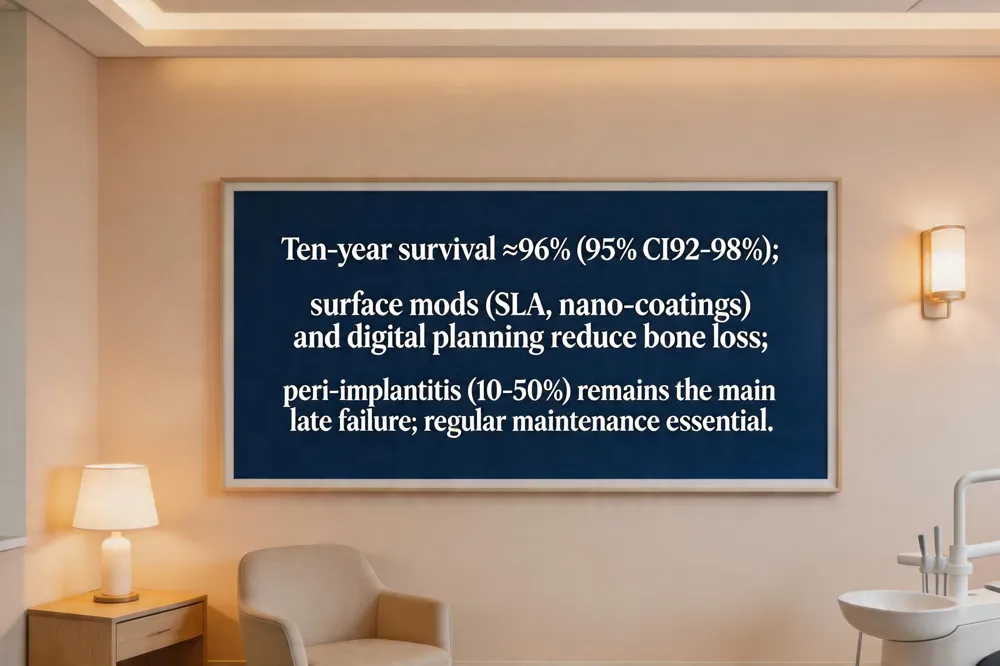 Long‑term data consistently show that dental implants are a reliable solution for tooth replacement. A recent meta‑analysis of over 10,000 implants reported a cumulative 10‑year survival rate of roughly 96 % (95 % CI 92‑%‑98 %), confirming that the majority of implants remain functional for at least a decade. This durability is further supported by large cohort studies that found 10‑year implant success rates above 95 % in healthy patients and 90‑95 % even when systemic risk factors are present.
Two technological advances are driving these high survival numbers. First, surface modifications such as sandblasted‑large‑grain‑acid‑etched (SLA) or hydrophilic nano‑coatings accelerate osseointegration, leading to higher implant stability values and reduced marginal bone loss. Second, digital planning tools—including cone‑beam CT, CAD/CAM design, and computer‑guided surgical guides—improve placement accuracy, minimise surgical trauma, and help clinicians achieve optimal bone‑to‑implant contact. Studies have linked these innovations to marginal bone loss reductions of 0.2‑0.3 mm and a modest rise in five‑year success rates (up to 97 %).
Despite these successes, late implant failures still occur, most often due to peri‑implantitis. This inflammatory condition, reported in 10‑50 % of implants depending on patient factors, leads to progressive bone loss and can ultimately compromise implant stability. Other late‑stage complications include screw fractures, prosthetic debonding, and crown fractures, each accounting for a small percentage of failures. Regular professional maintenance and meticulous oral hygiene, and early detection of peri‑implant inflammation are essential to preserve the impressive ten‑year durability demonstrated by modern implant therapy.
3. Twenty‑Year Perspective: The Long‑Term Picture
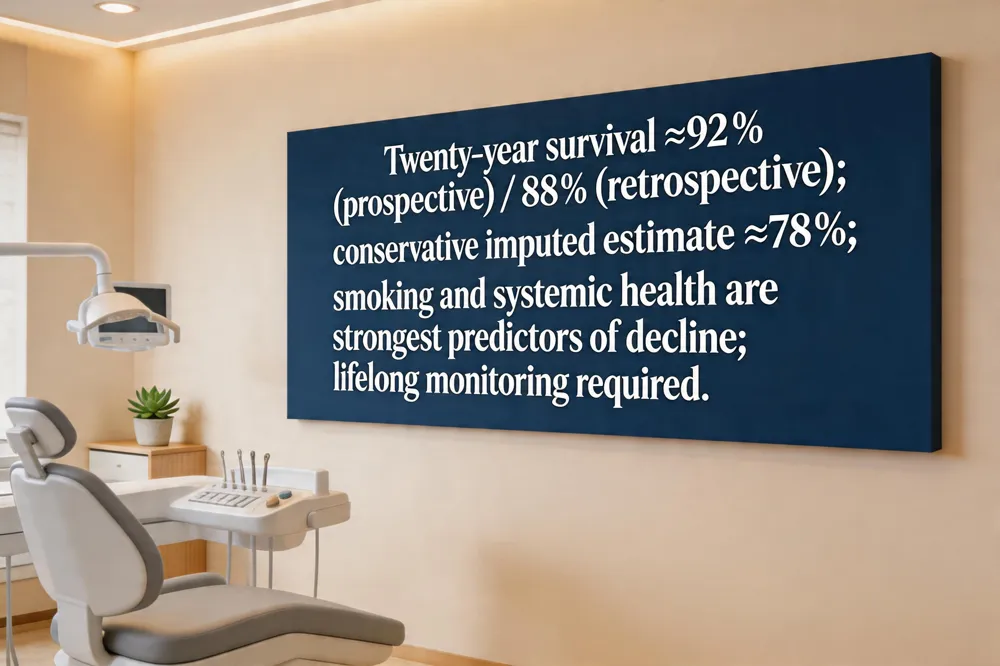 When we look beyond the typical five‑ or horizon, the evidence on dental‑implant longevity becomes more nuanced. Prospective studies that followed patients for up to two decades report a mean survival rate of about 92 % (95 % CI 82 %–97 %), while retrospective analyses of larger cohorts show a slightly lower but still robust rate of approximately 88 % (95 % CI 78 %–94 %). These figures reflect the real‑world performance of modern rough‑surface titanium implants when placed by experienced clinicians and maintained with regular follow‑up.
Bone loss, smoking, and systemic health remain the most powerful predictors of long‑term failure. Patients who exhibit minimal crestal bone loss and maintain healthy peri‑implant tissues tend to stay within the higher end of the survival spectrum. In contrast, chronic smokers experience a 2‑ to 3‑fold increase in implant loss, and systemic conditions such as diabetes, hypertension, or a history of periodontitis consistently lower survival odds over decades. The cumulative effect of these risk factors can be seen in the gradual decline of implant stability values and probing depths reported in long‑term cohorts.
A recent 20‑year meta‑analysis introduced imputed data to account for patients lost to follow‑up, resulting in a more conservative survival estimate of ≈78 % (95 % CI 74 %–82 %). This adjustment underscores the importance of robust, ongoing patient monitoring; when follow‑up data are incomplete, the true failure rate may be higher than reported in studies with complete retention.
Implications for practice: Even with a conservative 78 % estimate, the majority of implants remain functional after two decades, highlighting the durability of current implant systems. However, clinicians should emphasize meticulous case selection, stringent control of smoking and systemic disease, and a lifelong maintenance program to maximize the probability of long‑term success.
4. Thirty‑Year Outlook: Implants That Last a Lifetime
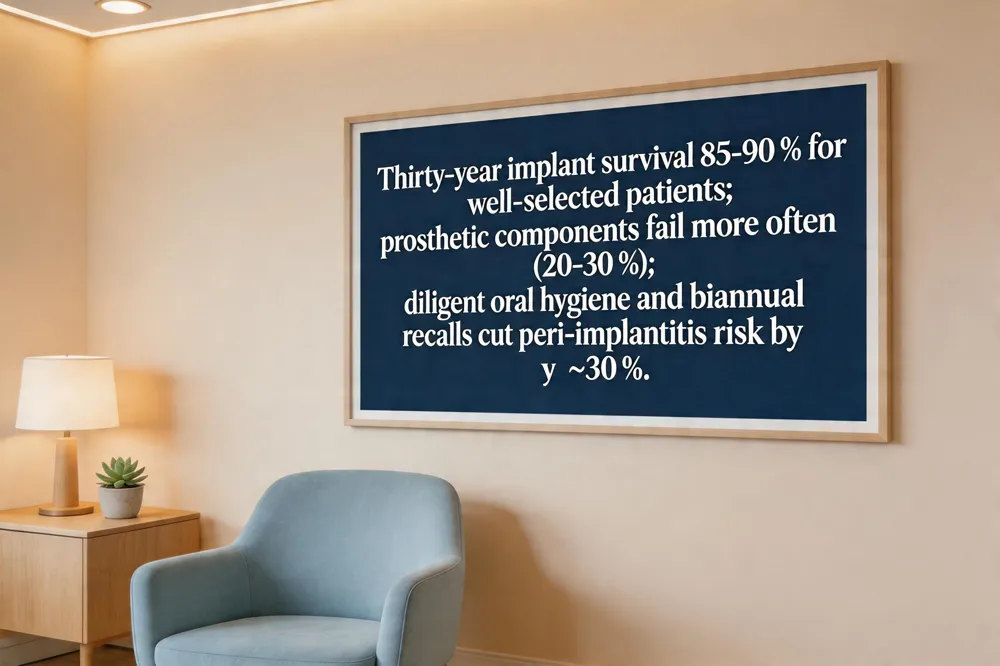 Long‑term studies have demonstrated that dental implants can remain functional for decades. A handful of case series report 30‑year cumulative survival rates ranging from 85 % to 90 % for well‑selected patients, illustrating that implants placed in healthy bone with appropriate surgical protocols can endure well beyond the conventional 5‑ and 10‑year benchmarks. It is important to recognize that "implant survival" (the fixture remaining in the jaw) does not automatically translate to "prosthetic survival". Crowns, bridges, or overdentures are subject to mechanical wear, material fatigue, and connector loosening; many long‑term reports note prosthetic failure rates of 20 %–30 % after two decades, even when the underlying implants are still stable. This discrepancy underscores the need for vigilant, life‑long maintenance. Regular professional cleanings, radiographic monitoring of crestal bone levels, and early detection of peri‑implant inflammation dramatically reduce the risk of late complications such as peri‑implantitis, which is the leading cause of implant loss after the first few years. Patients who adhere to a strict oral‑hygiene regimen and attend biannual recall visits experience up to a 30 % lower incidence of biologic complications. In practice, a proactive maintenance plan—combined with prompt management of any emerging issues—ensures that both the implant and its prosthetic components continue to function harmoniously, allowing patients to enjoy a lifetime of confidence and comfort.
5. Overall Success Across Populations and Technologies
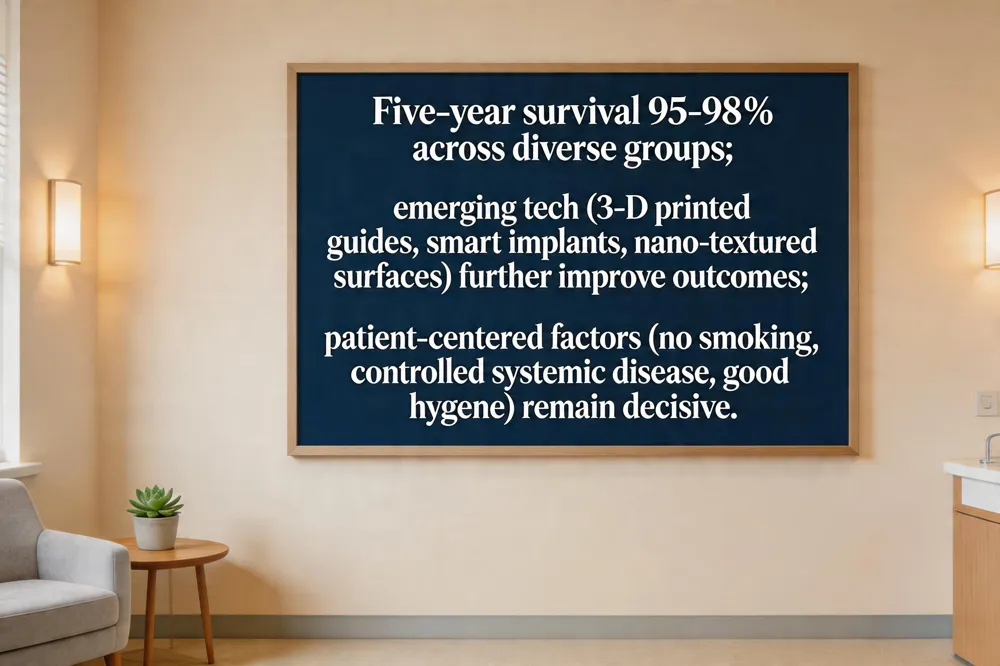 Systematic reviews of contemporary implant literature consistently report five‑year survival rates between 95 % and 98 %, confirming that dental implants are a highly predictable solution for tooth replacement. This robust performance holds across diverse patient groups when evidence‑based protocols are applied.
Emerging technologies are further strengthening these outcomes. Three‑dimensional (3‑D) printing of surgical guides and custom abutments improves placement accuracy to within 0.5 mm, reducing marginal bone loss and early complications. Smart implants equipped with biosensors are being evaluated for real‑time detection of peri‑implant inflammation, a development that could lower late‑stage failure rates once long‑term data are available. Surface modifications—such as nano‑textured, hydrophilic, or hydroxyapatite‑coated titanium—accelerate osseointegration and have demonstrated higher early stability (ISQ values) and marginal reductions in bone loss compared with machined surfaces.
Regardless of technology, patient‑centered factors remain the cornerstone of success. Non‑smokers, individuals without parafunctional habits, and patients with well‑controlled systemic conditions (e.g., systemic conditions such as diabetes and hypertension) consistently show higher survival rates. Meticulous oral hygiene, regular professional maintenance visits, and adherence to personalized post‑operative care plans further protect against peri‑implantitis and mechanical complications. By combining cutting‑edge technology with diligent patient education and follow‑up, clinicians can reliably achieve the 95‑98 % five‑year survival benchmark across a broad spectrum of patients.
Key Patient Questions Answered
 Latest news on dental implants
Recent advances are reshaping implant therapy. Three‑dimensional printing now produces patient‑specific titanium posts and abutments that fit the anatomy perfectly, while nano‑textured and bio‑active surface coatings (hydroxyapatite, graphene, silver nanoparticles) accelerate early bone healing and reduce infection risk. Digital workflows—cone‑beam CT scanning, intra‑oral scanning, and computer‑guided surgery—provide sub‑millimeter placement accuracy, making same‑day or immediate‑loading protocols safe when primary stability exceeds 35 Ncm. Robotic assistance and smart implants equipped with micro‑sensors are moving from research to clinical practice, offering real‑time monitoring of load and tissue health. Materials such as Ti‑20Zr‑3Mo‑3Sn β‑alloys and porous titanium‑hydroxyapatite composites show promising biocompatibility, expanding options for patients with limited bone volume.
Latest news on dental implants
Recent advances are reshaping implant therapy. Three‑dimensional printing now produces patient‑specific titanium posts and abutments that fit the anatomy perfectly, while nano‑textured and bio‑active surface coatings (hydroxyapatite, graphene, silver nanoparticles) accelerate early bone healing and reduce infection risk. Digital workflows—cone‑beam CT scanning, intra‑oral scanning, and computer‑guided surgery—provide sub‑millimeter placement accuracy, making same‑day or immediate‑loading protocols safe when primary stability exceeds 35 Ncm. Robotic assistance and smart implants equipped with micro‑sensors are moving from research to clinical practice, offering real‑time monitoring of load and tissue health. Materials such as Ti‑20Zr‑3Mo‑3Sn β‑alloys and porous titanium‑hydroxyapatite composites show promising biocompatibility, expanding options for patients with limited bone volume.
Failure rate of dental implants in smokers Smoking remains the most significant modifiable risk factor. Studies consistently show a 2‑ to 3‑fold increase in failure risk for smokers versus non‑smokers. While non‑smokers achieve roughly 95 % five‑year survival, smokers’ survival drops to about 85 % and heavy smokers (≥1 pack/day) may fall below 80 % in the same period. Early failures are common due to reduced blood flow and impaired osseointegration. Quitting at least two weeks before and eight weeks after surgery markedly improves outcomes.
Dental implant success rate after 10 years Long‑term data demonstrate impressive durability: ten‑year survival rates range from 92 % to 97 % when patients maintain good oral hygiene and regular professional care. A recent meta‑analysis reported a 10‑year implant‑level survival of 96.4 % (95 % CI 95.2 %‑97.5 %). Late failures are usually linked to peri‑implantitis, progressive bone loss, excessive occlusal forces, or uncontrolled systemic disease. Consistent cleaning, six‑to‑twelve‑month recall visits, and prompt management of gum inflammation are key to preserving implants.
Dental implant success rate after 20 years Survival after two decades remains high, though it gradually declines. Prospective studies of 237 implants found a mean 20‑year survival of 92 % (95 % CI 82 %‑97 %); retrospective data of 1,440 implants gave 88 % (95 % CI 78 %‑94 %). When missing‑to‑ follow‑up data are imputed conservatively, survival can fall to about 78 %, highlighting the impact of late complications such as peri‑implantitis. Overall, roughly four out of five implants continue to function well after 20 years, underscoring the importance of lifelong maintenance.
Dental implant success rate after 30 years Even at 30 years, well‑maintained implants show robust results. Published long‑term series report survival between 85 % and 90 % for patients who adhere to oral‑hygiene protocols and regular check‑ups. One retrospective case series of mandibular fixed prostheses demonstrated 100 % implant survival after 30 years, though prosthetic components required periodic renewal. The data suggest that the osseointegrated implant itself is highly durable, with the attached restoration being the more likely element to need replacement.
Overall survival rate of dental implants Across the literature, five‑year survival rates cluster around 95 %‑98 %. The five‑year retrospective cohort of 161 implants reported a 92.5 % survival, confirming that real‑world outcomes align with controlled studies. Success is influenced by smoking status, systemic health (diabetes, hypertension, periodontitis), bone dimensions, and prosthetic design. When risk factors are managed, implants provide a predictable, long‑term solution for missing teeth.
New dental implant technology 2025 In 2025, nano‑textured surfaces and bio‑active coatings dominate new implant designs, enhancing early stability and antimicrobial protection. Patient‑specific 3‑D‑printed titanium and zirconia components improve fit and aesthetics. Smart implants with embedded sensors enable early detection of inflammation, while computer‑guided surgery combined with CBCT imaging delivers sub‑millimeter placement accuracy. Regenerative approaches, such as stem‑cell‑enhanced bone grafts and ultra‑short tapered implants, expand treatment possibilities for patients with limited bone.
What percentage of dental implants are successful? The consensus is clear: about 95 %‑98 % of implants succeed during the first five years. With diligent oral hygiene and routine professional care, the ten‑year success remains above 90 %, and many implants function for decades. At Southern Boulevard Dental we apply advanced imaging and a patient‑centered workflow to maximize these favorable odds.
What I wish I knew before dental implants Patients often underestimate the timeline—consultation, possible bone grafting, placement, and final restoration can span several months. Post‑operative discomfort is usually mild and resolves within days, but the commitment to daily brushing, flossing, and biannual cleanings is essential. Systemic health, especially smoking, uncontrolled diabetes, and gum disease, directly impacts outcomes. Understanding the financial scope, including potential ancillary procedures, also helps set realistic expectations.
Peri‑implantitis Peri‑implantitis is an inflammatory condition that destroys the supporting bone around an implant. It arises from bacterial plaque accumulating below the gum line, leading to bleeding, swelling, and progressive bone loss. Risk factors include a history of periodontitis, poor oral hygiene, smoking, and uncontrolled diabetes. Prevention hinges on meticulous daily cleaning, regular professional maintenance, and early intervention at any sign of gum inflammation.
Front tooth dental implant success rate Anterior implants enjoy a very high success range—approximately 94 %‑98 % at five years—thanks to adequate bone volume and lower occlusal forces compared with posterior sites. Proper prosthetic planning and adherence to hygiene protocols further bolster long‑term stability.
Reasons not to get dental implants Implants may be postponed in patients with uncontrolled systemic conditions (untreated diabetes, recent cardiac surgery, immunosuppression), severe untreated gum disease, or insufficient bone without grafting. Heavy smoking, vaping, chronic alcohol use, and certain medications (bisphosphonates, high‑dose steroids) increase failure risk. The upfront cost and the need for lifelong maintenance may also make alternative solutions preferable for some individuals.
Putting the Data Into Practice
At Southern Boulevard Dental we turn the latest research into care. Our clinicians select implants with proven survival—such as rough‑surface titanium or Ti‑Zr alloys—and use computer‑guided CBCT planning to place them accurately, especially in the posterior mandible where bone density is highest. We also favor delayed loading protocols for cases, following evidence that this improves crestal bone preservation. Patient commitment is equally vital: regular hygiene visits, quitting smoking, and controlling systemic conditions such as diabetes dramatically raise long‑term success odds. Looking ahead, we are preparing for biosensor‑enabled implants and nano‑textured surfaces that promise even faster osseointegration, while continuing to rely on surgical technique and after‑care. We also educate patients on proper brushing and flossing techniques to maintain healthy peri‑implant tissues.