Introduction
Digital Smile Design (DSD) is a technology‑driven workflow that captures high‑resolution photographs, videos and 3‑D scans to create a virtual mock‑up of a patient’s future smile. By visualizing the final aesthetic before any tooth preparation, DSD lets patients see and approve the proposed outcome, fostering confidence and informed consent. In modern dentistry, patient‑centered technology such as DSD bridges the gap between expectations and reality, improves communication among the dentist, lab, and patient, and supports minimally invasive, personalized treatment plans. This article explains how Southern Boulevard Dental in Rio Rancho, NM, uses DSD to enhance smile makeovers, streamline workflow, and deliver natural‑looking results that harmonize with each patient’s facial features and functional needs.
Understanding Digital Smile Design: Tools and Apps
Tools & Apps Overview
| Platform | Core Functions | Export Format | Cost |
|---|---|---|---|
| DSD App (iPad) | 2‑D simulations, record storage, instant sharing | Free (basic) | |
| Planmeca Romexis Smile Design | 3‑D modeling, CAD/CAM integration | Subscription | |
| 3Shape DSD Suite | Full workflow, lab communication | Subscription | |
| DSD Free / Open‑source modules | Drawing, measurement, basic analysis | Free |
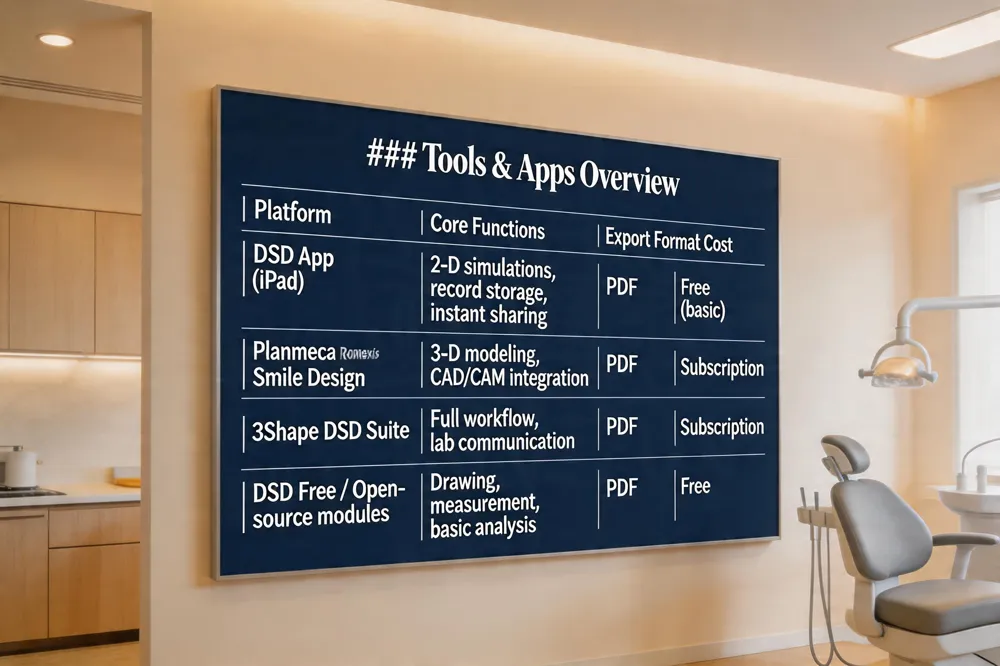 Digital Smile Design (DSD) software transforms photographs and intra‑oral scans into realistic 2‑D or 3‑D virtual smile models. Core functions include measurement tools, drawing baseline lines, tooth proportion analysis, shade selection and virtual adjustment of shape, size and gingival contour. Leading platforms are the DSD App, Planmeca Romexis Smile Design and 3Shape’s DSD suite, all of which export PDFs for lab communication. The free iPad‑based DSD app lets clinicians create quick 2‑D simulations, store records, and share designs instantly, streamlining case acceptance. Low‑cost alternatives such as DSD Free or open‑source modules provide basic drawing and measurement features without subscription fees. Digital DSD PDFs serve as patient‑education handouts, outlining the workflow from facial analysis to mock‑up creation and guiding informed consent. At Southern Boulevard Dental these tools enable transparent, patient‑centered planning, reduce chair time and increase confidence in the final aesthetic outcome.
Why Patients Love Digital Smile Design: Benefits and Advantages
Patient‑Centric Benefits
| Benefit | Description |
|---|---|
| Realistic 3‑D preview | See final smile before any prep |
| Informed consent | Visualizes harmony with facial features |
| Streamlined communication | Dentist‑lab‑patient alignment in real time |
| Reduced chair time | Precise pre‑planning shortens procedures |
| Higher case‑acceptance | Interactive design boosts confidence |
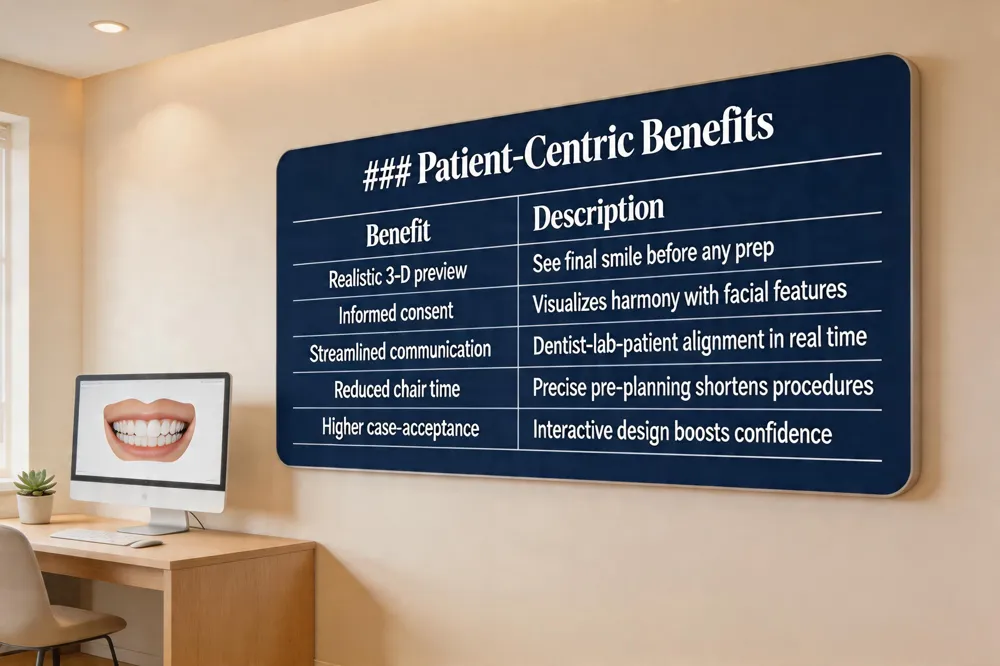 Digital Smile Design (DSD) gives patients a realistic, 3‑D preview of their future smile before any tooth preparation begins. This visual mock‑up builds confidence and helps patients give informed consent, because they can see how the new smile will harmonize with their facial features, lip line, and personal style. By integrating high‑resolution photographs, video, and intra‑oral scans, DSD creates a customized plan that predicts natural‑looking, proportionate results and reduces the likelihood of unwanted surprises. The technology streamlines communication between the dentist, lab, and patient, allowing real‑time adjustments and eliminating misunderstandings. Because the treatment is digitally pre‑planned, clinicians can work more precisely, which shortens chair time, minimizes revisions, and preserves more natural tooth structure. The interactive design process engages patients as active partners, resulting in higher case‑acceptance rates, greater satisfaction, and a smoother, more predictable aesthetic outcome.
The DSD Workflow: Photo Protocol and Precision
Photo & Scan Protocol
| Step | Details |
|---|---|
| Photo capture | Soft LED, 1 m distance, calibrated ruler, full‑face, “m” shot, right profile, rest, 12‑o’clock smile |
| Video | Short laugh clip for dynamic lip‑tooth relationship |
| Intra‑oral scan | Sub‑millimeter accurate 3‑D model of teeth, gums, bite |
| Measurements | Width‑to‑height ratios, gingival contour ±0.2 mm accuracy |
| Integration | CAD/CAM & 3‑D printing for veneers, crowns, surgical guides |
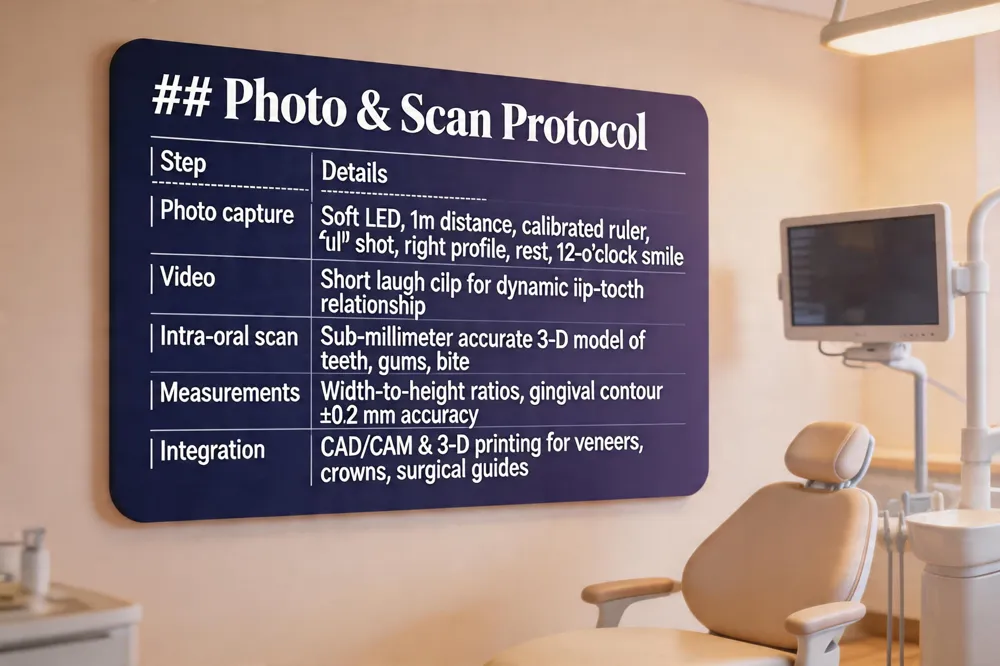 Digital Smile Design (DSD) begins with a strict photo‑ and capture protocol. Under consistent soft LED lighting, the patient is positioned one meter from a tripod‑mounted camera at eye level. A full‑face frontal smile, a relaxed frontal “m” shot, right‑profile smile and rest images, and a 12‑o’clock full‑smile view are taken, each including a calibrated ruler for scale. A short video of the patient laughing records dynamic lip‑tooth relationships. These high‑resolution photographs are complemented by intra‑oral scans that generate a sub‑millimeter accurate 3‑D model of the teeth, gums, and bite. The software measures tooth width‑to‑height ratios and gingival contours with an accuracy of ±0.2 mm, far surpassing traditional impressions. The digital mock‑up is then linked to CAD/CAM systems and 3‑D printers allowing precise milling of veneers, crowns, or surgical guides directly from the virtual design. This seamless integration ensures that the final restoration matches the patient’s approved simulation, minimizing chair‑time, revisions, and preserving natural tooth structure.
Clinical Scope: What DSD Can and Cannot Do
Clinical Scope
| Can Do | Cannot Do |
|---|---|
| Aesthetic planning for veneers, crowns, bridges, implants, orthodontic alignments | Treat active periodontal disease, severe caries, acute infections |
| Full‑mouth reconstructions, multidisciplinary cases | Resolve TMJ dysfunction or complex functional disorders |
| Patient education & case acceptance | Replace clinical interventions or guarantee exact outcomes |
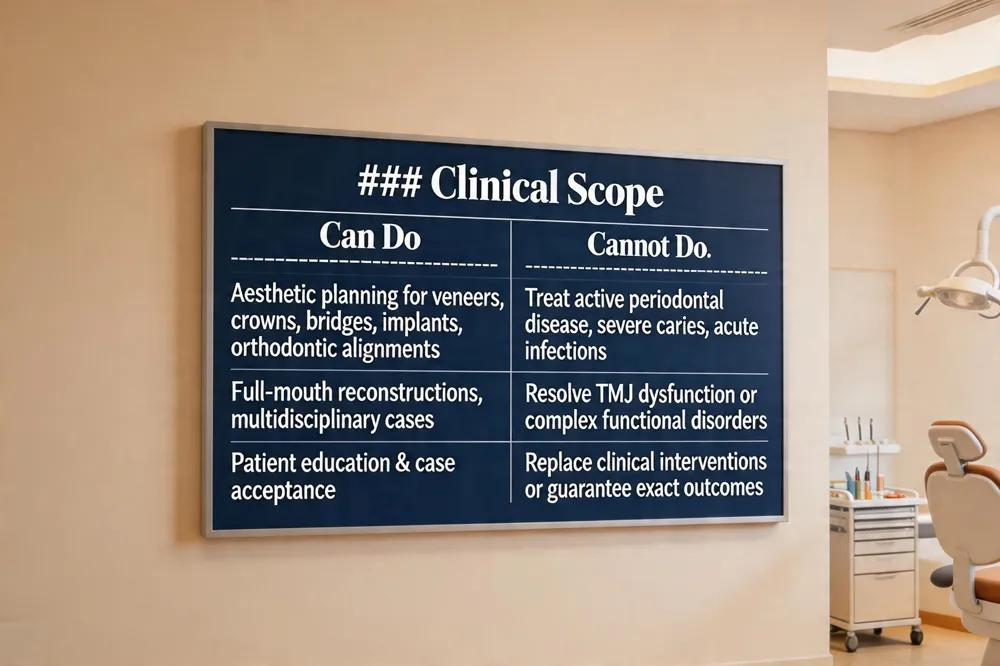 Digital Smile Design (DSD) excels as a planning tool for aesthetic and restorative procedures such as veneers, crowns, bridges, implants, and orthodontic alignments, allowing clinicians to create a 3‑D mock‑up that harmonizes tooth proportions with facial features. It is especially valuable for full‑mouth reconstructions, smile makeovers, and multidisciplinary cases involving prosthodontics, periodontics, and orthodontics. However, DSD is not a therapeutic solution for every dental problem. Active periodontal disease, severe caries, acute infections, or complex functional disorders (e.g., TMJ dysfunction) fall outside its scope; these conditions must be treated first, and DSD can only be used afterward to visualize the restorative phase. Careful case selection and thorough patient education are essential: the patient must understand that DSD provides a visual blueprint, not a guarantee, and that the final outcome may differ slightly from the digital simulation. In summary, DSD enhances planning for many cosmetic and restorative procedures but cannot replace the need for specialized clinical interventions when disease or functional issues are present.
Southern Boulevard Dental Center: Bringing DSD to Rio Rancho
Southern Boulevard Dental – DSD Services
| Service | Cost Range | Notes |
|---|---|---|
| DSD consultation | $150 – $300 | Includes photos, scans, virtual mock‑up |
| Restorative procedure (per tooth) | $800 – $2,000 | Veneers, crowns, implants etc. |
| Emergency appointment | Same‑day (no price listed) | |
| Financing / Medicaid | Accepted for general services | Cosmetic work usually out‑of‑pocket |
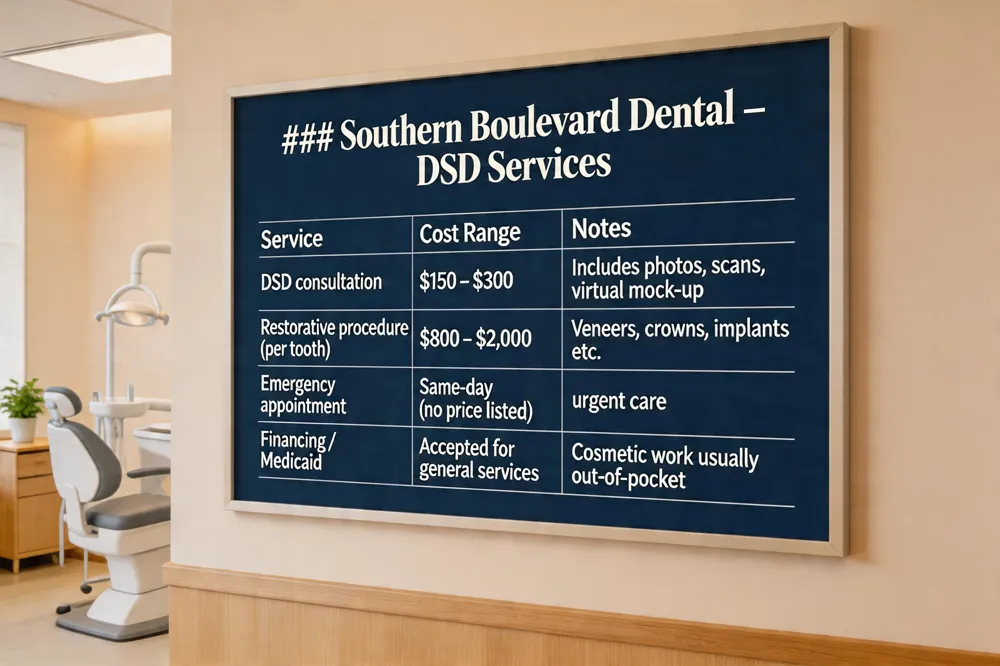 Southern Boulevard Dental Center, located at 2716 Southern Blvd SE in Rio Rancho, NM, serves families across the Rio Rancho, Albuquerque, Santa Fe and Corrales area with a warm, veteran‑owned, LGBTQ+‑friendly environment. Led by Dr. Martin Goebbel, the practice integrates Digital Smile Design (DSD) into daily workflow: high‑resolution photos, intra‑oral scans, and CAD/CAM software create a 3‑D mock‑up, allowing patients to preview and approve aesthetic outcomes before any tooth preparation. A DSD consultation costs $150‑$300, with final restorative fees ranging $800‑$2,000 per tooth; insurance typically does not cover cosmetic work, though Medicaid is accepted for general services and financing options are available. The office offers same‑day emergency appointments, reinforcing its reputation as the best dentist in Rio Rancho. Staff regularly attend DSD continuing‑education courses, ensuring up‑to‑date expertise and seamless interdisciplinary collaboration.
Future Directions: AI, AR, and Long‑Term Patient Outcomes
Emerging Technologies
| Technology | Potential Impact |
|---|---|
| AI‑driven analysis | Automated symmetry & proportion measurements |
| Augmented/Virtual Reality | Real‑time 3‑D simulation while patient speaks or laughs |
| Digital archives | Long‑term outcome tracking, early detection of shifts |
| Integrated AI‑AR workflow | Higher practice growth, patient loyalty, case‑acceptance rates |
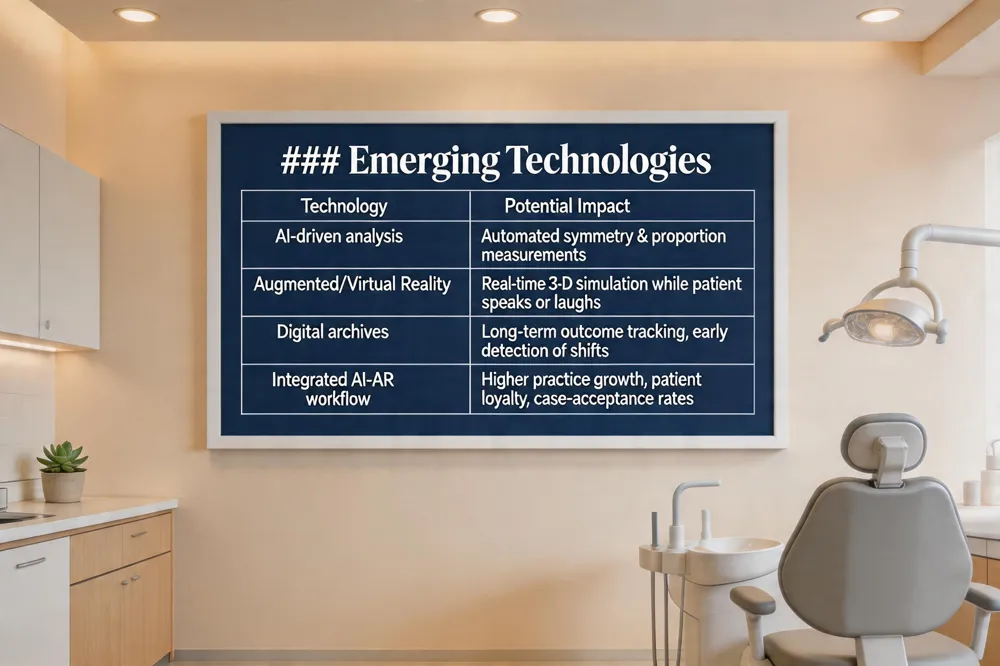 AI‑driven analysis will automate facial symmetry, tooth proportion and gum‑line measurements, supporting the clinician’s eye. Augmented and virtual reality will turn static pictures into 3‑D simulations. With a headset or tablet, patients can view their new smile while speaking or laughing, instantly confirming how the design blends with lip dynamics. This feedback builds confidence and reduces anxiety before irreversible work.
records store the DSD mock‑up and scans, letting clinicians compare post‑treatment results with the plan and catch minor shifts early, extending longevity.
Integrating AI, AR and digital archives is expected to boost practice growth and patient loyalty. These tools differentiate a practice, attract tech‑savvy patients and raise case‑acceptance rates, encouraging visits.
DSD consultation at Southern Boulevard Dental costs $150 – $300; prices depend on cosmetic procedures—porcelain veneers, crowns or implants—ranging $800 – $2000 per tooth. Insurance usually does not cover cosmetic work, so out‑of‑pocket expense is amount. Our team will provide an estimate after DSD appointment so you know what to expect.
Conclusion
Digital Smile Design (DSD) lets dentists visualize the final smile in three dimensions before any tooth is prepared, ensuring that tooth proportions, gingival contours and facial harmony match natural aesthetics. By using high‑resolution photography, intra‑oral scans and 3‑D modeling, DSD produces a realistic mock‑up that predicts how the restoration will look and function, reducing the need for adjustments and preserving as much natural tooth structure as possible. Southern Boulevard Dental in Rio Rancho embraces this technology as part of its patient‑centered philosophy. The team captures every detail, involves patients in the design process, and shares the digital plan with the laboratory so that the final restoration follows the approved blueprint. This transparent, collaborative approach builds confidence and minimizes surprise. Experience the difference for yourself—schedule a DSD consultation at Southern Boulevard Dental today and take the first step toward a natural, confident smile.