Why Oral Health Matters for Your Heart
Research consistently shows that gum disease and heart disease share common risk pathways. When plaque builds up and periodontal inflammation develops, harmful bacteria such as Porphyromonas gingivalis can enter the bloodstream, triggering systemic inflammation. Elevated C‑reactive protein, interleukin‑6 and other cytokines damage arterial walls and promote atherosclerotic plaque formation, increasing the chance of heart attack, stroke, and hypertension. Regular dental care interrupts this cascade. Twice‑daily brushing, daily flossing and twice‑year professional cleanings remove plaque and tartar, lowering bacterial load and reducing inflammatory markers. Professional scaling and root planing have been shown to cut CRP levels by up to 30 % and improve endothelial function. By maintaining oral health, patients lower systemic inflammation and support a healthier heart and overall well‑being daily.
The Science Behind Plaque, Inflammation, and Cardiovascular Risk
Plaque‑Inflammation‑Cardiovascular Risk Overview
| Stage | Description | Cardiovascular Impact |
|---|---|---|
| Plaque Formation | Bacterial biofilm adheres to tooth surface; if not removed, it matures. | Initiates local inflammation (gingivitis). |
| Gingivitis | Inflammation of gingival tissue; swelling, bleeding. | Increases local cytokines; may enter bloodstream. |
| Periodontitis | Deep pockets, bone loss, systemic spread of microbes. | Triggers bacteremia → ↑ CRP, endothelial dysfunction → atherosclerotic plaque formation. |
| Systemic Inflammation | Elevated CRP, IL‑6, TNF‑α circulating. | Promotes thrombosis, plaque instability, higher risk of MI, stroke, AFib. |
Key takeaway: Maintaining plaque control interrupts this cascade, reducing systemic inflammation and cardiovascular risk.
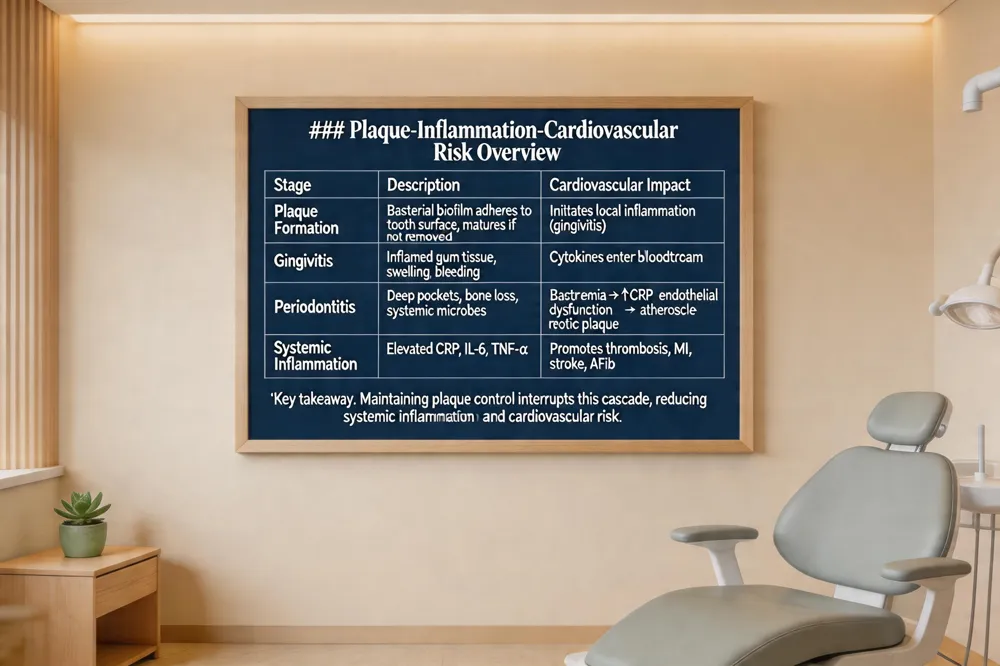 Dental plaque is a sticky bacterial film that, if not removed, irritates gums and can progress from gingivitis to periodontitis. Inflammation disease create pockets that let oral microbes and toxins enter the bloodstream, a process known as bacteremia. Once systemic, these pathogens trigger a rise in C‑reactive protein (CRP) and other inflammatory mediators, which damage endothelial cells and promote atherosclerotic plaque formation. This cascade increases the likelihood of heart attacks, strokes, and atrial fibrillation.
Because the mouth is a gateway to the circulatory system, poor oral hygiene can amplify systemic inflammation and affect distant organs. Studies consistently link untreated gum disease with higher rates of cardiovascular events, hypertension, and even poorer diabetes control. Conversely, regular brushing, flossing, and professional cleanings lower bacterial load, reduce CRP levels, and support overall health.
In short, maintaining good oral hygiene is a simple, low‑cost strategy that helps protect the heart by curbing plaque‑driven inflammation and bacteremia.
Evidence Linking Oral Hygiene to Heart Health
Key Epidemiological Findings
| Study Finding | Oral Hygiene Practice | Relative Risk Reduction |
|---|---|---|
| 9‑14 % lower incidence of MI & stroke | Brushing ≥2 min, twice daily + cleanings twice/year | 0.86–0.91 |
| 12 % lower hypertension prevalence | Brushing ≥3 times/day | 0.88 |
| 10 % reduced type‑2 diabetes risk | Daily flossing + interdental cleaning | 0.90 |
| 15 % lower all‑cause cardiovascular events | Professional scaling every 6 months | 0.85 |
These associations persist after adjusting for age, smoking, diet, and socioeconomic status.
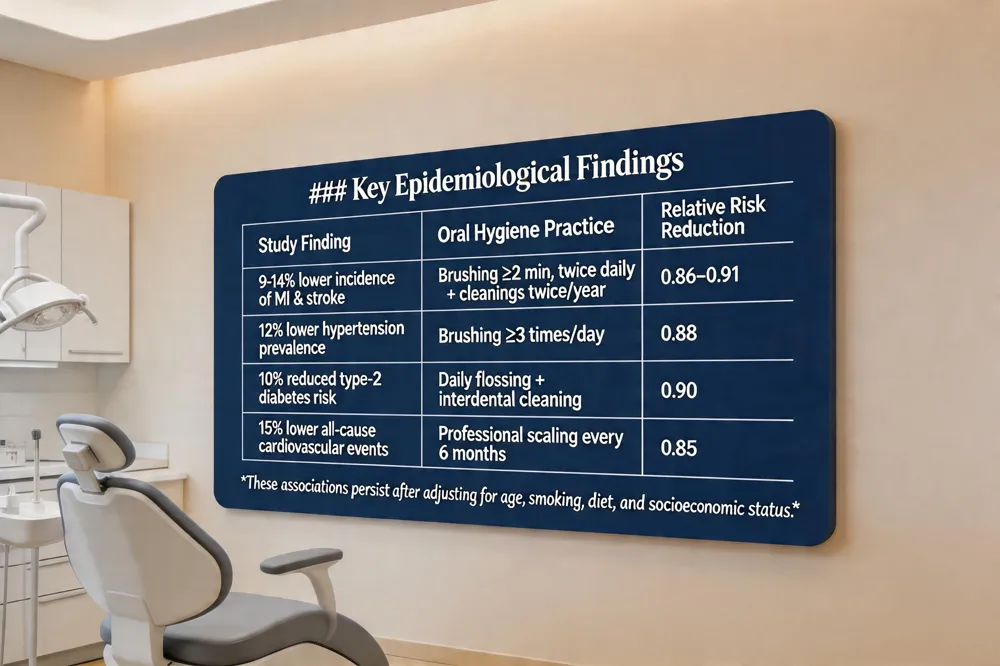 Research links oral hygiene to cardiovascular health. Studies of hundreds of thousands show that people who brush daily for two minutes and receive cleanings twice a year have a 9‑14 % lower risk of heart attacks and stroke than those who neglect oral care. Brushing three or more times daily further lowers hypertension and type‑2 diabetes risk, and interdental cleaning adds protection.
What is the 2‑2‑2 rule in dentistry? It means brushing twice a day, two minutes per session, and two cleanings per year—habits that remove plaque, prevent gum disease and catch problems.
Can I reverse years of bad dental hygiene? Yes. Consistent twice‑daily brushing with fluoride, flossing, a low‑sugar diet and cleanings can halt decay, lower inflammation and allow gum healing; severe damage may still need restorative work.
Is dental hygiene linked to heart disease? Indeed, poor oral health, especially periodontitis, raises systemic inflammation and lets bacteria enter the bloodstream, contributing to atherosclerosis and higher cardiovascular event rates. Oral care reduces risk.
Professional Cleanings: What to Expect and How Often
Cleaning Frequency & Procedure Summary
| Visit Frequency | Recommended For | Typical Procedure Steps | Common Transient Side Effects |
|---|---|---|---|
| Every 6 months | General population | Scaling (removal of plaque/tartar), polishing optional, fluoride rinse | Mild gum irritation, transient sensitivity |
| Every 3‑4 months | Smokers, diabetics, CVD patients | Same as above + possible subgingival debridement | Slightly higher chance of bleeding, soreness |
| Deep cleaning (SRP) | Diagnosed periodontitis | Local anesthesia, scaling below gum line, root planing, possible antibiotics | Post‑procedure swelling, tenderness for 1‑3 days |
Long‑term benefits outweigh these short‑term discomforts.
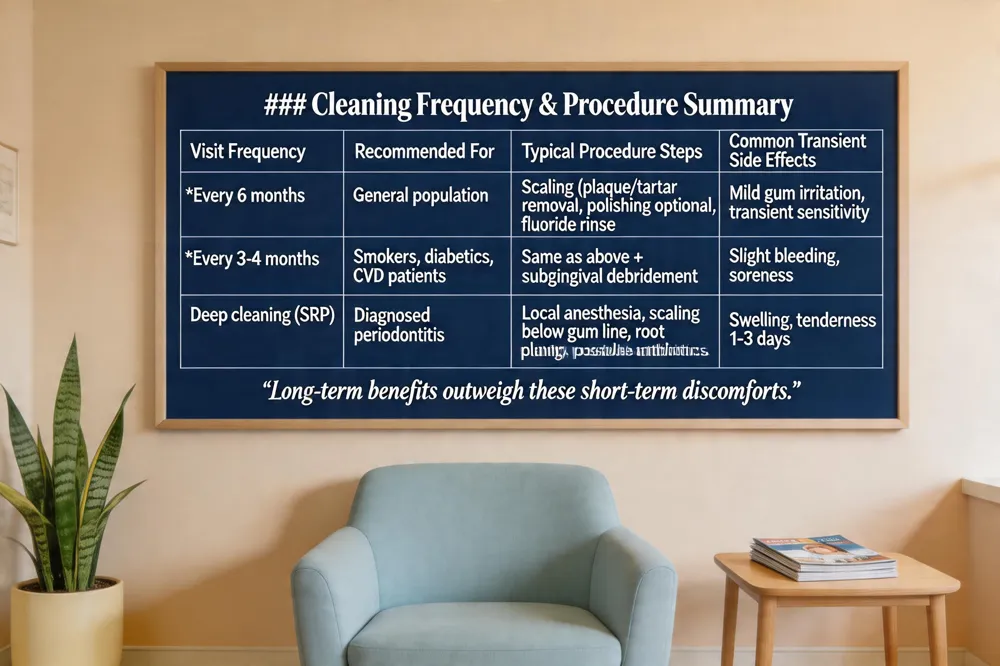 Regular professional cleanings are a cornerstone of heart‑healthy oral care. The American Dental Association recommends a cleaning every six months, but patients with risk factors such as smoking, diabetes, or cardiovascular disease may benefit from three‑to‑four‑monthly visits. The procedure is designed for comfort: most people feel only brief mild sensitivity while plaque or tartar is removed, and any discomfort fades quickly. Deep cleanings for periodontal disease may use local anesthesia, but overall the experience is painless. Polishing is optional; it smooths the tooth surface and brightens the smile but removes only a tiny amount of enamel and is not essential for disease prevention. If you prefer a natural feel, you can skip it. Short‑term side effects can include mild gum irritation, bleeding, or temporary sensitivity, which resolve within a few days. The long‑term benefits—lower inflammation, reduced cardiovascular risk, and healthier gums—far outweigh these brief drawbacks.
Practical Oral‑Hygiene Strategies for Heart Health
Habit‑Based Heart‑Friendly Oral Care
| Strategy | Details | Expected Heart‑Health Benefit |
|---|---|---|
| 2‑2‑2 Rule | Brush 2 × day, 2 min each, 2 professional cleanings/year | Consistent plaque removal → ↓ CRP |
| 3‑3‑3 Rule | Brush 3 × day, 3 min each, replace brush every 3 months | Deeper cleaning, reduced bacterial load |
| Daily Flossing | Interdental cleaning each night | Disrupts plaque between teeth → lower systemic inflammation |
| Antimicrobial Mouthwash | 30 sec rinse, 1‑2 × day (e.g., chlorhexidine) | Additional reduction of oral pathogens |
| Low‑Sugar, High‑Fiber Diet | ≤5 g added sugar, plenty fruits/veg, whole grains | Less substrate for cariogenic bacteria, healthier gums |
| Lifestyle | Regular exercise, quit smoking, stay hydrated | Improves endothelial function, synergistic with oral care |
Combining these habits creates a robust defensive front against cardiovascular disease.
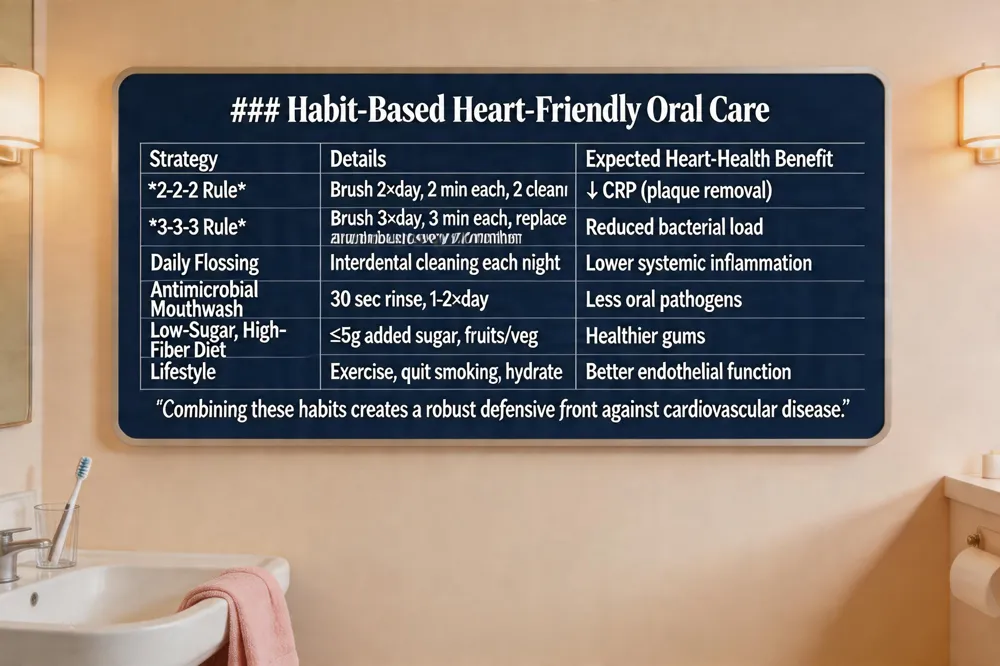 Adopting the 2‑2‑2 and 3‑3‑3 rule is a cornerstone of heart‑friendly oral care. The 2‑2‑2 rule reminds you to brush twice a day for two minutes each session, while the 3‑3‑3 rule expands this to three daily brushings (after breakfast, lunch, and before bedtime) lasting three minutes, with a toothbrush replacement every three months. Complement this routine with daily flossing and, if desired, an antimicrobial mouthwash to disrupt plaque between teeth and lower systemic inflammation markers such as CRP. Nutrition matters: a diet low in added sugars and rich in fiber, fruits, vegetables, and lean proteins reduces bacterial growth and supports healthy gum tissues. Lifestyle choices—regular exercise, smoking cessation, and adequate hydration—further curb inflammation and improve endothelial function. Together, these evidence‑based habits not only protect your smile but also help keep your heart beating strong.
Integrating Dental Care into a Heart‑Healthy Lifestyle
Collaborative Care Model
| Stakeholder | Role in Integrated Care | Direct Benefit to Cardiovascular Health |
|---|---|---|
| Dentist | Perform regular cleanings, screen for hypertension/diabetes, refer to physicians | Early detection of risk factors, reduced systemic inflammation |
| Physician | Refer patients for dental evaluations, incorporate oral health in risk assessments | Holistic risk reduction, improved patient outcomes |
| Community Health Programs | Provide affordable scaling, education on oral‑heart link | Population‑level decrease in MI/stroke incidence |
| Patient | Adhere to oral hygiene regimen, attend dental appointments, share dental findings with doctor | Personal reduction in CRP, blood pressure, and overall CVD risk |
Synergy between medical and dental teams amplifies preventive impact on heart disease.
 Collaboration between dentists and physicians is essential for a heart‑healthy lifestyle. Physicians can refer patients to dental professionals for regular cleanings, while dentists can screen for hypertension, diabetes, and cardiovascular risk factors during exams, creating a seamless preventive‑care loop. At the community level, widespread access to professional cleanings reduces the bacterial load that fuels systemic inflammation, lowering rates of heart attack, stroke, and hypertension across the population. Southern Boulevard Dental in Rio Rancho embodies this model by offering state‑of‑the‑art ultrasonic scaling, laser periodontal therapy, and personalized preventive plans that align with cardiovascular‑risk‑reduction guidelines.
What are the advantages and disadvantages of teeth cleaning? Professional teeth cleaning removes plaque and tartar, preventing cavities, gum disease, and bad breath while brightening the smile and enabling early detection of oral problems. It lowers systemic inflammation linked to heart disease and diabetes, and includes polishing and fluoride treatment to strengthen enamel. Temporary tooth sensitivity or gum irritation may occur, especially after deep scaling, and costs are sometimes not fully covered by insurance, requiring out‑of‑pocket payment.
Take the Next Step Toward a Healthier Heart
Regular professional cleanings are a cornerstone of heart‑healthy care. Aim for a check‑up and prophylaxis at least twice a year; each visit removes plaque, tartar and hidden bacteria that can fuel systemic inflammation and increase cardiovascular risk. Complement the visits with the simple 2‑2‑2 rule—brush twice a day for two minutes, floss twice daily, and use an antimicrobial mouthwash twice daily—and, when possible, the 3‑3‑3 rule—brush three times, floss three times, and rinse three times a day—to keep oral bacterial load at a minimum. Southern Boulevard Dental in Rio Rancho offers state‑of‑the‑art ultrasonic scaling, personalized oral‑hygiene coaching and a family‑focused, comfortable environment, making it easy to stay on track and protect both your smile and your heart.