Introduction
Overview of CBCT Technology
Cone beam computed tomography (CBCT) is a modern imaging technology that provides three‑dimensional views of your teeth, jawbone, nerves, and soft tissues from a single, quick scan. Unlike traditional two‑dimensional dental X‑rays, CBCT creates a detailed 3‑D model that allows dentists to see your oral anatomy without overlapping or distortion. The process is painless, non‑invasive, and uses a lower radiation dose than conventional medical CT scans.
Growing Importance in Everyday Practice
CBCT is increasingly becoming a routine part of dental care. It helps dentists plan treatments with exceptional precision for procedures such as implant placement, orthodontics, and root canal therapy. Because it reveals hidden details and reduces surgical surprises, many practices now consider CBCT an essential diagnostic tool for delivering safer, more predictable outcomes.
Understanding CBCT: Definition and Clinical Uses
What is CBCT, and how is it used in dentistry?
Cone Beam Computed Tomography, or CBCT, is a specialized type of dental X-ray that creates detailed three-dimensional images of your teeth, jawbone, nerves, and soft tissues—all in a single, quick scan. Unlike traditional 2D dental X-rays, CBCT provides a complete view that eliminates the overlap of structures. This advanced technology delivers a radiation dose that is significantly lower than a fraction of a conventional medical CT scan, making it a safe and powerful diagnostic tool for modern dentistry.
CBCT is used for precise treatment planning in complex cases. It is essential for evaluating bone quality and anatomy before dental implant placement, planning surgery for impacted teeth, and assessing temporomandibular joint disorders. The technology also aids in diagnosing jaw tumors, sinus issues, and complex root canal anatomy. By providing this level of detail, CBCT helps clinicians perform safer, more predictable procedures and greatly improves patient communication.
What are the basic principles and history of CBCT in dentistry?
CBCT works by rotating a cone-shaped X-ray beam around the patient's head, capturing hundreds of 2D images that are reconstructed into a 3D volume. Its history in dentistry began in the late 1990s when Yoshinori Arai developed the first dedicated dental CBCT prototype. The technology entered the U.S. market in the early 2000s and quickly became a standard tool for diagnostics and treatment planning, praised for its low radiation dose and high spatial resolution. Today, ongoing innovations include ultra-low-dose protocols and artificial intelligence integration, further enhancing its value in everyday practice.
Key Dental Specialties Leveraging CBCT
Which Fields Benefit Most
Cone-beam CT (CBCT) has transformed diagnostics across several dental specialties. Oral and maxillofacial surgery is often cited as the field that benefits most, as CBCT enables precise measurement of facial structures and accurate injury assessment that 2D images cannot provide. Similarly, implantology relies heavily on CBCT for detailed evaluation of bone quality and quantity before implant placement.
Specific Applications by Field
Endodontics benefits from CBCT’s ability to visualize complex root canal anatomy, detect apical lesions, and locate root fractures. In orthodontics, CBCT aids assessment of impacted teeth and craniofacial structures for treatment planning. Periodontology also relies on CBCT for evaluating buccal and lingual bone defects, furcation involvement, and osseous lesions more accurately than traditional radiographs.
While oral and maxillofacial surgery and implantology are among the most dependent on CBCT, the technology is equally valuable in a general practice setting for diagnosing conditions ranging from TMJ disorders to sinus pathology.
CBCT vs. Traditional Imaging
What is the difference between CBCT and OPG (panoramic X-ray)?
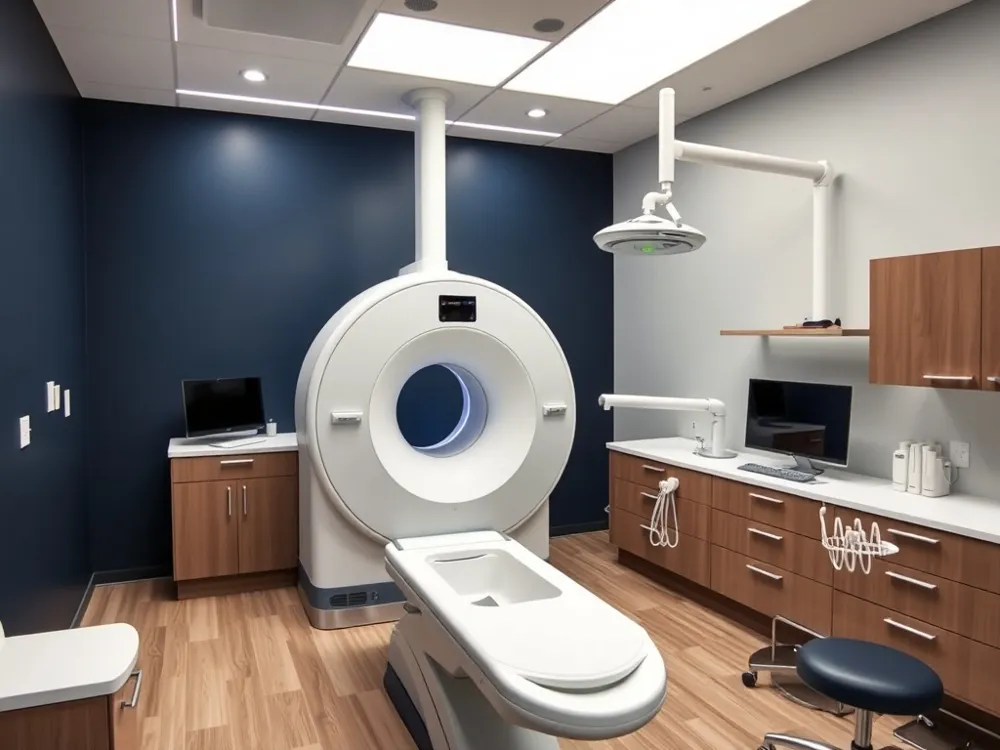
A traditional panoramic X-ray (OPG) produces a single, two-dimensional (2D) flat image of the entire mouth. This provides a useful overion for general check-ups, assessing wisdom teeth, and initial orthodontic evaluations. In contrast, a cone-beam CT (CBCT) scan creates a detailed three-dimensional (3D) model bones, and sinuses. This 3D view allows your dentist to examine structures from any angle, with a level of detail down to 0.1 mm, making it essential for precise procedures like implant placement and complex diagnostics. While an OPG is faster and uses less radiation, the unmatched detail of a CBCT scan is critical when surgical planning is required.
What is the radiation dose of a dental cone beam CT scan?
The radiation dose from a dental CBCT scan is higher than that of a standard panoramic X-ray. A panoramic X-ray typically delivers a dose of 5 to 25 µSv. A CBCT scan, depending on the field of view and machine settings, generally ranges from 29 µSv to 477 µSv. While this is significantly higher than a panoramic X-ray, it is still considerably lower than the dose from a conventional medical CT scan. Your dentist will always follow the "As Low As Reasonably Achievable" (ALARA) principle, using CBCT only when necessary for diagnosis, especially for children, to ensure the clinical benefit outweighs the small increase in radiation exposure.
Practical Considerations: Cost, Insurance, and Safety
How Much Does a CBCT Scan Cost?
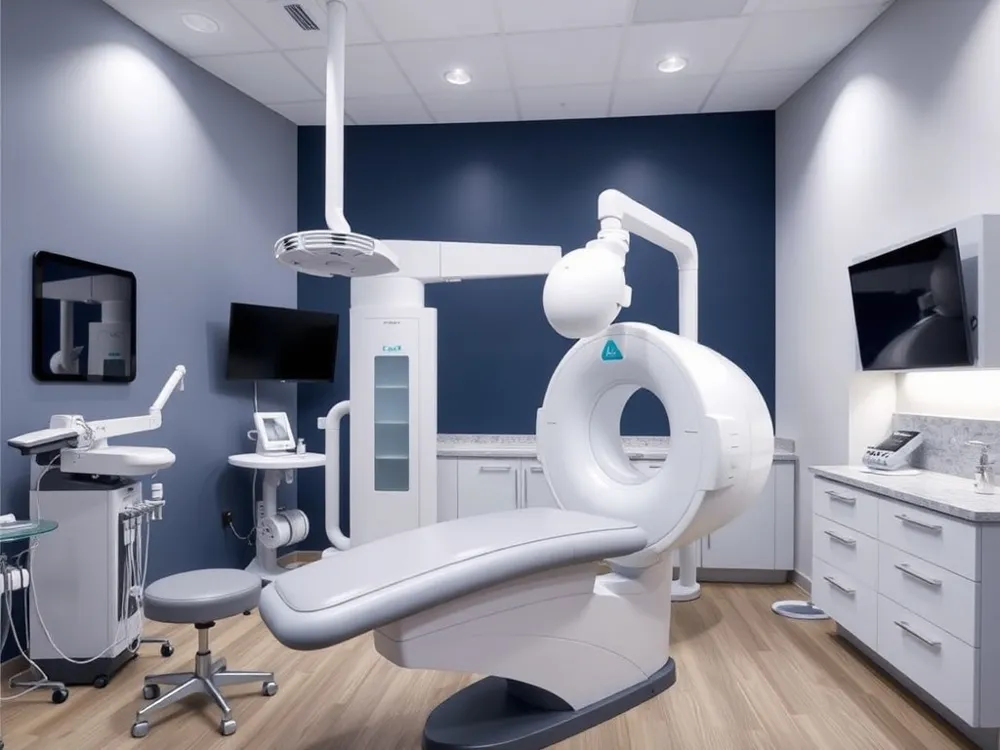
The typical price of a CBCT dental scan in the United States ranges from $100 to $500 per scan. This cost depends on factors like the scan’s complexity, your location, and whether it is part of a larger treatment plan. Many practices offer financing options to make this advanced technology more accessible. While not needed for routine check-ups, CBCT provides critical 3D imaging for precise planning of implants, root canals, and other procedures—often reducing the need for additional X-rays.
Is a Cone Beam CT Scan Covered by Insurance?
Coverage for CBCT scans by dental insurance in the United States varies by plan and is often tied to medical necessity. Many insurers, including Delta Dental as of 2024, cover CBCT for specific procedures such as implant placement, surgical extractions, or diagnosing infections and lesions. Routine use for crowns or simple extractions is typically not covered, and pre-authorization may be required. Patients should check with their insurance provider to understand their specific benefits and any required documentation.
Is It Safe to Have a CBCT Scan During Pregnancy?
CBCT scans during pregnancy are generally avoided, especially in the first trimester, due to the principle of minimizing any radiation exposure to the fetus. However, the fetal dose from a dental CBCT is extremely low—typically between 0.009 and 7.97 µSv, which is less than the daily natural background radiation. The associated cancer risk from such a dose is thousands of times lower than the baseline childhood cancer risk. If a dental CBCT is medically essential, it can be performed with proper optimization, such as using lead shielding. Ultimately, the decision should involve consulting with the patient and her obstetrician, weighing the urgent need for the scan against the minimal theoretical risk.
Integrating CBCT into Clinical Workflow
How do you interpret basic CBCT images and integrate them into dental practice?
Basic CBCT interpretation begins with a systematic review of axial, coronal, and sagittal slices to assess bone density, tooth morphology, and the course of critical structures like the inferior alveolar nerve. Practitioners must also identify normal anatomical variants and incidental findings, such as sinus pathologies or airway obstructions. Integration into practice involves using the 3D data for precise implant placement, orthodontic and endodontic planning, and image‑guided surgical procedures.
What are the best research and review resources on CBCT in dentistry?
Key research and review resources on CBCT in dentistry include the comprehensive open‑access article "Cone beam computed tomography: basics and applications in dentistry" available via PubMed Central, which covers technology fundamentals and clinical applications. PubMed is an essential database for accessing peer‑reviewed studies and systematic reviews on CBCT applications. Ongoing review articles in major dental journals offer updated perspectives on evolving CBCT protocols and safety considerations.
What are the advantages and disadvantages of CBCT in dentistry?
| Advantages | Disadvantages | | | High‑resolution 3D imaging | Poor soft tissue resolution | | | Lower radiation dose vs. medical CT | Limited scan range | | | Detailed views of hard tissues | Motion artifacts | | | Enhanced diagnostic accuracy | Time‑consuming processing |
Training, protocols, and regulatory guidelines
Effective integration requires dedicated training in CBCT interpretation. Clinicians must follow the ALARA (As Low As Reasonably Achievable) and ALADA (As Low As Diagnostically Acceptable) principles to optimize radiation dose while maintaining image quality. Regulatory guidelines in the United States and Europe require justification of each CBCT exam and adherence to dose‑optimization protocols. Professional training with device‑specific software for patient positioning and protocol selection is essential. These steps enhance diagnostic accuracy and treatment outcomes across multiple dental disciplines.
Beyond Imaging: ROI, Patient Communication, and Future Trends
How does CBCT improve practice ROI?
Investing in a CBCT unit can yield strong returns. For example, a practice performing three 2D panoramic images, eight implant CBCTs, five impacted third molar scans, and five endodontic CBCTs weekly could generate $6,625 in monthly revenue, translating to roughly $48,000 in annual profit. While initial costs range from $75,000 to $100,000, a clear protocol for when to use CBCT—especially for implant planning, third molars, and endodontic evaluation—helps ensure a solid return on investment.
How do 3D visuals enhance patient education?
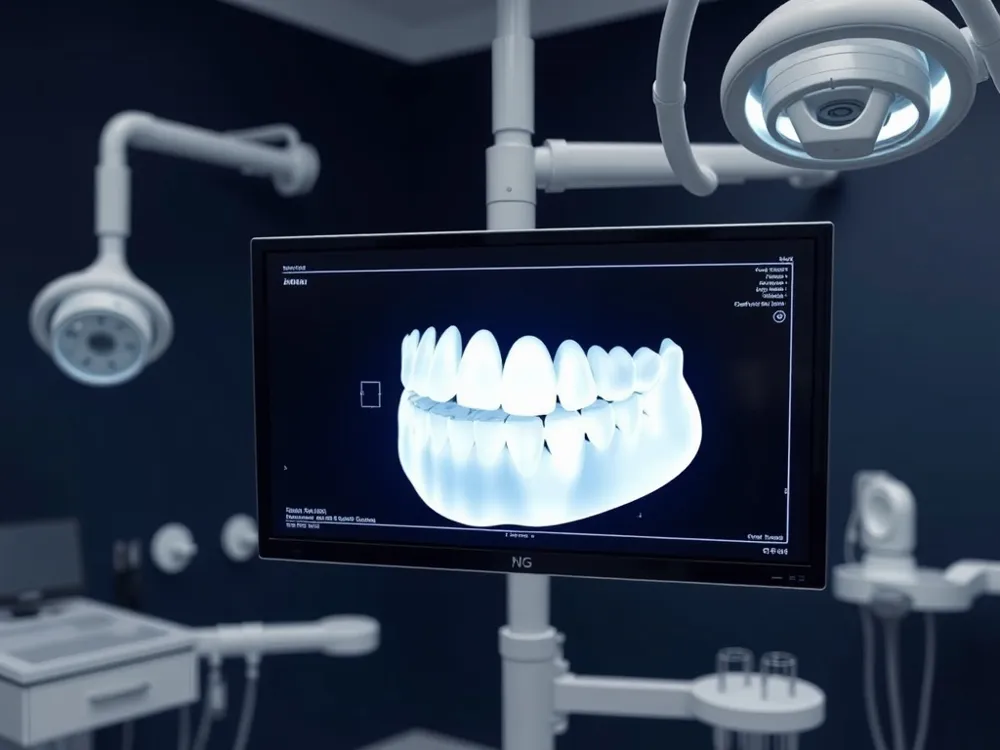
three‑dimensional images allow patients to see their own anatomy, making diagnoses and treatment options far easier to understand. Practices report that sharing these visuals with patients increases case acceptance rates by 10–20%. This transparency builds trust, helps patients make informed decisions, and leads to smoother, more efficient treatment experiences.
What role does AI and digital integration play?
Artificial intelligence is transforming CBCT interpretation. FDA-cleared platforms like Overjet automatically detect conditions such as bone loss and apical lesions, reducing diagnostic variability and streamlining documentation. Integration with intraoral scanners, CAD/CAM systems, and orthodontic software (e.g., ClinCheck Pro) enables fully digital workflows—from virtual implant planning to same-day restoration design—saving chair time and enhancing precision.
How are low-dose protocols advancing patient safety?
Modern low‑dose and ultra‑low‑dose‑dose CBCT protocols can reduce patient radiation exposure by up to 87% compared with conventional CBCT, achieving doses lower than a panoramic X‑ray. Following ALARA and ALADA principles, clinicians can select the smallest field of view, adjust tube current and voltage, and use iterative reconstruction algorithms to maintain diagnostic quality while minimizing radiation, especially important for younger patients.
Conclusion
Embracing CBCT for a Higher Standard of Care
Cone Beam Computed Tomography (CBCT) has fundamentally changed how dentists diagnose and treat complex oral conditions. Offering far more detail than traditional X-rays, it provides clear, three-dimensional views of teeth, bone, and nerves. This allows for safer implant placements, more precise orthodontic planning, and early detection of hidden pathology.
Integrating CBCT into a practice like Southern Boulevard Dental is a significant investment in patient well-being. It aligns with a commitment to the highest standard of modern, family-oriented care. By bringing this technology in-house, our team can diagnose with greater confidence and create more effective, personalized treatment plans.
Your Health, Visualized Clearly
We invite you to experience the difference that advanced diagnostic imaging can make. For your next implant consultation, orthodontic evaluation, or any complex dental concern, ask us how CBCT technology can provide a safer, more predictable, and more comfortable treatment journey.