Why Nutrition Matters in Dental Visits
A healthy diet and oral health share a two‑way relationship: what you eat influences the condition of your teeth and gums, and the state of your mouth can affect the foods you’re able to enjoy. Free sugars—especially sucrose, glucose, and fructose—are readily fermented by plaque bacteria, producing acids that drop the plaque pH below the critical 5.5 threshold. Frequent sugary snacking keeps the mouth acidic for longer periods, increasing the risk of dental caries. In contrast, calcium‑rich foods such as dairy, leafy greens, and fortified plant milks, together with vitamin D and phosphorus, supply the minerals needed for enamel remineralization and strengthen the underlying tooth structure. Vitamin D supports calcium absorption, while phosphorus works with calcium to rebuild hydroxyapatite after acid attacks. By screening patients for high‑sugar habits and recommending nutrient‑dense, saliva‑stimulating foods, dental teams can provide brief, evidence‑based nutrition counseling during routine visits. This collaborative approach not only helps prevent cavities and erosion but also supports overall systemic health, reinforcing the practice’s family‑focused, preventive care philosophy.
Understanding the Science: Nutrition and Oral Health
 The development of dental caries is driven by frequent exposure to fermentable sugars, especially sucrose, which oral metabolize into acids that lower plaque pH below the critical 5.5 threshold. Prolonged low‑pH periods prevent remineralization and lead to enamel demineralization. Vitamins and minerals play a protective role: calcium and phosphorus provide the substrate for hydroxyapatite formation, vitamin D facilitates calcium absorption, vitamin C supports collagen synthesis in gingival tissue, and vitamin K2 aids proper mineral placement. Evidence‑based guidelines from the ADA and WHO recommend limiting free sugars to less than 10 % of daily calories (ideally 5 % for children), consuming calcium‑rich foods (dairy, fortified plant milks, leafy greens), and choosing water or fluoridated drinks over sugary or acidic beverages. Frequent snacking on sugary items should be avoided; instead, opt for fiber‑rich fruits, vegetables, and cheese that stimulate saliva flow and buffer acids. Integrating brief nutrition screenings and personalized counseling into routine dental visits—referring complex cases to a registered dietitian—has been shown to reduce new carious lesions and improve periodontal health, reinforcing the bidirectional link between diet and oral well‑being.
Practical Guidance: Dental Diet Advice and Food Choices
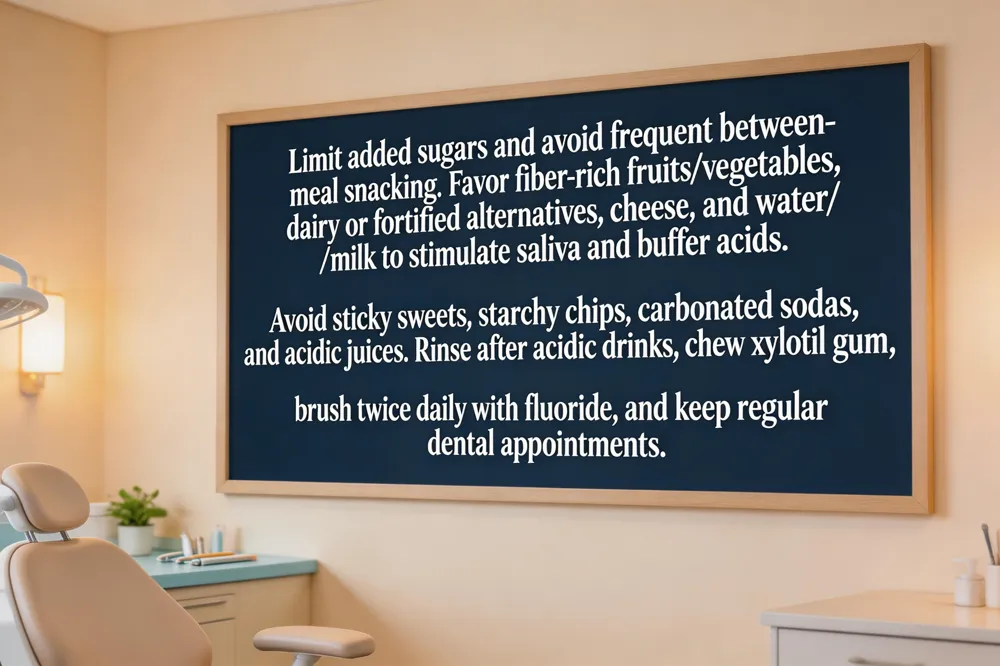 Role of sugar in dental caries – Sugar fuels plaque bacteria; when metabolized it drops plaque pH below 5.5, demineralizing enamel. Added free sugars in processed foods and drinks linger on teeth, providing energy for acid‑producing microbes. Frequency matters: repeated snacking or sipping prolongs acid attacks. Natural sugars in whole fruit and dairy are less risky because fiber, water and calcium buffer acids and stimulate saliva. Reducing added‑sugar intake and maintaining oral hygiene are key preventive steps.
Good and bad food for teeth – Fiber‑rich fruits and vegetables (apples, carrots, celery) mechanically clean teeth and boost saliva. Dairy, cheese and plain yogurt supply calcium and phosphate for remineralization. Green/black tea, sugar‑free xylitol gum and fluoridated water also protect enamel. In contrast, sticky sweets, starchy chips, carbonated sodas and acidic juices erode enamel and promote decay. Alcohol and certain medications dry the mouth, reducing saliva’s protective effect.
Dental diet advice – Keep added‑sugar low, avoid frequent between‑meal snacking, and pair sugary items with meals. Choose calcium‑rich foods (cheese, yogurt, nuts), raw vegetables, and drink water or milk throughout the day. Rinse after acidic drinks, chew xylitol gum, brush twice with fluoride, and schedule dental visits.
Integrating Nutrition Counseling into Clinical Workflow
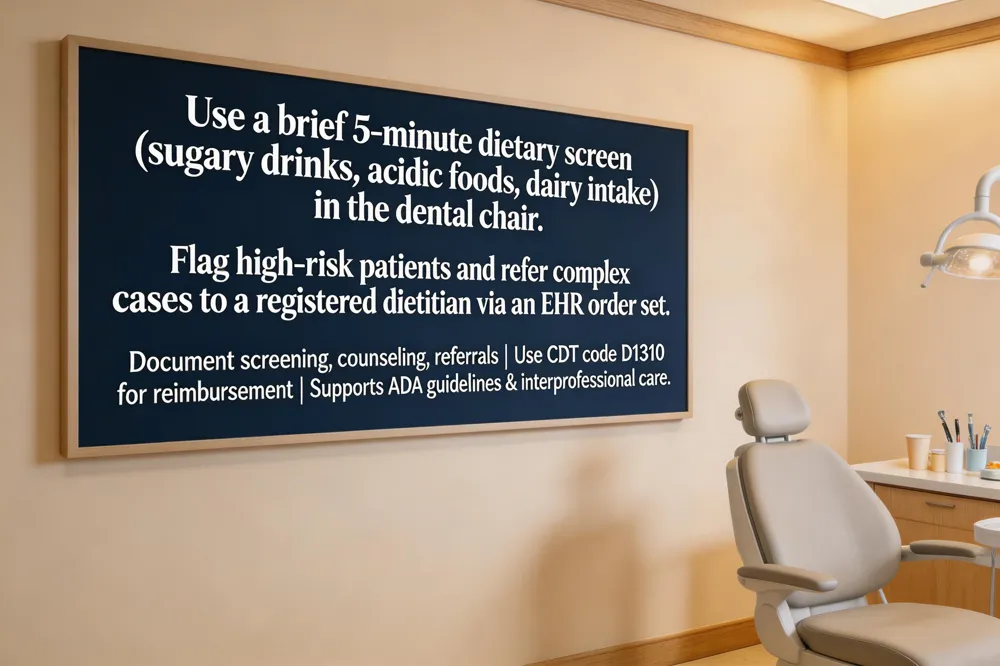 A brief dietary screening tool—such as a 5‑minute questionnaire asking about frequency of sugary drinks, acidic foods, and dairy intake—can be completed in the dental chair to flag high‑risk habits. When the screen indicates complex needs (e.g., uncontrolled diabetes, malnutrition, or persistent caries), the team should follow a clear referral pathway to a registered dietitian nutritionist (RDN). Referral can be made directly through the practice’s electronic health record (EHR) using a standardized order set that captures the patient’s oral‑health concerns and the RDN’s scope (nutrition counseling to control dental disease). Documentation of the screening results, counseling provided, and any referral is essential for continuity of care and billing (e.g., CDT code D1310). Integrating these steps into the EHR workflow ensures that nutrition assessments become a routine part of every exam, supports interprofessional collaboration, and reinforces the ADA’s guideline that nutrition is integral to oral health. By consistently screening, referring, and documenting, dental teams can help patients reduce free‑sugar exposure, increase calcium‑rich foods, and improve overall gum and enamel health.
Policy and Practice: Insurance, Office Policies, and Patient Support
 At Southern Boulevard Dental we strive to make oral‑health care affordable, safe, and comprehensive. Our staff works with most major dental insurance plans, helping you understand benefits, deductibles, and annual maximums. Preventive services such as exams, cleanings, and X‑rays are typically covered at 100 %, while restorative procedures receive lower percentages and may include waiting periods. For patients without dental coverage, we can guide enrollment in stand‑alone plans through the Marketplace and discuss flexible payment options for any out‑of‑pocket costs.
Your privacy and safety are top priorities. We follow HIPAA‑compliant privacy policies, OSHA‑aligned infection‑control protocols, and ADA‑recommended emergency‑preparedness procedures. All team members are trained on consent, scheduling, billing, and the safe handling of dental materials, ensuring a respectful and legally sound environment for every visit.
Nutrition counseling is an essential part of preventive dentistry, yet reimbursement is limited to the CDT code D1310 and varies by insurer. To maximize coverage, we document counseling sessions, provide personalized dietary screens, and refer complex cases to a registered dietitian nutritionist when needed. This interdisciplinary approach aligns with the 2020 Surgeon General’s Report and ADA guidelines, reinforcing our commitment to whole‑body health while navigating insurance constraints.
Education and Outreach: Presentations, Research, and Community Impact
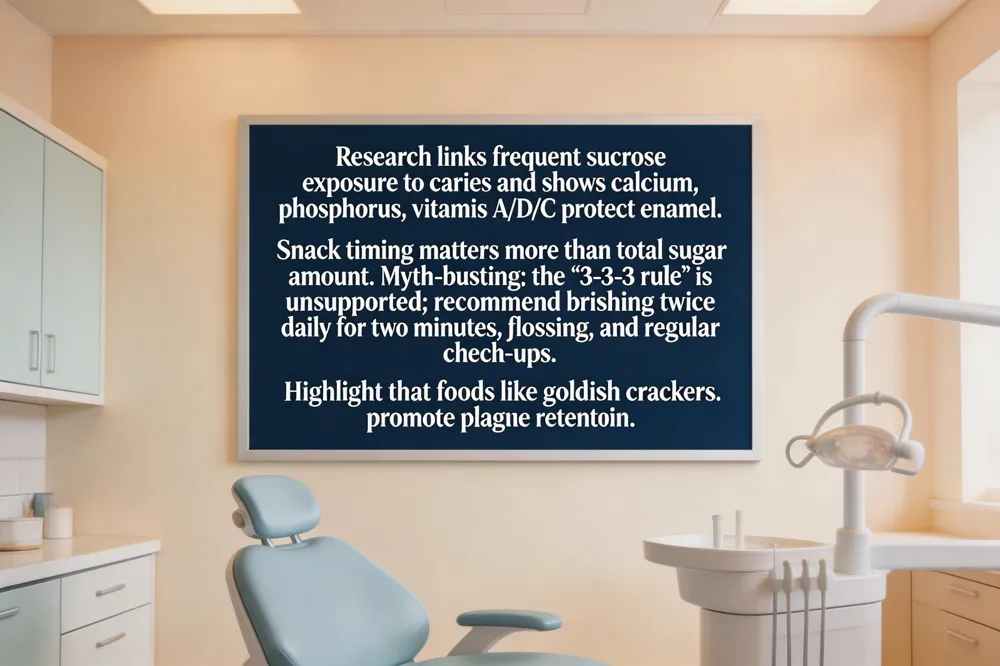 Recent research reinforces that frequent sucrose exposure drives enamel demineralization, while diets rich in calcium, phosphorus, vitamins A, D, and C provide a protective buffer. Studies also highlight that snack‑timing matters more than total sugar amount, and that nutrient‑dense foods can help arrest early lesions.
Myth‑busting is essential: The informal “3‑3‑3 rule” (brush three times a day for three minutes, then avoid food for three hours before bed) is not evidence‑based; we recommend brushing twice daily for two minutes, flossing, and regular check‑ups. Goldfish crackers cling to teeth and create a plaque‑friendly environment, which is why dentists advise against them. These concise, science‑backed messages empower patients to make healthier choices and support better oral outcomes.
Future Directions: Interprofessional Collaboration and Whole‑Body Health
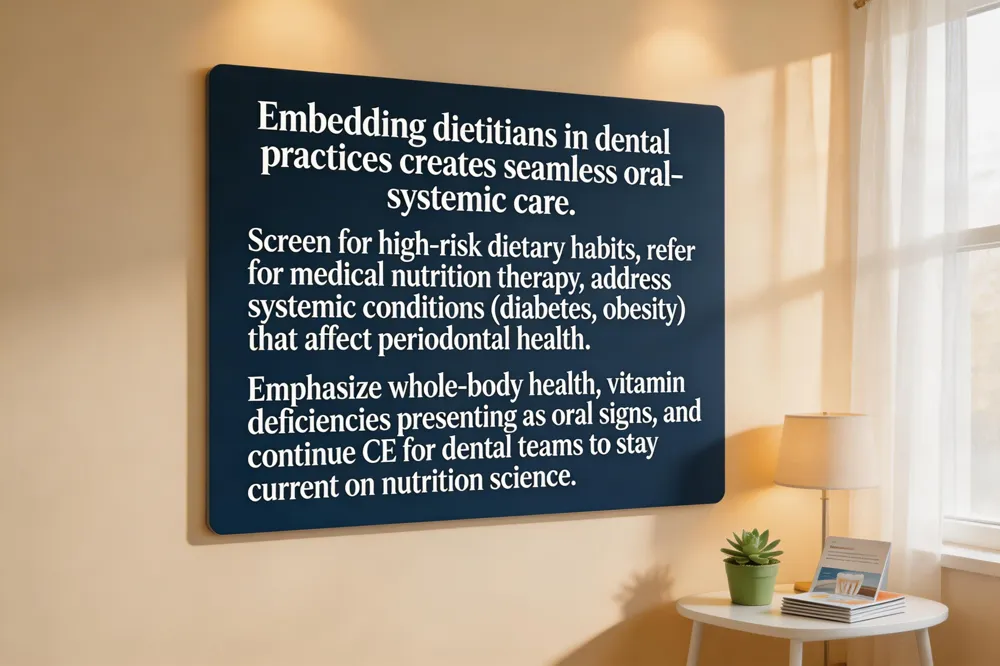 Embedding registered dietitians in dental practices creates a seamless bridge between oral health and nutrition, allowing clinicians to address the root causes of disease while patients receive coordinated care. Dental professionals can screen for high‑risk dietary habits—such as frequent free‑sugar intake and acidic beverage consumption—and refer patients to a dietitian for personalized medical nutrition therapy. This interprofessional model supports the oral‑systemic health connection: poor nutrition fuels cariogenic bacteria and inflammation, while systemic conditions like diabetes and obesity amplify periodontal risk. By integrating nutrition counseling into routine exams, dentists reinforce evidence‑based recommendations: limit added sugars, choose calcium‑rich foods (dairy or fortified alternatives), obtain adequate vitamin D, and prioritize fluoridated water to buffer plaque acids. Deficiencies often manifest first in the mouth; low vitamin A, B‑vitamins, C, D, or folate can cause leukoplakia, angular cheilitis, bleeding gums, and enamel defects, signaling the need for dietary intervention. Continuing education for dental teams—through CE courses, hands‑on workshops, and collaborative case reviews—ensures clinicians stay current on nutrition science and feel confident delivering brief, effective counseling. Together, these strategies promote whole‑body health, reduce caries and periodontal disease, and empower patients to make lasting, oral‑friendly lifestyle choices.
Putting Nutrition into Practice at Southern Boulevard Dental
At Southern Boulevard Dental we weave evidence‑based nutrition counseling into each routine visit, giving patients a powerful tool to protect their smiles. By identifying high‑sugar and acidic‑food habits and offering personalized, bite‑size recommendations—such as swapping soda for water, choosing calcium‑rich dairy or fortified plant milks, and adding crunchy vegetables that stimulate saliva—our team helps reduce caries risk, lessen erosion, and support gum health. Patients who receive this guidance report fewer cavities, improved periodontal outcomes, and a greater sense of control over their overall well‑being.
Our clinicians stay current through mandatory continuing‑education modules on nutrition science, ensuring that every recommendation reflects the latest ADA, WHO, and Surgeon General guidance. We also host quarterly webinars and provide easy‑to‑read handouts so families can reinforce healthy choices at home.
We invite you to schedule your next check‑up and experience the difference a brief, friendly nutrition conversation can make. Call us today or book online to keep your teeth strong, your gums healthy, and your whole body thriving.