Introduction
Periodontal disease, commonly known as gum disease, is an infection caused by bacterial plaque that inflames the soft tissues and, if left untreated, can destroy the supporting bone and lead to tooth loss. It affects nearly half of U.S. adults over age 30 and is linked to systemic health issues such as heart disease and diabetes. The cornerstone of nonsurgical treatment is scaling and root planing (SRP), a mechanical deep‑cleaning technique that removes plaque, tartar, and diseased cementum from tooth surfaces below the gumline. In recent years, laser periodontal therapy has emerged as an adjunctive option that uses focused light energy to disinfect pockets, remove inflamed tissue, and promote hemostasis. This section introduces the comparison of these two approaches, highlighting why clinicians evaluate their relative benefits—clinical effectiveness, patient comfort, cost, and long‑term stability—to help patients and providers make informed, personalized treatment decisions.
When Scaling Is Necessary and When It Isn’t
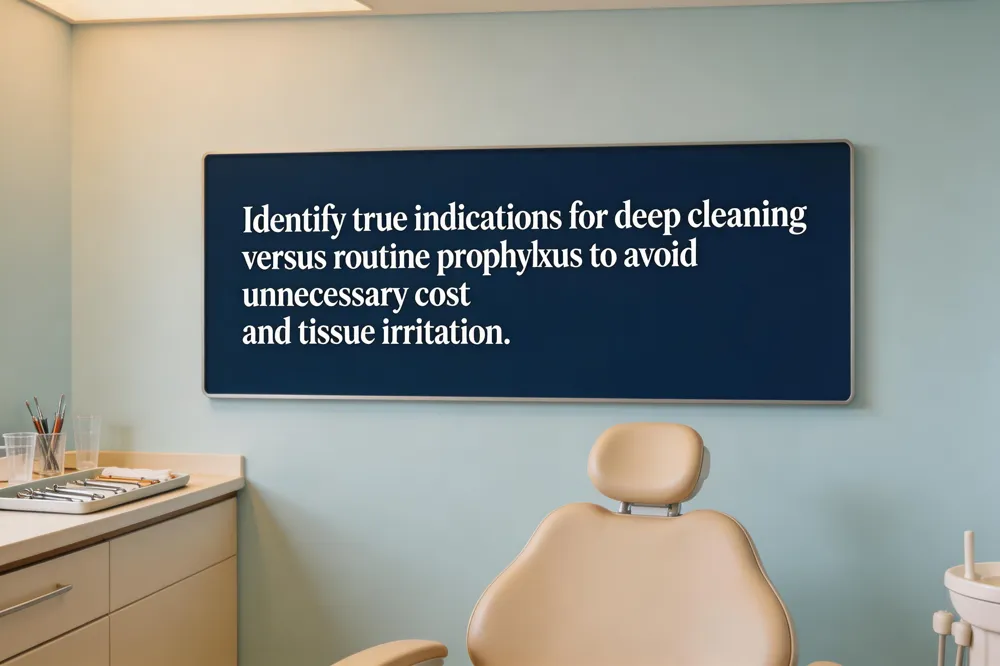 Scaling and root planing (SRP) is indicated when clinical signs of periodontal disease are present—deep pockets (>4 mm), bleeding on probing, gum inflammation, recession, or radiographic bone loss. In healthy mouths, routine prophylaxis cleanings and diligent oral hygiene are sufficient; unnecessary SRP can irritate gingiva, cause enamel wear, increase sensitivity, and add unwarranted cost.
Patients with rapid plaque or tartar buildup (e.g., smokers, diabetics, or those with poor home care) may benefit from more frequent deep cleanings. While the standard interval is twice a year, a three‑month schedule can be appropriate for high‑risk individuals, helping control inflammation and prevent disease progression.
Scaling removes sub‑gingival calculus and smooths root surfaces, whereas a regular cleaning (prophylaxis) only polish the visible tooth surfaces. Deep scaling (SRP) is performed under local anesthesia and may cause mild post‑operative soreness, swelling, or temporary sensitivity.
Cost varies by region and insurance coverage. The national average for SRP is $242 per quadrant (range $185‑$444), translating to $600‑$1,600 for a full‑mouth deep cleaning. Routine prophylaxis typically costs $100‑$250 per visit. Insurance often covers 50‑80 % when the procedure is deemed medically necessary, reducing out‑of‑pocket expense.
Ultimately, a thorough clinical exam and radiographs guide the decision, ensuring that deep cleaning is used only when truly needed.
Types of Dental Cleanings and Pricing
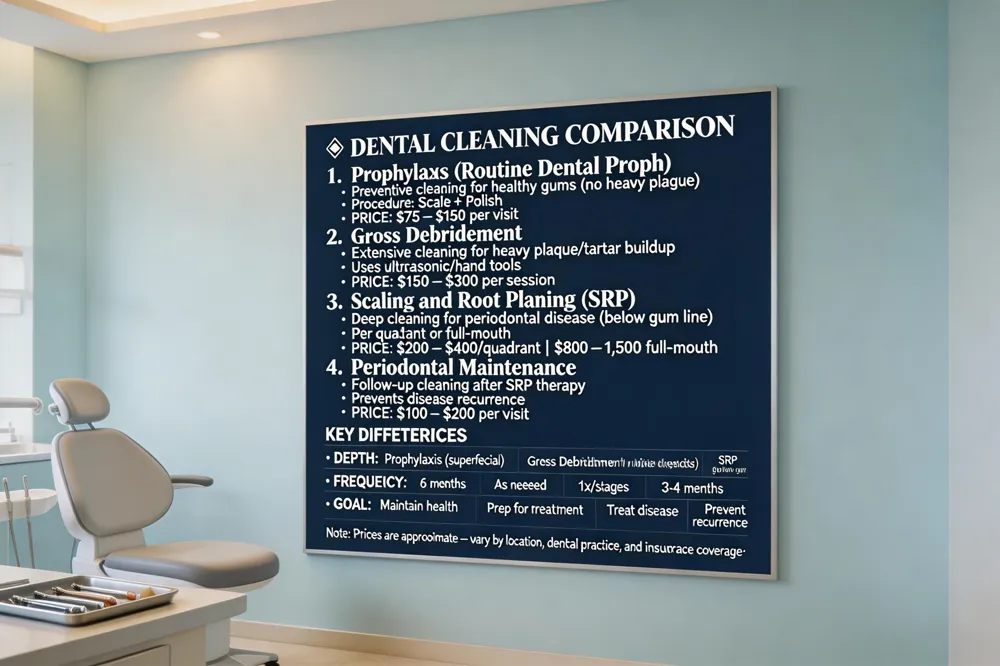 What are the 4 types of dental cleanings?
The four primary cleaning categories are prophylaxis (routine cleaning), gross debridement (intensive deep cleaning after prolonged neglect), Scaling and root planing (deep cleaning below the gumline to treat early gum disease), and periodontal maintenance (follow‑up care after periodontal therapy).
What are the 4 types of dental cleanings?
The four primary cleaning categories are prophylaxis (routine cleaning), gross debridement (intensive deep cleaning after prolonged neglect), Scaling and root planing (deep cleaning below the gumline to treat early gum disease), and periodontal maintenance (follow‑up care after periodontal therapy).
Scaling and root planing cost Deep cleaning (SRP) typically runs $150–$400 per quadrant, so a full‑mouth treatment costs roughly $600–$1,600 in the United States. Insurance often covers a portion when the procedure is deemed medically necessary.
Periodontal disease treatment cost Basic SRP ranges $400–$4,000 depending on case complexity. Laser‑assisted therapy (e.g., LANAP) costs $1,250–$3,000 per quadrant ($5,000–$12,000 full mouth). Surgical options add $600–$3,000 per quadrant. Most plans pay 50‑100% of preventive and non‑surgical fees; financing options are common.
Laser gum treatment vs deep cleaning cost Laser gum therapy generally $1,000–$4,000 per quadrant, totaling $2,000–$8,000 for the whole mouth, while SRP is $250–$400 per quadrant ($600–$1,600 total). Laser procedures involve higher technology fees and may require multiple visits.
Laser scaling of teeth cost Basic laser scaling costs $200–$400 per session; extensive laser scaling is $1,000–$4,000 per quadrant. Insurance coverage varies, so patients should verify benefits and co‑pay amounts with their provider.
Laser Periodontal Therapy: Benefits, Side Effects, and Evidence
 How laser therapy works
Laser periodontal therapy uses focused light energy (diode, Nd:YAG, Er:YAG, or CO₂ lasers) to selectively ablate inflamed gum tissue, disinfect periodontal pockets, and promote hemostasis. The light is absorbed by pigmented bacteria and diseased tissue, producing a photothermal effect that kills microbes and coagulates blood vessels while preserving healthy structures.
Clinical outcomes and research
Randomized trials and systematic reviews report that adjunctive laser use can modestly improve probing‑depth reductions (≈0.5‑1 mm) and clinical‑attachment gains (≈0.3‑0.5 mm) compared with scaling and root planing (SRP) alone, especially in pockets ≥5 mm. Erbium lasers (Er:YAG, Er,Cr:YSGG) show the most consistent depth reductions, while Nd:YAG and diode lasers provide strong bactericidal effects. Long‑term (>2 years) data remain limited, and SRP continues to be the gold‑standard for deep‑pocket debridement.
Patient‑reported side effects
- Laser teeth cleaning: temporary tooth sensitivity, mild gum irritation or redness, rare superficial burns or discoloration, and eye‑safety concerns if protective measures are omitted.
- Laser gum treatment: slight swelling, light bleeding, transient color change of gums, brief sensitivity to hot/cold foods, and occasional mild itching or burning. Rarely, minimal gum recession or bite changes occur.
- Teeth scaling (SRP): temporary sensitivity, gum soreness, minor bleeding, mild swelling, and occasional slight gum‑line recession. Symptoms usually resolve within a few days.
Pros and cons of laser use
Pros: minimally invasive, reduced intra‑operative bleeding, lower postoperative pain, faster healing, targeted bacterial reduction, and potential for biostimulation of tissue regeneration. May lessen the need for systemic antibiotics.
Cons: higher equipment and per‑session cost, need for specialized training, limited long‑term evidence, possible thermal injury if settings are incorrect, and often requires multiple visits for deep pockets.
Laser bacterial reduction – pros, cons, and evidence
Laser irradiation can penetrate biofilms and kill pathogenic species (e.g., Porphyromonas gingivalis), offering a non‑invasive antimicrobial adjunct. Studies show modest, short‑term bacterial load reductions, but results vary and are constrained by small sample sizes. The benefit is most pronounced when lasers are combined with conventional debridement.
Laser gum treatment vs. deep cleaning
Deep cleaning (SRP) mechanically removes plaque and calculus, providing a robust, low‑cost baseline therapy. Laser treatment adds a bactericidal, hemostatic component that can reduce bleeding, discomfort, and healing time, especially in moderate to deep pockets. For mild‑to‑moderate disease, SRP alone is often sufficient; for refractory or deep pockets, adjunctive laser therapy may enhance outcomes.
Effectiveness and drawbacks
Overall, laser periodontal therapy is effective as an adjunct to scaling and root planing (SRP), improving short‑term clinical parameters and patient comfort. Drawbacks include higher cost, need for multiple appointments, and limited long‑term data. Clinicians should individualize treatment based on disease severity, patient health, and financial considerations.
Laser Adjunctive Treatments and Financial Considerations
 Laser bacterial reduction cost – A laser‑assisted gum therapy session typically runs between $150 and $400, while a comprehensive laser gum treatment can cost $1,000–$4,000 per quadrant. Out‑of‑pocket expenses are usually $200–$400 after insurance, because most plans cover the underlying periodontal procedure but not the laser technique itself.
Adjunctive scaling with laser – When lasers are used as an adjunct to scaling and root planing, the price rises. Most offices charge $1,000–$4,000 per quadrant, meaning a full‑mouth treatment may total $4,000–$16,000. In Rio Rancho, many practices report $1,200–$2,800 for a complete mouth, depending on disease severity and the number of quadrants treated.
Insurance and payment options – Dental insurance generally reimburses the conventional SRP portion, leaving a co‑pay or reduced out‑of‑pocket cost for the laser component. Many offices, including Southern Boulevard Dental, offer financing plans, payment schedules, and detailed cost estimates after the initial exam to help patients plan their budgeting.
Finding local laser providers – If you are searching for “laser scaling and scaling and root planing near me” in the Rio Rancho area, Southern Boulevard Dental provides laser‑assisted periodontal therapy with soft‑tissue lasers that minimize bleeding and discomfort. Call (555) 123‑4567 or visit the website to verify coverage and schedule a consultation. Early laser intervention can halt disease progression while offering a comfortable, minimally invasive experience.
Clinical Workflow, Coding, and Maintenance
 Laser patients therapy before and after
Before treatment patients typically present with deep pockets, swollen bleeding gums, bad breath, and sometimes tooth mobility. After a laser‑assisted session the pocket depths shrink, gingival tissue appears tighter and healthier, and bleeding and inflammation are markedly reduced. The precise removal of diseased tissue promotes quicker healing, minimal pain, and a fast return to normal oral‑hygiene routines.
Laser periodontal therapy ADA code
The CDT codes most commonly used for laser‑assisted periodontal work are D4341 (periodontal maintenance) and D4342 (periodontal therapy), which cover scaling and root‑planing when a laser is used as an adjunct. If a separate laser service is reported, a miscellaneous code such as 4999 may be added, but the primary procedure should still be billed under D4341/D4342 with clear documentation of laser use to satisfy insurance requirements.
Advanced periodontal disease treatment
Severe disease requires intensive nonsurgical debridement—often ultrasonic or laser‑enhanced scaling and root‑planing—followed by targeted antibiotics. Persistent deep pockets may be addressed with flap surgery, bone grafting, or guided tissue regeneration. Adjunctive laser therapy can disinfect pockets and accelerate healing, while strict maintenance (regular cleanings, personalized home‑care) sustains results.
Periodontal disease treatment antibiotics
Systemic antibiotics (amoxicillin, metronidazole, doxycycline) or localized delivery (minocycline gel, chlorhexidine chips) are prescribed to lower bacterial load and support pocket reduction. Choice of drug, dose, and duration depend on disease severity, allergies, and whether the infection is acute or refractory.
Do gums go back to normal after scaling?
Yes. Thorough scaling removes plaque and calculus, allowing the gingiva to reattach and pocket depths to decrease. Within days to weeks the gums typically become pink, firm, and less swollen. However, lost bone or severely destroyed tissue cannot fully regenerate, so ongoing oral hygiene and maintenance are essential.
Laser scaling and root planing near me
If you are in the Rio Rancho area, Southern Boulevard Dental offers laser‑assisted scaling and root‑planing. Call (555) 123‑4567 to schedule a consultation and verify insurance coverage.
Patient FAQs and Lifestyle Guidance
 Home care and self‑treatment myths – Good oral hygiene is the foundation of gum health, but it cannot replace professional care. Brushing twice daily with a soft‑bristled fluoride toothpaste, flossing or using interdental cleaners, and rinsing with an antimicrobial mouthwash remove plaque and reduce bacterial load. Natural rinses (diluted 3 % hydrogen peroxide, warm salt‑water, tea‑tree or sage) may soothe inflammation, yet they do not eradicate the deep‑seated biofilm that causes periodontitis. The American Academy of Periodontology and the CDC both stress that scaling and root planing (SRP) remains the gold‑standard nonsurgical treatment; lasers are an adjunct, not a substitute.
Living with periodontal disease – Periodontal disease is manageable with regular professional cleanings, diligent home care, and lifestyle changes such as quitting smoking and controlling diabetes. Adjunctive laser therapy can reduce bleeding, swelling, and early bacterial load, but long‑term stability still depends on SRP and ongoing maintenance.
Clarifying common misconceptions –
- “How to cure gum disease without a dentist?” – You can halt early gingivitis with rigorous hygiene, but true cure of periodontitis requires SRP (and sometimes laser adjuncts) performed by a clinician.
- “I cured my periodontal disease” – Self‑assessment is unreliable; pocket depths and attachment levels must be measured professionally.
- “Scaling of teeth is good or bad?” – When done correctly by a trained professional, scaling removes plaque and tartar, preventing disease progression; improper technique can cause sensitivity.
- “Can you live a healthy life with periodontal disease?” – Yes, with proper treatment and maintenance, patients can enjoy a healthy lifestyle while keeping the condition under control.
Conclusion
In the battle against gum disease, both laser periodontal therapy and traditional scaling and root planing (SRP) have proven effective, but they serve different roles. SRP remains the gold‑standard, non‑surgical option for deep‑pocket debridement and has a robust, long‑term evidence base. Laser therapy, especially when used as an adjunct, can speed early healing, lessen postoperative bleeding and discomfort, and reach bacteria in hard‑to‑access areas, though it typically costs more and lacks extensive long‑term data.
Key takeaways for patients: 1) SRP is essential for thorough mechanical plaque removal; 2) laser treatment may enhance bacterial reduction and comfort, particularly in moderate pockets; 3) the best outcomes come from diligent home oral hygiene and regular maintenance visits, regardless of the modality chosen.
If you’re concerned about periodontal health or want to explore a minimally invasive option, schedule a consultation at Southern Boulevard Dental. Our experienced team will evaluate your specific needs, discuss the benefits and limitations of each approach, and design a personalized plan to keep your smile healthy and comfortable.