Why Oral Health Matters
Your mouth is the gateway to the digestive and respiratory tracts, so oral health reflects and influences overall well‑being. Harmful bacteria that accumulate in dental plaque can enter the bloodstream, contributing to systemic inflammation and increasing the risk of heart disease, stroke, diabetes complications, pneumonia, and adverse pregnancy outcomes. Regular dental visits—at least once a year, or more often for high‑risk patients—allow dentists to remove plaque and tartar, detect early signs of gum disease or oral cancer, and provide personalized preventive care such as fluoride treatments and counseling on diet, tobacco use, and medication‑induced dry mouth. Consistent professional care, combined with daily brushing, flossing, and a balanced diet, helps keep the oral microbiome in check and supports long‑term health.
Essential Oral Hygiene Routine
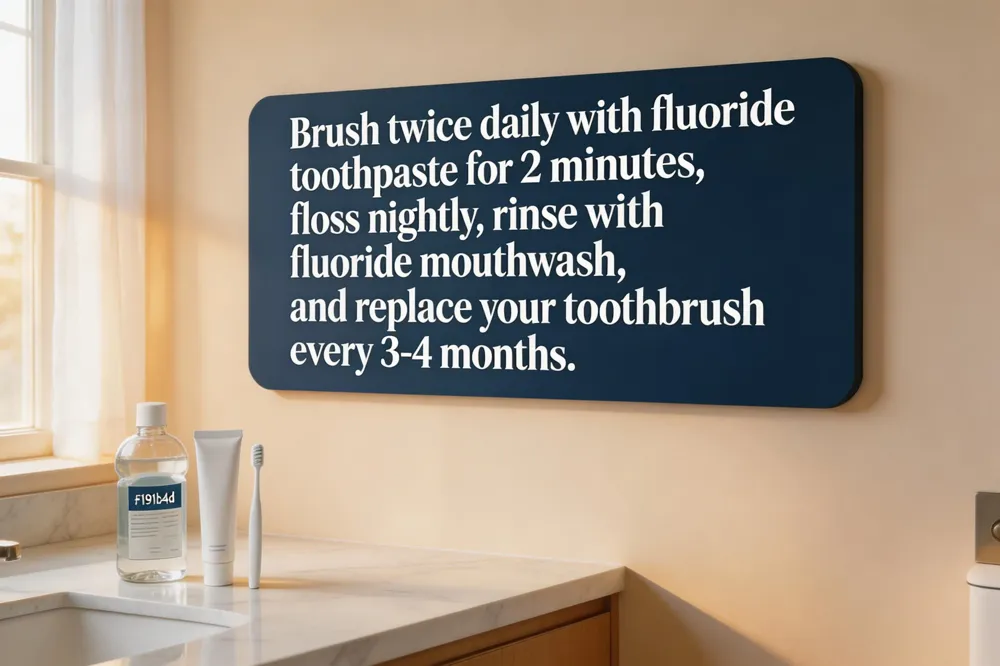 Oral hygiene is the routine practice of keeping the mouth, teeth, gums, and tongue clean and free of disease‑causing plaque and debris. Daily brushing with fluoride toothpaste, flossing to remove food particles and bacteria from between teeth, and regular professional dental exams and cleanings are essential. Good oral hygiene prevents tooth decay, gum disease, bad breath, and oral infections, and it supports overall health because untreated oral bacteria can enter the bloodstream and contribute to cardiovascular disease, diabetes complications, and respiratory infections.
A step‑by‑step brushing technique includes: (1) Wet the toothbrush and apply a pea‑sized amount of fluoride toothpaste; (2) Brush for 2 minutes using gentle circular motions on outer, inner, and chewing surfaces; (3) Tilt the brush vertically for gentle up‑and‑down strokes on the inner surfaces of front teeth; (4) Brush the tongue and roof of the mouth; (5) Rinse thoroughly. Follow with daily flossing or interdental brushes to clean between teeth and an optional fluoride mouthwash as advised by your dentist.
A comprehensive daily care checklist: brush twice a day with a soft‑bristled brush for at least 2 minutes, floss every night, rinse with an antimicrobial fluoride mouthwash, clean your tongue, replace your toothbrush every 3–4 months, maintain a balanced low‑sugar diet, stay hydrated, avoid tobacco and limit alcohol, and schedule dental check‑ups and professional cleanings at least twice a year. Discuss any medications or health conditions with your dentist to tailor your routine.
Adult Oral Health Tips
 Practical daily habits for adults
- Brush twice daily for two minutes with a fluoride toothpaste, using a soft‑bristled brush at a 45° angle.
- Floss or use interdental cleaners every day to remove plaque between teeth.
- Rinse with an alcohol‑free antibacterial mouthwash if advised by your dentist.
- Replace your toothbrush every 3‑4 months, or sooner if bristles are frayed.
- Stay hydrated and chew sugar‑free gum to stimulate saliva, which naturally cleans the mouth.
Nutrition and lifestyle influences
- Limit sugary and acidic foods and drinks; choose water, fresh fruits, vegetables, dairy, and calcium‑rich foods.
- Avoid tobacco and limit alcohol consumption to reduce gum disease and oral‑cancer risk.
- Manage medications that cause dry mouth by sipping water and using saliva‑stimulating products.
- Maintain a balanced diet rich in vitamins C and D, calcium, and phosphorus to support enamel strength.
Frequency of professional care
- Schedule dental check‑ups and cleanings at least twice a year; more frequent visits may be needed for high‑risk individuals.
- Early detection of cavities, gum disease, and oral cancer helps prevent complications that can affect overall health.
Key oral‑health tips for adults • Brush twice a day with fluoride toothpaste. • Floss daily and use anti‑plaque mouthwash. • Limit sugary/acidic foods, stay hydrated. • Visit the dentist regularly. • Avoid tobacco, manage dry‑mouth‑reducing meds, and replace your brush regularly.
Consistent daily care and professional visits protect both your smile and systemic health, reducing inflammation, infection risk, and the impact of chronic diseases such as heart disease, diabetes, and pregnancy complications.
Managing Specific Concerns

Signs of Poor Oral Hygiene
Persistent bad breath, bleeding or swollen gums, and visible plaque or tartar are the most common warning signs. You may also notice tooth sensitivity to hot, cold, or sweet foods, recurring cavities, a coated tongue, or loose teeth. Non‑healing mouth sores and chronic halitosis can indicate deeper infection or systemic involvement. Prompt dental evaluation is essential.
How Can You Improve Gum Health Quickly?
Begin with twice‑daily brushing using a soft‑bristled or electric brush held at a 45° angle, employing gentle circular motions. Floss daily, shaping the floss into a "C" around each tooth to clean below the gum line, and finish with an alcohol‑free antibacterial mouthwash (chlorhexidine or essential oils). Incorporate a brief oil‑pulling session (e.g., coconut oil 1–2 minutes) and a vitamin‑C‑rich diet or probiotic oral rinse to boost immunity. Avoid tobacco, limit acidic foods, manage stress, and schedule a professional cleaning to remove tartar and receive personalized care.
Diseases Caused by Poor Dental Hygiene
Neglected oral care leads to caries, gingivitis, periodontitis, and tooth loss. Chronic gum inflammation allows bacteria to enter the bloodstream, increasing the risk of cardiovascular disease, stroke, endocarditis, and respiratory infections such as pneumonia. It also exacerbates diabetes control and contributes to adverse pregnancy outcomes such as premature birth. Emerging evidence links chronic oral infection to neurodegenerative disorders like Alzheimer’s disease and inflammatory conditions such as rheumatoid arthritis and osteoporosis. Consistent brushing, flossing, and regular dental check‑ups are vital to protecting both oral and overall health.
Lifestyle and Systemic Connections
 Maintaining good oral hygiene is more than keeping a bright smile; it directly influences quality of life. When teeth and gums are healthy, people can eat a varied diet without pain, speak clearly, and sleep comfortably, which sustains energy and physical activity. Conversely, chronic oral pain, swelling, or tooth loss can lead to embarrassment, social withdrawal, and lowered self‑esteem, while untreated infection raises the risk of systemic illnesses such as cardiovascular disease, diabetes complications, and pneumonia.
The benefits of diligent oral care extend well beyond the mouth. Regular brushing with fluoride toothpaste, daily flossing, and professional cleanings remove plaque and control harmful bacteria, reducing inflammation that contributes to heart disease, stroke, and respiratory infections. Healthy gums aid blood‑sugar regulation, supporting diabetes management, and for pregnant women, proper oral hygiene lowers the chance of preterm birth and low‑birth‑weight infants. Fresh breath and a confident smile also improve social and professional interactions, enhancing overall well‑being.
A simple mnemonic to sustain these habits is the 3‑3‑3 rule: brush three times daily (after breakfast, after lunch, and before bed) for three minutes each session, and replace your toothbrush every three months (or sooner if bristles fray). This routine keeps plaque in check, prevents cavities and gum disease, and supports both oral and systemic health.
Practical Home Care Strategies
 Good oral hygiene begins at home and can be tailored to each patient’s needs. Simple home‑based techniques—brushing twice a day for at least two minutes with a soft‑bristled toothbrush, using fluoride toothpaste, and daily flossing—remove plaque before it hardens into tartar. Rinsing with an alcohol‑free antibacterial mouthwash adds a layer of protection, while chewing sugar‑free gum after meals stimulates saliva, which neutralizes acids and helps remineralize enamel. A tongue scraper or gentle brushing of the tongue reduces bacterial load and freshens breath. Store your brush upright, let it air‑dry, and replace it every three to four months or sooner if the bristles fray.
Special equipment is useful for orthodontic patients and those with limited dexterity. Water flossers, interdental brushes, and orthodontic‑specific brush heads can reach around brackets and wires, removing food particles that a regular brush misses. A custom‑fit mouthguard protects teeth during contact sports and reduces trauma risk.
Teeth care tips at home
- Brush twice daily with a soft‑bristled brush for at least 2 minutes, covering all surfaces.
- Floss gently each night to disrupt plaque buildup.
- Rinse with a fluoride mouthwash to strengthen enamel.
- Chew sugar‑free gum after meals to increase saliva production.
- Use a tongue scraper or brush your tongue to reduce bacteria and freshen breath.
- Store your toothbrush upright and let it dry; avoid covering it.
- If you have braces or other appliances, use a water flosser or special brushes.
Oral care for patients Patients should maintain a daily routine that includes brushing twice daily with fluoride toothpaste, nightly flossing, and, when desired, an antimicrobial mouthwash. Regular dental check‑ups—at least once a year—allow early detection of decay, gum disease, or oral cancer and enable professional cleanings and fluoride treatments. Inform the dentist of any medical conditions (e.g., diabetes, heart disease) or medications that reduce saliva flow, as these increase oral‑health risk. Seniors, orthodontic patients, or those with limited dexterity may benefit from water flossers, interdental brushes, or customized fluoride regimens. Pairing diligent oral hygiene with lifestyle choices—avoiding tobacco, limiting alcohol, and eating a low‑sugar diet—supports both oral and overall well‑being.
Special Populations and Preventive Care
 Pregnancy and oral health – Hormonal shifts during pregnancy increase blood flow to the gums, making gingivitis more common. Untreated gum disease ( periodontitis) is linked to premature birth and low‑birth‑weight infants, so pregnant patients should brush twice daily with fluoride toothpaste, floss, and schedule a dental check‑up before delivery. A balanced diet low in added sugars and regular hydration support both maternal nutrition and oral health.
Older adults and denture care – As we age, reduced saliva, receding gums, and limited dexterity can raise the risk of cavities, gum disease, and fungal infections. Daily denture cleaning with a denture‑care product, overnight soaking, and removal while sleeping help keep the oral tissues healthy. For those with limited hand mobility, soft‑bristled brushes, electric toothbrushes, or interdental cleaners can make brushing and flossing easier. Regular professional cleanings and examinations—at least once a year—detect early signs of decay, gum inflammation, and oral cancer.
Access to affordable dental services – High‑quality preventive care reduces costly restorative work and systemic health complications. Community health centers, dental school clinics, and state Medicaid programs can provide low‑cost examinations, cleanings, and fluoride treatments. Adults should seek a dentist for at least an annual visit, and those with chronic conditions such as diabetes or heart disease may need more frequent appointments to manage oral‑systemic interactions. Early, affordable care is a cornerstone of long‑term health and wellbeing.
Your Path to a Healthier Smile
Key takeaways: Good oral hygiene—brushing twice daily with fluoride toothpaste, daily flossing, and using a soft‑bristled brush—controls plaque, lowers cavity risk, and reduces gum disease that can trigger systemic inflammation, heart disease, diabetes complications, and adverse pregnancy outcomes. Medications that dry the mouth, tobacco use, and excessive sugar increase risk, while regular dental visits catch problems early.
Next steps for readers:
- Adopt a two‑minute brushing routine at a 45° angle, floss each night, and consider an alcohol‑free antibacterial mouthwash.
- Stay hydrated, chew sugar‑free gum, and limit sugary, acidic foods and drinks.
- Schedule a dental check‑up within the next month—most patients benefit from at least one yearly exam, or more often if you have diabetes, pregnancy, or a history of gum disease.
By taking these actions and partnering with your dentist, you protect both your smile and your overall health.