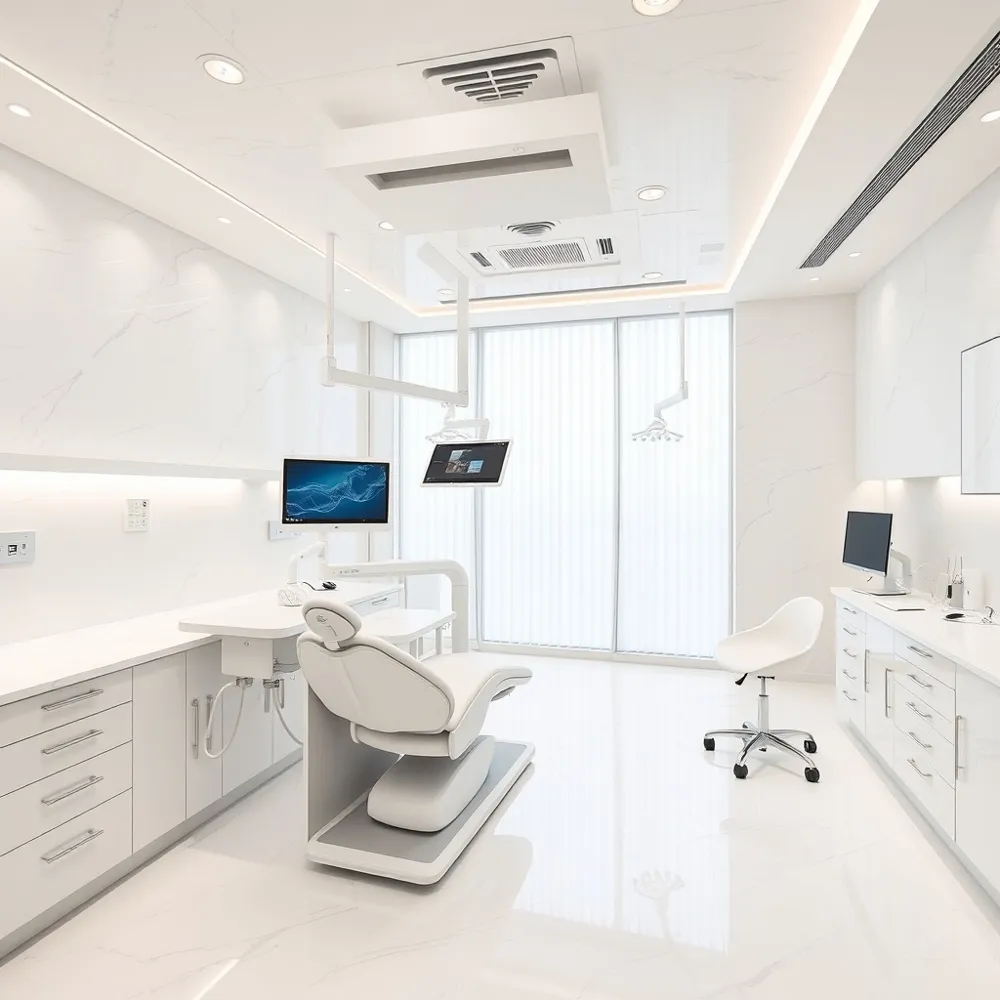
From Chair to Choice: Redefining Your Dental Experience
From Chair to Choice: Redefining Your Dental Experience
Traditionally, dental care often followed a provider-focused model where the dentist held primary control over treatment decisions. The patient's role was largely passive, receiving expert recommendations. While clinically sound, this model sometimes felt impersonal and didn't always account for a patient's personal preferences, lifestyle, or unique goals for their smile.
A modern patient-centered care (PCC) model redefines this relationship. It is a collaborative partnership where care is respectful of and responsive to your individual preferences, needs, and values. In practice, this means your choices and goals guide the treatment plan, supported by your dentist's clinical expertise and clear communication.
The Impact on Your Health and Experience
This collaborative approach isn't just about philosophy; it's linked to tangible benefits. Studies associate patient-centered care with improved health outcomes, greater treatment adherence, and reduced dental anxiety. When you feel heard and actively involved in decisions, you're more likely to follow through with care plans and return for preventive visits. This builds long-term trust and transforms dental visits into more manageable, positive experiences.
Our Commitment to Partnership
At Southern Boulevard Dental, we embrace this patient-centered philosophy. We invest time in listening, use advanced technology to help you visualize your oral health, and ensure you have the information and choice to feel confident in your care. Our goal is to move beyond a transactional relationship to a lasting partnership focused on your overall well-being.
| Traditional Model Focus | Patient-Centered Model Focus | Your Experience at Our Practice |
|---|---|---|
| Clinician-driven decisions | Collaborative, shared decisions | Your input shapes your treatment plan. |
| Standardized treatment paths | Personalized, tailored care | Plans consider your lifestyle and goals. |
| Limited patient explanation | Empathetic, clear communication | We ensure you understand all options. |
| Focus on immediate procedure | Holistic view of health & comfort | We consider your long-term oral health. |
Beyond a Friendly Smile: What Patient-Centered Care Really Is (and Isn't)
What is patient-centered care in dentistry?
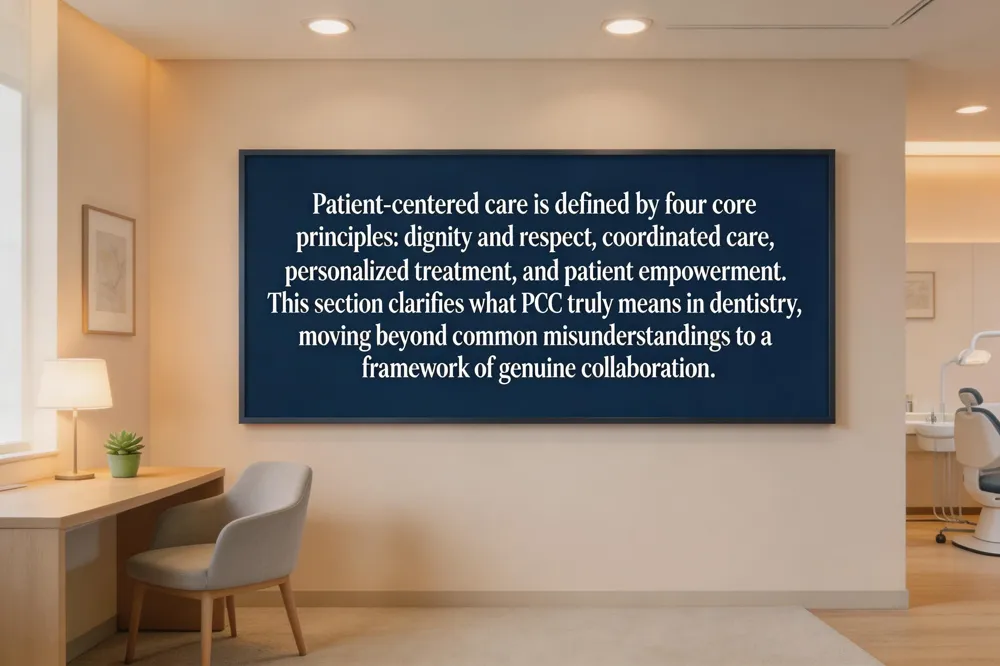
Patient-centered care (PCC) in dentistry is a mode of healthcare delivery that puts the patient at the forefront of all decision making and treatment. Formally defined by authoritative sources like the Institute of Medicine, it is a process that is 'respectful of and responsive to individual patient preferences, needs, and values.' Crucially, this ensures a patient's own values guide all clinical decisions made about their care.
This approach is more than a philosophy. It is linked to tangible benefits of patient-centered care in both physical and psychological health outcomes for patients, including improved health status, enhanced satisfaction, and better long-term oral health. The principles extend beyond clinical procedures to create a holistic, supportive care environment.
What are the four principles of a person-centered approach in healthcare?
The foundational principles of patient-centred dental care, which are fully applicable to dentistry, provide a clear framework for true patient-centered care. These principles move beyond a simple definition to actionable guidance.
- Treating Individuals with Dignity, Compassion, and Respect: This is about more than just a friendly greeting. It involves recognizing each patient's inherent worth, acknowledging their fears and concerns with empathy, and creating a comfortable, welcoming environment.
- Providing Coordinated Care: Care should be seamless and integrated. This can mean coordinating with other healthcare providers, ensuring continuity with a consistent dental team, or having efficient systems that respect a patient's time and reduce confusion.
- Offering Tailored, Personalized Care: A one-size-fits-all model is replaced with individualized dental treatment plans uniquely designed for the individual. This involves considering a patient's full medical history, lifestyle, personal goals, and specific preferences when proposing any treatment.
- Supporting People to Develop Knowledge, Skills, and Confidence: True PCC empowers patients. It focuses on education—explaining conditions and options in clear, understandable language—to equip patients with the tools they need to make informed choices and actively participate in managing their oral health.
Common Misunderstandings in Practice
While the formal definition is clear, research reveals a significant gap in how PCC is commonly understood and practiced in many dental settings. A qualitative study found that while almost all dentists were confident they practiced PCC, dentists' understanding of patient-centred care varied widely and often did not align with the deeper principles.
Frequently, dentists defined PCC in terms of a basic sense of humanity—'being nice to patients,' showing compassion, courtesy, and honesty. While this positive interaction is a crucial starting point, it often did 'not move beyond this basic interaction' to include the core tenets of shared decision-making with dental patients.
Another common theme was viewing PCC as giving information and 'allowing' patient choice, but within a set of pre-approved options. Patients were offered choices, but these choices were often bounded and curated by the clinician's judgment of what was in the patient's 'best interest.' This highlights a potential tension between a clinician's duty of care and a patient's autonomy, which can limit genuine collaboration.
The Deeper Collaboration of True Patient-Centered Care
Moving beyond a friendly smile and a limited menu of options, true PCC is defined by an ethos of mutual agreement and shared responsibility. As outlined by regulatory bodies like the UK's General Dental Council, a key principle is that dental professionals should 'recognise and promote patients’ responsibility for making decisions about their bodies, their priorities and their care.'
This shifts the dynamic. Instead of a dentist simply allowing choice, the process becomes a collaborative exploration. It involves spending ample time to understand the patient's life context, using tools like digital imaging to educate and co-diagnose, and working as partners to weigh the pros and cons of every option until a decision is reached together.
Here is a table contrasting common interpretations with the foundational principles of true patient-centered care:
| Common Interpretation in Practice | Foundational Principle of True PCC |
|---|---|
| Being friendly and having a good 'bedside manner' | Treating individuals with dignity, compassion, and respect in all interactions, clinical and non-clinical |
| Telling patients what they 'need' based on clinical findings | Exploring disease context with the patient and viewing them as a whole person with unique needs and goals |
| Offering a limited choice between a few 'approved' treatments | Providing information, tools, and support to facilitate fully informed patient choice in dentistry and shared decision-making in dental care |
| Making decisions for the patient's 'best interest' | Establishing a mutual agreement on the problem definition, treatment goals, and the roles of both patient and provider |
| Learning patient-centered care on the job | Requiring training for patient-centred dentistry in PCC theory and practical communication skills for consistent, high-quality implementing PCC in dental practice |
The Partnership in Action: Shared Decisions, Trust, and Your Health
Why is involving a patient in their own dental care plan important?
Involving a patient in their own dental care plan shifts the dynamic from a one-way instruction to a collaborative partnership. This shared decision-making process is central to patient-centered care. It means your values, lifestyle, and personal goals are integral to creating a personalized dental treatment plan, rather than receiving a standardized prescription.
When you are an active partner, you develop a stronger sense of ownership over your oral health. This leads to greater trust in your dental team and reduces anxiety, as open communication becomes the norm. Studies consistently show that this collaborative approach significantly increases patient compliance with treatment recommendations and home care routines.
Ultimately, care plans crafted through partnership are more likely to succeed because they are realistic and aligned with your life. This fosters a long-term commitment to oral health, directly contributing to better clinical outcomes and overall well-being.
How does active participation in oral care benefit an individual?
Active participation transforms oral care from a chore into a personalized health strategy. When you are engaged through hands-on education—like proper brushing technique demonstrations or discussions about nutrition—you gain practical, actionable knowledge. This empowers patients in oral health decisions and helps you make informed daily choices that directly impact your oral health.
This sense of empowerment builds self-efficacy. You become confident in managing your care, which is a powerful motivator for maintaining excellent hygiene and keeping regular dental appointments. The benefits are multifaceted: improved prevention of cavities and gum disease, higher satisfaction with your dental experiences, and stronger, trust-based relationships with your care team.
Over time, being an active participant can lead to better long-term health outcomes and may help reduce the need for more complex, costly treatments down the line. It’s an investment in a healthier smile and greater personal confidence.
From Information to Partnership: The Hierarchy of Choice
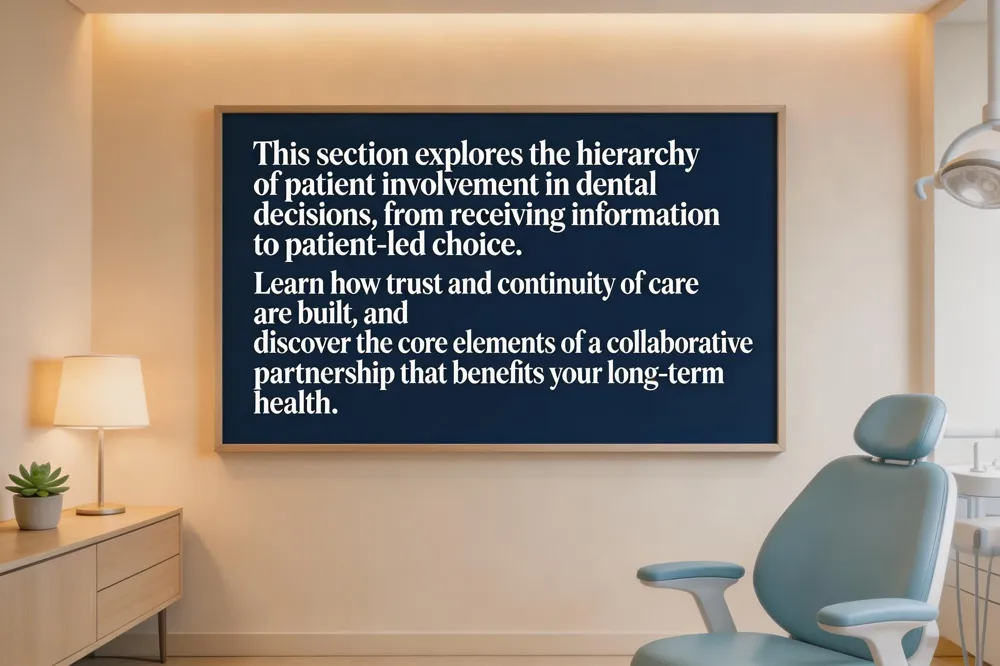
True patient-centered care involves more than just providing information; it’s about facilitating informed choice. A useful model describes a hierarchy of information and choice during a consultation:
| Level | Type of Consultation | What It Involves | Patient's Role |
|---|---|---|---|
| 1 | Information Provision | Dentist explains evidence-based findings and treatment needs. | Listener, receiving information. |
| 2 | Information & Choice | Dentist presents a few clinically appropriate treatment options. | Chooses from pre-selected options. |
| 3 | Informed Choice with Support | Dentist provides tools (e.g., models, imaging) to weigh pros, cons, and personal values. | Active collaborator in shared decision-making. |
| 4 | Patient-Led Decision | Patient has final say, even if choice differs from clinical advice (with clear understanding of risks). | Ultimate decision-maker. |
The goal is not necessarily to reach Level 4 in every situation, but to operate at the level of involvement you desire. A patient-centered dentist will assess and adapt to your preferred level, ensuring you feel supported, not steered.
Building Trust Through Continuity and Overcoming Barriers
Trust is the foundation of any effective healthcare partnership. Continuity of care—seeing the same familiar team at each visit—is crucial for building trust in dentistry. It creates a safe environment where you feel comfortable sharing concerns and asking questions, which directly reduces dental anxiety.
A significant barrier to true partnership can be "defensive practice", where a dentist’s fear of potential complications or litigation leads them to overly control decisions. While clinical expertise is vital, patient-centered care balances this duty of care with respect for your autonomy. The ideal is a transparent dialogue where clinical recommendations are clearly explained, and your preferences are genuinely incorporated into a mutually agreed-upon plan.
Core Elements of a Collaborative Dental Partnership
| Partnership Aspect | What It Looks Like in Practice | Benefit for Your Health |
|---|---|---|
| Shared Decision-Making | Discussing pros, cons, and alternatives for every treatment step. | Plans align with your goals, increasing follow-through. |
| Personalized Education | Using intraoral cameras or models to explain conditions and techniques. | You understand why and how to care for your smile. |
| Consistent Care Team | Building relationships with dentists and hygienists you know. | Reduces anxiety and improves communication over time. |
| Transparent Communication | Allocating time for your questions and explaining costs clearly. | Builds trust and eliminates unwelcome surprises. |
| Respect for Preferences | Considering your schedule, budget, and personal values in planning. | Care is realistic and sustainable for your lifestyle. |
The Language of Care: Communication That Builds Understanding
The Pillars of Patient-Centered Communication
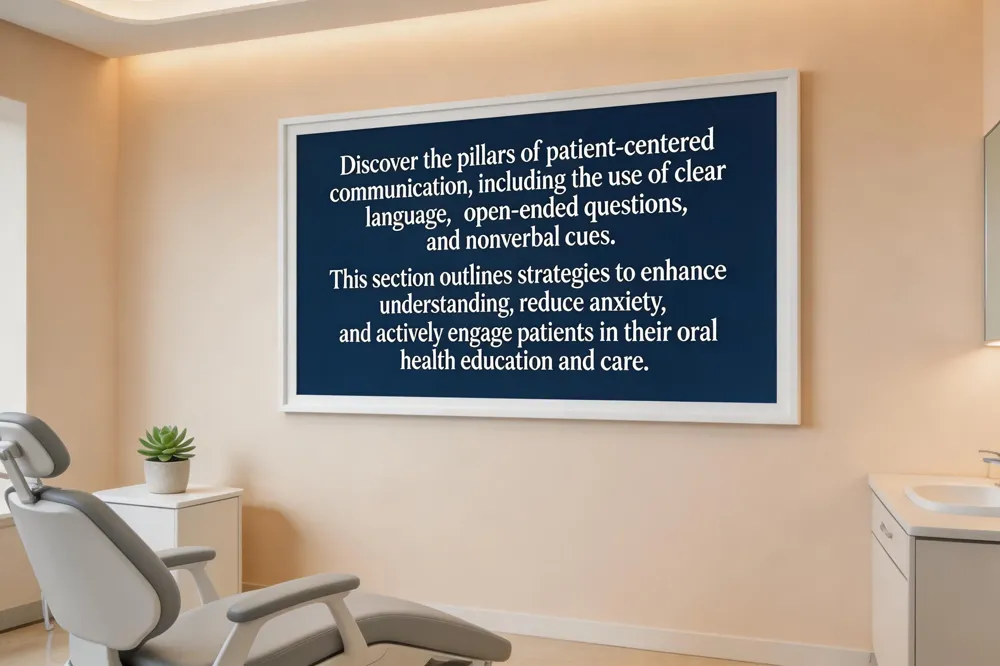
In patient-centered care, communication is the bridge between clinical expertise and patient comfort. It moves beyond simply delivering information to creating a genuine partnership. This involves actively listening, showing empathy, and ensuring the patient's voice guides the process. Clear dialogue fosters trust and directly influences health outcomes, making patients more likely to adhere to treatment plans and return for preventive care.
Effective Communication Strategies for Dentists
Dentists can implement several key strategies to enhance communication. Avoiding complex medical jargon is essential, as dental terminology can be difficult for many patients. Instead, use simple, clear language to explain conditions and options.
Visual aids and technology, such as intraoral cameras and 3D imaging, are powerful tools. They allow patients to see their oral health in real-time, making abstract issues tangible and understandable.
Allocating ample, unrushed time for questions is another critical strategy. This ensures patients feel their concerns are addressed and that they can participate fully in shared decision-making about their care.
The Role of Open-Ended Questions in Dental Consultations
Open-ended questions transform a standard consultation into a collaborative dialogue. Asking 'What are your main concerns?' or 'How do you feel about your smile?' invites patients to share their personal experiences and goals.
This approach helps uncover unspoken anxieties or barriers to care that might otherwise go unnoticed. It provides vital context about a patient's lifestyle and values, enabling the dental team to create a truly personalized care plan.
Why Nonverbal Communication Is Important in Dentistry
Nonverbal cues—eye contact, body language, and tone of voice—carry immense weight in the dental office. In an environment where patients often feel vulnerable, a gentle tone and calm demeanor can significantly reduce anxiety.
Dentists who maintain open body language and appropriate eye contact signal attentiveness and compassion. This unspoken reassurance helps build a safe, trusting atmosphere, which is fundamental for patient cooperation and overall satisfaction.
Addressing Challenges Through Communication
Two common challenges in dental care are health literacy gaps and dental anxiety. Both can be effectively addressed through deliberate communication.
To bridge health literacy gaps, dentists should explain procedures, risks, and benefits in straightforward, accessible language. Written materials and diagrams can also reinforce understanding.
For patients with dental anxiety, communication becomes a therapeutic tool. Explaining each step of a procedure beforehand, checking in on comfort levels, and using a calm, reassuring tone can help ease fears.
Communication for Prevention and Education
Clear communication is the engine of preventive care. It empowers patients with the knowledge to maintain their oral health between visits. Dentists should actively educate patients about proper brushing and flossing techniques, the impact of diet, and the importance of regular check-ups.
This educational dialogue encourages proactive habits, helping to prevent future issues and promoting long-term wellness.
| Communication Aspect | Key Strategy | Impact on Patient Experience |
|---|---|---|
| Clarity | Using simple language, avoiding jargon | Enhances understanding and reduces confusion about treatments |
| Engagement | Employing open-ended questions and visual aids | Fosters active participation and makes patients feel heard |
| Comfort | Mindful nonverbal cues and unhurried time | Builds trust, reduces anxiety, and creates a calming environment |
Bridging the Gap: From Philosophy to Practice in Your Dental Visit
The gap identified in research: many dentists believe they practice PCC intuitively but lack formal training, leading to varied understanding
Research consistently highlights a common disconnect in dental care. Many dental professionals are confident they provide patient-centered care in dentistry intuitively. However, studies reveal most have had little to no formal training for patient-centred dentistry on its core principles or practical application. This often leads to dentists' understanding of patient-centred care being quite varied.
For instance, a dentist’s view of patient-centered care might focus on basic courtesy, like being nice to patients. While this is essential, true patient-centered care involves much more. It requires structured collaboration, shared decision-making in dental care, and ensuring your values actively guide clinical choices. This training gap in patient-centered skills explains why patients might experience very different approaches from one dental office to another.
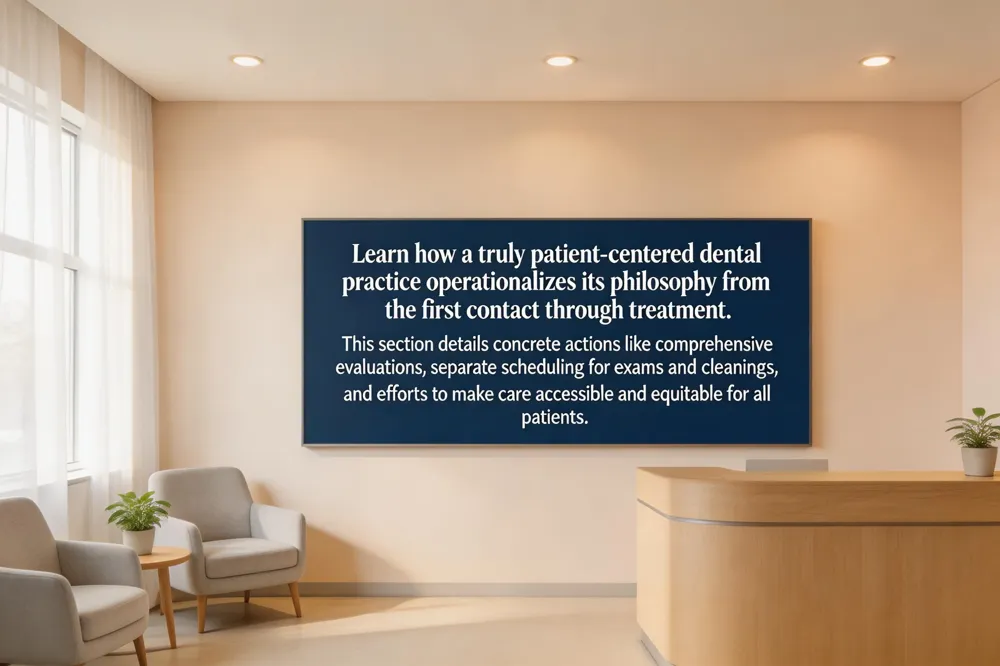
How a truly patient-centered practice operationalizes the philosophy: from the first phone call to the treatment chair
A practice truly committed to this philosophy integrates it into every interaction. It starts with your first phone call. Friendly and accommodating staff work with your schedule to find a convenient appointment time. This initial contact sets a tone of respect and partnership.
During your visit, the focus is on you as a whole person, not just a set of teeth. The team takes time to understand your life, your goals, and any anxieties you may have. Every step, from consultation to treatment, is designed to be a transparent, collaborative process where your voice is heard and valued, embodying a holistic approach to dental care.
Practical examples: reviewing medical/dental history thoroughly, using advanced diagnostics, separate scheduling for exams and cleanings for personalization
Concrete actions define a patient-centered approach. Your first appointment is a comprehensive evaluation, not rushed. The dentist and team thoroughly review your complete medical and dental history to understand your overall health context, forming the basis for individualized dental treatment plans.
Advanced diagnostic technology, like digital x-rays and intraoral cameras, is used not just for precision but for patient education for oral hygiene. These tools help you see what the dentist sees, making complex conditions easier to understand and discuss.
A distinctive practice is separating your cleaning and examination. This allows the dentist to first perform a complete health assessment. Based on that evaluation, they can then recommend the precise type of cleaning you need, ensuring truly personalized dental care plans from the start.
Creating a welcoming, comfortable office atmosphere and showing genuine personal interest
The physical environment plays a crucial role in patient-centered care. The office should feel positive, welcoming, and inviting to help reduce dental anxiety. You are greeted warmly by name, and the team shows genuine interest in your life, asking about family, interests, and your dental health goals, which is key to dentist-patient rapport building.
Comfort extends to the treatment chair. Amenities may include calming music, blankets, or sedation options for anxious patients. The dental team demonstrates compassion for any fear or apprehension, ensuring you feel safe, respected, and at ease throughout your visit, aligning with GDC standards for patient dignity.
Ensuring accessible, equitable care by addressing barriers like cost, language, and transportation
True patient-centered care actively works to remove common barriers to dental care access. This means offering transparent pricing and insurance discussions and flexible sliding-scale payment options or membership plans to manage costs. Practices may provide multilingual resources and interpreter services to ensure clear communication for all patients.
Some offices extend their reach through teledentistry services or community initiatives to improve access. By addressing these practical challenges, a practice demonstrates its commitment to making quality, personalized dental care accessible to everyone in the community, a core aspect of accessible and equitable dental care services.
The importance of formal training and Continuing Professional Development (CPD) for the dental team in PCC skills
Because patient-centered care is a learned skill set, ongoing education is vital. Leading practices invest in formal training for their entire team. This includes embedding patient-centered theory into continuing professional development for patient-centered dentistry and teaching practical skills like advanced communication skills for patient-centered dentistry, behavior change counseling, and shared decision-making techniques.
Continuing Professional Development (CPD) ensures the team stays current with best practices. This commitment to learning translates directly to your experience, fostering consistent, high-quality interactions where you are an active partner in your oral health journey, moving beyond learning patient-centered care on the job.
| Patient-Centered Practice Element | Common Gap in Understanding | How a Committed Practice Implements It |
|---|---|---|
| Defining Care | Seen as basic courtesy and being nice | Structured partnership guided by patient preferences and values in dental care and patient choice in dentistry |
| First Contact | Focused on booking the appointment quickly | Staff trained to be accommodating, friendly, and schedule-conscious |
| Initial Visit | Quick exam, immediate cleaning scheduled | Comprehensive health review, separate cleaning for personalization |
| Decision-Making | Dentist presents a single "best" option | Collaborative discussion of multiple options, pros, and cons |
| Team Training | Learned intuitively or on the job | Formal education in PCC principles and communication skills |
Empowered for Life: Your Role and Our Commitment at Southern Boulevard Dental
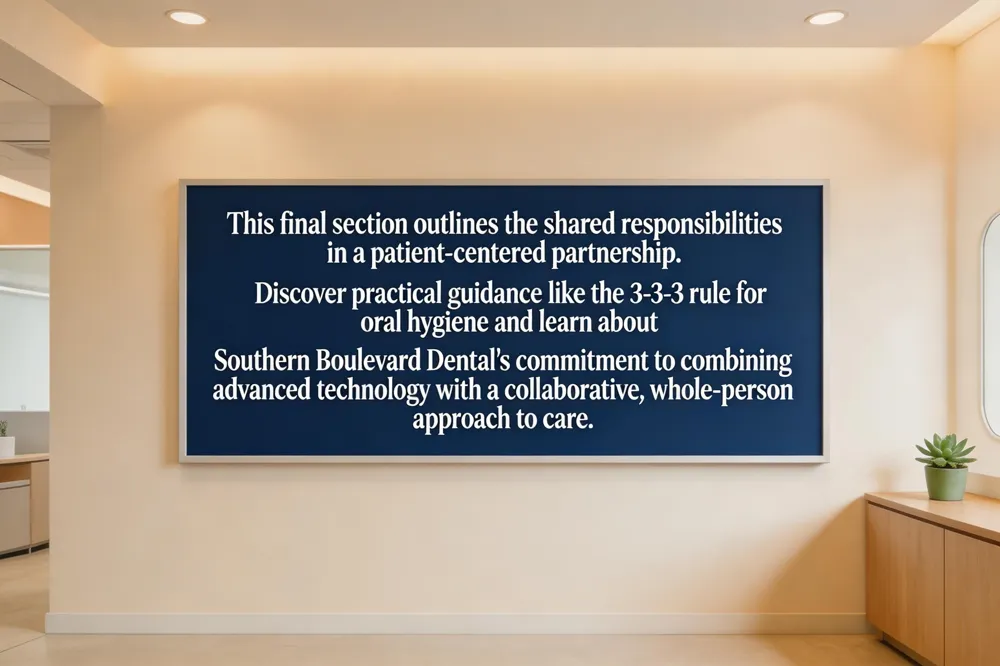
Your Partner for a Lifetime of Healthy Smiles
Patient-centered care fundamentally redefines the dental experience, shifting control and confidence into your hands. It’s about building a partnership where your preferences guide a personalized plan for lasting oral health. This approach has been linked to better physical and psychological outcomes, as you become an active participant in your own well-being. At its core, it transforms the dynamic from a simple clinical transaction to a collaborative journey toward long-term health.
Your Role: The Active Partner
Your participation is the engine of patient-centered care. This means feeling empowered to ask questions until you feel fully informed about any procedure, diagnosis, or recommended treatment. It involves openly expressing your concerns, preferences, and lifestyle factors so your care plan can be tailored to you. Crucially, it extends beyond our office, encompassing your commitment to maintaining recommended home care routines. When you feel heard and respected, you are more likely to follow through with these plans, leading to more successful outcomes and a greater sense of ownership over your oral health.
What is the 3-3-3 rule for teeth?
A key part of maintaining your oral health between visits is having simple, actionable guidance. One example is the 3-3-3 rule for teeth, an enhanced hygiene guideline. It suggests brushing your teeth three times a day (ideally after meals), for a full three minutes each session, and replacing your toothbrush every three months. This routine aims for more consistent plaque control than the standard twice-daily brushing. The three-minute duration ensures you have enough time to gently and thoroughly clean all tooth surfaces, while regular brush replacement maintains its cleaning effectiveness. At a patient-centered practice like ours, such guidelines are offered as part of personalized education to help you develop the habits that work best for your individual needs.
Our Commitment: Advanced Care, Rooted in Partnership
At Southern Boulevard Dental, our commitment to you is twofold: to provide access to the latest dental technologies for precise, comfortable care, and to uphold a deeply ingrained patient-centered philosophy in everything we do. We believe that technology, from digital imaging to intraoral cameras, is most powerful when used to educate and involve you in your care, allowing you to see and understand what we see. Our team engages in ongoing training to refine the communication and shared decision-making skills essential for true collaboration. We focus on the whole person, understanding the profound connection between your oral health and your overall wellness.
We invite you to seek a genuine partnership with your dental provider. Experience the difference of care where you are an active collaborator, not a passive recipient. Schedule a visit with us to discover how a truly patient-centered approach can transform your dental health journey, building confidence and comfort for a lifetime of healthy smiles.
| Core PCC Principle | Your Role as a Patient | Our Practice Commitment |
|---|---|---|
| Shared Decision-Making | Ask questions, express preferences | Provide clear options, collaborative planning |
| Personalized Care | Share medical history, lifestyle details | Tailor treatment plans to your unique needs |
| Education & Empowerment | Adopt home care routines (e.g., 3-3-3 rule) | Offer practical, personalized guidance |
| Trust & Comfort | Voice concerns, seek clarification | Foster a welcoming environment, show empathy |
| Holistic Health Focus | Consider oral-body health connection | Integrate overall wellness into dental care |
Your Dental Journey, Redefined
A Transformative Partnership for Your Health
Patient-centered dental care redefines the traditional dental experience. It transforms it from a simple, one-way service into a collaborative partnership. This approach recognizes that your preferences, values, and lifestyle are the guiding principles for your care plan. The goal is to build a trusting and supportive relationship that prioritizes your comfort, satisfaction, and overall well-being. By focusing on your needs, this partnership empowers you to take an active role in your long-term oral health.
Building a Foundation of Trust for Lifelong Smiles
The ultimate outcome of a patient-centered approach is a positive and lasting relationship with your dental team. This strong foundation of trust leads to better communication, increased adherence to preventive care, and more successful treatment outcomes. When you feel heard, respected, and involved, you are more likely to prioritize your oral health. This commitment contributes to a lifetime of healthier smiles and improved overall well-being, which is the core objective of true patient-centered care.
Becoming an Advocate for Your Own Care
You deserve a dental experience that respects your voice and choices. We encourage you to be an advocate for the level of care you want and need. Look for a practice that demonstrates a commitment to collaboration, clear communication, and personalized treatment planning. A genuine patient-centered practice will take the time to explain your options, answer your questions thoroughly, and work with you to create a plan that aligns with your health goals and comfort level.
Experience the Southern Boulevard Dental Difference
At Southern Boulevard Dental, we are committed to providing this level of personalized, compassionate care. Our team invites you to experience the difference that a truly collaborative approach can make for your comfort and oral health. We look forward to partnering with you on your journey to a healthier, happier smile.
| Aspect of Patient-Centered Care | How It Benefits You | What It Looks Like in Practice |
|---|---|---|
| Collaborative Partnership | You feel respected and involved in decisions. | Dentist discusses options with you, asks for your input. |
| Clear Communication | You understand your health and treatment plans. | Team uses simple language, encourages questions, provides details. |
| Personalized Care | Your treatment is tailored to your unique situation. | Plan considers your health history, lifestyle, and personal goals. |
| Focus on Comfort | Dental visits become less stressful and more positive. | Office provides a calming environment and addresses anxieties directly. |
| Long-Term Relationship | Builds trust for consistent, lifelong preventive care. | Team knows you by name, understands your history, prioritizes continuity. |