Why Same‑Day Crowns Matter
Same‑day crowns dramatically improve patient convenience by eliminating the uncomfortable, messy impression trays and the need for a temporary restoration. With a digital intra‑oral scan, CAD design, and in‑office 3‑D printing or milling, the entire workflow — from impression to final bonding — can be completed in a single visit, usually within 60‑90 minutes. This reduces the number of appointments, saving patients time, travel, and missed work or school. Because the crown is fabricated and placed immediately, patients regain full chewing function and a natural‑looking tooth in the same appointment, avoiding the discomfort and aesthetic gaps associated with provisional crowns. The result is a smoother, more satisfying experience that aligns with modern, family‑focused dental care.
The Digital Workflow Behind Same‑Day Crowns
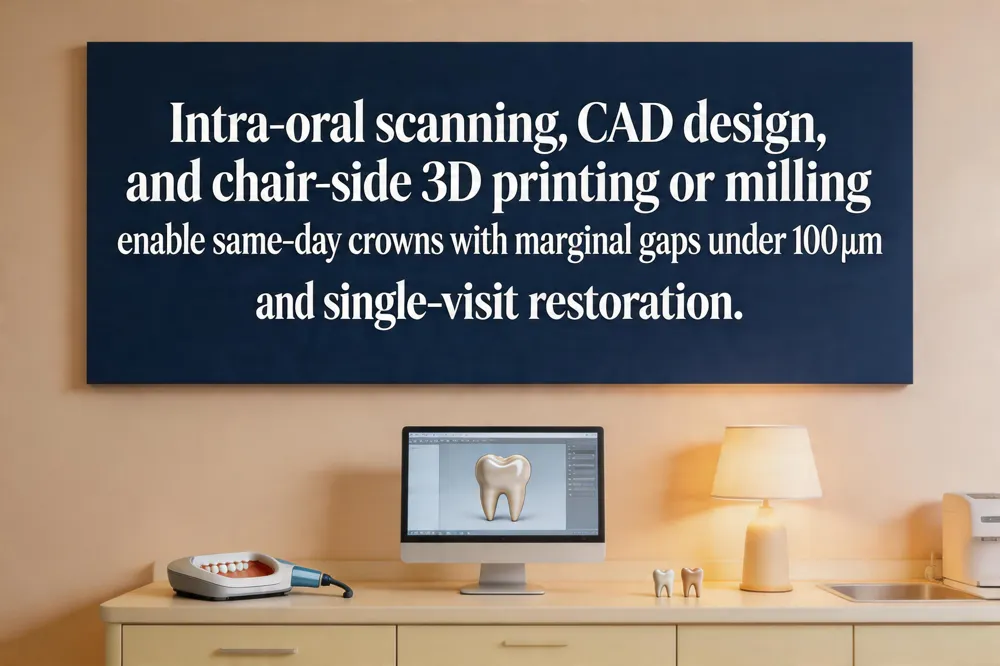 Same‑day crowns are made possible by a seamless digital workflow that begins with intra‑oral scanning. Modern scanners capture a three‑dimensional image of the prepared tooth in 2‑3 minutes with an accuracy of 10‑30 µm, eliminating traditional impression trays, reducing patient discomfort, and avoiding gag reflexes. The scan is transferred to CAD design software, where the dentist digitally shapes the crown to match the tooth’s morphology, bite relationship, and shade. This computer‑aided design step allows precise control of marginal and internal fit, often achieving gaps of less than 100 µm—well within clinically acceptable limits.
From the CAD file the practice can choose in‑office 3‑D printing or milling. 3‑D printers (SLA/DLP) cure biocompatible resin or ceramic‑filled materials layer‑by‑layer, producing a permanent crown in 30‑60 minutes plus post‑curing. Milling units carve the restoration from a solid block of zirconia, lithium disilicate, or high‑strength ceramic in 10‑20 minutes, offering mechanical properties comparable to lab‑fabricated crowns. Both methods achieve micron‑level precision, but milled ceramics provide higher fracture strength for load‑bearing posterior teeth, while printed resins are suitable for low‑load areas or temporary use.
The fit accuracy and marginal gaps achieved by digital workflows are superior to conventional impressions, reducing the need for adjustments and enhancing long‑term periodontal health. Patients benefit from a single‑visit experience, no temporary crown, and immediate restoration of function and aesthetics—all while enjoying the comfort and confidence of cutting‑edge digital dentistry.
Materials and Mechanical Performance of 3D‑Printed Crowns
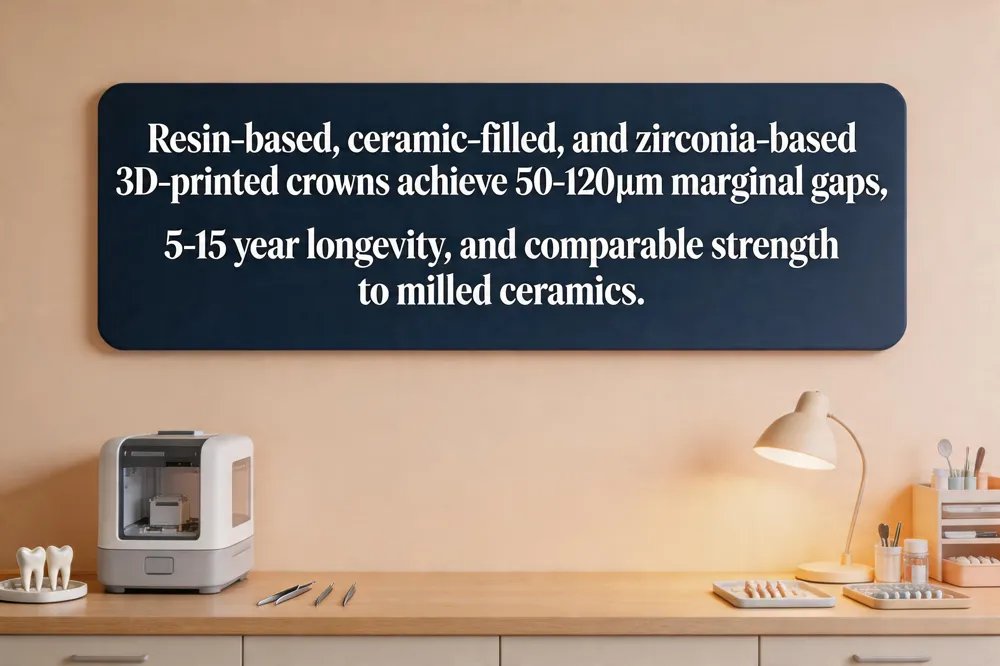 3‑D‑printed dental crowns are fabricated from several material families. Resin‑based composite crowns use high‑strength photopolymer resins that cure quickly for temporary or low‑load restorations. Ceramic‑filled resins, such as nanoceramic‑filled polymers, lithium disilicate, and zirconia‑based inks, are sintered or glazed after printing to achieve hardness, wear resistance, and translucency comparable to milled ceramics. Zirconia crowns printed with a slurry‑based system are sintered at high temperature, producing an ultra‑strong, uniformly dense restoration with natural tooth‑like translucency. Lithium disilicate printed crowns offer excellent aesthetics and sufficient compressive strength for anterior and posterior use. Post‑processing steps—UV curing for resins, debinding and sintering for ceramics, and final polishing or glazing—are essential to reach the required mechanical performance and smooth surface. These workflows deliver marginal gaps of 50‑120 µm, reducing adjustments. Clinically, high‑strength resin or ceramic‑filled crowns last 5‑10 years, with newer materials reporting up to 12‑15 years when properly maintained. The digital design also allows precise shade matching and contouring, providing durable, lifelike restorations in a single visit.
Cost Considerations and Insurance for Same‑Day Crowns
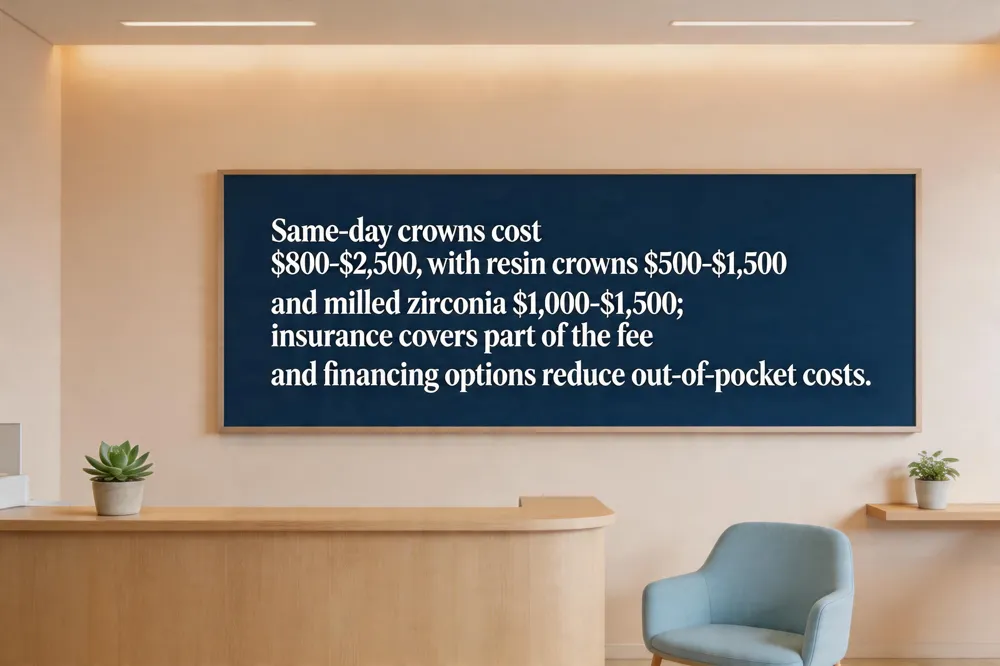 Modern same‑day crowns eliminate temporary restorations and multiple visits, but patients often wonder how the cost compares to traditional lab‑fabricated crowns and what insurance will cover.
Material and lab fee differences – 3‑D‑printed resin crowns typically range from $500 to $1,500, while milled ceramic or zirconia crowns fall between $1,000 and $1,500. The price is driven by material strength, aesthetic layering, and the overhead of in‑office manufacturing versus outsourcing to a dental lab.
Insurance reimbursement – Most dental plans treat a crown as a restorative procedure and cover a portion of the fee. Reimbursement varies with the material (ceramic crowns often receive higher coverage than resin) and the billing code used. Patients with high‑deductible or no insurance may still qualify for partial coverage under medical necessity clauses.
Financing and in‑office discounts – Practices like Southern Boulevard Dental offer flexible payment plans, CareCredit financing, and in‑office discounts that can lower out‑of‑pocket expenses. These options make same‑day crowns affordable while preserving the convenience of a single visit.
Price range for patients – Overall, a same‑day crown costs between $800 and $2,500, depending on material, tooth location, and insurance benefits. Discuss your treatment plan with the dental team to receive a personalized estimate and explore financing solutions.
Temporary vs. Permanent Restorations: From Bis‑Acrylic to 3D‑Printed Solutions
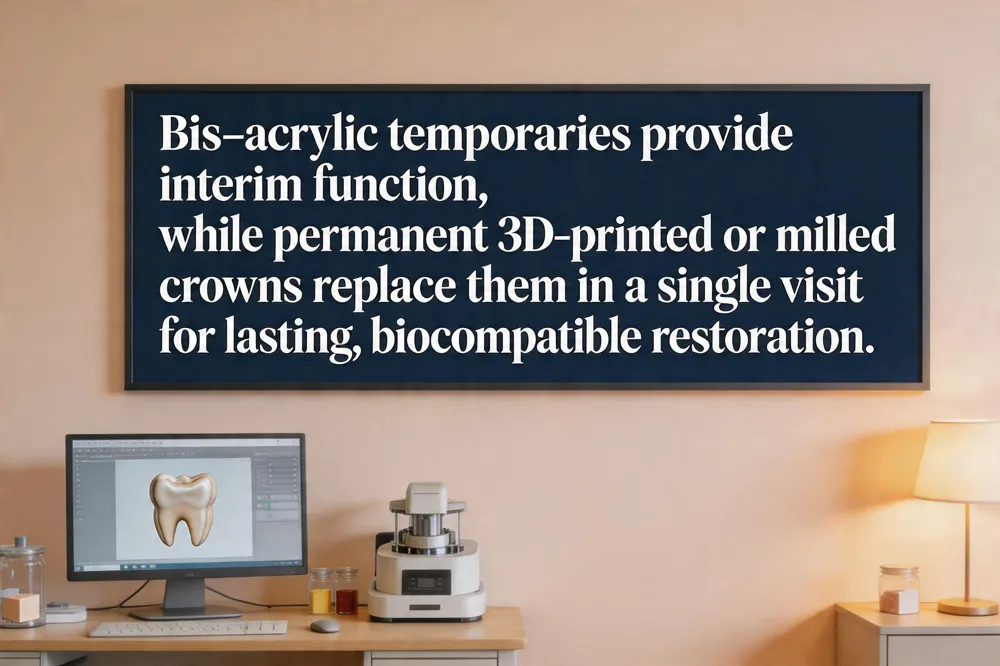 Bis‑acrylic temporary crowns are made from a high‑strength, easy‑to‑mold acrylic resin that mimics natural tooth colour. They provide excellent marginal integrity, allowing patients to eat, speak and keep good oral hygiene while the permanent crown is being fabricated.
A temporary crown can be created chair‑side without an impression by trimming a pre‑formed shell, filling it with fast‑setting flowable composite or bis‑acrylic resin, seating it, curing (if needed), adjusting the occlusion and polishing the margins before provisional cementation.
Clip‑style temporaries work similarly: a pre‑shaped shell snaps onto the prepared tooth after a thin layer of temporary cement or composite is placed inside, then excess cement is removed and the margins are trimmed for comfort.
When the final restoration is ready, the temporary crown is simply removed and the definitive 3D‑printed or milled crown is bonded, providing a long‑lasting, biocompatible solution.
Clinical Outcomes, Patient Satisfaction, and Longevity
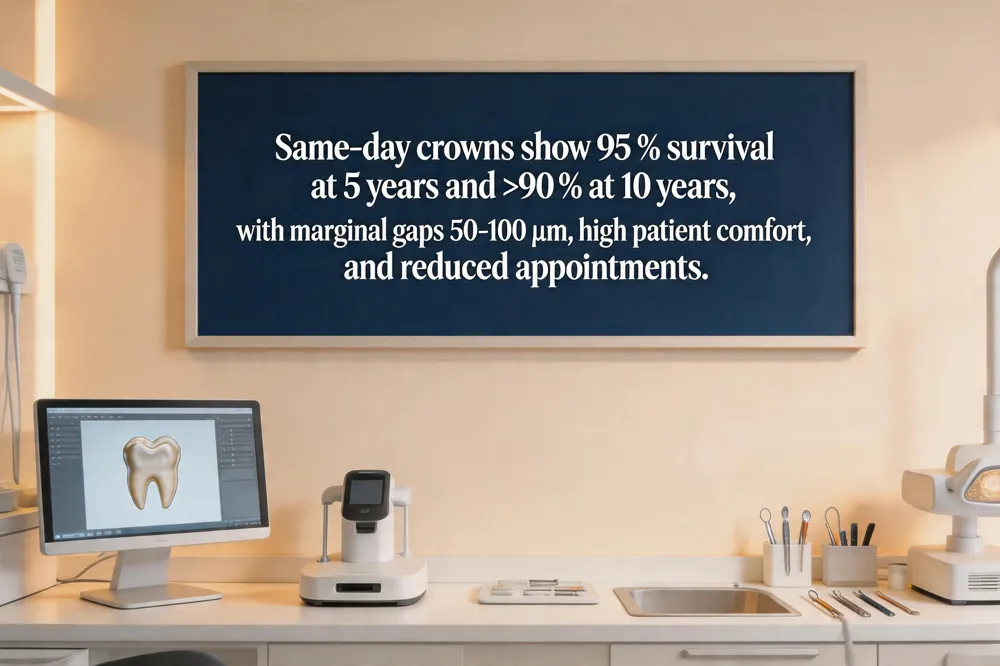 Same‑day crowns show survival rates of 95 % at five years and 90 %+ at ten years when fabricated from high‑strength ceramic or zirconia, matching laboratory‑milled restorations. Digital intra‑oral scanners achieve marginal gaps of 50‑100 µm, which protects periodontal health by limiting plaque‑. secondary caries. Patients benefit from a painless, non‑invasive scan, elimination of temporary crowns, and a total chair time of 60‑90 minutes, resulting in higher comfort and fewer appointments. Recent advancements—high‑resolution scanners, AI‑assisted CAD design, fast SLA/DLP 3‑D printers, and ultrafast zirconia sintering—further improve fit accuracy and material strength, boosting long‑term outcomes.
Are Same‑day crowns worth it? Yes, for most straightforward cases they provide convenience, speed, and comparable durability to lab‑crafted crowns, especially when the practice uses calibrated CAD/CAM systems.
What are the latest advancements in digital dentistry? High‑resolution intra‑oral imaging, AI‑driven design, chairside 3‑D printing of nanoceramic resins, guided implant planning, and digital smile simulation now streamline care and enhance precision.
3D‑printed dental crown review: In‑office printing delivers a crown within 30–60 minutes, offers excellent marginal fit, and uses biocompatible nanoceramic resins that meet FDA standards. While long‑term data are still emerging, current studies show comparable short‑term performance to milled crowns, making them a reliable, cost‑effective option for many patients.
Future Directions: Fast Zirconia Printing and AI Integration
 The next wave of same‑day crowns will combine ultrafast thermal debinding with porous graphite‑felt sintering, cutting zirconia sintering time from hours to minutes while preserving the material’s renowned strength and translucency. AI‑driven design software will automatically generate optimal crown contours and detect any occlusal interferences, streamlining the CAD step and further reducing chair time. These advances make chairside permanent zirconia crowns a realistic reality, allowing patients to receive a fully finished, esthetically matched restoration in a single visit. Regulatory bodies such as the FDA and ISO 13485 are already reviewing fast timelines for these new workflows, ensuring biocompatibility and consistent manufacturing. Sustainability benefits include dramatically lower material waste compared with traditional milling and reduced energy consumption thanks to rapid sintering.
3D printed zirconia crowns: Zirconia crowns can now be fabricated with a 3‑D‑printing system that deposits a high‑purity zirconia slurry layer‑by‑layer, which is then sintered at ≈ 1 500 °C to achieve a dense, ultra‑strong restoration. The digital workflow begins with an intra‑oral scan, allowing the crown to be designed precisely to the patient’s bite and anatomy before the printer creates the exact shape in minutes. Because the model is built additively, the final crown exhibits a highly uniform microstructure, excellent translucency, and superior fit, reducing the need for extensive adjustments at placement. After the brief sintering cycle, the crown can be stained and glazed to match neighboring teeth, delivering both strength and natural aesthetics. At Southern Boulevard Dental we combine this cutting‑edge technology with our patient‑centered approach, often delivering a fully finished zirconia crown in a single visit.
Embracing the Future of Restorative Care
Same‑day crowns combine digital impressions, computer‑aided design and chairside 3‑D printing to deliver a restoration in one visit. Intra‑oral scanners capture a precise 3‑D model in seconds, eliminating messy trays and reducing gag reflex. The CAD software then tailors the crown’s shape, occlusion and shade, guaranteeing a fit that minimizes adjustments. Whether fabricated from resin for low‑load areas or from milled zirconia for posterior teeth, the restorations achieve marginal gaps under 100 µm and strength comparable to lab‑produced crowns, lasting 10‑15 years with proper care. Because the entire workflow occurs in‑office, lab fees and prostheses are avoided, lowering cost and improving patient convenience and comfort. The streamlined process also reduces chair‑time, allowing practices to treat patients while maintaining a comfortable experience.