Why Seasonal Care Matters
Temperature and humidity directly influence saliva flow—dry winter air and hot summer dehydration both reduce this natural cleanser, increasing acid exposure and decay risk. Seasonal eating habits also shift: summer brings sugary iced drinks and fruit juices, while fall and winter bring comfort foods high in sugar and acid, both of which can erode enamel. Maintaining a steady routine of twice‑daily brushing with fluoride toothpaste, daily flossing, and regular use of sugar‑free gum works year‑round and counteracts these fluctuations. Scheduling dental check‑ups before high‑risk periods—such as before summer vacations or after holiday indulgences—allows early detection of problems and timely professional cleanings, keeping smiles healthy every season.
Daily Foundations: Brushing, Flossing, and Products
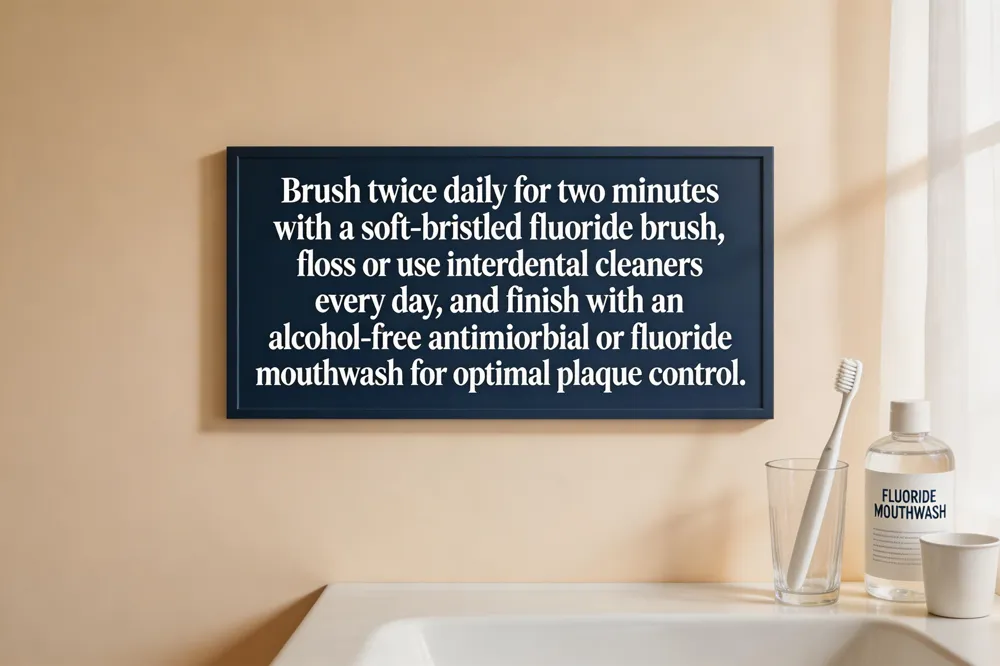 Flossing or using interdental brushes daily removes plaque where a brush cannot reach. For tight spaces, a water flosser can be a painless alternative, but traditional floss remains the gold standard for biofilm removal.
Select a fluoride‑rich toothpaste (1,000‑1,500 ppm OTC or prescription‑strength if needed) and consider a fluoride or antimicrobial mouthwash to strengthen enamel and reduce bacterial load.
Order of routine: rinse briefly to loosen debris, floss or clean between teeth, brush for two minutes, then finish with mouthwash and a final water sip to stay hydrated and wash away any remaining particles.
10 ways to keep your teeth healthy include brushing twice daily, flossing, limiting sugary snacks, staying hydrated, using sugar‑free gum, protecting teeth with a mouthguard during sports, applying SPF lip balm, avoiding ice chewing, using a straw for acidic drinks, and scheduling dental visits at least twice a year.
Best oral‑hygiene products are a soft‑bristled brush, fluoride toothpaste, dental floss or interdental brushes, an alcohol‑free antimicrobial mouthwash, and a tongue scraper.
Follow the steps above each day for a confident, healthy smile.
Seasonal Adjustments: Summer Heat and Winter Dryness
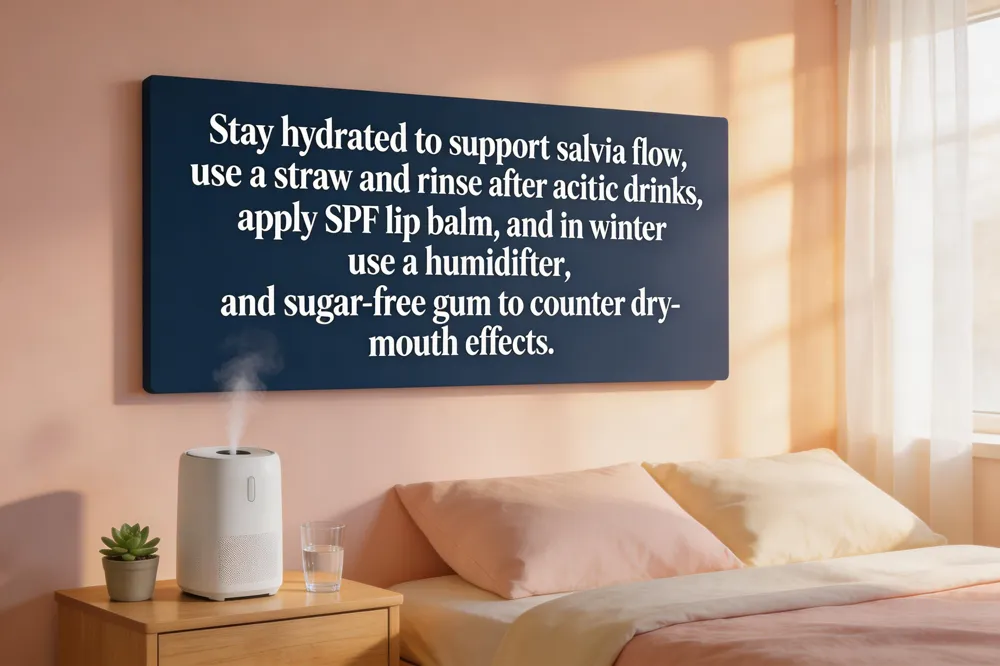 Summer heat and winter dryness demand a few simple tweaks to keep your mouth healthy. Stay well‑hydrated; water stimulates saliva, which neutralizes acids and washes away food debris. When enjoying sodas, sports drinks, or citrus juices, sip through a reusable straw and rinse with water afterward to limit direct enamel contact. Protect your lips with an SPF‑rated balm, reapplying every few hours under sun exposure. In winter, combat dry mouth by using a humidifier, sipping water frequently, and chewing sugar‑free gum to boost saliva flow. Choose enamel‑friendly snacks: fresh fruit, crunchy vegetables, cheese, or nuts instead of sticky candies and sugary treats.
How to keep teeth healthy naturally
Brush twice daily with a soft‑bristle brush and fluoride toothpaste, floss each day, and rinse with water after meals. Eat calcium‑rich foods, get vitamin D, and limit refined sugars. Chew sugar‑free gum and stay hydrated to support saliva.
Oral health tips for adults
Use fluoride toothpaste, replace brush every three months, floss or use interdental cleaners daily, limit sugary/acidic foods, visit the dentist at least twice a year, wear a mouthguard for sports, avoid tobacco and excess alcohol, stay hydrated with fluoridated water.
Importance of oral hygiene in daily life
Good oral care removes plaque, preventing cavities, gum disease, and systemic inflammation that can affect heart, lungs, and diabetes control. It also preserves confidence and overall well‑being.
Healthy teeth and gums
Maintain twice‑daily brushing, daily flossing, a balanced diet rich in calcium and vitamin D, regular professional cleanings, and avoid tobacco. Use a soft brush to protect gums.
Types of oral hygiene
Mechanical (brushing, flossing), chemical (fluoride or antimicrobial rinses), and professional (in‑office cleanings and exams) work together to prevent decay and disease.
Protective Gear and Emergency Prep
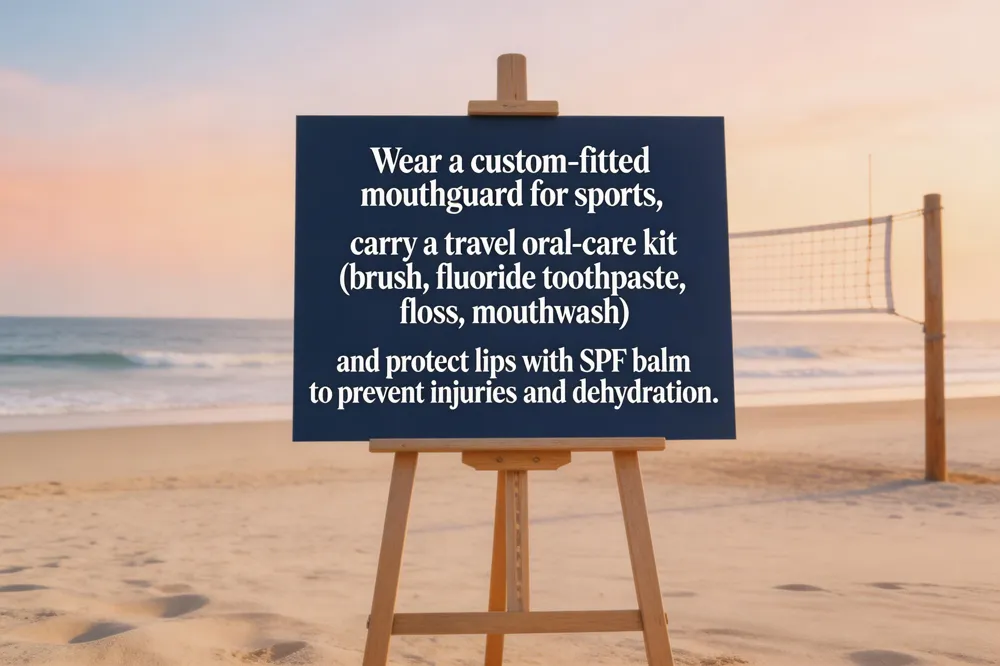 Custom‑fitted mouthguards are essential for summer sports—basketball, soccer, biking—because they absorb impact, protect teeth, gums, and soft tissues from fractures or avulsions. Pack a travel oral‑care kit (toothbrush, fluoride toothpaste, floss, and a small antimicrobial mouthwash) when vacationing; let the brush air‑dry to curb bacterial growth. Apply an SPF lip balm every few hours to shield lips from UV‑induced chapping and actinic damage. Avoid chewing ice, hard candy, or other rigid objects that can chip enamel or injure gums.
How to care for teeth without a dentist: Brush twice daily for two minutes with a soft‑bristle fluoride brush, floss or use a water flosser, rinse with fluoride mouthwash, limit sugary/acidic foods, stay hydrated, chew sugar‑free gum after meals, and replace your brush every three months.
3‑3‑3 rule: Brush three times, three minutes each, and wait three hours before bedtime—most professionals recommend brushing twice for two minutes, flossing daily, and regular check‑ups.
2‑2‑2 rule: Brush twice a day for two minutes and see your dentist twice a year.
Strengthening teeth: Ensure adequate calcium and vitamin D, use fluoride toothpaste, limit sugary snacks, brush gently, and maintain regular professional cleanings to support bone and gum health.
Professional Support and Seasonal Check‑Ups
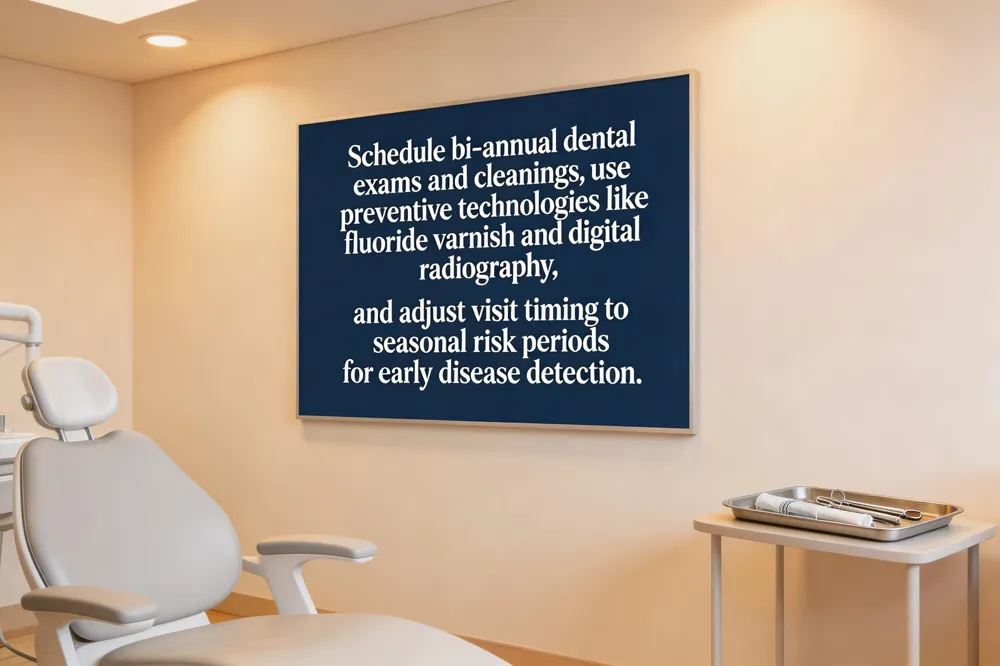 Maintaining a healthy smile year‑round starts with biannual dental examinations and professional cleanings. These visits allow us to detect early decay, remove hardened plaque (tartar), and apply fluoride varnish or sealants that strengthen enamel during high‑risk seasons such as summer’s sugary treats or winter’s dry air. By scheduling appointments seasonally—spring for a fresh start, summer before travel, fall after holiday indulgences, and winter to combat dry‑mouth issues—you keep your oral health in sync with climate‑related challenges. Modern preventive technologies, including digital radiography, air‑polishing, and VELscope fluorescence screening, enhance early detection of cavities, gum disease, and oral cancer, ensuring timely, minimally invasive care.
How long do teeth last without brushing? Plaque forms within hours; acids begin demineralizing enamel almost immediately. Within 24‑48 hours tartar can develop, and after a week you may notice bad breath and gum irritation. A month of neglect often leads to visible cavities and early gingivitis; a year can result in serious decay, loose teeth, and possible tooth loss.
Why are teeth important? They enable chewing for nutrition, speech for communication, facial support for confidence, and help prevent systemic diseases such as heart disease and diabetes.
What is the 50‑40‑30 rule? In an aesthetic smile, the perceived width ratios of central incisors, lateral incisors, and canines are roughly 50 %, 40 %, and 30 % of the total anterior display, guiding harmonious proportions.
Oral hygiene PDF Download comprehensive guides from the ADA or HRSA, or request a personalized handout from our office for step‑by‑step brushing, flossing, diet tips, and special‑needs strategies.
5 Ways to take care of your teeth
- Brush twice daily with a soft‑bristle brush and fluoride toothpaste using a 45‑degree angle.
- Floss daily to remove plaque between teeth.
- Rinse with an antimicrobial or fluoride mouthwash.
- Limit sugary/acidic foods, stay hydrated, and chew sugar‑free gum.
- Schedule regular dental check‑ups and cleanings at least twice a year.
Special Considerations: Allergies, Medications, and Lifestyle
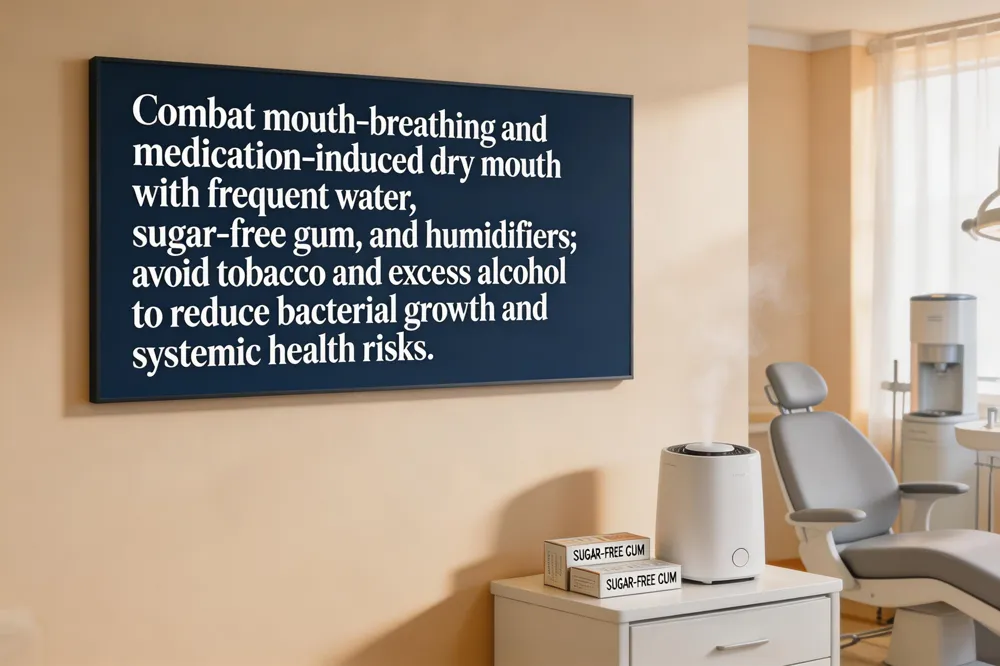 Allergy season often triggers nasal congestion, leading many people to breathe through the mouth. This mouth‑breathing dries the oral tissues, reduces saliva flow, and encourages plaque buildup. Counteract it by staying well‑hydrated, using a humidifier, and rinsing with water after exposure to allergens. Certain prescription drugs—especially antihistamines, decongestants, and some antidepressants—can cause xerostomia (dry mouth). Chewing sugar‑free gum or sipping water throughout the day helps stimulate saliva and protect enamel. Tobacco and excessive alcohol use both lower saliva production, increase bacterial growth, and raise the risk of gum disease, oral cancer, and systemic conditions such as heart disease and diabetes. Reducing or quitting these habits dramatically improves oral and overall health.
Teeth care tips at home: Brush twice daily with a soft‑bristled toothbrush and fluoride toothpaste, using gentle circular motions and paying special attention to the gum line and tongue. Floss or use a water flosser daily, rinse with an antimicrobial or fluoride mouthwash, eat a balanced diet rich in crunchy vegetables and calcium‑dense foods, limit sugary snacks and drinks, stay well‑hydrated, avoid tobacco and excess alcohol, and schedule regular dental check‑ups and cleanings for early detection and long‑term smile health.
Maintaining Strong Teeth All Year
Keep your smile bright by blending core habits—twice‑daily brushing with fluoride toothpaste, daily flossing, and regular water intake—with seasonal adjustments. In summer, stay hydrated, use a straw for acidic drinks, and protect lips with SPF balm; in winter, use a humidifier, choose softer foods, and consider fluoride rinses. Professional cleanings every six months catch early decay and reinforce prevention. Southern Boulevard Dental offers personalized plans, advanced fluoride treatments, and flexible scheduling, ensuring your oral health thrives no matter the season. We’re dedicated to your confidence and comfort.