Introduction
Dental implants are titanium posts that replace missing tooth roots, offering a permanent, natural‑looking solution that preserves jawbone health and restores full function. The treatment unfolds in several carefully planned stages—initial consultation and imaging, surgical implant placement, a healing period for osseointegration, minor abutment attachment, and finally the custom‑made crown. Success depends on factors such as bone density, gum health, overall medical condition, and strict adherence to post‑operative care. This guide walks you through each step, explains typical timelines, and answers the most common patient questions so you can feel confident and prepared for a smooth, lasting restoration.
Step 1 – Consultation, Imaging, Planning, and Cost Overview
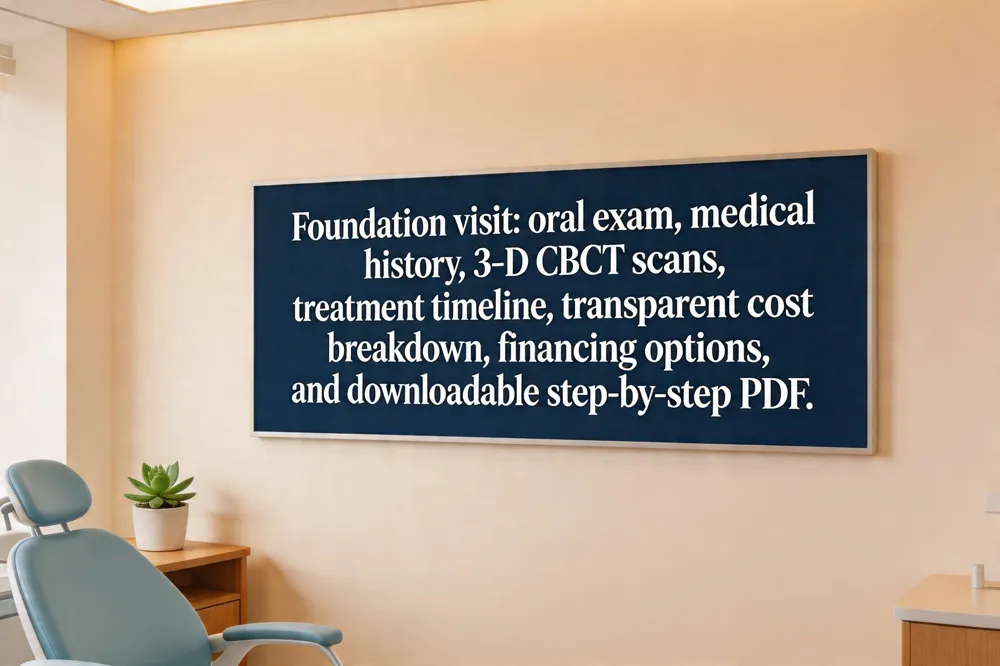 The first visit sets the foundation for a successful implant. A thorough oral exam and medical‑history review identify any gum disease, bone loss, or systemic conditions that could affect healing. 3‑D CBCT scans and panoramic X‑rays evaluate jawbone density, locate vital structures, and determine whether a bone graft or sinus lift is needed. Using this data the dentist creates a personalized treatment timeline, outlines each surgical and restorative phase, and provides a transparent cost breakdown—including the implant fixture, abutment, crown, and any adjunctive procedures. Financing options and a downloadable step‑by‑step PDF are offered for easy reference.
Dental implant procedure step by step pdf
A comprehensive plan begins with imaging, possible grafting, implant placement under local anesthesia, a 3‑6‑month osseointegration period, abutment attachment, and final crown placement. The PDF can be downloaded from our website.
Tooth implant process timeline
From consultation to final crown the process typically spans 5–12 months, depending on extractions, grafts, and healing speed. Osseointegration alone requires 3–6 months.
Tooth extraction and implant timeline
Extraction (or socket preservation) is followed by 1–2 weeks of soft‑tissue healing, then a 2–6‑month graft healing (if needed), implant placement, 4–6 months of osseointegration, and finally abutment‑ crown placement within 2–4 weeks
Dental implant process step by step
- Consultation & imaging
- Extraction & graft (if required)
- Implant surgery
- Healing/osseointegration
- Abutment & permanent crown.
Tooth implant cost
A single‑tooth implant ranges $3,000‑$6,000 (post, abutment, crown). Bone grafts add $500‑$3,000, sinus lifts $1,500‑$5,000. Full‑arch solutions can exceed $15,000. We provide an itemized estimate and flexible financing to fit your budget.
Step 2 – Surgical Placement and Immediate Recovery
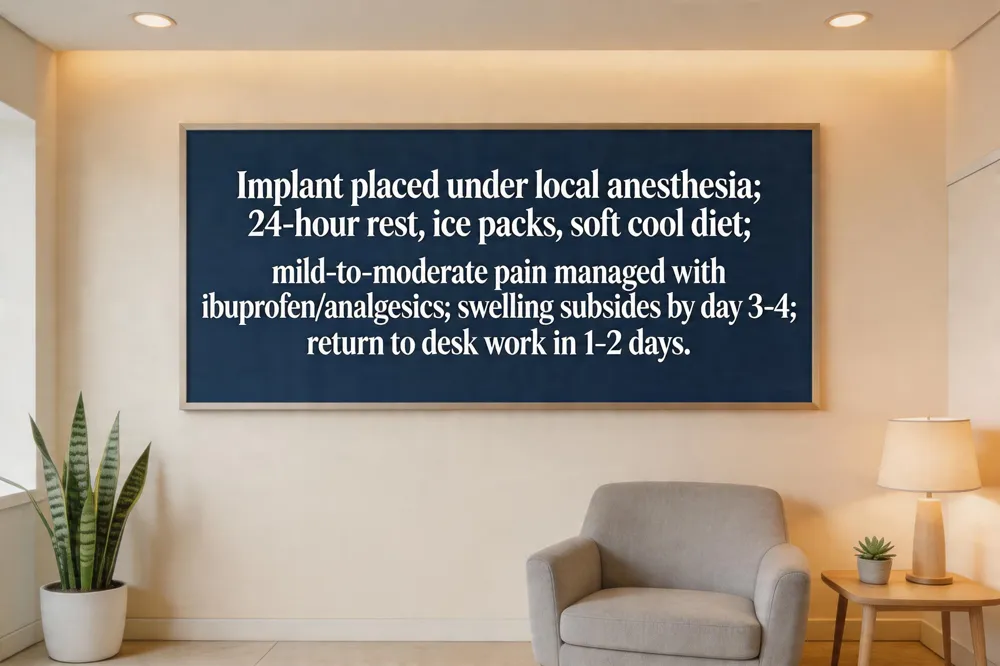 Implant placement is performed under local anesthesia, so patients feel only pressure, not pain, while a titanium screw‑like post is carefully drilled into the jawbone.
The first 24 hours focus on rest with the head elevated, ice packs on the cheek, and a soft, cool diet; brushing the site is avoided and gentle warm‑salt‑water rinses begin after the initial day.
Pain is usually mild to moderate, peaking within the first 48‑72 hours and managed with ibuprofen or prescribed analgesics, while swelling subsides by day 3–4.
The most uncomfortable phase is this early recovery, not the surgery itself.
Dairy is discouraged for the first 4‑6 weeks because its fat and protein can foster bacterial growth and interfere with antibiotics, increasing infection risk.
Most patients can return to desk work within one to two days and to light physical activity after a week; those with demanding jobs may need three to four days off.
If pain, swelling, or fever worsen, contact the dental office promptly.
Step 3 – Healing Phase, Home Care, and Visual Progress
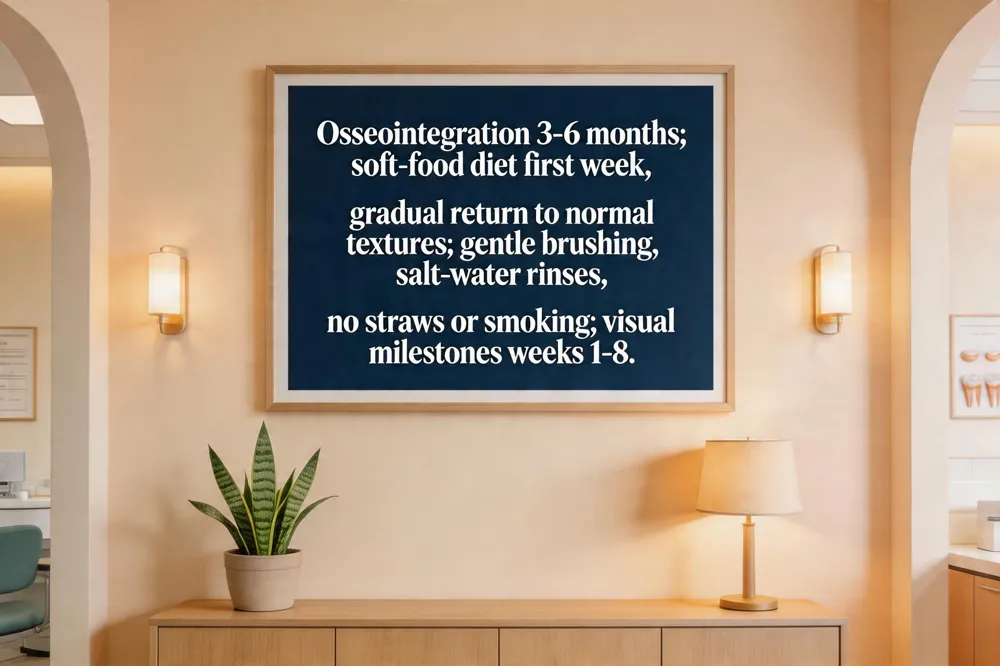 After implant placement, Osseointegration—bone fusing to titanium—takes 3‑6 months. During the first week follow a soft‑food diet (smoothies, yogurt, mashed potatoes) and progress to semi‑soft foods by week 2, then normal textures by weeks 3‑4 as swelling subsides.
Home‑care routine:
- First 24 h: keep gauze on the site, avoid spitting, smoking, and straws.
- Apply ice packs 15 min on/off for the first 48 h, then switch to warm compresses.
- Begin gentle brushing around the implant on day 2 and rinse with warm salt‑water 2‑3 times daily; add any prescribed antimicrobial rinse.
- Use a soft‑bristled brush, avoid floss or Waterpik near the site for 6‑12 weeks, stay hydrated, and refrain from alcohol and tobacco.
Visual milestones: week 1 photos show swollen gums and sutures; week 2 images reveal pink, firm tissue with minimal swelling; weeks 3‑4 display a stable gingival margin; weeks 5‑8 show healed tissue and a temporary crown or healing abutment.
Dos & don’ts: Do keep the wound undisturbed, elevate the head, and attend follow‑ups. Don’t chew hard foods, smoke, or engage in vigorous exercise for the first week.
Accelerate recovery: Follow prescribed meds, maintain a protein‑rich soft diet, apply ice promptly, and keep oral hygiene gentle but consistent.
Key Q&A:
- How to heal faster? Follow post‑op instructions, ice, soft diet, hydration, avoid smoking, and attend appointments.
- Home care after surgery? Gauze pressure, ice, soft diet, gentle brushing, salt‑water rinses, no straws, limit activity.
- What does the implant look like after 2 weeks? Pink, firm gums, minimal swelling, stable implant, no pain.
- Do & don’ts? No touching, smoking, heavy lifting; yes, ice, soft foods, hygiene.
- Normal eating timeline? Soft foods 1‑2 weeks, regular diet by 2‑4 weeks, final crown after 3‑6 months.
- Full‑mouth healing stages? Extraction/graft (if needed), implant placement, 2‑6 months osseointegration, abutment and final prosthesis placement.
Step 4 – Abutment Placement, Final Crown, and Full‑Arch Options
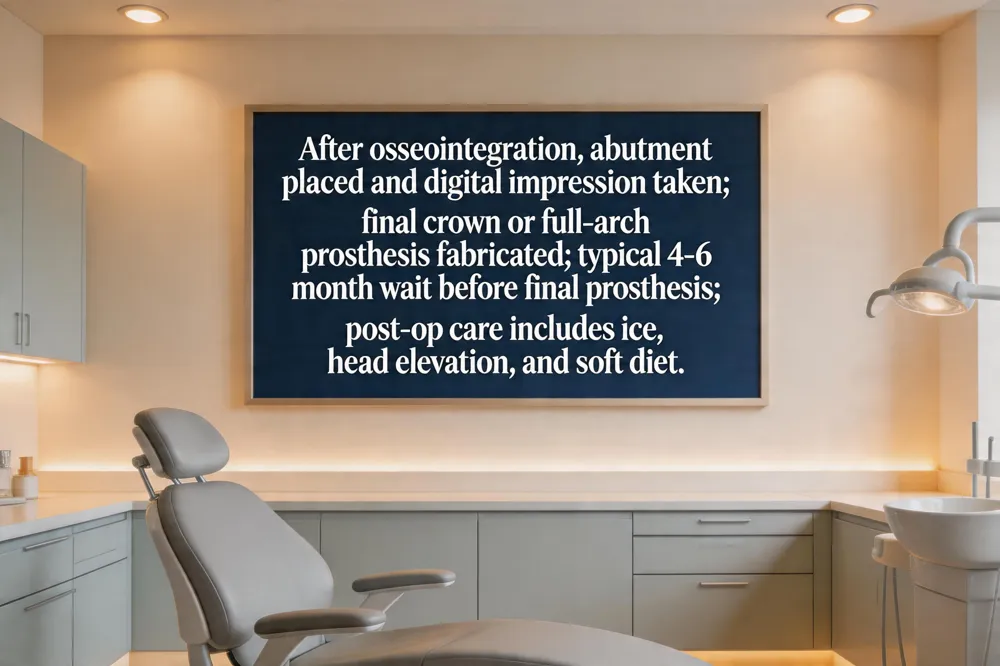 After the implant has completed osseointegration (typically 3‑6 months), the second surgical stage begins: abutment placement. The gum is gently opened, a titanium or zirconia abutment is selected, and it is screwed into the healed implant post. Height and angle are verified for optimal fit, then a digital impression or traditional mold is taken to fabricate the permanent crown. A provisional crown may be placed temporarily to protect the site.
Timing before the final crown: Most clinicians wait 4‑6 months after implant placement to ensure robust bone integration before the final prosthesis is fabricated and attached.
Full‑arch implant video overview: A typical video shows 3‑D scanning, guided surgery, multi‑unit abutment placement, and the final milled framework that restores an entire arch in a few visits, emphasizing precision and patient‑centered care.
All‑on‑4 after‑care: Keep the head elevated, use ice packs for the first 48 hours, avoid smoking, straws, and vigorous rinsing for a week, and follow a soft‑food diet for 7‑10 days. Use chlorhexidine rinses initially, then gentle brushing with a soft brush once cleared.
Full‑mouth procedure summary: Consultation with 3‑D imaging → extractions/bone grafts if needed → placement of 4‑6 titanium posts (often with a same‑day temporary bridge) → 2‑6 months osseointegration → abutment placement → custom permanent crown or bridge.
General post‑op instructions: Avoid rinsing, straws, and smoking for 24‑48 hours; control bleeding with gauze; apply ice then warm compresses; eat soft foods on chew opposite side, and maintain gentle oral hygiene as directed.
Step 5 – Resources, Costs, and Final Recap
 To support a smooth recovery, your practice provides a downloadable Post‑Op Instructions PDF that outlines a short antibiotic course, pain‑medication timing, ice‑pack usage (15 min on/15 min off for the first 24‑48 hrs, then warm compress), head‑elevation while sleeping, and a soft‑food diet for the first week. Oral hygiene guidance includes avoiding brushing the surgical site until cleared, gentle warm‑salt‑water rinses 4‑5 times daily, and a chlorhexidine rinse after day 1.
step‑by‑step photo guide is also available. It shows the initial consultation with 3‑D imaging, the sterile placement of the titanium post under local anesthesia, the later abutment attachment and impression‑taking, and the final custom crown placement with before‑and‑after smile images.
Overall cost considerations involve the implant body, possible bone grafts, abutment, and laboratory‑fabricated crown; most patients see the full treatment span 3‑6 months, with insurance often covering a portion when medically indicated.
Key take‑aways: follow the PDF instructions meticulously, keep the surgical area clean and protected, attend all follow‑up visits, and maintain a soft diet and gentle oral hygiene during the first weeks. These steps dramatically increase the chance of successful osseointegration and a lasting, natural‑looking restoration.
Conclusion
The dental implant journey at Southern Boulevard Dental follows a clear five‑step pathway: a thorough consultation with 3‑D imaging, precise implant placement under local anesthesia, a 3‑ to month osseointegration healing period, a minor procedure to attach the abutment, and finally the custom‑fabricated crown that restores natural function and aesthetics. Throughout each phase, the practice places you at the center of care—using advanced technology, offering personalized treatment plans, and providing compassionate guidance to ease any concerns. We encourage you to review the educational resources we’ve shared, adhere strictly to the post‑operative instructions (soft diet, gentle oral hygiene, no smoking, and scheduled follow‑ups), and stay in touch with our team for any questions. Your comfort, confidence, and long‑term oral health are our top priorities.