Introduction
Teledentistry has surged across the United States, moving from a niche service to a mainstream component of dental care. Fueled by advances in video‑conferencing, secure messaging and digital imaging, the COVID‑19 pandemic accelerated adoption, and today more than 70 % of practices offer remote consultations. Rural residents, seniors and patients with mobility challenges now enjoy same‑day access to qualified dentists without travel, while insurers increasingly reimburse virtual visits, making care more affordable.
Southern Boulevard Dental embraces this technology by integrating HIPAA‑compliant video platforms, intra‑oral scanners and 3‑D imaging into its virtual workflow. Patients in Rio Rancho and surrounding communities can upload photos, X‑rays or digital scans before a live video session, allowing the clinician to draft a personalized treatment plan, discuss costs and answer questions from the comfort of home. This blend of tele‑health and digital treatment planning reduces chair time, streamlines scheduling and builds confidence that care is a click away.
Saving Time, Reducing Travel, and Boosting Convenience
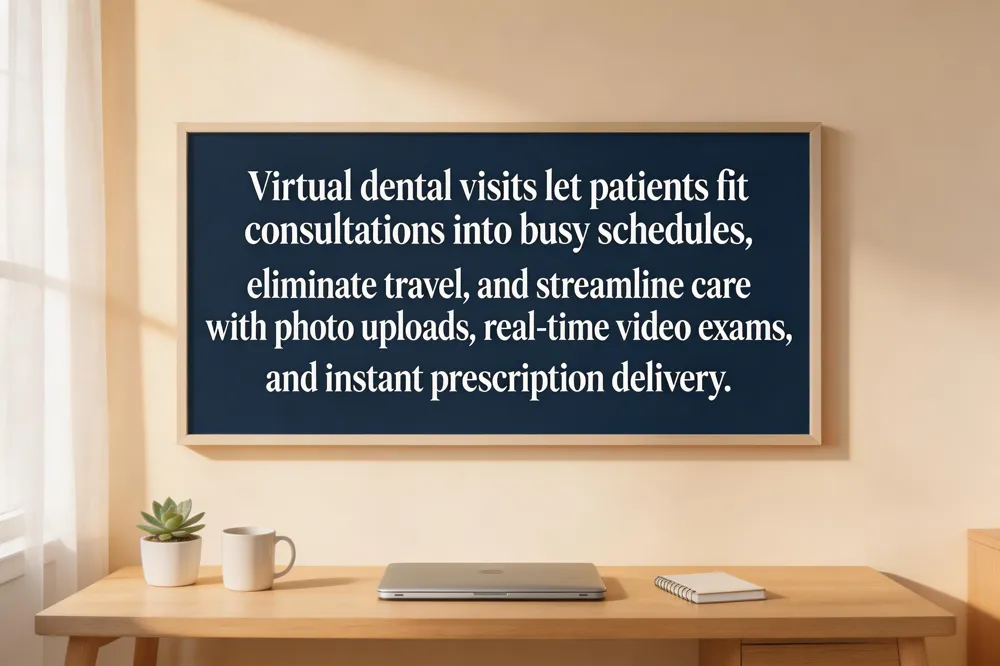 The convenience of video visits also fits easily into busy schedules. Patients can book a virtual consult after work, during a lunch break, or even from home while caring for children, reducing the need to take time off or arrange childcare. Platforms such as SmileSnap, Teledentistry.com, and Even TeleDentists enable quick photo uploads, real‑time video exams, and immediate prescription delivery, streamlining the entire workflow.
What are the benefits of virtual dental consultations? Virtual dental consultations save time and eliminate travel by allowing patients to connect with their dentist from the comfort of home. They reduce exposure to contagious illnesses, which is especially important for seniors, pregnant patients, and those with compromised immune systems. The convenience of video visits makes it easier to fit appointments into busy schedules without taking time off work or arranging childcare. Dentists can assess oral health in the patient’s natural environment, identify habits or factors that affect teeth, and involve family members in the discussion regardless of location. Finally, virtual visits support ongoing management of chronic dental issues, prescription refills, and follow‑up care, keeping treatment plans on track without unnecessary office trips.
Legal Landscape and Professional Legitimacy
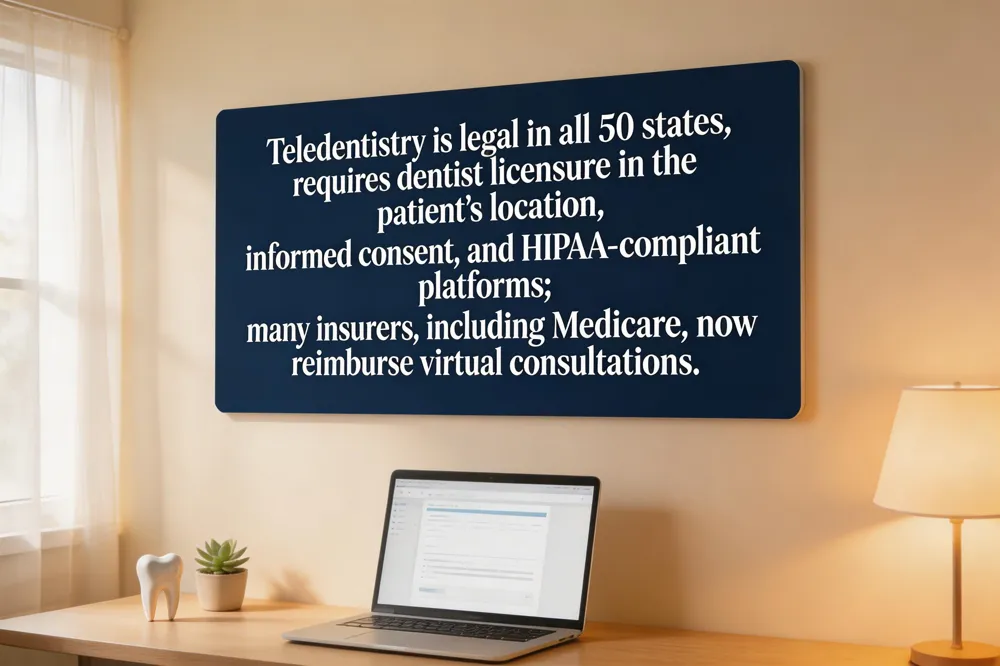 Teledentistry is legally permissible in all 50 U.S. states, but each state sets its own rules. Most require the dentist to be licensed in the patient’s location, to obtain informed consent, and to use HIPAA‑compliant platforms. Some states allow only synchronous video exams, while others also permit asynchronous (store‑and‑forward) image uploads or remote‑monitoring. The scope of services that dental hygienists can provide and the ability to prescribe medication remotely vary by state, so practices must review local regulations before offering virtual care. The American Dental Association endorses teledentistry as a safe, effective delivery model, and many insurance carriers—including Medicare since 2021—reimburse virtual consultations. This endorsement, combined with clear state licensing requirements, establishes teledentistry as a legitimate, patient‑centered option that expands access while maintaining professional standards.
What Teledentists Can Do for You
 What services do teledentists provide?
Teledentists deliver comprehensive oral exams and screenings via live video or store‑and‑forward photos and radiographs, allowing early detection of cavities, gum disease, and other issues. They perform emergency triage, offering immediate advice for severe pain, broken teeth, swelling, or infection, and can prescribe medication or refer patients for in‑person care when needed. Virtual visits also support follow‑up monitoring, post‑procedure check‑ins, and digital treatment planning—including clear‑aligner eligibility screening and partial‑dentures consultations—enhancing patient convenience and reducing chair time.
What software platforms support teledentistry?
Secure, HIPAA‑compliant platforms such as TeethWatch TeleDent, Teledentix, Doxy.me, Zoom for Healthcare, and Teledentistry.com enable video exams, image sharing, and e‑prescriptions. Many practice‑management systems now embed teledentistry modules, allowing seamless integration of intra‑oral scans, 3‑D imaging, and treatment‑plan documentation while protecting patient data. These tools give dental teams flexibility to conduct virtual visits, coordinate specialist referrals, and maintain comprehensive clinical records.
Limitations, Risks, and Managing Tooth Infections
 Virtual dental consultations have transformed access to care, yet they come with clear procedural constraints. Because teledentistry relies on video, photos, and patient‑provided information, any treatment that requires drilling, scaling, suturing, or other hands‑on interventions must still be performed in person. Diagnostic accuracy can be limited when low‑resolution images hide subtle lesions or the floor of the mouth, and patients lacking stable internet or proper lighting may be unable to submit usable visuals, creating access inequities.
Insurance reimbursement for virtual visits varies widely across U.S. plans, and some services are only partially covered, leaving patients with unexpected out‑of‑pocket costs. The absence of a physical exam also raises malpractice concerns; missed or mis‑diagnosed conditions may only become evident after an in‑person follow‑up.
What are the drawbacks of teledentistry? Teledentistry cannot replace hands‑on procedures, may be less reliable without and may be inaccessible to those without reliable internet. Reimbursement is inconsistent, and the lack of a physical exam can increase malpractice risk.
Can I use telehealth for a tooth infection? Yes. A virtual visit lets a dentist assess symptoms, review photos, and prescribe antibiotics or pain relief. However, definitive care—drainage, root canal, or extraction—requires an in‑person exam, so telehealth is a useful first step but not a complete solution.
Digital Dentistry, Hygiene Coaching, and Simple Oral‑Care Rules
 Digital dentistry blends CAD, intra‑oral scanners, 3‑D imaging, cone‑beam CT, and AI‑driven analysis into a seamless workflow. Clinicians capture a virtual impression, view a detailed 3‑D model of the mouth, and simulate outcomes before any tooth is touched. This precision reduces chair time, improves fit of restorations, and lets patients see their treatment plan on screen, increasing confidence and informed consent.
Telehealth extends that precision to daily oral hygiene. Through secure video calls, dentists demonstrate proper brushing and flossing, answer questions in real time, and create personalized care plans based on each patient’s risk factors. Automated reminders and remote coaching keep habits on track, especially for patients in rural or mobility‑limited areas, cutting plaque buildup and preventing gum disease before it requires emergency care.
The 3‑3‑3 rule simplifies brushing: brush three times a day, for three minutes each session, and replace the brush every three months. Divide the mouth into quadrants, spend about 45 seconds per quadrant, and use a soft‑bristled brush at a 45° angle. This mnemonic ensures consistent, effective cleaning and maintains optimal oral health.
Conclusion
Virtual dental consultations have proven to be a game‑changer for accessibility, efficiency, and patient comfort. By allowing patients to share photos, videos, and digital scans before stepping into the office, practices can triage urgent cases, streamline treatment planning, and reduce chair time. The technology expands care to rural and mobility‑limited populations, lowers travel costs, and often eliminates the need for in‑person visits for routine assessments. For Southern Boulevard Dental, the future includes deeper integration of AI‑driven imaging, expanded 24/7 tele‑dentistry services, and seamless cloud‑based collaboration with specialists. Continued investment in secure, HIPAA‑compliant platforms will keep the practice at the forefront of patient‑centered, technology‑driven oral health care.