Introduction to Laser Dentistry and Sensitivity Management
Dental laser technology delivers concentrated light energy that can precisely cut, reshape, or vaporize both hard (enamel, dentin, bone) and soft (gums, mucosa) tissues. By targeting only diseased tissue, lasers preserve healthy structures, seal dentin tubules, and coagulate blood vessels, which minimizes inflammation, bleeding, and thermal trauma. This minimally invasive approach translates into less postoperative swelling, fewer nerve irritations, and a dramatically lower incidence of tooth and gum sensitivity—an outcome patients value highly for comfort and quick return to normal activities. Reducing sensitivity is more than a convenience; it eases anxiety, shortens recovery, and supports long‑term oral health. At our family‑focused practice, we combine advanced laser systems with gentle, patient‑centered care to ensure every procedure is as comfortable and painless as possible.
Understanding Post‑Operative Sensitivity and Laser’s Role
 Post‑operative tooth sensitivity is usually temporary and fades as the tooth heals. For minor procedures such as a shallow filling or simple crown preparation, most patients notice a marked reduction within a few days. Deeper restorations that approach the pulp may keep the nerve irritated for two to four weeks, while cosmetic whitening typically resolves in a few days to a week, especially when a desensitising toothpaste is used. If discomfort persists beyond four weeks or worsens, a dentist should be consulted.
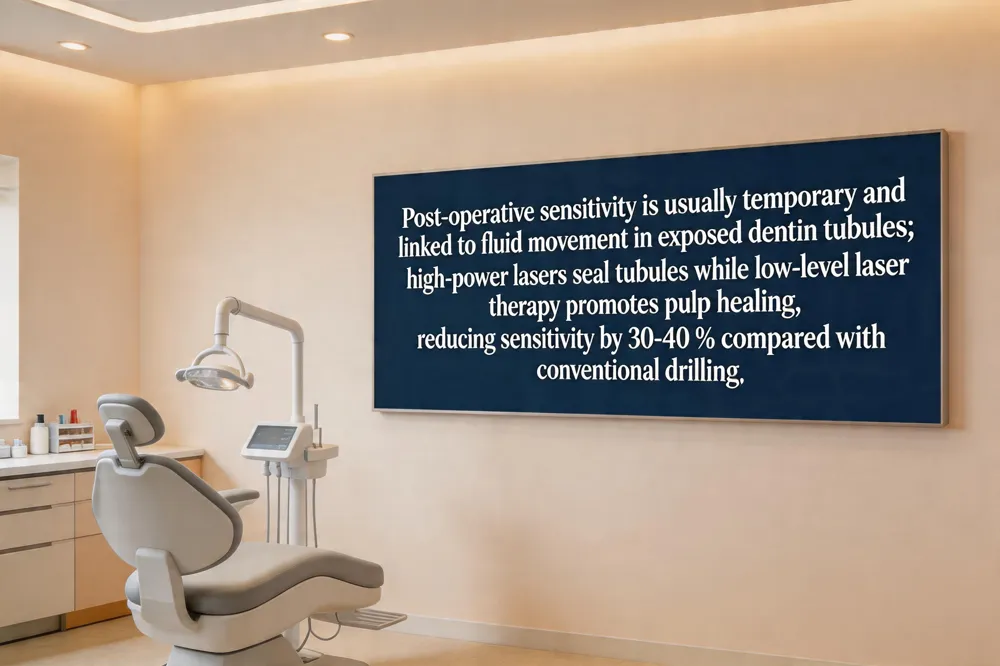
The hydrodynamic theory explains that fluid movement within exposed dentin tubules triggers nerve pain. When dentin tubules are opened during a composite restoration, micro‑leakage, over‑etching, or an irritating bonding agent can allow fluid shifts, leading to hypersensitivity.
Laser dentistry directly addresses this mechanism. High‑power lasers (Er:YAG, Nd:YAG) melt and re‑harden dentin, sealing tubules and creating a protective barrier that blocks fluid flow. Low‑level laser therapy (LLLT) further promotes pulp healing and reduces inflammation, accelerating recovery. Clinical studies consistently show that laser‑assisted cavity preparation and bonding lower postoperative sensitivity by up to 30‑40% compared with conventional drilling.
In practice, patients benefit from faster healing, reduced swelling and a smoother return to normal eating habits when lasers are incorporated into restorative and periodontal treatments.
Laser‑Assisted Treatments at Southern Boulevard Dental
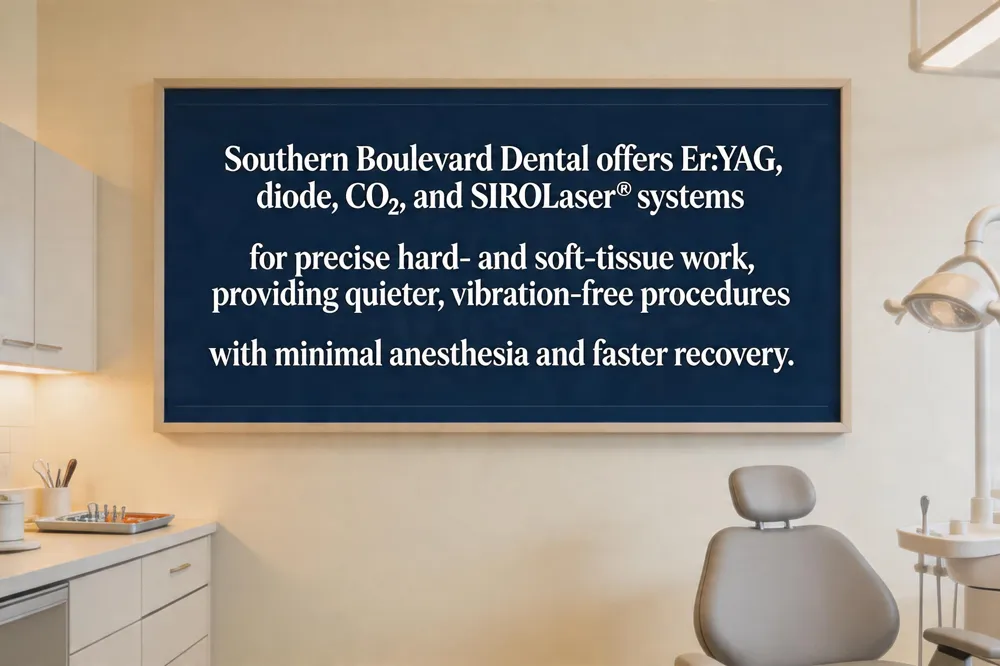 Southern Boulevard Dental in Rio Rancho, NM offers a full suite of laser‑assisted services, including soft‑tissue contouring, gum‑disease therapy, and professional laser tooth whitening. The practice utilizes several laser types: Er:YAG and diode lasers for precise hard‑tissue work that seal dentin tubules and reduce postoperative hypersensitivity; CO₂ lasers for soft‑tissue vaporization with excellent hemostasis; and the SIROLaser® system for gentle soft‑tissue surgery that minimizes bleeding and speeds healing. Patients benefit from a markedly quieter environment, virtually no vibration, and often no need for local anesthesia, making the experience comfortable even for those with dental anxiety.
Laser dentistry near me – does Southern Boulevard Dental offer it? Yes. The clinic’s on‑site lasers enable minimally invasive procedures that cut down on pain, swelling, and recovery time, providing a modern, patient‑centered alternative to traditional drills.
Is laser dental cleaning worth it? For patients seeking reduced trauma, faster healing, and the added photobiomodulation benefits of low‑level laser therapy, laser cleaning can be valuable. Traditional scaling remains effective and more affordable, so the choice depends on individual needs and budget.
Are there any side effects of laser teeth cleaning? Temporary gum irritation, mild swelling, or brief sensitivity to temperature may occur but typically resolve within 24‑48 hours. Serious complications are rare when performed by a trained professional.
Managing Sensitivity After Restorations
 Modern clinical protocols focus on minimizing postoperative pain by using low‑stress, low‑shrinkage restorative materials and ensuring meticulous adhesive technique. A well‑sealed bond, proper isolation, and gentle curing reduce polymerization stress and protect the pulp. After the procedure, many dentists apply desensitizing varnishes, fluoride gels, or resin‑based bonding agents that seal exposed dentin tubules, providing an immediate barrier against thermal and osmotic stimuli.
At‑home care is essential for a smooth recovery. Patients should brush with a soft‑bristled toothbrush and a fluoride‑containing toothpaste, rinse with a fluoride mouthwash or warm salt‑water, and avoid extreme temperatures, acidic foods, and vigorous swishing for the first 24‑48 hours. Over‑the‑counter analgesics such as ibuprofen can help manage lingering discomfort when needed.
FAQ
How can I reduce post‑op sensitivity after a filling or crown? Use a low‑stress, low‑shrinkage material (e.g., SDR® Flow+), apply adhesive correctly, and consider a desensitizing varnish or bonding agent to seal tubules. Brush gently with a soft brush and use fluoride toothpaste, avoiding hot, cold, or acidic foods for 24‑48 hours.
How can I treat dental post‑op sensitivity at home? Switch to desensitizing toothpaste, rinse with fluoride mouthwash or salt‑water, avoid extreme temperatures and acidic foods, and use OTC pain relievers sparingly. Contact your dentist if sensitivity persists beyond a week.
How much does laser desensitization cost? Typical fees range from $100 to $250 per tooth, varying by laser type and practice location. Some insurance plans cover part of the cost, and bundled rates may be available for multiple teeth.
Pros, Cons, and Limitations of Laser Dentistry
 Laser dentistry offers several clear clinical benefits. By using focused light energy, it can seal dentin tubules, coagulate blood vessels, and remove decayed tissue with minimal vibration, which translates into reduced bleeding, lower need for local anesthesia, less postoperative pain and swelling, and faster healing. Patients often experience a shorter recovery period, and a quieter and more comfortable procedure—especially valuable for those with dental anxiety.
However, the technology is not without drawbacks. The high upfront cost of laser units can increase treatment fees, and many insurance plans treat laser cleaning or restorative work as elective rather than preventive, offering limited coverage. Lasers also have limitations: they cannot effectively treat teeth with existing metal restorations, extensive interproximal decay, or large prosthetic components such as crowns and bridges. In such cases, conventional drills or hand instruments remain necessary.
Understanding insurance coverage is essential. Some plans categorize laser prophylaxis as a preventive service and may cover part or all of the cost, while others view it as a cosmetic or elective procedure and provide little reimbursement. Patients should verify their benefits with their insurer and discuss any out‑of‑pocket expenses with the dental team before scheduling laser treatment.
Laser Techniques for Desensitization
 Diode laser mechanism and dentin sealing – A diode laser (≈810 nm) is strongly absorbed by dentin proteins, producing a gentle heat that melts and fuses exposed dentin tubules. This creates an immediate barrier that limits fluid movement, the primary cause of hypersensitivity, and coagulates superficial vessels to reduce inflammation. The procedure is non‑contact, painless, and often requires no anesthetic.
Low‑level laser therapy (photobiomodulation) for healing – After restorative work, Low‑level laser therapy stimulates cellular metabolism, accelerate pulp and soft‑tissue repair, and provide analgesic effects. This photobiomodulation reduces inflammatory mediators, shortens swelling, and diminishes postoperative pain and sensitivity.
Clinical evidence for efficacy – Systematic reviews and randomized trials consistently show laser‑assisted cavity preparation and desensitization lower postoperative sensitivity by 30‑40 % compared with conventional drilling. Low‑level laser therapy applied after procedures accelerates healing and further reduces sensitivity scores within 24‑48 hours.
FAQ
- How does a diode laser help with tooth desensitization? It seals dentin tubules by melting and re‑solidifying their walls, limiting fluid flow and providing an immediate soothing effect while coagulating blood vessels to reduce inflammation.
- How much does laser desensitization cost? Typically $100‑$250 per tooth, varying by practice, laser type, and insurance coverage; bundled rates may be offered for multiple teeth.
Conclusion: Embracing Laser Dentistry for Comfort
Laser technology has repeatedly shown that it can dramatically lower postoperative discomfort. By sealing dentin tubules, coagulating blood vessels and eliminating vibration, lasers reduce fluid movement in teeth and inflammation in gums, leading to up to 30‑40 % less hypersensitivity after fillings, crowns, or periodontal work. At Southern Boulevard Dental in Rio Rancho, Dr. Martin Goebbel and his team use FDA‑cleared Er:YAG, diode and CO₂ lasers to tailor each procedure to the patient’s anatomy, offering a gentle, noise‑free experience that often requires little or no anesthesia. This patient‑centered approach, combined with thorough pre‑ and post‑operative counseling, ensures comfort, faster healing and higher satisfaction. Looking ahead, continued advances in laser wavelengths, digital workflow integration and low‑level photobiomodulation promise to make laser‑assisted care the standard of care for routine restorations and preventive treatments, further enhancing comfort and oral health for every family member.