The Rise of Microbiome‑Friendly Oral Care
Dental caries, the most common chronic disease, arise when acid‑producing Streptococcus mutans dominates the oral biofilm, demineralizing enamel. Traditional toothpastes rely on fluoride and broad‑spectrum antimicrobials to kill bacteria, but they also disrupt beneficial microbes. Recent research shows that probiotic, prebiotic, synbiotic, and postbiotic approaches can selectively suppress S. mutans while nurturing a balanced microbiome, using bacteriocins, biosurfactants, and pH‑modulating metabolites. Southern Boulevard Dental embraces these microbiome‑friendly options because they complement fluoride, reduce plaque acidity, and support long‑term oral health without harsh chemicals. By offering probiotic‑based toothpastes, prebiotic gum‑care products, and synbiotic lozenges, the practice provides families with gentle, science‑backed tools that work with the body’s natural defenses to prevent cavities.
Probiotic Toothpastes: Mechanisms, Evidence, and FAQs
Probiotic Toothpaste – Mechanisms, Evidence & FAQs
| Aspect | Details |
|---|---|
| Mechanisms | Live bacteria (e.g., L. paracasei, L. rhamnosus, S. salivarius K12) colonize tongue, cheeks, enamel; produce bacteriocins, H₂O₂, biosurfactants → inhibit S. mutans, compete for adhesion, maintain neutral plaque pH |
| Key Clinical Evidence | • 2020 in‑vivo trial (PerioBiotic vs. neem) – significant drop in salivary S. mutans after 60 days.<br>• 2022 RCT – 30 % reduction in new carious lesions vs. fluoride‑only over 12 months.<br>• 15‑30 % lower plaque scores after 4‑6 weeks of L. reuteri use. |
| FAQs | What is probiotic toothpaste? A paste containing viable bacteria that rebalance oral microbiome.<br>Does it work? Modest reductions in S. mutans and plaque; adjunct to fluoride.<br>Onset of effect? 1‑2 weeks for measurable bacterial decline.<br>Safety? Generally safe for healthy adults; rare GI upset or taste change; caution in immunocompromised.<br>Cavities? Lowers acid production but does not replace fluoride remineralization. |
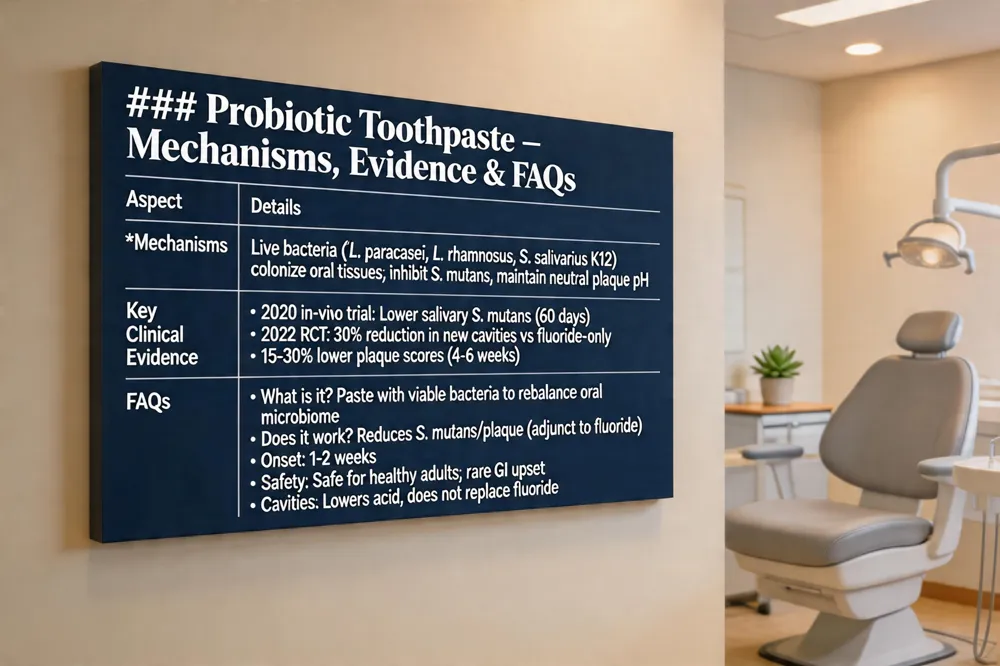 Probiotic toothpaste introduces live, beneficial microbes—most often Lactobacillus paracasei, L. rhamnosus, or Streptococcus salivarius K12—into the oral cavity. These bacteria colonize the tongue, cheeks, and enamel, producing bacteriocins, hydrogen peroxide, and biosurfactants that inhibit Streptococcus mutans, compete for adhesion sites, and help maintain a neutral plaque pH.
Key clinical evidence includes a 2020 in‑vivo trial (PerioBiotic vs. neem toothpaste) showing a statistically significant drop in salivary S. mutans counts after 60 days, and a 2022 randomized controlled trial reporting a 30% reduction in new carious lesions with probiotic toothpaste versus fluoride‑only control over 12 months. Studies also demonstrate 15‑30% lower plaque scores after 4‑6 weeks of L. reuteri use.
FAQs:
• What is probiotic toothpaste? A dental paste containing viable bacteria that rebalance the oral microbiome, reducing cariogenic microbes and supporting gum health.
• Does it really work? Evidence shows modest reductions in S. mutans and plaque, plus improvements in gingivitis and breath; benefits are adjunctive to fluoride.
• How long to see effects? Most users notice a measurable decline in harmful bacteria within 1‑2 weeks.
• Safety? Generally safe for healthy adults; rare mild gastrointestinal upset or taste changes. Immunocompromised patients should consult a dentist.
• Cavities? Probiotics may lower acid production but do not replace fluoride’s proven remineralization. Use as a complement to standard oral‑care routines.
Choosing the Right Probiotic Toothpaste for Different Needs
Choosing the Right Probiotic Toothpaste
| Target User | Product (Brand) | Key Probiotic Strains | Notable Features |
|---|---|---|---|
| Adults (general) | PerioBiotic | L. paracasei, Bifidobacterium spp. | Most studied; twice‑daily use; adjunct to fluoride; soft‑bristled brush recommended |
| Women (hormonal‑related gum sensitivity) | Vital Nutrients Hyperbiotics Activated Charcoal | L. rhamnosus (vgan‑friendly) | Charcoal for breath & mild whitening; fluoride‑free; addresses sensitivity |
| Microbiome‑focused | Revitin Toothpaste | Prebiotic seaweed + S. salivarius K12 (optional) | Prebiotic substrates nourish beneficial microbes; fluoride‑free; natural formulation |
| Gum health & post‑antibiotic recovery | Bio‑Probiotic Gum Care / Hyperbiotics PRO‑Dental | L. reuteri DSM 17938 + xylitol/arginine | Reduces gingival inflammation; plaque score reduction; safe adjunct to fluoride |
| Fluoride‑free vegan | Vital Nutrients Hyperbiotics Charcoal | L. rhamnosus | Vegan, charcoal, fluoride‑free, breath freshening |
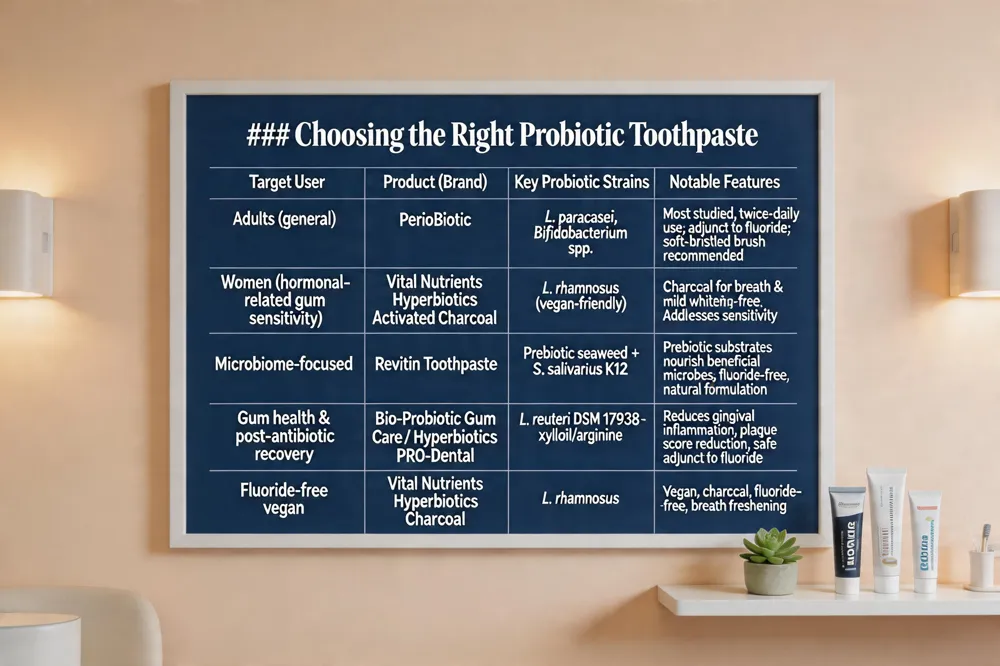 Choosing the probiotic toothpaste that fits your lifestyle can enhance oral health while supporting a balanced microbiome.
Best probiotic toothpaste for adults – PerioBiotic stands out as the most well‑studied option. In an in‑vivo trial it significantly lowered salivary Streptococcus mutans compared with a neem‑based control. The formula contains live Lactobacillus and Bifidobacterium strains that colonize the mouth, compete with pathogenic bacteria, and help restore microbial balance. Use twice daily with a soft‑bristled brush, allowing the bacteria to remain on teeth for a few minutes before rinsing. While it does not replace fluoride, it offers an evidence‑based, natural adjunct for gum health and reduced cariogenic microbes.
Best probiotic toothpaste for women – Vital Nutrients Hyperbiotics Activated Charcoal Probiotic Toothpaste is a gentle, vegan‑friendly choice. It combines probiotics with activated charcoal for breath freshening and mild whitening, addressing hormonal‑related gum sensitivity and cavity risk. The fluoride‑free blend targets S. mutans while supporting overall gum health.
Which toothpaste is best for the microbiome? – Revitin Toothpaste is formulated with prebiotic ingredients that nourish beneficial bacteria without harsh chemicals, promoting a healthy oral ecosystem that protects against cavities and inflammation.
Traditional Fluoride and Hydroxyapatite: Proven Cavity Fighters
Fluoride vs. Hydroxyapatite Toothpastes
| Property | Fluoride Toothpaste | Hydroxyapatite (HAP) Toothpaste |
|---|---|---|
| Active Ingredient(s) | Sodium fluoride (0.15 % F⁻), sodium monofluorophosphate, stannous fluoride | Synthetic nano‑HAP particles, often combined with xylitol |
| Mechanism of Action | Forms fluorapatite → harder, acid‑resistant enamel; promotes remineralization | Directly fills microscopic enamel cracks with calcium‑phosphate crystals; mimics natural enamel |
| Clinical Evidence | Extensive long‑term RCTs; ADA Seal of Acceptance; reduces caries incidence | Emerging studies show reduced sensitivity, improved hardness, early‑decay reversal; not yet ADA‑sealed |
| Typical Use Cases | General population, high‑risk caries patients, prescription‑strength for severe risk | Fluoride‑free users, those preferring natural/mineral‑based options, mild sensitivity |
| Limitations | Potential fluorosis if over‑used; some consumers avoid fluoride | Limited large‑scale data; higher cost; not universally endorsed by dentists |
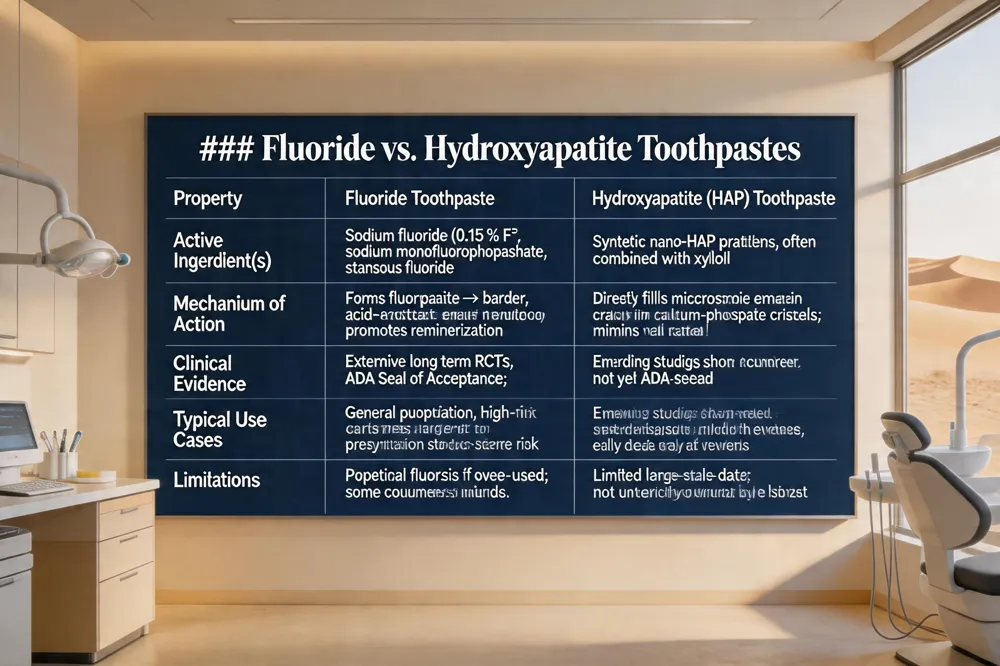 Fluoride toothpaste works by delivering calcium‑ and phosphorus‑rich minerals that remineralize weakened enamel and halt early decay before a full‑blown cavity forms. Over‑the‑counter formulas such as Ecosmiles Hydroxyapatite Toothpaste combine fluoride with enamel‑repairing hydroxyapatite and xylitol for gentle, SLS‑free cleaning while promoting remineralization. For patients at higher risk of caries, prescription‑strength options like 3M ClinPro 5000 (1.1 % sodium fluoride with functionalized tri‑calcium phosphate) create a more acid‑resistant mineral layer and can even repair micro‑lesions within dentin. Using the toothpaste twice daily, together with proper brushing technique and flossing, maximizes fluoride exposure and supports the tooth’s natural repair processes.
Hydroxyapatite (HAP) cavity‑repair toothpaste contains synthetic calcium‑phosphate particles that mimic the mineral composition of natural tooth enamel. Nano‑sized HAP particles infiltrate microscopic cracks and replace lost calcium and phosphate, forming a protective layer that remineralizes weakened enamel and can reverse early decay. Unlike fluoride, which forms a harder fluorapatite surface, HAP directly fills defects, offering a gentle, non‑toxic option for fluoride‑free preferences. Clinical studies show regular HAP use reduces sensitivity, improves enamel hardness, and lowers new cavity risk, though it has not yet earned an ADA Seal of Acceptance in the U.S.
Dentists are cautious about recommending hydroxyapatite because it lacks the extensive, long‑term clinical research and large‑scale studies that support fluoride’s proven efficacy. Limited professional familiarity, higher product costs, and limited insurance coverage further reduce patient adoption, making clinicians hesitant to endorse it over well‑established fluoride treatments. As more rigorous trials emerge, attitudes may shift, but currently the evidence base remains insufficient for widespread recommendation.
Crest Cavity Protection toothpaste’s active ingredient is sodium fluoride (0.243 % w/w, delivering 0.15 % fluoride ion). Inactive ingredients include sorbitol, water, hydrated silica, sodium lauryl sulfate, trisodium phosphate, flavor, cellulose gum, sodium phosphate, carbomer, sodium saccharin, titanium dioxide and FD&C Blue 1. This formulation is ADA‑approved, providing proven anticavity action while freshening breath and protecting both teeth and exposed roots.
Prebiotic, Synbiotic, and Postbiotic Strategies
Prebiotic, Synbiotic & Postbiotic Oral Strategies
| Strategy | Definition | Example Ingredients/Products | Primary Benefits |
|---|---|---|---|
| Prebiotic | Non‑digestible substrates that feed beneficial oral microbes | Seaweed‑derived fibers, galactooligosaccharides, xylitol | Promote growth of health‑promoting bacteria, neutralize plaque pH |
| Synbiotic | Combination of prebiotic substrates + live probiotic strains | Prebiotic seaweed + L. paracasei or S. salivarius K12 | Enhanced colonization, synergistic antimicrobial activity |
| Postbiotic | Inactivated microbes or their metabolites (bacteriocins, organic acids) | Heat‑killed L. reuteri cells, purified bacteriocins | Antimicrobial effect without viability concerns; stable in formulations |
| Product Highlight | Revitin toothpaste (prebiotic) | Seaweed fibers, cranberry seed oil, vitamins C/E, CoQ10, essential oils | Supports microbiome, antioxidant protection, mild remineralization |
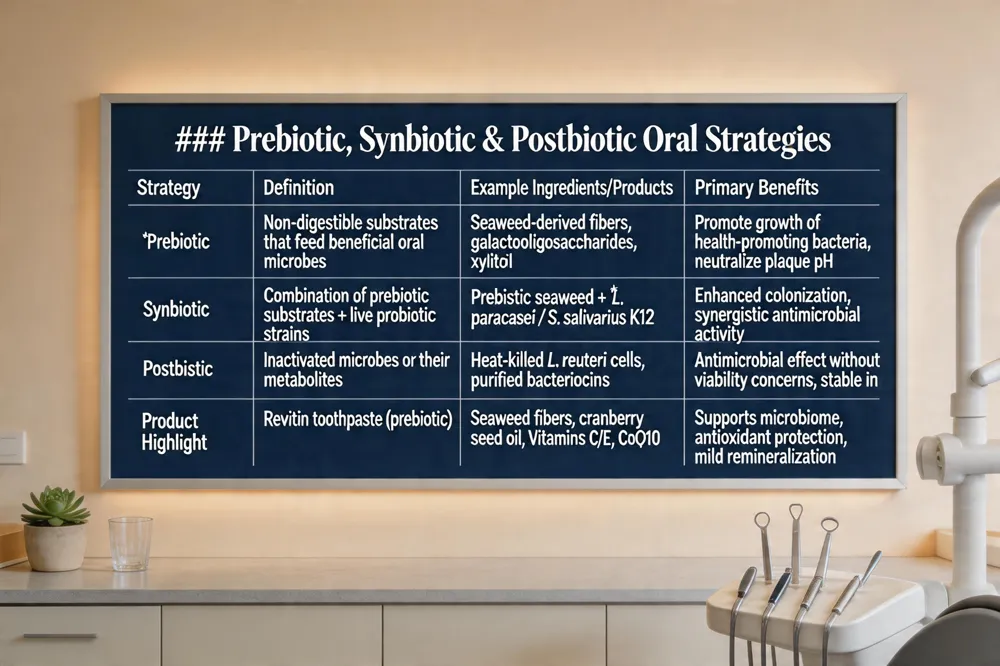 Prebiotic toothpastes contain nutrients such as seaweed‑derived fibers, galactooligosaccharides and xylitol that selectively feed beneficial oral bacteria. By boosting the growth of health‑promoting microbes, they help maintain a neutral plaque pH, reduce acid‑driven enamel demineralization and support gum health.
Synbiotic formulations combine these prebiotic substrates with live probiotic strains (e.g., Lactobacillus paracasei or Streptococcus salivarius K12). The prebiotic fuels the probiotic, enhancing its colonization and antimicrobial activity such as bacteriocin production, while the probiotic competitively displaces cariogenic Streptococcus mutans.
Postbiotic oral care products use inactivated bacteria or their metabolites—such as heat‑killed Lactobacillus cells, bacteriocins, and organic acids—to deliver antimicrobial effects without the stability challenges of live organisms. These components can be incorporated into toothpaste, gum or lozenges and have shown reductions in S. mutans counts.
Revitin toothpaste is a fluoride‑free, natural toothpaste that uses prebiotic seaweed and cranberry seed oil to nurture beneficial oral bacteria. Its formula includes antioxidants (vitamins C, E, CoQ10) and essential oils (tangerine, lemon) that aid remineralization and reduce gum inflammation, making it a microbiome‑friendly option for daily use.
Safety, Special Populations, and Practical Use
Safety & Practical Use of Probiotic Toothpastes
| Consideration | Details |
|---|---|
| General Safety | GRAS‑approved strains (L. reuteri, S. salivarius K12, BLIS M18) – no systemic infections reported in healthy adults |
| Adverse Effects | Rare mild GI upset, transient taste changes; allergic reactions possible (check for flavor allergens) |
| Immunocompromised | Consult dentist before use; theoretical risk of bacterial translocation |
| Gluten Sensitivity | Minimal risk; toothpaste not swallowed in significant amounts; choose “gluten‑free” labeled products if concerned |
| Post‑Antibiotic Use | Re‑introduce probiotic toothpaste to restore oral microbiome and reduce opportunistic recolonization |
| Recommended Regimen | Twice daily, soft‑bristled brush; allow bacteria to remain on teeth for 2–3 minutes before rinsing; can be used alongside fluoride toothpaste (alternate or combine) |
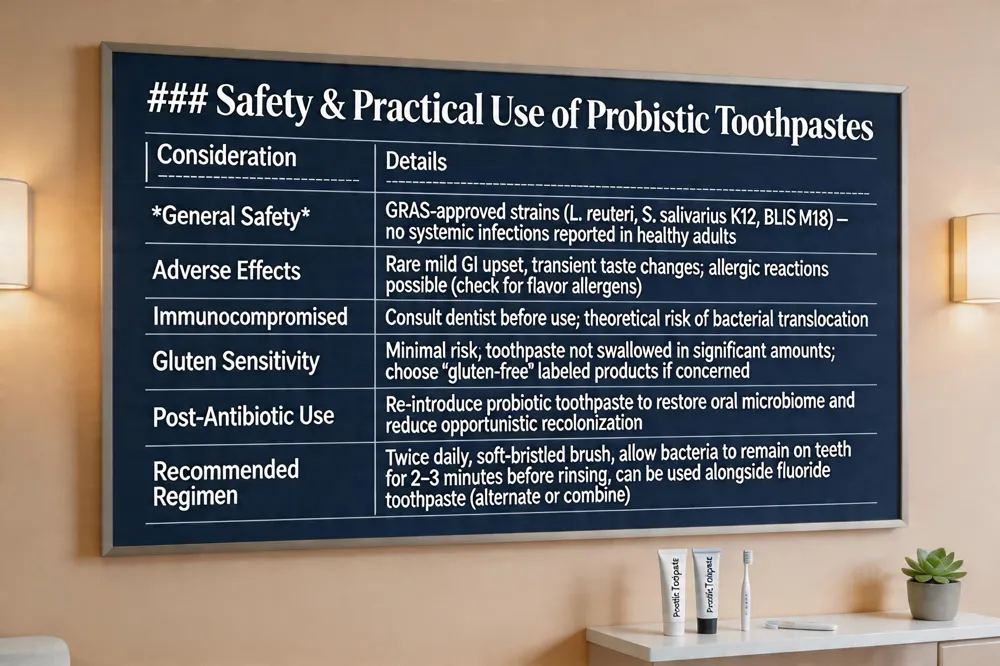 Probiotic oral products are generally well‑tolerated, but safety considerations include rare allergic reactions, mild gastrointestinal upset, and the theoretical risk of bacterial translocation in severely immunocompromised patients. Most probiotic strains used in toothpastes—e.g., Lactobacillus reuteri, Streptococcus salivarius K12, and BLIS M18—are GRAS‑approved and have not been linked to systemic infections in healthy adults. For individuals with celiac disease, the concern is minimal: toothpaste is not swallowed in significant quantities, and the trace gluten that may appear in flavored or specialty products is unlikely to trigger a reaction. As a precaution, checking the ingredient label or choosing a “gluten‑free” product can provide peace of mind. After a course of antibiotics, re‑introducing oral probiotics can help restore a balanced microbiome, reduce recolonization by opportunistic pathogens, and support gum health. The most effective probiotic toothpaste for gum health combines live Lactobacillus reuteri (DSM 17938) with prebiotic agents such as xylitol or arginine, exemplified by Bio‑Probiotic Gum Care Toothpaste and Hyperbiotics PRO‑Dental. These formulations have demonstrated reductions in gingival inflammation and plaque scores when used twice daily with a soft brush, making them a safe, evidence‑based adjunct to fluoride‑containing toothpastes.
Top Brands, Product Recommendations, and How to Use Them
Top Cavity‑Prevention & Probiotic Toothpaste Brands
| Brand | Fluoride? | ADA Seal? | Key Ingredients | Ideal For |
|---|---|---|---|---|
| Crest Pro‑Health Advanced | Yes (stannous fluoride) | Yes | Stannous fluoride, triclosan‑free | Extra gum protection |
| Colgate Cavity Protection | Yes (sodium monofluorophosphate) | Yes | 0.76 % fluoride ion | Whole‑family daily use |
| Sensodyne Pronamel | Yes (potassium nitrate + fluoride) | Yes | Fluoride + desensitizing agents | Sensitive teeth |
| Tom’s of Maine Whole Care | Yes (fluoride) | Yes | Fluoride, natural flavors, SLS‑free | Natural‑flavor lovers |
| Burt’s Bees | Yes (fluoride) | Yes | Fluoride, botanical extracts | Natural‑focused consumers |
| Arm & Hammer Complete Care | Yes (fluoride) | Yes | Fluoride, baking soda | Fresh breath & cleaning |
| PerioBiotic (Probiotic) | No (adjunct) | No | Live L. paracasei, Bifidobacterium spp. | Adults seeking microbiome support |
| Vital Nutrients Hyperbiotics Charcoal | No (fluoride‑free) | No | Activated charcoal, L. rhamnosus | Vegan, breath freshening |
| Revitin | No (fluoride‑free) | No | Prebiotic seaweed, cranberry seed oil, antioxidants | Microbiome‑focused, natural |
| Bio‑Probiotic Gum Care | No (adjunct) | No | L. reuteri DSM 17938, xylitol/arginine | Post‑antibiotic gum health |
 Cavity prevention toothpaste brands
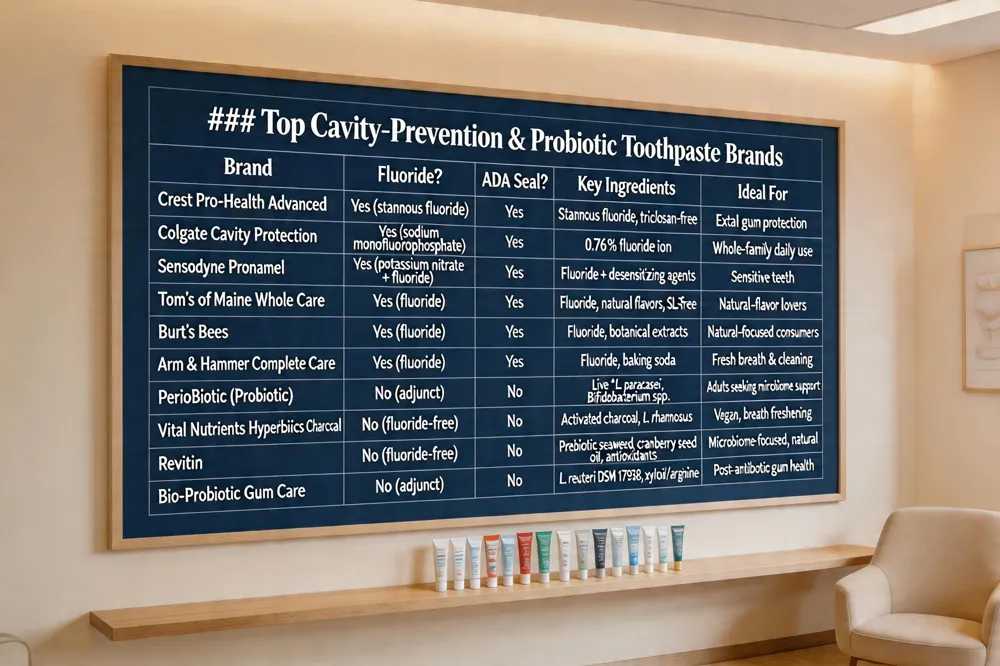
Several well‑known brands formulate cavity‑fighting toothpastes with fluoride as the active ingredient. Crest Pro‑Health Advanced, Colgate Cavity Protection, Sensodyne Pronamel, Tom’s of Maine Whole Care, Burt’s Bees, and Arm & Hammer Complete Care all carry the ADA Seal of Acceptance, confirming their effectiveness in strengthening enamel and remineralizing early decay.
Cavity prevention toothpaste brands
Several well‑known brands formulate cavity‑fighting toothpastes with fluoride as the active ingredient. Crest Pro‑Health Advanced, Colgate Cavity Protection, Sensodyne Pronamel, Tom’s of Maine Whole Care, Burt’s Bees, and Arm & Hammer Complete Care all carry the ADA Seal of Acceptance, confirming their effectiveness in strengthening enamel and remineralizing early decay.
Best cavity prevention toothpaste The most effective option contains fluoride and an ADA seal. Popular choices include Crest Pro‑Health Advanced (stannous fluoride for extra gum protection), Colgate Cavity Protection (sodium monofluorophosphate), and Sensodyne Pronamel for sensitive teeth. Natural‑flavor users may prefer Tom’s of Maine Whole Care, which offers fluoride without artificial dyes.
Colgate Cavity Protection Toothpaste An ADA‑approved fluoride toothpaste featuring sodium monofluorophosphate (0.76 % fluoride ion). It remineralizes enamel, controls plaque, and provides a fresh mint taste suitable for the whole family.
Best probiotic toothpaste PerioBiotic toothpaste, containing Lactobacillus paracasei, demonstrated a significant reduction in Streptococcus mutans in a 2020 in‑vivo study, matching the efficacy of neem‑based toothpaste while supporting a balanced oral microbiome.
Crest Cavity Protection Toothpaste This fluoride‑rich toothpaste uses clinically proven Fluoristat to strengthen enamel and protect exposed roots. ADA‑approved, it freshens breath and complements a daily oral‑care routine.
Putting It All Together: A Patient‑Centric Oral‑Care Routine
Patient‑Centric Oral‑Care Routine
| Step | Action | Product Type | Duration/Notes |
|---|---|---|---|
| 1 | Morning Brush | Fluoride toothpaste (≈1450 ppm) | 2 minutes, soft brush, ensure full coverage |
| 2 | Mid‑day (optional) Brush | Probiotic toothpaste (e.g., PerioBiotic) | 2 minutes, allow bacteria to stay on teeth 2–3 minutes before rinsing |
| 3 | Floss | Dental floss or interdental brushes | Daily, after brushing to disrupt biofilm |
| 4 | Evening Brush | Fluoride toothpaste (or probiotic if preferred) | 2 minutes, same technique as morning |
| 5 | Rinse (optional) | Alcohol‑free mouthwash (optional) | After brushing, avoid rinsing vigorously to retain fluoride/probiotic action |
| 6 | Dental Check‑up | Professional exam & cleaning | Every 6 months (or sooner for pain/bleeding) |
| 7 | Special Cases | Adjust frequency (e.g., high‑risk patients may use fluoride twice daily) | Follow dentist recommendations |
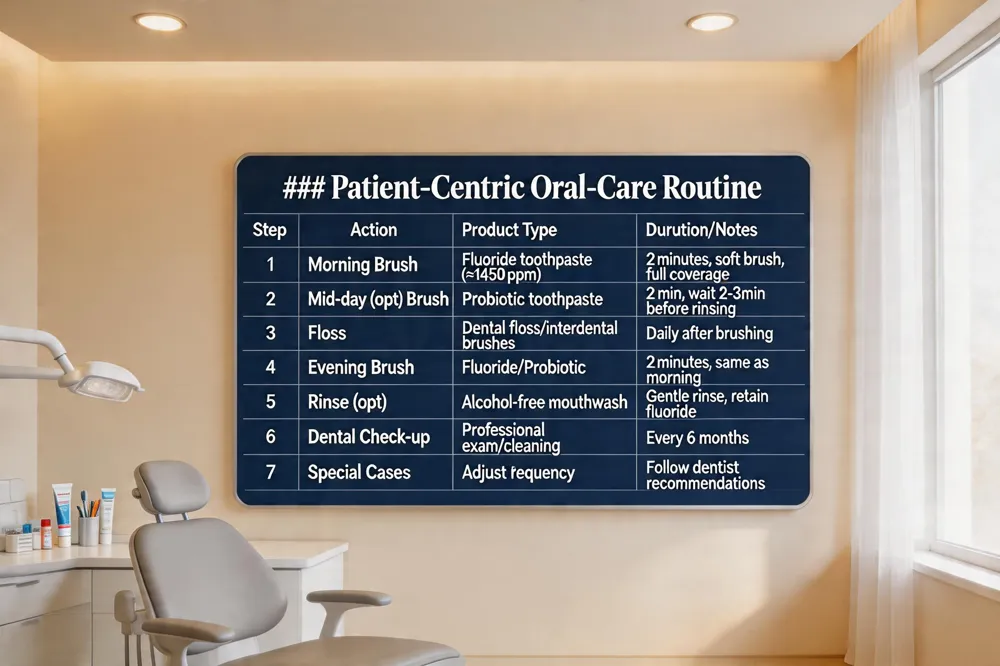 An oral‑care routine starts with brushing twice for two minutes with a brush, followed by flossing to disrupt biofilm. Use a fluoride toothpaste (≈1450 ppm) at least once a day; on the second brushing, apply a probiotic toothpaste (e.g., PerioBiotic) containing live Lactobacillus or Streptococcus strains that compete with S. mutans, lower plaque acidity, and help maintain pH. Probiotic toothpastes can cut S. mutans counts up to 30 % and protect enamel with fluoride.
See a dentist every six months or sooner for pain, bleeding, or rapid cavities. Misconceptions: probiotic toothpaste is not a fluoride substitute and its whitening is mild, based on stain removal.
Probiotic whitening toothpaste uses beneficial bacteria and abrasives, whitening teeth less dramatically than peroxide. The best adult probiotic toothpaste is PerioBiotic, proven to lower S. mutans. Probiotics can reduce odor‑producing bacteria linked to tonsil stones, though they do not dissolve stones. Women may prefer fluoride‑free, vegan options like Vital Nutrients Hyperbiotics Charcoal Toothpaste. Key strains for teeth and gums: Streptococcus salivarius K12, Lactobacillus reuteri, and L. rhamnosus delivered via lozenges or toothpaste.
Putting Scientific Insights into Everyday Practice
Probiotic and traditional cavity‑prevention strategies each have proven strengths. Fluoride‑containing toothpastes, the gold standard, remineralize enamel and lower bacterial acidity, while probiotic products—live strains such as Lactobacillus rhamnosus, L. paracasei, or Streptococcus salivarius K12—compete with Streptococcus mutans, produce bacteriocins and help maintain a neutral pH. Southern Boulevard Dental blends these approaches by recommending a fluoride toothpaste for twice‑daily brushing, supplemented with a probiotic mouth rinse or toothpaste for patients at higher caries risk, those who have taken antibiotics, or individuals seeking a microbiome‑friendly option. The team tailors the regimen: selecting specific probiotic strains, adding prebiotic ingredients like arginine or xylitol, and monitoring salivary S. mutans levels. By customizing oral‑care plans, patients receive both proven mineral protection and the emerging benefits of a balanced oral microbiome. Your dentist will guide you.