Why Managing Dental Costs Matters
Unexpected dental procedures can quickly become a financial burden, often forcing patients to delay care or incur high out‑of‑pocket expenses. Regular preventive visits—cleanings, exams, sealants, and fluoride—catch problems early, reducing the need for costly restorations such as crowns, root canals, or implants. Leveraging insurance benefits (especially 100% covered preventive services), dental discount or, in‑house membership plans, and flexible financing options like interest‑free installments or CareCredit further lowers the amount patients pay out of pocket, making essential oral health care affordable and stress‑free.
Embrace Preventive Care to Avoid Big Expenses
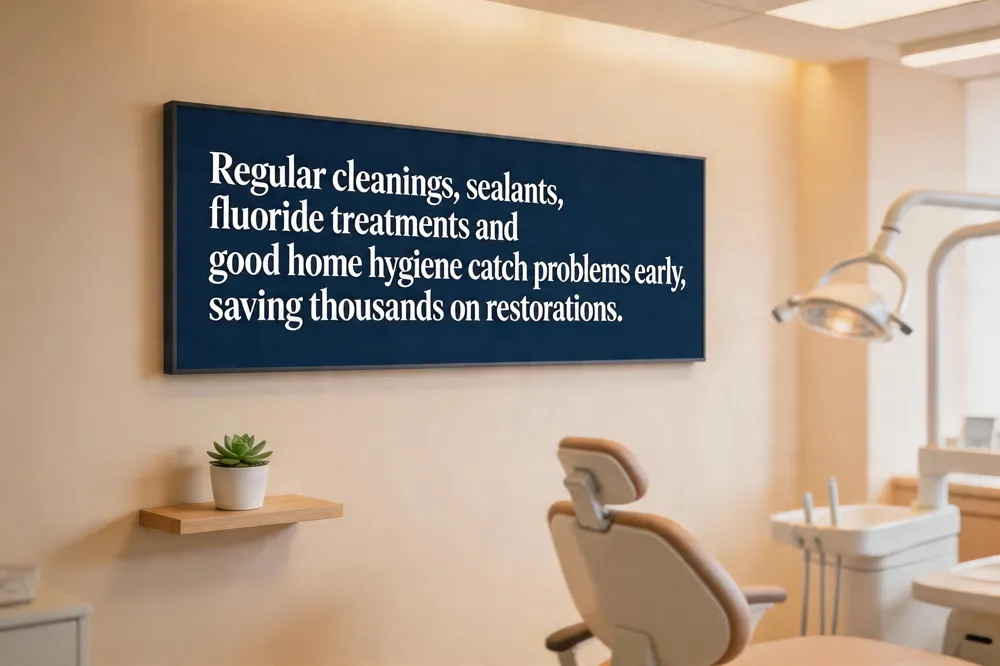 Regular, twice‑yearly cleanings, exams and X‑rays—averaging $203 nationally and ranging from $50 to $350—are the cornerstone of cost‑effective oral health. By visiting the dentist every six months, small cavities and early gum disease are caught before they require expensive fillings, root canals, or crowns. Adding low‑cost preventive measures such as Dental sealants and fluoride treatments ($42 on average) and fluoride treatments ($20‑$50) strengthens enamel and dramatically lowers the risk of decay. At home, brushing twice daily with fluoride toothpaste, daily flossing and limiting sugary foods and drinks create a protective barrier that keeps plaque and bacteria at bay. This daily routine, combined with professional cleanings, often eliminates the need for costly restorative work later on. Early detection not only preserves teeth but also saves thousands of dollars over a lifetime, making preventive care the smartest financial—and health—investment a patient can make.
Leverage Insurance and Benefit Timing
 Take full advantage of the 100 % covered preventive services that most dental plans include—twice‑yearly cleanings, exams, and X‑rays are usually free after the premium, so schedule them promptly to catch problems early and avoid expensive repairs. When planning larger work such as crowns, bridges, or root canals, aim to complete the treatment before your plan’s benefit year resets; this maximizes the use of your annual maximum and reduces out‑of‑pocket costs. Be familiar with your deductible and the amount your insurance will pay after it is met, and keep track of how much of the annual maximum you have used. If you have access to a Flexible Spending Account (FSA) or Health Savings Account (HSA) and set aside pre‑tax dollars for dental expenses to lower the net cost. Medicare Advantage plans and Dental HMOs, and employer‑provided plans often cover preventive care at 100 % and offer discounted rates for other procedures—review your specific plan details and ask your dentist for a written estimate to ensure you’re getting the best value.
Explore Discount and Membership Plans
 Dental discount (savings) plans work like a membership club: for a modest annual fee patients receive 10 %‑60 % off routine and specialized procedures at participating dentists, with no deductible or claim forms. In‑office membership plans take this a step further by charging a flat monthly or yearly fee that covers preventive services—exams, cleanings, X‑rays, sealants, and fluoride—at no extra charge, while offering steep discounts on any additional treatment. Community‑based clubs such as Smiles360 operate on the same principle, negotiating network‑wide discounts and often adding perks like free consultations or bundled family packages. Compared with traditional dental insurance, fee‑based discount programs typically cost far less than monthly premiums ($25‑$50) and avoid annual maximums, making them an attractive option for patients who need occasional restorative work or who lack coverage altogether. By reviewing the discount schedule, confirming participating providers, and matching the plan to your expected care frequency, families can achieve significant out‑of‑pocket savings while maintaining high‑quality oral health.
Consider Low‑Cost Care Settings
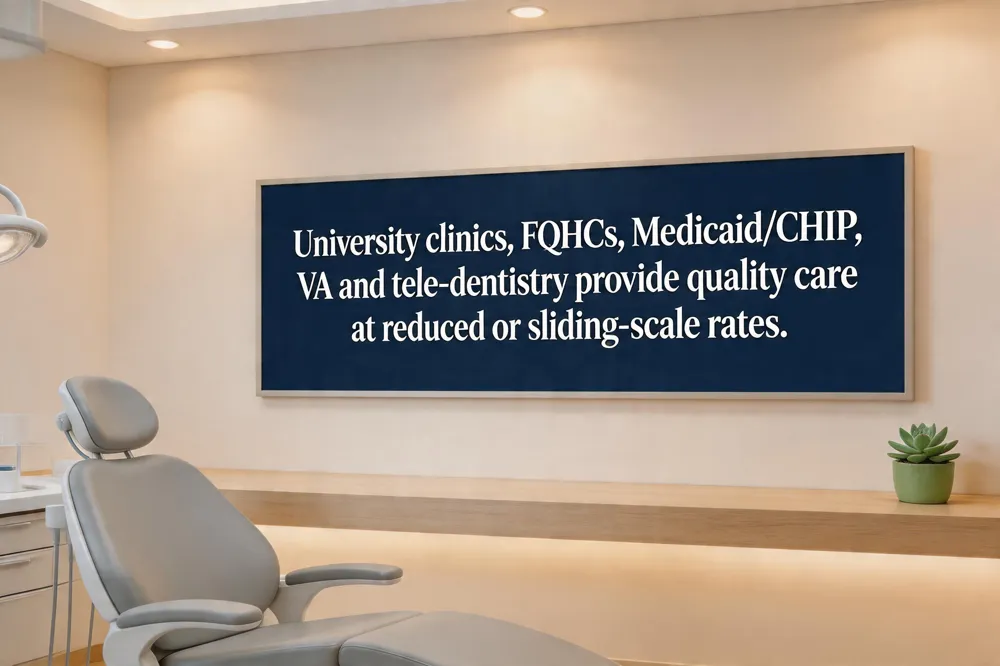 When budget matters, families can turn to several reliable, low‑cost options that still deliver quality care. University dental school teaching clinics provide supervised treatment at 30‑50 % less than private practices, with students performing cleanings, fillings, and even root canals under licensed dentists. Federally Qualified Health Centers (FQHCs) and community health centers offer sliding‑scale fees based on household income, making routine exams, X‑rays, and preventive services affordable for uninsured patients. Veterans can access reduced‑rate or free dental care through the Department of Veterans Affairs if they meet eligibility criteria, while Medicaid and the Children’s Health Insurance Program (CHIP) cover comprehensive dental services for qualifying children and, in many states, low‑income adults. For minor concerns, tele‑dentistry consultations let patients receive professional advice, triage, and prescription services without an in‑person visit, cutting both travel time and cost. Exploring these settings helps patients maintain oral health without compromising their financial well‑being.
Financing Options and Payment Strategies
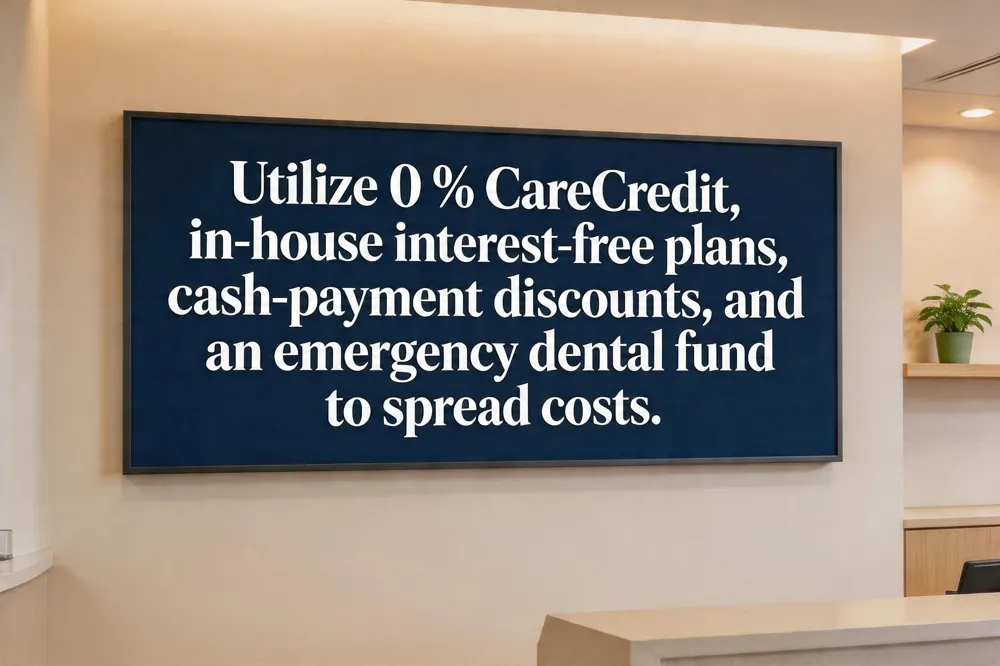 Dental care can be affordable when you know the right financing and payment tactics. Third‑party health‑care credit cards such as CareCredit let you spread larger bills over months, often with 0 % promotional periods, while in‑house financing programs may offer interest‑free installment plans directly through the practice. If you can pay at the time of service, many offices provide cash‑payment discounts because they avoid insurance processing fees. It’s wise to set aside a small amount each month in an emergency dental fund this buffer protects you from unexpected procedures that could otherwise derail your budget. Before any treatment, ask for a written cost estimate and inquire about bundled service discounts—e.g., a cleaning paired with X‑rays or a family package—so you can compare quotes and negotiate the best price. Together, these strategies keep oral health care within reach without sacrificing quality.
Smart Shopping and Negotiation Tips
 When you’re looking for affordable dental care, start by comparing fee schedules across local clinics—many offices publish their prices online, and a quick side‑by‑side review can reveal savings of 10‑30 % for the same service. Use price‑comparison tools such as FAIR Health, which aggregates average costs for procedures like cleanings ($125‑$350) and crowns ($800‑$2,500), letting you spot outliers and negotiate better rates. Ask at least two offices for written estimates and consider a second opinion; dentists often suggest alternative materials (e.g., composite instead of porcelain) that lower costs without sacrificing quality. Bundle services whenever possible—many practices include X‑rays at no extra charge when you book a cleaning, and family package deals can cut the per‑patient price further. Finally, limit unnecessary X‑rays by discussing your risk factors with the dentist; the ADA permits extending intervals up to three years for healthy adults, reducing both radiation exposure and expense.
Putting It All Together for Affordable Oral Health
Adopt a preventive‑first mindset by scheduling cleanings and exams twice a year, brushing twice daily, flossing, and limiting sugary foods—early detection saves money on major work. Maximize insurance benefits and tax‑advantaged accounts by using 100 % covered preventive services, timing larger procedures before benefit resets, and paying with an FSA or HSA to reduce out‑of‑pocket costs. Tap into discount plans, low‑cost clinics, and financing when needed: consider dental‑membership plans, community health‑center sliding‑scale fees, dental‑school clinics, or CareCredit interest‑free installments for larger procedures. Stay proactive with budgeting and price research—track average procedure costs, request written estimates, compare quotes with tools like FAIR Health, and set aside a small monthly emergency fund. Together, these steps make quality oral health affordable and stress‑free.