Introduction to Laser Periodontal Therapy: A Gentle Approach to Gum Disease
Understanding Laser Periodontal Therapy
Laser periodontal therapy is a modern dental treatment that uses focused laser light to precisely remove diseased gum tissue and bacteria from beneath the gumline. This minimally invasive approach targets only infected areas, preserving healthy gum tissue and promoting natural healing.
How the Treatment Works
During the procedure, local anesthesia is applied for patient comfort. A specialized dental laser is then used to remove inflamed tissue and bacteria, sterilizing the area and sealing blood vessels to reduce bleeding. This process not only cleans the infected gums but also stimulates tissue regeneration, encouraging better gum reattachment and faster healing.
Comparing Laser Therapy with Traditional Methods
Traditional treatments for gum disease, such as scaling and root planing or gum flap surgery, often involve mechanical scraping, incisions, and sutures. These methods can cause more discomfort, longer recovery times, and increased bleeding. In contrast, laser periodontal therapy offers a gentler experience with less pain, reduced swelling, faster recovery, and higher patient satisfaction due to its precision and minimally invasive nature.
How Laser Periodontal Therapy Works to Treat Gum Disease
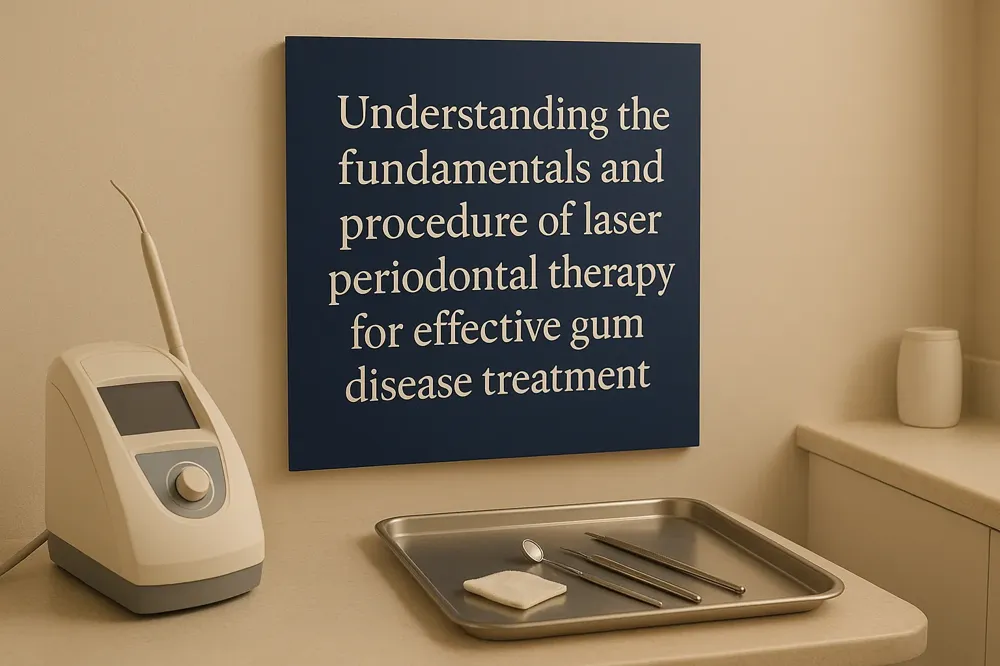
What is laser periodontal therapy and how does it treat gum disease?
Laser periodontal therapy is a minimally invasive laser gum treatment that uses concentrated light beams to remove inflamed gum tissue and eliminate tartar and plaque from below the gum line. This precise approach targets infected areas without harming healthy tissues, providing a gentler alternative to traditional periodontal surgery.
Procedure Details
During treatment, local anesthesia is applied to ensure patient comfort. A specialized dental laser is then used to remove diseased gum tissue and sterilize the periodontal pockets by killing harmful bacteria. The laser also smooths irregular root surfaces to reduce bacterial recolonization. In many cases, ultrasonic instruments complement the laser therapy by removing remaining tartar. Finally, the laser helps seal blood vessels and nerve endings, reducing bleeding and promoting faster healing.
Laser Types Used and Their Applications
Commonly used lasers include:
- Diode Lasers: Effective for soft tissue procedures, bacterial reduction, and controlling bleeding.
- Nd:YAG Lasers: Penetrate deeper pockets, providing strong bacterial kill and precise infected tissue removal.
- Erbium Lasers (Er:YAG, Er,Cr:YSGG): Remove both soft and hard tissues with minimal thermal damage; useful for calculus removal and root surface decontamination.
These lasers are selected based on the severity and location of periodontal infection.
Effects on Gum Tissue and Bacteria Removal
Laser therapy selectively removes inflamed and infected tissue while preserving healthy gum, resulting in less post-treatment pain and swelling. The light energy sterilizes the treated area, significantly reducing bacterial load, which lowers infection risk and supports better long-term outcomes. Furthermore, the laser stimulates tissue regeneration, encouraging gum reattachment and new bone formation around teeth. This contributes to reduced pocket depths, improved attachment levels, and overall periodontal health improvement.
By combining precise tissue ablation, bacterial sterilization, and enhanced healing, laser periodontal therapy effectively treats gum disease with improved patient comfort and clinical results compared to conventional methods.
Clinical Effectiveness of Laser Periodontal Therapy Compared to Traditional Methods
How effective is laser treatment for periodontal disease?
Laser periodontal therapy is highly effective in the treatment of gum disease due to its precision in selectively removing infected gum tissue while preserving healthy areas. The Laser Assisted New Attachment Procedure (LANAP), a specific laser-based approach, boasts a 99.9% kill rate of harmful oral bacteria. This sterilizing effect reduces infection and supports natural tissue reattachment, thereby preventing disease recurrence and further tissue damage.
Clinical studies have demonstrated that laser therapy enhances key periodontal parameters such as reducing probing pocket depth and improving clinical attachment levels, outperforming some traditional treatments in these respects. The laser's ability to stimulate tissue regeneration promotes healing not just in soft tissues but also in bone, facilitating stabilization of affected teeth.
When compared with conventional scaling and root planing (SRP), laser therapy shows synergistic benefits. It helps thoroughly clean periodontal pockets by reaching deeper layers and effectively kills bacteria, which may be less accessible by mechanical means alone. This adjunctive use generally leads to superior long-term outcomes including reduced bleeding on probing and better periodontal health maintenance.
Moreover, patients undergoing laser treatment typically experience less bleeding, reduced postoperative discomfort, and faster healing times compared to traditional surgical procedures. These benefits contribute to improved patient satisfaction and compliance.
In summary, laser periodontal therapy provides a minimally invasive, precise, and clinically effective alternative or complement to traditional methods. It delivers enhanced bacterial reduction, promotes tissue regeneration, and supports improved long-term periodontal health, making it a valuable tool in modern gum disease management.
Comparing Laser Therapy and Traditional Deep Cleaning: Patient Experience and Procedure Differences
How does laser gum treatment compare to traditional deep cleaning?
Laser gum treatment and traditional deep cleaning differ significantly in technique and patient experience. Traditional deep cleaning, known as scaling and root planing (SRP), mechanically removes plaque and tartar from below the gumline using hand instruments or ultrasonic scalers. This process can cause tissue irritation, bleeding, and discomfort during and after treatment. Recovery may involve sensitivity and a longer healing period.
Laser therapy, by contrast, uses focused light energy to precisely target and remove diseased gum tissue and bacteria. This minimally invasive method causes less tissue trauma, leads to reduced bleeding, and speeds up healing time. It often results in less postoperative pain and swelling compared to SRP alone. The laser also sterilizes the treated area and stimulates gum tissue regeneration, further enhancing recovery.
Differences in procedure technique and instruments
Traditional deep cleaning involves scraping and smoothing root surfaces to remove deposits manually, which can be uncomfortable and sometimes painful.
Laser therapy employs advanced laser devices that ablate infected tissues and kill bacteria with precision, while preserving healthy gum tissue. Some lasers can treat both soft and hard tissues, allowing for versatile applications including calculus removal and pocket decontamination, as described in research on types of lasers used in periodontal treatment.
Impact on patient discomfort and recovery
Laser therapy is generally associated with less pain, reduced bleeding, and faster healing. Many patients report less anxiety due to the avoidance of scalpels and stitches. Recovery after laser treatment typically allows return to normal activity within 24 to 48 hours, whereas traditional deep cleaning may involve more soreness lasting several days. Patient comfort and reduced pain with laser periodontal treatment are often cited as key benefits.
Suitability for different severities of gum disease
Both laser therapy and traditional deep cleaning effectively manage mild to moderate gum disease. However, laser therapy is especially beneficial in moderate to advanced cases, as it can reach deeper pockets and promote tissue regeneration more effectively. Patients who prefer minimally invasive treatment with enhanced comfort may also favor laser options. The LANAP procedure is one example of laser-assisted periodontal therapy effective for advanced disease.
Dental professionals determine the best approach based on individual patient evaluations, gum disease severity, and overall oral health, ensuring personalized, effective periodontal care.
Benefits and Limitations of Laser Periodontal Therapy for Gum Disease Treatment
What are the benefits of laser periodontal therapy?
Laser periodontal therapy offers precise removal of infected gum tissue while sparing healthy areas, providing enhanced healing with less pain and swelling compared to traditional methods. The procedure often requires minimal anesthesia and seals blood vessels to immediately control bleeding, resulting in a smoother, more comfortable treatment and faster recovery. Its sterilizing action reduces bacterial load, lowering infection risk and supporting tissue regeneration. Laser therapy can be used alongside scaling and root planing to improve clinical outcomes and may also enable simultaneous cavity treatment with less damage to natural tooth structure. Patients generally experience less postoperative discomfort, shorter healing times, and higher satisfaction.
What are the advantages and disadvantages of laser treatment for gum disease?
Advantages include targeted treatment that preserves healthy gums, reduced bleeding and pain, faster recovery, and stimulation of new gum and bone tissue growth. The minimally invasive nature benefits those with dental anxiety or sensitivity. Laser therapy also offers effective disinfection and improved cosmetic outcomes through precise tissue management.
However, disadvantages entail higher upfront costs due to specialized equipment and professional training requirements, which may limit availability. Certain severe periodontal cases might not respond well to laser therapy alone. Potential risks, though rare when performed by skilled practitioners, include thermal injury, gum tissue discoloration, or scarring. Patient safety depends heavily on the clinician’s expertise and adherence to protocols.
What safety considerations and training are necessary?
Laser periodontal therapy is safe when conducted by trained dental professionals who follow established safety protocols, including proper laser settings and protective measures for patients and staff. Extensive training ensures correct laser use, minimizing risks such as thermal damage or eye injury. Professionals assess patient candidacy carefully, tailoring treatment plans to individual needs. Ongoing research and standardization aim to optimize procedures and outcomes. Overall, choosing an experienced periodontist is vital for safe, effective laser periodontal care.
Care and Recovery After Laser Gum Treatment and LANAP Procedures
How should patients sleep after a LANAP procedure?
After a LANAP procedure, it is recommended that patients sleep with their head elevated to reduce swelling and enhance comfort during rest. Applying an ice pack gently to the outside of the face for 20 minutes each hour until bedtime on the day of treatment helps minimize swelling, but icing should not be continued beyond that day. To avoid putting pressure on the treated gum areas, patients should aim to sleep on their back or on the side opposite the surgical site. Maintaining a gentle oral care routine, as advised by the dental professional, will further support the healing process during sleep. If patients experience unusual pain, persistent bleeding, or excessive swelling overnight, they should immediately contact their dental office for guidance.
How should a patient care for their gums after laser gum treatment?
Post-treatment care is essential for a smooth recovery after laser gum therapy. Cold compresses should be applied during the initial 36 hours to reduce swelling, followed by moist heat to encourage tissue healing. Patients are advised to consume soft, nutritious foods such as smoothies, yogurt, mashed potatoes, and mild soups while avoiding hot, spicy, or crunchy foods that could irritate sensitive gums. Hydration is important, but the use of straws should be avoided to prevent dislodging blood clots. Oral hygiene should be maintained gently using a soft toothbrush and rinsing with warm salt water as recommended by the periodontist. Disturbing or poking the treated gum areas should be avoided. Smoking and strenuous physical activities should be refrained from for several days to promote proper healing. Patients should remain vigilant for heavy bleeding, severe pain, or signs of infection and seek prompt dental advice if these occur.
Additional Instructions to Reduce Swelling and Promote Healing
Patients should follow all aftercare instructions provided by their dental specialist to support optimal healing. This includes keeping the treatment area clean without aggressive brushing, scheduling and attending follow-up visits, and adhering to prescribed medications or rinses. Elevation, cold therapy, dietary adjustments, and gentle oral care all contribute to reducing inflammation and encouraging tissue regeneration. Avoiding tobacco products and alcohol further aids recovery and reduces the risk of complications. By following these recommendations carefully, patients can expect a faster, more comfortable recovery, enhancing the overall effectiveness of their laser periodontal treatment or LANAP procedure.
Cost Considerations and Insurance Coverage for Laser Periodontal Therapy
How much does laser periodontal therapy typically cost?
Laser periodontal therapy costs in the United States generally range from $1,000 to $4,000 per mouth quadrant. For patients with mild to moderate gum disease, the cost is often between $1,000 and $2,500 per quadrant. More severe cases or advanced laser techniques like LANAP can cost from $2,500 up to $4,000 or higher per quadrant.
Although laser therapy usually has a higher initial price compared to traditional treatments like scaling and root planing or conventional gum surgery, it may be more cost-effective long term. This is due to its minimally invasive nature, faster recovery, less postoperative discomfort, and reduced risk of complications, which can decrease the need for repeat treatments.
What factors influence cost variation?
Several factors impact the final cost of laser periodontal therapy:
- Severity of periodontal disease: Advanced disease often requires more extensive laser treatment.
- Practice location and provider expertise: Urban areas and providers specializing in advanced laser care may charge more.
- Type of laser technology used: Different lasers (diode, Nd:YAG, Er:YAG) and protocols can vary in cost.
- Number of treatment sessions: Some cases need multiple appointments.
- Additional procedures: Complementary treatments such as ultrasonic scaling or tissue regeneration augment costs.
Patients should discuss their specific treatment plan with their periodontist for an accurate cost estimate.
What is the ADA code for laser-assisted periodontal therapy?
Currently, there is no exclusive American Dental Association (ADA) CDT code dedicated solely to laser-assisted periodontal therapy. Instead, laser treatment is billed using standard periodontal procedure codes, for example:
- D4341: Scaling and root planing for four or more teeth per quadrant.
- D4342: Scaling and root planing for one to three teeth per quadrant.
The laser use is considered an adjunct and is often reported alongside these codes. Some practices may use adjunctive or miscellaneous codes such as D4999 to document laser components.
It is important to note that codes for gingival flap surgery (D4240, D4241, D4260, D4261) are generally not applicable to laser therapy, as laser treatment typically avoids flap reflection and osseous re-contouring.
Patients are advised to verify coverage details with their dental insurance provider, as policies vary. Dental offices often assist patients with insurance preauthorization and clarifying benefits related to laser periodontal procedures.
Patient Outcomes and Future Directions in Laser Periodontal Care
How does laser periodontal therapy impact patient satisfaction and comfort?
Laser periodontal therapy significantly enhances patient experience by offering a minimally invasive alternative to traditional gum surgery. Patients report less pain during and after treatment due to precise targeting of diseased tissue and sealing of blood vessels and nerve endings by the laser. This method reduces bleeding, swelling, and postoperative discomfort, resulting in faster healing times—often allowing a return to normal activities within 24 to 48 hours. The gentler approach decreases dental anxiety and improves acceptance, especially among patients sensitive to conventional surgical procedures (Patient Comfort in Laser Gum Therapy, Pain management in laser periodontal treatment).
What are the long-term oral health benefits of laser periodontal therapy?
Beyond immediate comfort, laser therapy promotes improved clinical outcomes including reductions in probing pocket depths and gains in clinical attachment levels. The laser's sterilizing effect lowers bacterial load, which helps prevent reinfection and supports stable gum tissue reattachment to teeth (Sterilizing Gum Treatment with Lasers). Additionally, laser treatment can stimulate regeneration of gum tissue and bone, leading to healthier, more resilient periodontal structures, and reducing the risk of tooth loss (Tissue Regeneration Using Laser Therapy, Laser therapy for gum recession). These factors contribute to prolonged maintenance of oral health and potentially fewer repeat treatments (Clinical outcomes of laser-assisted periodontal therapy).
What technological advances and research are shaping the future of laser periodontal care?
Emerging technologies are enhancing laser therapy through integration with digital imaging and artificial intelligence, enabling personalized, real-time adjustments during treatment (Technological innovations in dental lasers. Portable and more affordable laser devices are improving accessibility for diverse clinical settings. Despite promising outcomes, there remains a need for standardized laser protocols and additional long-term clinical studies to firmly establish efficacy and safety profiles (Research gaps in laser periodontal treatment, standardization of laser irradiation parameters in periodontics). Ongoing research aims to optimize laser parameters and explore links between laser periodontal therapy and systemic health benefits, ensuring continued advancement in patient-centered care (Laser therapy impact on systemic diseases.
Conclusion: Embracing Laser Periodontal Therapy for Comfortable and Effective Gum Care
Laser periodontal therapy offers a modern, minimally invasive alternative to traditional gum disease treatments.
Patients benefit from reduced bleeding, less pain, and faster healing times, which leads to a more comfortable overall experience. The precision of laser technology allows for targeted removal of infected tissue while preserving healthy gums, enhancing treatment effectiveness and promoting natural tissue regeneration.
Many patients report minimal discomfort during procedures and appreciate the shorter recovery periods that let them quickly resume daily activities. This gentle and effective therapy makes it especially suitable for those anxious about invasive dental work.
If you experience symptoms such as bleeding gums, bad breath, or gum recession, consulting a periodontist about laser therapy can provide personalized care tailored to your needs. Early intervention with laser technology can prevent progression of gum disease and support lasting oral health.
Laser periodontal therapy represents a significant advance in dental care practices by combining clinical efficacy with enhanced patient comfort, aligning with modern dentistry's focus on patient-centered and technologically advanced treatments.