

Introduction to Dental Implants
Dental implants replace a missing tooth root with a small, threaded titanium (or zirconia) post that fuses to the jawbone, an abutment that connects the post to the gum line, and a restoration—crown, bridge or denture—that mimics the natural tooth. This three‑part system provides a stable, permanent foundation that restores chewing efficiency, speech clarity and facial aesthetics while preserving jawbone density. Patients often choose implants over removable dentures or traditional bridges because they do not require alteration of adjacent teeth, eliminate the need for adhesives, and can last a lifetime with proper care. Ideal candidates are adults whose facial growth is complete, have sufficient healthy bone (or are suitable for a bone graft), maintain good oral hygiene, and are free of uncontrolled diabetes, active gum disease, or smoking habits. A thorough consultation, imaging and medical review help determine eligibility and create a personalized treatment plan.
The Implant Restoration Process Step‑by‑Step
Step‑by‑Step Overview
| Step | Description | Key Points |
|---|---|---|
| 1. Consultation & Imaging | Initial exam + 3‑D imaging (X‑ray/CBCT) to assess bone density | Determines need for bone graft, plans implant placement |
| 2. Bone Grafting (if needed) | Graft material placed to augment bone volume | Adds $500‑$2,500; extends healing timeline |
| 3. Implant Placement | Titanium post inserted under local anesthesia | Begins 3‑6 month osseointegration phase |
| 4. Healing (Osseointegration) | Bone fuses to implant; soft‑food diet & gentle hygiene | Monitor swelling, pain, and integration via X‑ray |
| 5. Abutment Attachment | Small connector placed on healed implant | Allows impression taking for prosthesis |
| 6. Prosthesis Fabrication | Custom crown, bridge, or denture made | Based on impression and patient anatomy |
| 7. Final Restoration | Prosthesis secured to abutment | Restores natural look, function, and speech |
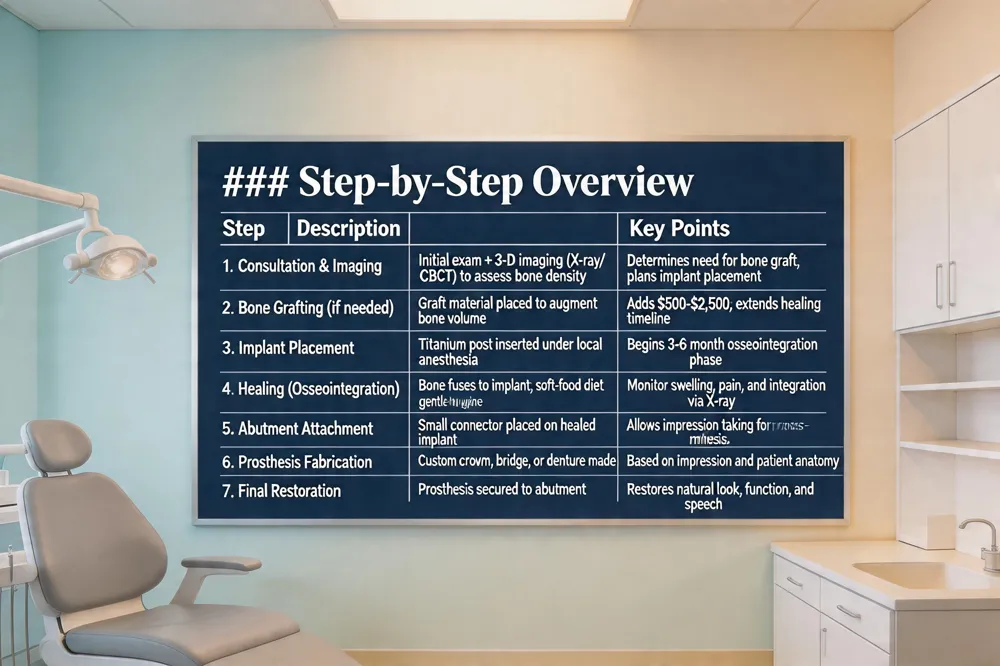 The journey begins with a thorough consultation and 3‑D imaging (X‑ray/CBCT) to evaluate bone density and plan the implant. If needed, a bone graft is performed before the surgical placement of a titanium post under local anesthesia. After surgery, the implant enters a 3‑6‑month healing phase called osseointegration (bone fuses to the post) and the patient follows a soft‑food diet and gentle oral‑hygiene routine. Once integration is confirmed, a small abutment is attached and an impression is taken to fabricate a custom crown, bridge or denture. The final prosthesis is then secured, delivering a natural‑looking, fully functional tooth.
Step‑by‑step dental implant procedure photos – our gallery shows each phase, from consultation and imaging to extraction, grafting, implant placement, abutment attachment, crown fabrication, and the finished restoration.
Basics of dental implants – titanium posts serve as artificial roots, fuse with bone (osseointegration), and support a crown or bridge, preserving jawbone, speech, and neighboring teeth.
How do implant teeth work – the post integrates with bone, an abutment connects to a custom crown, creating a permanent, stable tooth that can last a lifetime with proper care.
What does no one tell you about dental implants? – healing takes months, health factors (smoking, diabetes) affect success, and peri‑implantitis (gum infection) can threaten stability, making diligent hygiene essential.
What is the 3‑2 rule for dental implants? – a guideline ensuring at least 3 mm of bone above and 2 mm of bone around the implant for optimal stability.
Managing Healing and Recovery
Healing & Recovery Timeline
| Timeframe | Focus | Recommendations |
|---|---|---|
| 0‑24 hrs | Swelling control | Head elevation, ice packs, prescribed meds |
| 24‑48 hrs | Gentle cleaning | Salt‑water rinses, avoid brushing implant site |
| Week 1 | Soft‑food diet | Liquids → soft foods (yogurt, applesauce, mashed potatoes) |
| Weeks 2‑3 | Tissue closure | Continue soft foods, monitor gum healing |
| Weeks 4‑8 | Early osseointegration | Semi‑solid foods (ground meat, soft veg) |
| Months 2‑6 | Full integration | Re‑introduce firmer foods, avoid hard/sticky items |
| Ongoing | Maintenance | Hydration, oral hygiene, follow‑up visits |
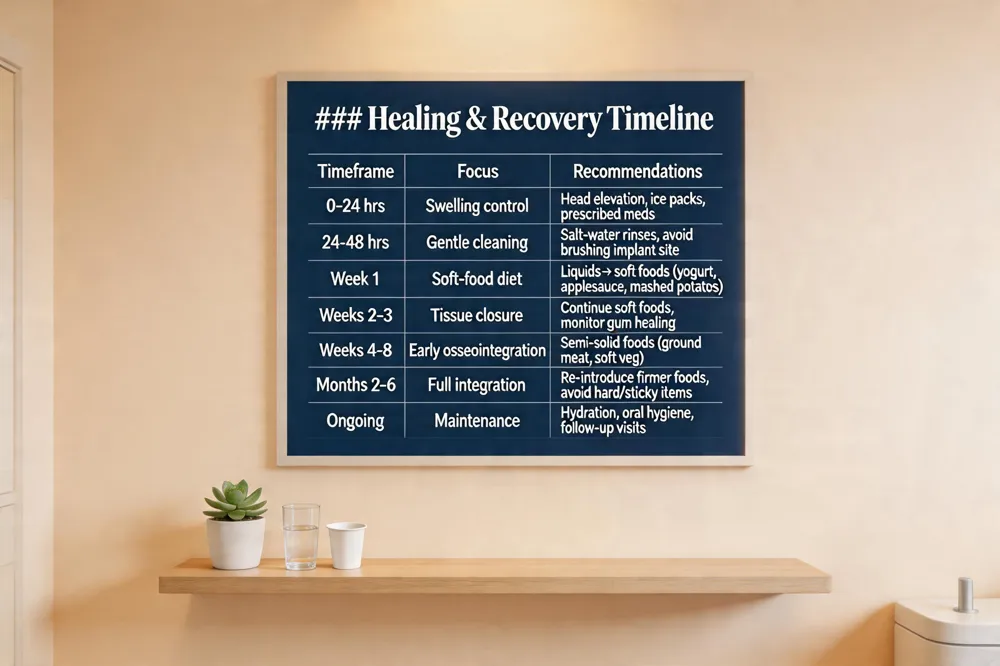 Post‑operative care begins with head elevation and ice packs for the first 24‑48 hours to limit swelling. Take prescribed pain meds and antibiotics exactly as directed, avoid smoking, alcohol, and vigorous exercise for at least a week, and keep the surgical site clean with gentle salt‑water rinses after 24 hours while brushing away from the implant.
Dental implant recovery diet – Start with liquids (water, clear broth, smoothies, protein shakes) for the first 24‑48 hours. In week 1 move to soft foods such as yogurt, applesauce, mashed potatoes, scrambled eggs, and oatmeal. Weeks 2‑6 allow semi‑solid options like tender ground meat, soft‑cooked vegetables, avocado, and soft fruits. By month 2‑6 you can re‑introduce firmer foods, chewing evenly on both sides; avoid extremely hard or sticky items.
Healing stages – Week 1: soft‑tissue swelling and bruising. Weeks 2‑3: gum tissue closure. Weeks 4‑8: early osseointegration as bone grows around the implant. By 3‑4 months the implant is fully integrated, ready for the final crown.
Tips for a smooth recovery – Rest, stay hydrated, follow a soft‑food diet, maintain oral hygiene, attend all follow‑up appointments, and contact your dentist immediately if pain worsens, bleeding persists, or the implant feels loose.
Complications, Risks, and Long‑Term Effects
Common Complications & Long‑Term Considerations
| Issue | Frequency | Signs & Symptoms | Management |
|---|---|---|---|
| Mild pain/swelling | Very common | Discomfort, bruising | Ice, OTC pain meds |
| Infection | Less common | Fever, pus, worsening redness | Antibiotics, professional cleaning |
| Peri‑implantitis | Variable (years later) | Bone loss, gum inflammation | Rigorous hygiene, possible debridement |
| Nerve injury | Rare | Persistent numbness | Evaluate, possible nerve repair |
| Sinus perforation (upper jaw) | Rare | Nasal discharge, sinus pain | Surgical correction if needed |
| Implant loosening | Uncommon | Mobility, discomfort | Re‑evaluation, possible re‑placement |
| Longevity | Long‑term | Crown may need replacement 10‑15 yr; implant can last decades | Regular check‑ups, good oral hygiene |
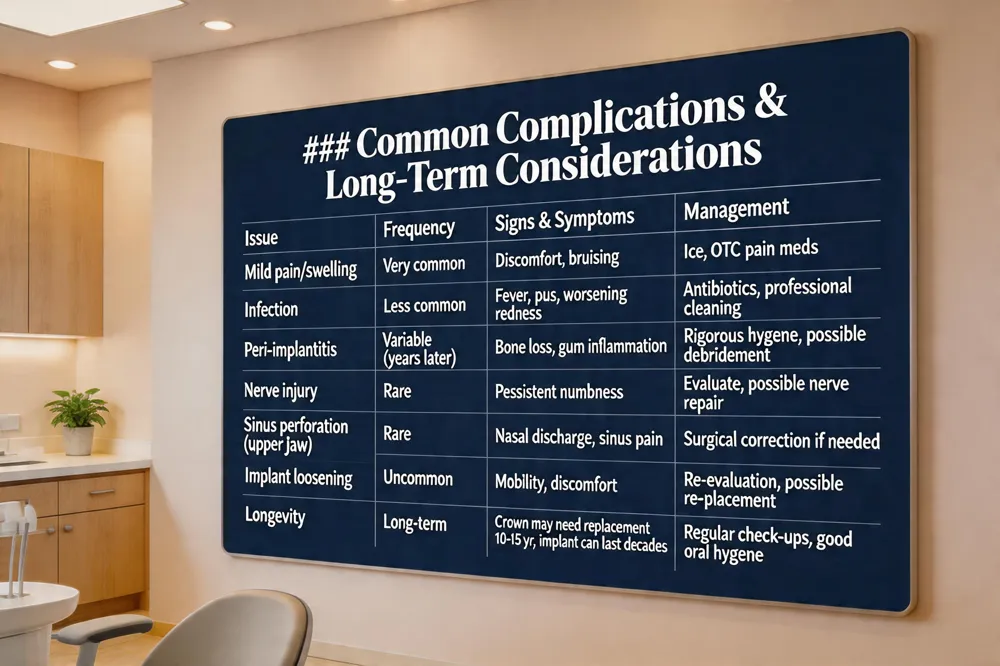 After a dental‑implant procedure most patients notice mild pain, swelling, bruising, light bleeding and temporary numbness that usually subside within one to two weeks. Less common side effects include infection (pain, fever, pus, worsening redness), persistent nerve injury, implant loosening, and sinus problems for upper‑jaw implants. Rare complications can involve severe bone loss, nerve injury causing lasting numbness, or allergic reaction to titanium, though ceramic alternatives are available. Peri‑implantitis a progressive inflammatory bone loss around the implant, may develop years later and requires prompt treatment to prevent failure. Allergies to metal are uncommon; symptoms such as chronic swelling, itching or implant rejection should be reported. Longevity concerns focus on the implant post, which can remain integrated for decades, while the crown typically needs replacement after 10‑15 years. Maintaining excellent oral hygiene, avoiding smoking, and regular dental check‑ups are essential to preserve function and minimize long‑term risks. Regular exams and imaging help detect problems before they affect implant.
Financial Considerations and Treatment Planning
Financial & Planning Overview
| Component | Typical Cost Range | Impact on Treatment |
|---|---|---|
| Implant ( titanium post | $1,500‑$3,000 per unit | Core foundation for restoration |
| Bone graft | $500‑$2,500 | Adds stability, may extend timeline |
| Crown/Bridge/Denture | $1,000‑$2,500 (crown) | Final aesthetic & functional outcome |
| Full‑arch restoration | $15,000‑$30,000+ | Multiple implants, temporary bridge, longer timeline |
| Insurance/Financing | Varies | Major dental insurance accepted; CareCredit, in‑house plans available |
| Follow‑up & maintenance | $100‑$300 per visit | Essential for long‑term success |
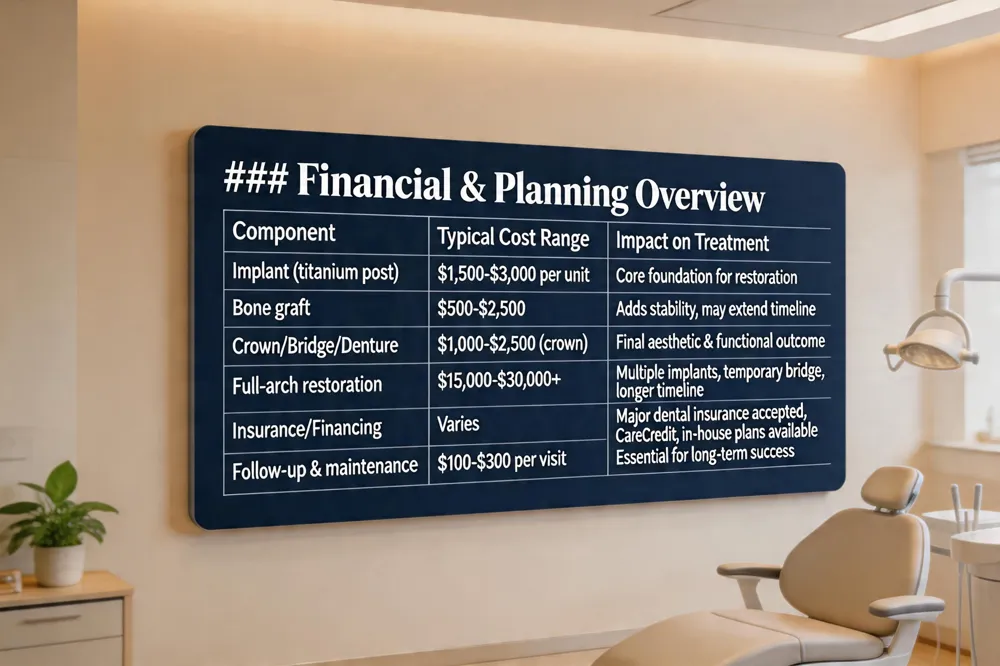 Insurance and financing – Most offices, including Southern Boulevard Dental, accept major dental insurance and offer flexible financing like CareCredit or in‑house payment plans to ease out‑of‑pocket expenses.
Bone grafting impact – If bone volume is insufficient, a bone graft adds $500‑$2,500 and may extend the healing timeline, but it creates a stable foundation for long‑term success.
Full‑mouth vs. single implant – A full‑arch restoration involves multiple implants, a temporary bridge, and a 3‑6‑month osseointegration period before the permanent prosthesis is placed. Single‑tooth treatment follows the same steps on a smaller scale, often with a shorter overall timeline and lower total cost.
Decision making – Discuss the complete treatment plan up front, weigh the benefits of bone preservation against additional procedures, and consider financing options to choose the solution that best fits your budget and oral‑health goals.
Patient Guidance and Frequently Asked Questions
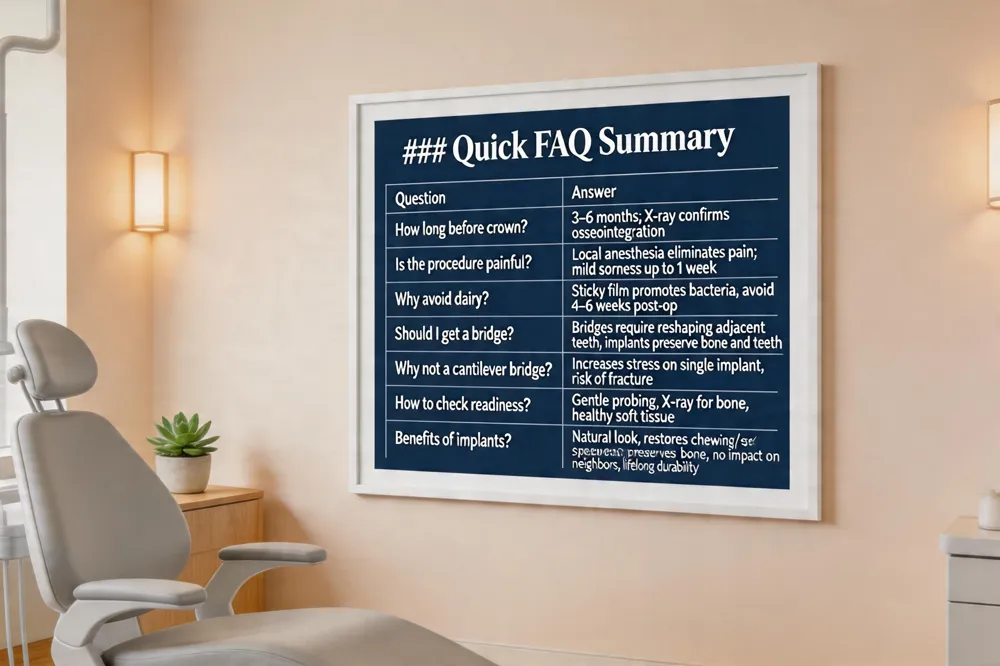
Quick FAQ Summary
| Question | Answer |
|---|---|
| How long before crown? | 3–6 months; X‑ray confirms osseointegration |
| Is the procedure painful? | Local anesthesia eliminates pain; mild soreness up to 1 week |
| Why avoid dairy? | Sticky film promotes bacteria; avoid 4–6 weeks post‑op |
| Should I get a bridge? | Bridges require reshaping adjacent teeth; implants preserve bone and teeth |
| Why not a cantilever bridge? | Increases stress on single implant, risk of fracture |
| How to check readiness? | Gentle probing, X‑ray for bone, healthy soft tissue |
| Benefits of implants? | Natural look, restores chewing/speech, preserves bone, no impact on neighbors, lifelong durability |
 How long for implant to heal before crown?
3–6 months; X‑ray confirms bone integration before final impression.
How painful is getting a dental implant?
Local anesthesia makes surgery painless; mild soreness for up to a week, managed with OTC pain relievers and ice.
Why no dairy after dental implant?
Dairy leaves a sticky film that can promote bacteria and interfere with antibiotics; avoid for 4–6 weeks.
Should I get a dental bridge?
Bridges need reshaping of neighboring teeth; implants avoid this and preserve bone.
Why is a cantilever bridge not recommended?
Single support raises stress and fracture risk, especially posteriorly.
How to check if an implant is ready for restoration?
Check stability by gentle probing, X‑ray for bone, and healthy soft tissue.
What are the benefits of getting dental implants?
Natural‑looking, restore chewing and speech, preserve bone, no impact on adjacent teeth; can last a lifetime.
Final Thoughts
Dental implants offer a durable, natural‑looking solution that restores chewing efficiency, speech clarity, and facial aesthetics while preserving jawbone density and protecting adjacent teeth. With success rates above 95 % and the potential to last a lifetime when cared for properly, implants provide a reliable alternative to removable dentures or traditional bridges. Maintaining this long‑term success requires diligent oral hygiene—brushing twice daily with a soft brush, flossing or using interdental cleaners, and regular dental check‑ups every six months. Avoiding smoking, managing systemic health conditions such as diabetes, and following post‑operative dietary guidelines further support osseointegration and implant stability. If you notice persistent swelling, pain, or a loose restoration, contact your dentist promptly. A personalized consultation will assess bone health, review medical history, and outline a customized treatment plan, ensuring you receive the best possible care and a confident, healthy smile.