Overview of Gentle Laser Therapy
Gentle laser therapy, also called low‑level laser or photobiomodulation, uses a focused light beam—typically diode (810‑980 nm) or erbium (Er:YAG, 2940 nm)—to selectively ablate diseased gum tissue and destroy bacterial biofilm while sparing healthy structures. The laser’s energy is absorbed by pigmented tissues and water, creating a photothermal effect that coagulates blood vessels, sterilizes the pocket, and stimulates cellular metabolism for faster healing. This minimally invasive approach is gaining popularity because it can be performed with little or no anesthesia, produces minimal bleeding, and reduces postoperative pain and swelling compared with conventional scaling or flap surgery. Patients benefit from precise tissue removal, quicker recovery (often within a week), lower discomfort, and a higher satisfaction score, making laser‑assisted periodontal care a comfortable, modern option for gum‑disease management.
Understanding Laser Technology in Periodontics
Key Laser Types & Effects
| Laser Type | Wavelength (nm) | Primary Target | Main Photothermal Effect |
|---|---|---|---|
| Diode | 810‑1064 | Pigmented tissue | Coagulation & bacterial destruction |
| Nd:YAG | 1064 | Deep pocket tissue | Deep debridement with hemostasis |
| Er:YAG | 2940 | Calculus & root surface | Efficient calcified tissue removal, minimal thermal damage |
| LLLT (Low‑Level) | 600‑1000 (varies) | Cellular metabolism | Photobiomodulation – increased microcirculation & tissue regeneration |
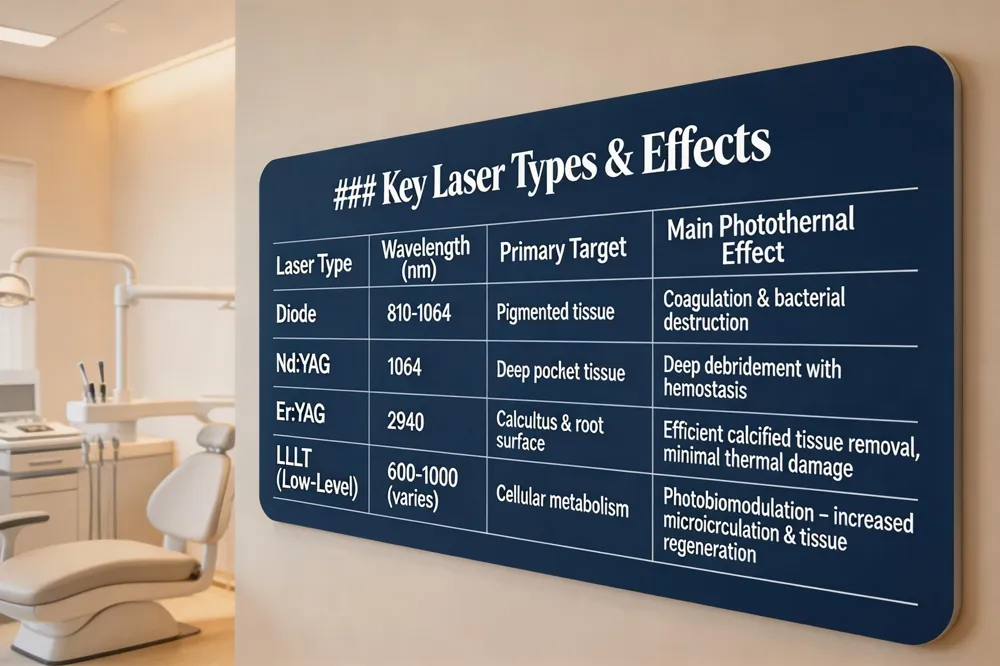 Laser therapy has become a valuable adjunct in modern periodontal care, offering precision, reduced bleeding, and faster healing compared with traditional mechanical debridement. The most common lasers used for gum disease are diode lasers (810‑1064 nm) that target pigmented tissue, Nd:YAG lasers (1064 nm) for deeper pocket debridement, and Er:YAG lasers (2940 nm) that efficiently remove calculus and decontaminate root surfaces while minimizing thermal damage. These wavelengths produce photothermal effects that destroy bacteria and coagulate vessels, and low‑level laser therapy (LLLT) provides photobiomodulation—stimulating cellular metabolism, increasing microcirculation, and accelerating tissue regeneration.
Low‑level laser therapy in dentistry uses non‑thermal, low‑intensity light to promote healing and reduce inflammation, serving as an adjunct to procedures such as scaling, root planing, and extractions. A recent systematic review (2024‑2025) reported modest improvements in pocket‑depth reduction and patient comfort with laser‑assisted therapy, though it called for standardized protocols and longer‑term trials to confirm superiority over conventional methods.
Patients typically experience only a mild tingling during the procedure, especially when a topical anesthetic is used; post‑procedure soreness is minimal and usually resolves within a few days.
The key differences between laser and drill dentistry lie in how tissue is treated: lasers vaporize soft tissue and early decay with minimal vibration, bleeding, and often no sutures, while drills use rotary burrs to remove hard‑tissue, shape cavities, and place crowns. In practice, many clinicians combine both tools—using lasers for precise soft‑tissue work and drills for deeper restorative needs—to achieve optimal outcomes.
Clinical Benefits and Efficacy
Clinical Outcomes Summary
| Outcome | Typical Improvement | Supporting Evidence |
|---|---|---|
| Pocket‑depth reduction | 0.5–1.5 mm (adjunctive SRP) | Systematic review 2024‑2025 |
| Clinical attachment level gain | 0.3–0.7 mm | Multiple RCTs on diode/Er:YAG + SRP |
| Patient comfort | Reduced pain & swelling | Patient‑reported outcomes in LLLT studies |
| Healing time | Faster soft‑tissue recovery (1‑2 weeks) | Photobiomodulation effects |
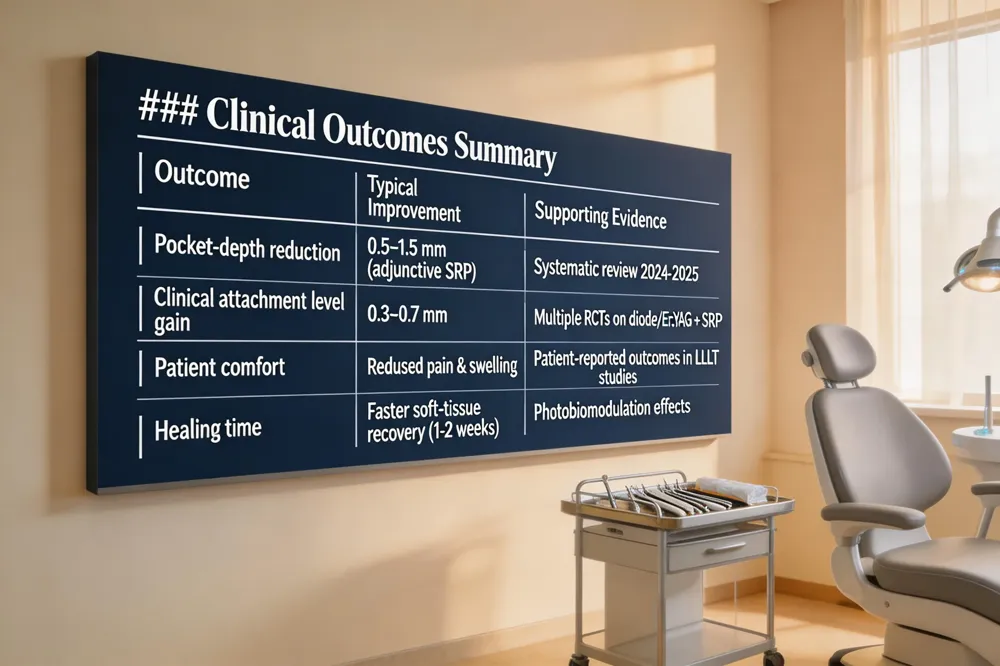 Laser periodontal therapy is an adjunctive, minimally invasive option that complements scaling and root planing (SRP).
Pocket‑depth reduction and clinical attachment level gains – Studies show that adding low‑level laser therapy (LLLT) or diode/Er:YAG laser treatment to SRP typically lowers probing pocket depths by 0.5–1.5 mm and improves clinical attachment levels by 0.3–0.7 mm, especially in mild‑to‑moderate periodontitis.
Impact on gingivitis and overall gum health – By selectively vaporizing bacterial biofilm and coagulating vessels, lasers reduce gingival inflammation, bleeding, and post‑operative swelling. The photobiomodulation effect also stimulates fibroblast activity, accelerating tissue repair.
Adjunctive role of laser curettage and other procedures – Laser curettage debrides pockets after SRP, achieving deeper decontamination without sutures. When combined with regenerative grafts or guided tissue regeneration, lasers can enhance new attachment and bone healing.
Is laser periodontal treatment effective? Yes; it provides modest pocket‑depth reductions and CAL gains while offering less pain and faster healing.
Can laser treatment help with gingivitis? Yes, as an adjunct to daily oral hygiene, it lowers bacterial load and inflammation.
Can you cure gum disease with laser? Laser is a valuable adjunct, not a standalone cure; long‑term success still depends on hygiene and maintenance.
Pros and cons – Pros: minimally invasive, reduced bleeding, quicker recovery, patient comfort. Cons: higher cost, limited insurance coverage, mixed long‑term data for deep pockets.
What is laser curettage? It is a focused‑laser debridement that removes diseased tissue and biofilm, sealing vessels and promoting faster healing, often used after SRP to enhance outcomes.
Safety, Side Effects, and Risks
Safety Profile & Common Side Effects
| Issue | Frequency | Typical Management |
|---|---|---|
| Thermal burn / necrosis | Rare (if settings too high) | Immediate cooling, adjust parameters |
| Mild swelling / dull ache | Common (short‑term) | NSAIDs, soft diet, cold compress |
| Temporary gingival discoloration | Occasional | Reassurance, resolves in weeks |
| Gum recession | Rare | Monitor, reinforce oral hygiene, possible graft if needed |
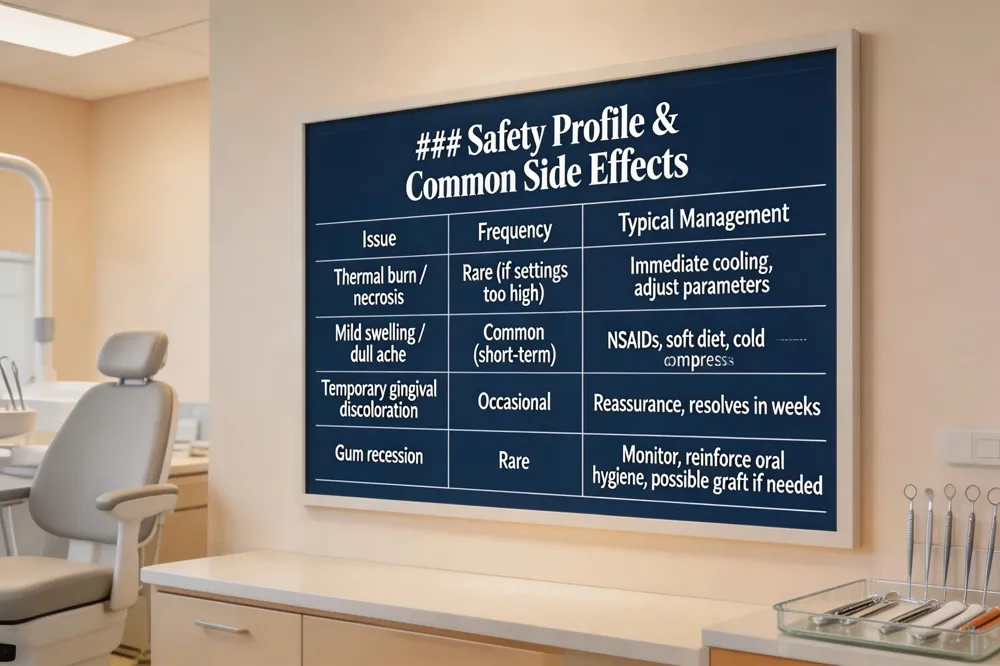 Laser‑assisted periodontal therapy is generally safe when performed by a trained clinician, but the high‑energy light can cause thermal injury if settings are too aggressive. Burns or localized tissue necrosis may delay healing, lead to scar formation, or alter pigmentation, especially in deep pockets where the laser penetrates more tissue.
Common short‑term side effects are mild and short‑lived. Patients typically experience a dull ache, slight swelling, or light bleeding at the treatment site. A transient tingling or burning sensation during the procedure is normal, as is occasional temporary discoloration of the gingiva. Rarely, a brief recession or minor bite change may be noted, but these usually resolve as the tissue repairs.
Healing timelines vary by case. Soft‑tissue recovery is usually complete within 1–2 weeks, allowing a return to normal eating after a few days on a soft‑food diet. Full regeneration of periodontal ligament and bone can take several months, and in complex cases up to a year. Follow‑up visits at 7–10 days and later intervals monitor progress and address lingering sensitivity.
Answers to key questions
- Disadvantages: thermal burns, higher cost, need for specialized training, limited effectiveness in very deep pockets, and operator‑dependent outcomes.
- Side effects: mild pain, swelling, temporary sensitivity, light bleeding, occasional itching, and rare gum recession.
- Healing time: most discomfort subsides in 1–3 days; soft‑tissue healing in 1–2 weeks; complete tissue and bone remodeling may require months.
- Gum regrowth: laser contouring removes excess tissue permanently; only minimal rebound can occur, depending on genetics, oral hygiene, and overall health.
Adhering to post‑procedure instructions—soft diet, gentle oral hygiene, avoidance of smoking, and scheduled check‑ups—optimizes safety and promotes the quickest, most comfortable recovery.
Cost, Insurance, and Financial Considerations
Financial Snapshot
| Service | Typical US Cost | Insurance Coverage |
|---|---|---|
| Full‑mouth laser protocol | $7,000‑$12,000 | Partial coverage if medically justified (LANAP, adjunctive therapy) |
| Single quadrant (moderate) | $2,000‑$3,000 | Often covered under deep‑cleaning benefits |
| Laser gingivectomy (per tooth) | $200‑$400 | Usually out‑of‑pocket (cosmetic) |
| Financing options | Interest‑free plans, health‑care credit lines | Available through most practices |
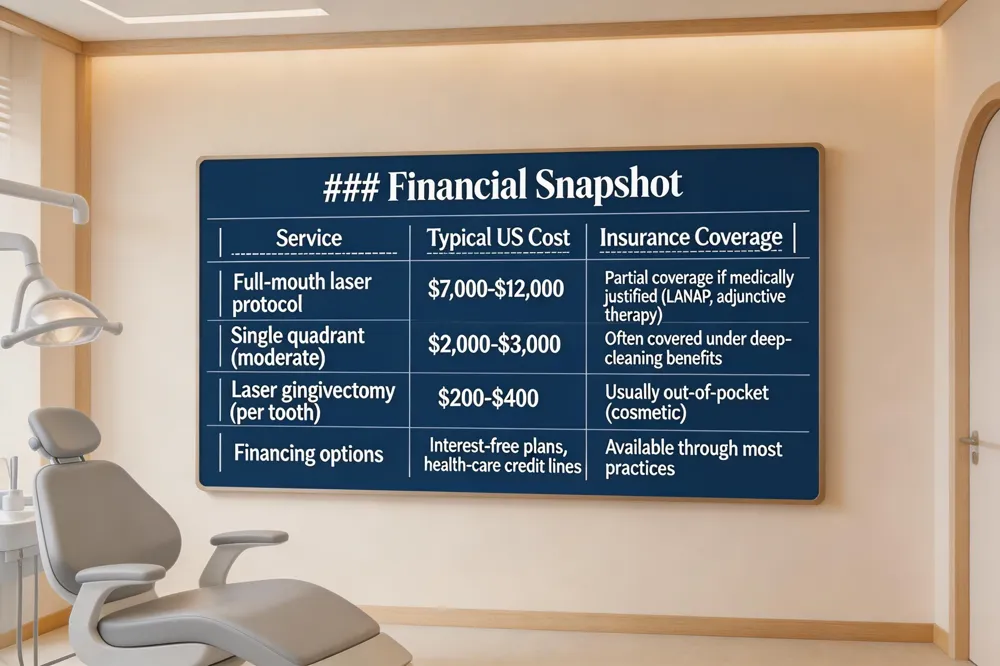 Laser‑assisted periodontal therapy offers a modern, minimally invasive option for gum disease, but understanding the financial side helps patients feel confident about treatment.
Typical price ranges vary by disease severity and the laser system used. For a full‑mouth protocol, most U.S. practices quote between $7,000 and $12,000, while a single quadrant (one fourth of the mouth) usually costs $2,000‑$3,000 for moderate disease and $2,500‑$4,000 for more severe periodontitis. Simpler procedures, such as a laser gingivectomy or gum‑line reshaping, may run $200‑$400 per tooth or $500‑$3,000 for an entire arch.
Insurance coverage is nuanced. Many dental plans cover deep‑cleaning and medically necessary laser procedures, often reimbursing a portion of LANAP or adjunctive laser therapy after prior authorization. Cosmetic laser work (e.g., gummy‑smile correction) is typically excluded and paid out‑of‑pocket. Patients should ask their provider to submit the appropriate codes and documentation to maximize benefits.
Financing options are widely available. Practices frequently offer interest‑free payment plans, health‑care credit lines, or bundled pricing discounts for multiple quadrants. Discussing budgeting early enables a smooth treatment experience without unexpected expenses.
Procedural Details, Patient Experience, and Specific Indications
Procedure Overview & Indications
| Step | Description | Patient Sensation |
|---|---|---|
| Laser contouring | Precise removal of excess gingiva (diode/Nd:YAG/Er:YAG) | Mild tingling, minimal bleeding |
| Laser curettage (post‑SRP) | Deep decontamination of pockets | Slight pressure, no sutures needed |
| LANAP protocol | Pocket debridement + guided tissue regeneration | Comfortable, faster recovery |
| Indications | Mild‑to‑moderate periodontitis, gingivitis, cosmetic gingivectomy | Generally well tolerated |
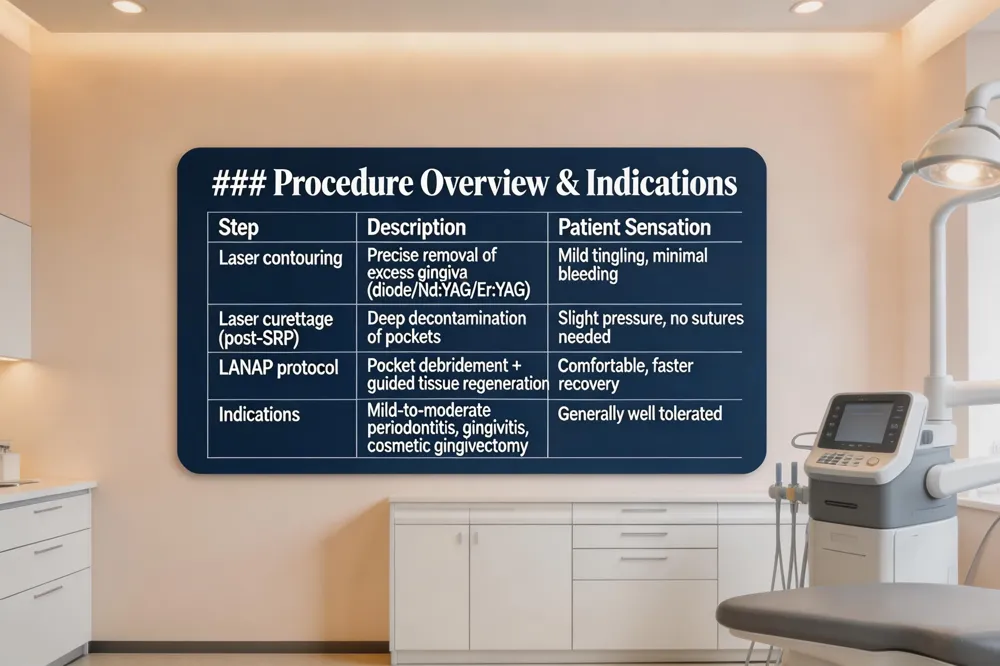 Laser gum contouring uses diode, Nd:YAG, or Er:YAG wavelengths to precise excess excess ging dise remove while preserving healthy tissue. The laser’s photothermal effect coagulates blood vessels, reduces bacterial load, and creates a cleaner surgical field, enabling gentle removal of diseased tissue and calculus. In cases of receding gums and deep pockets, protocols such as LANAP (Laser‑Assisted New Attachment Procedure) debride pockets, lower probing depths, and stimulate fibroblast activity, promoting natural re‑attachment of the remaining gum to the tooth surface. Patients typically experience minimal bleeding, reduced postoperative swelling, and little or no need for sutures. Recovery is rapid—most report a comfortable soft‑diet period of about one week and a return to normal oral hygiene within days.
Can laser therapy treat receding gums? Laser therapy can help stabilize receded gum tissue and encourage re‑attachment by removing diseased tissue, reducing pocket depth, and stimulating healing. It does not regenerate lost tissue; severe recession may still require grafts.
Can gums grow back after laser treatment? Laser contouring removes excess tissue permanently; only minimal regrowth may occur under optimal hygiene and health conditions. The result is generally a lasting, balanced smile.
Home Care, Maintenance, and Long‑Term Success
Maintenance Checklist
| Action | Frequency | Rationale |
|---|---|---|
| Soft‑bristled brushing | Twice daily (first week post‑laser) | Protect delicate tissue |
| Floss / interdental brushes | Daily | Remove plaque from pockets |
| Antimicrobial rinse (chlorhexidine) | 1‑2 weeks post‑procedure | Reduce bacterial load |
| Salt‑water rinse | 3 × daily | Soothes inflammation |
| Professional cleaning | Every 3 months | Monitor pockets, reinforce results |
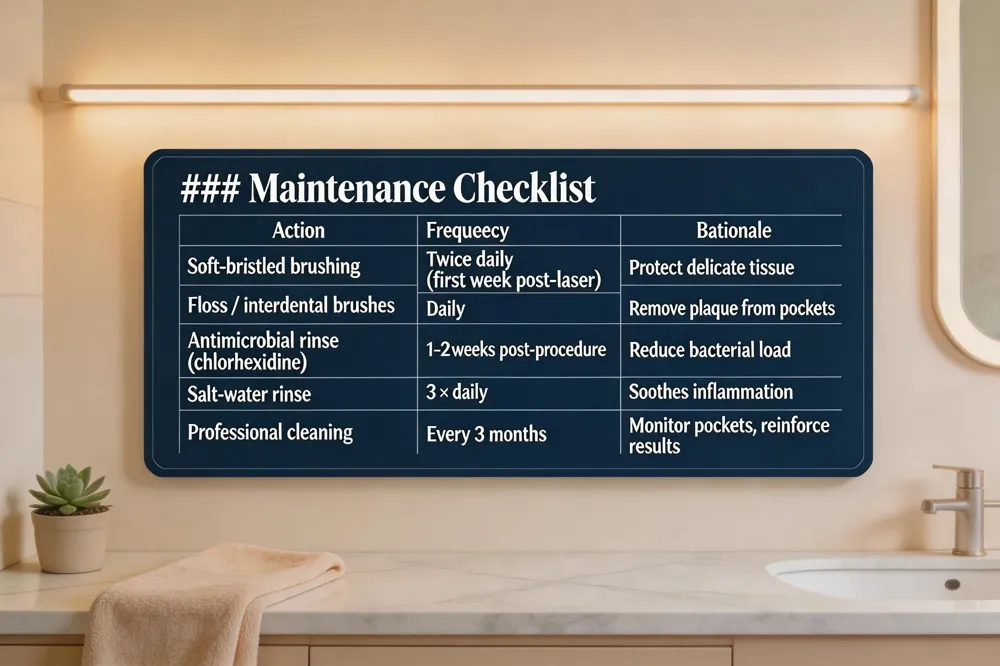 Effective home care begins with diligent oral hygiene. Brush twice daily with fluoride toothpaste, floss or use interdental brushes each day, and finish with an antimicrobial mouthwash such as chlorhexidine or a natural alternative like lemongrass oil. Warm salt‑water rinses (1 tsp salt in 8 oz water) three times a day reduce inflammation and kill bacteria, while occasional oil‑pulling with coconut oil helps loosen plaque. Avoid tobacco, limit sugary snacks, and stay well‑hydrated to support saliva’s natural cleaning action.
After laser gum therapy, follow the same routine but use a soft‑bristled brush for the first week, avoid hard foods, and rinse gently with warm salt water.
Regular professional maintenance—cleanings and periodontal check‑ups every three months—ensures any residual pockets are monitored and that the treatment’s benefits are sustained over the long term.
Future Directions: Integrating Laser Technology with Digital Dentistry
Emerging Integration Concepts
| Innovation | Description | Potential Benefit |
|---|---|---|
| AI‑driven feedback | Real‑time adjustment of laser parameters based on intra‑oral scan data | Optimized energy delivery, reduced collateral damage |
| Portable low‑cost lasers | Compact units for community clinics | Expanded access, lower patient cost |
| Standardized protocols | Consensus guidelines from multicenter trials | Consistent outcomes, easier insurance reimbursement |
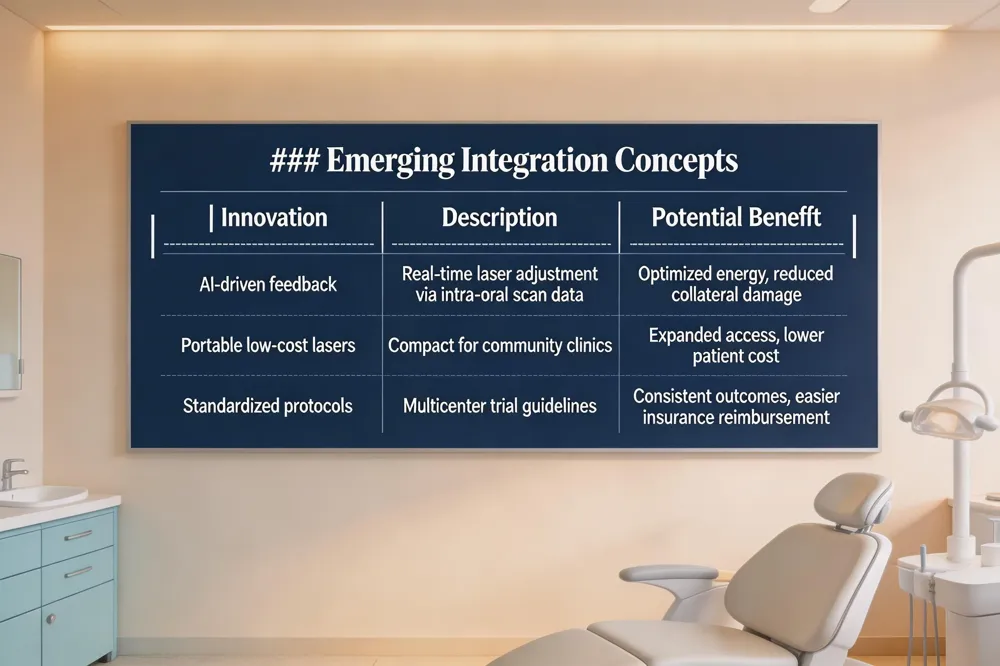 The next wave of periodontal care will blend laser precision with digital intelligence. AI‑driven feedback loops, paired with 3‑D intra‑oral scanning, can adjust laser parameters in real time, ensuring optimal energy delivery for each pocket depth while protecting healthy tissue. Meanwhile, manufacturers are developing portable, lower‑cost laser units that bring the benefits of minimally invasive therapy to community clinics and underserved practices, expanding access without compromising safety. To translate these advances into consistent patient outcomes, the dental community must establish standardized laser protocols and conduct long‑term, randomized trials that compare AI‑enhanced laser treatment with traditional scaling and root planing. Such evidence will help clinicians adopt uniform guidelines, validate sustained clinical gains, and reinforce confidence in laser‑assisted periodontal therapy.
Gentle Laser Therapy – A Patient‑Centered Advancement
Gentle laser therapy, also called low‑level laser or photobiomodulation, is a minimally invasive adjunct to scaling and root planing. Clinical studies show reductions in probing pocket depth of 0.5‑1.5 mm, improved clinical attachment levels, and faster tissue healing, while patients report less pain, swelling, and bleeding. The built‑in sterilization lowers bacterial load and infection risk. Safety is high when performed by a dentist with accredited laser‑training and FDA‑cleared protocols; thermal injury or eye damage are avoided with proper settings and protective eyewear. At Southern Boulevard Dental we customize each session to the patient’s pocket depths, medical history, and comfort preferences, ensuring optimal outcomes. Call us today to schedule a consultation and discover how gentle laser therapy can protect your smile.