Introduction
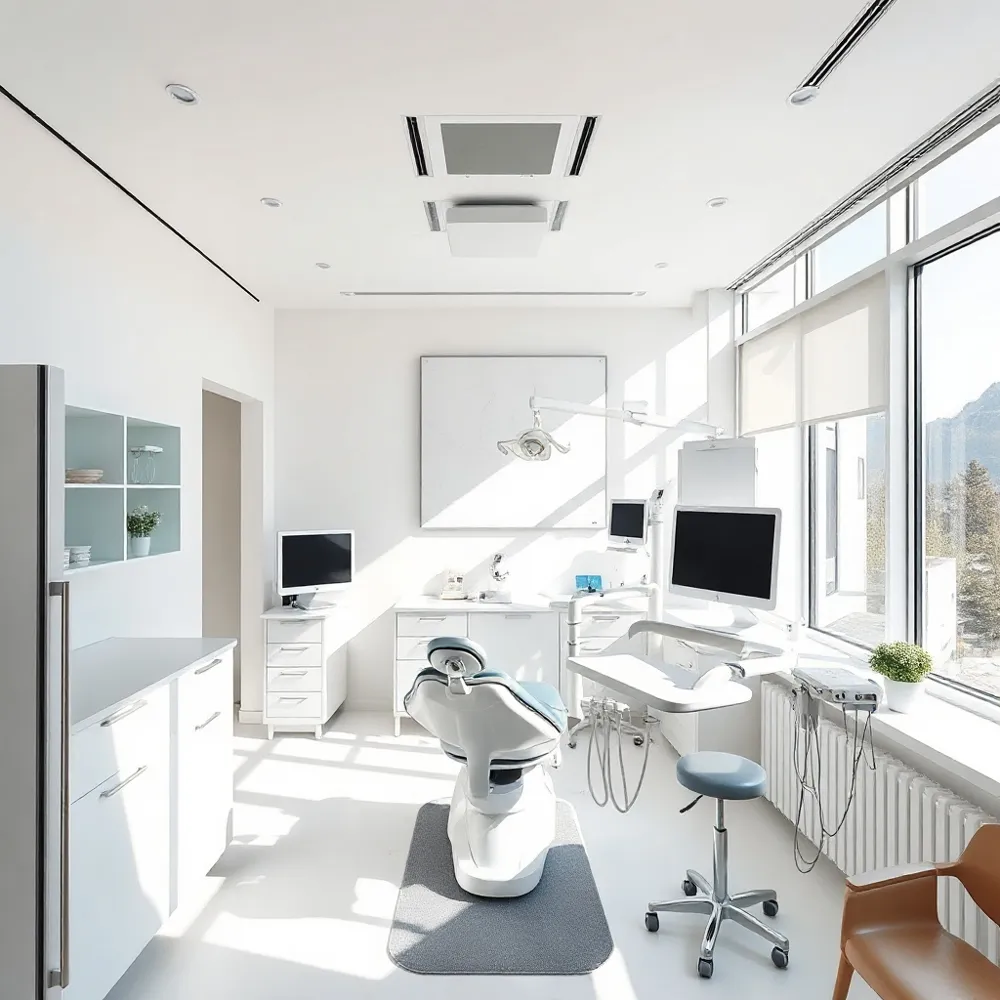
Same‑day ceramic crowns are custom‑designed restorations that are designed, milled, and placed in a single dental visit using chair‑side CAD/CAM technology such as CEREC®. A digital intra‑oral scanner captures a precise 3‑D impression of the prepared tooth, the software then creates a virtual crown that matches the tooth’s shape and shade, and an on‑site milling unit fabricates the restoration from high‑quality ceramic material within minutes. The crown is bonded permanently, eliminating the need for a temporary restoration and a second appointment.
In today’s fast‑paced world, patients value both speed and quality. Same‑day crowns dramatically reduce treatment time—often to two hours—while delivering aesthetic results that mimic natural enamel and durability comparable to laboratory‑fabricated crowns. This convenience minimizes days fromues office, while restoration, oral‑health and, and improves overall patient satisfaction, making modern restorative dentistry both efficient and trustworthy.
How Same‑Day Crowns Work: From Scan to Smile
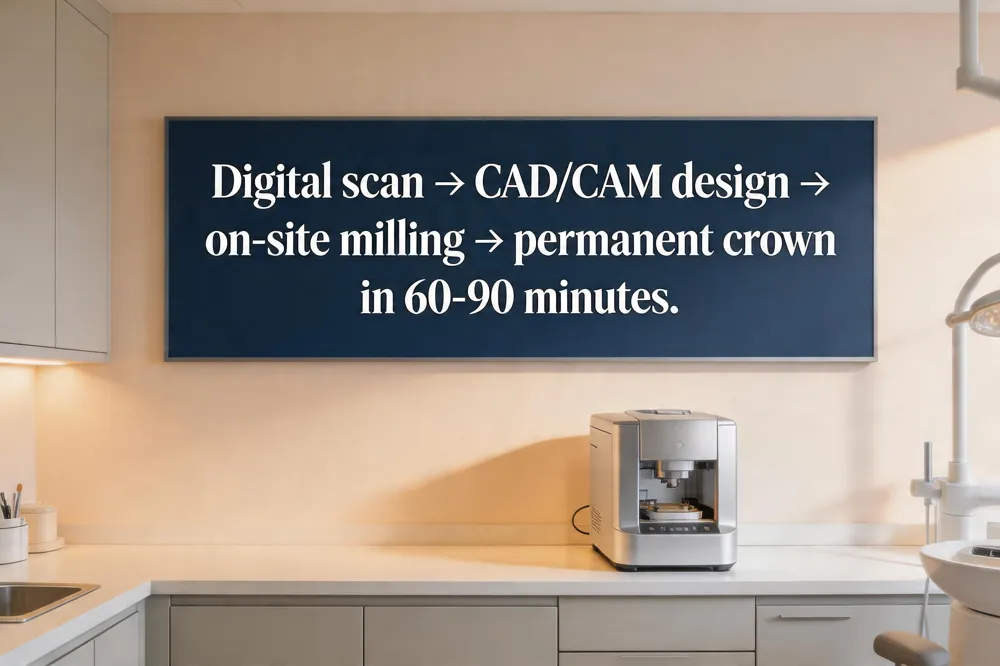 Modern same‑day crowns rely on three key steps that make the restoration fast, precise, and comfortable for patients.
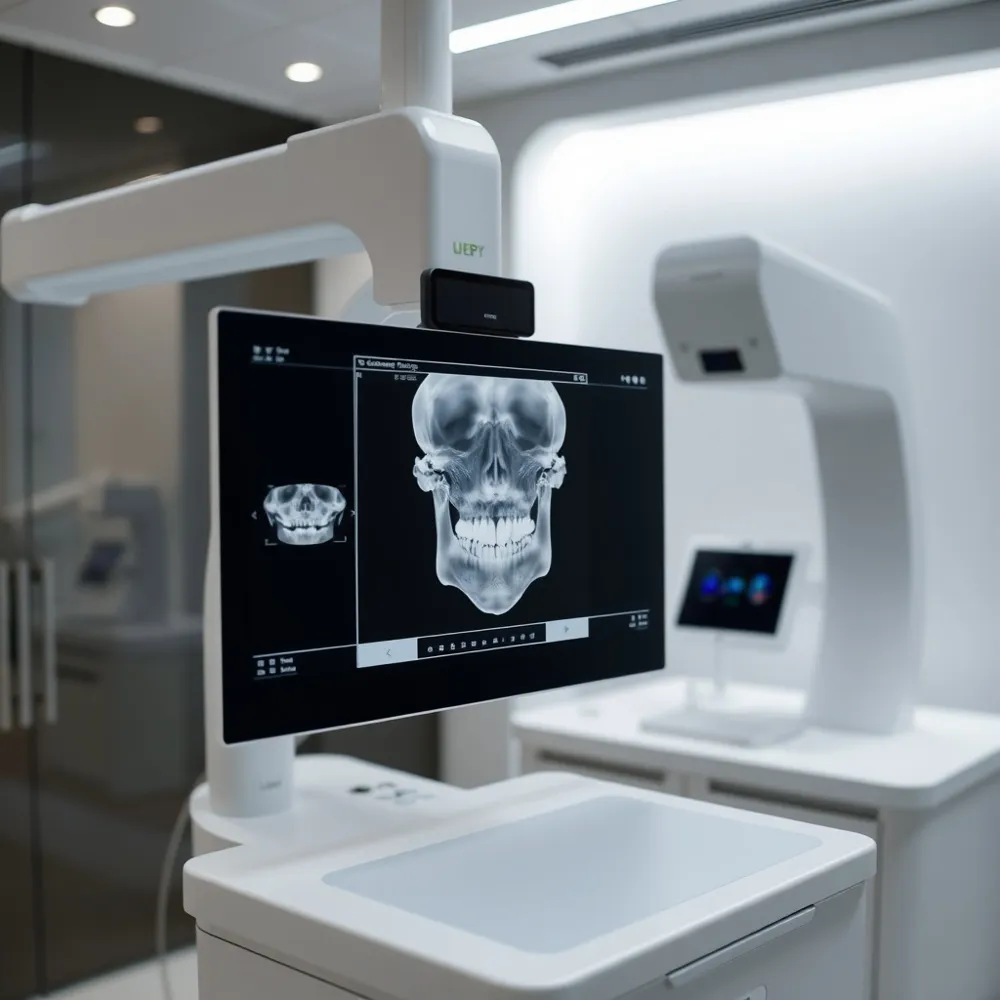
Digital intra‑oral scanning – An intra‑oral camera captures a 3‑D image of the prepared tooth and surrounding dentition in seconds, eliminating messy putty impressions and reducing gag reflex risk.
CAD/CAM design and on‑site milling – The scan is sent to chair‑side software where the dentist designs the crown’s shape, size, and shade. The design is then milled from a solid block of high‑quality ceramic (often lithium disilicate or zirconia) in roughly 15‑30 minutes.
Appointment timeline and patient comfort – The entire workflow—preparation, scanning, design, milling, polishing, fit‑check, and bonding—typically fits within a 60‑90‑minute visit. No temporary crown is needed, and patients leave with a permanent, natural‑looking restoration.
Can a crown be made the same day? Yes—using chair‑side CAD/CAM (CEREC) technology, a permanent ceramic crown can be fabricated and placed in one appointment, usually 60‑90 minutes, eliminating a second visit.
How long does a ceramic crown take? The digital scan and design take 15‑30 minutes, milling another 15‑30 minutes, and final fitting and cementation about 10‑15 minutes, totaling roughly one hour.
What is the 3‑3‑3 rule in dentistry? It is an ibuprofen guideline: take 200 mg every 3 hours, up to a maximum of 3 days, to manage post‑procedure inflammation and discomfort.
Choosing the Right Material: Brands, Strength, and Aesthetics
 When selecting a crown, dentists weigh aesthetics, durability, and the tooth’s location.
All‑ceramic vs. metal‑based crowns – All‑ceramic options (lithium‑disilicate, zirconia) provide a natural translucency that mimics enamel and require less tooth reduction, while metal‑based crowns (gold, PFM) offer superior fracture resistance for high‑stress molars but can be less aesthetic.
Top brands for lithium‑disilicate and zirconia – The most respected lithium‑disilicate system is E‑max, celebrated for its high strength and excellent shade matching. Leading zirconia brands include Lava Crown, Zirkonzahn, and Cercon, which deliver compressive strengths above 1,000 MPa and can be layered with porcelain for added aesthetics.
Balancing aesthetics and durability – For front‑tooth restorations, clinicians often choose E‑max to achieve a lifelike appearance. For posterior teeth or patients with heavy bite forces, high‑strength zirconia provides the necessary durability while still offering a natural hue.
What is the best crown brand? – E‑max lithium‑disilicate crowns are premium for aesthetics; zirconia systems such as Lava Crown, Zirkonzahn, and Cercon excel in strength. Gold remains the gold‑standard for longevity in posterior crowns.
Are same‑day crowns just as good? – Yes—modern CAD/CAM‑fabricated crowns achieve fit, aesthetics, and durability comparable to lab‑made crowns when the case is suitable.
Types of dental crowns and cost – Porcelain‑fused‑to‑metal crowns cost $800‑$1,200; all‑ceramic crowns (e‑max, zirconia) range $1,000‑$1,800; high‑noble gold crowns $1,200‑$2,500. Insurance often covers a portion of these fees.
Patient Convenience and Cost: Same‑Day vs. Lab Crowns
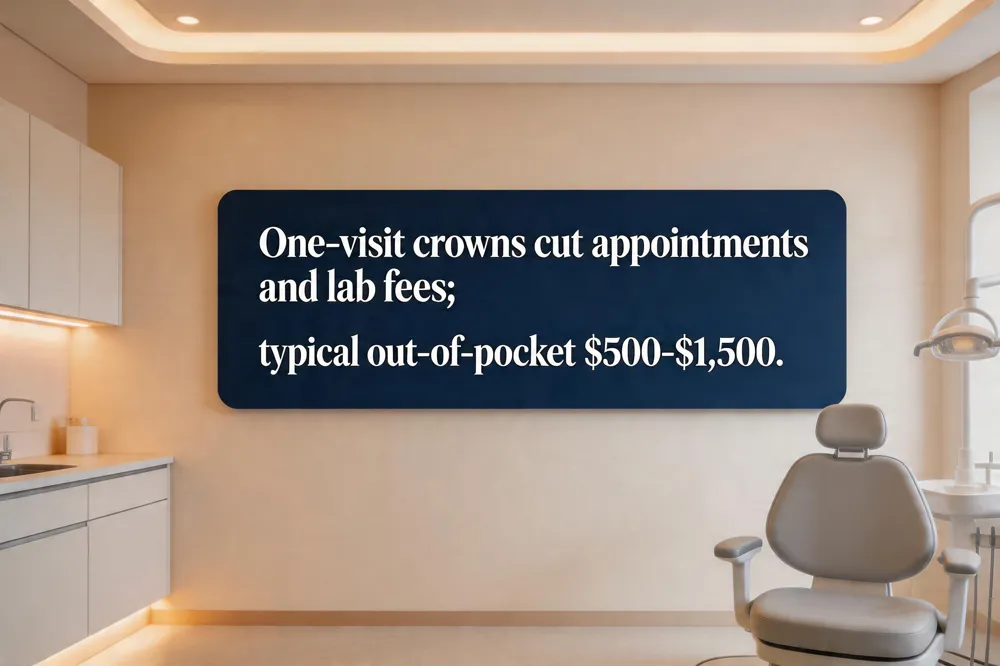 Same‑day crowns dramatically reduce the number of appointments needed for a restoration. Using CAD/CAM technology, the tooth is prepared, scanned, designed and milled, and the permanent crown is placed in a single visit—eliminating the need for a temporary crown and a second office visit. Traditional lab‑fabricated crowns typically require two appointments over 1‑2 weeks and a provisional restoration that can cause discomfort and sensitivity.
Insurance coverage for both same‑day and lab crowns is generally similar; many dental plans treat them as medically necessary and cover a portion of the fee, often around 50 % with an annual maximum. Because same‑day crowns avoid lab fees, the overall out‑of‑pocket cost can be lower, though the price varies by material (porcelain, zirconia, lithium disilicate) and the dentist’s expertise. The average cost of a CEREC crown ranges from $500 to $1,500, while traditional crowns fall between $300 and $1,000. Full‑coverage crowns overall the United States typically run $800‑$2,500, with insurance often covering half.
Geographically, same‑day crown services are widely available across the United States. Practices in Metairie, LA; Westport, CT; Johnson City, TN; and many other regions now offer chairside CAD/CAM restorations. At Southern Boulevard Dental in Rio Rancho, NM, patients can find a "dental crown near me" and benefit from our CEREC technology, which provides high‑quality porcelain crowns in one visit. Call (505) 555‑1234 or use our online request form to schedule an appointment today.
Clinical Considerations, Limitations, and Oral‑Health Context
 Same‑day crowns, typically fabricated with CEREC® or other CAD/CAM systems, are ideal when a tooth requires a full‑coverage restoration but the damage is limited to the crown portion, the margins are supragingival, and the patient has good oral hygiene. They work well for decayed, cracked, or severely worn teeth, and for post‑root‑canal restorations where the remaining structure can support a ceramic cap. Cases with extensive sub‑gingival decay, large multi‑unit bridges, or the need for metal‑based strength (e.g., heavy‑load molars) may still require a traditional laboratory‑fabricated crown.
When a full crown is not necessary, minimally invasive alternatives such as inlays, onlays, composite bonding, or porcelain veneers can preserve more natural tooth structure. For teeth that are severely compromised, a dental implant topped with a custom crown offers the most durable long‑term solution.
Cultural dietary patterns heavily influence dental health. Populations that consume low‑sugar, whole‑food diets—Mediterranean, Nordic, and many Western countries such as Denmark, Finland, Sweden, Switzerland, Canada, and the United States—show the lowest rates of decay. Their diets rich in fresh produce, dairy, fish, and tea, combined with routine fluoride exposure and diligent oral‑hygiene, contribute to healthier teeth overall.
Dental crowns are not permanent fixtures; they are designed to last 5‑15 years (often 10‑15 years with proper care). Materials, tooth position, and maintenance affect longevity, and regular check‑ups, brushing, flossing, and avoiding hard foods help extend a crown’s service life.
Front‑Tooth Restorations and Patient Experience
 Aesthetic priorities for anterior crowns focus on matching the translucency, color, and shape of natural enamel. High‑quality ceramic materials such as lithium disilicate (E‑max) or porcelain provide a lifelike appearance while offering enough strength for front‑tooth function. The workflow for a front‑tooth crown today often uses same‑day CAD/CAM technology. After numbing the tooth, the dentist gently reshapes it, then captures a digital impression with an intra‑oral scanner. The 3‑D model is sent to an on‑site milling unit, which carves a custom crown from a solid ceramic block in about 15‑20 minutes. The crown is tried in, adjusted for shade and occlusion, and permanently bonded—all in one appointment. This eliminates temporary crowns, reduces visits, and preserves more natural tooth structure. Patients consistently report higher satisfaction because the restoration looks natural immediately, treatment time is minimized, and there is less discomfort from multiple anesthetic administrations. Dental crown for front tooth: Front tooth crowns are used when a front tooth is cracked, heavily decayed, discolored, or after a root canal to restore both strength and appearance. The most aesthetic and durable option is an all‑ceramic crown, such as lithium disilicate (E‑max) or porcelain, which mimics natural enamel translucency while providing sufficient strength for the anterior region. The procedure involves two visits: first, the tooth is examined, numbed, reshaped, and an impression or digital scan is taken; a temporary crown protects the tooth while the permanent crown is fabricated in a lab. At the second visit, the temporary crown is removed, the custom‑made crown is checked for fit, color, and bite, and then permanently bonded with dental cement and polished for a natural look. With proper oral hygiene and regular check‑ups at Southern Boulevard Dental, a front‑tooth crown can last many years, giving you a confident, seamless smile.
Conclusion
Same‑day crowns blend rapid, high‑quality restorative care with a patient‑centered approach. Using CAD/CAM technology such as CEREC, dentists capture a digital impression, design the restoration, mill a custom ceramic crown, and bond it in a single visit—often within two hours. The result is a natural‑looking, durable restoration that matches the surrounding teeth and protects the tooth immediately, eliminating the inconvenience of temporary crowns and multiple appointments. This streamlined workflow not only saves time but also preserves more healthy tooth structure and reduces the risk of sensitivity or infection. Our practice is dedicated to delivering these advanced, comfortable solutions while ensuring each patient feels informed and confident throughout the process. If you need a crown for a decayed, cracked, or restored tooth, schedule your same‑day crown appointment today and experience the convenience and quality of modern dentistry.