The Digital Turn in Dentistry
Digital dentistry began in 1973 when CAD/CAM technology was first introduced, allowing computer‑aided design and manufacturing of restorations. Over the past five decades, intraoral scanners, digital radiography, and cone‑beam CT have replaced analog impressions, film‑based X‑rays, and manual model fabrication. Today, a single appointment can include a high‑resolution 3‑D scan, instant virtual design, and same‑day milling of crowns or aligners, eliminating the need for messy trays, impression materials, and shipping delays. For patients, this shift means less discomfort, a reduced gag reflex, shorter chair time, and immediate visual feedback that enhances understanding and confidence in treatment plans. The streamlined workflow also improves hygiene, lowers infection risk, and supports environmentally friendly practice. Because the data are stored electronically, records can be accessed quickly for visits, and dentists can share them securely with specialists, simplifying care coordination.
Diagnostic Power and Clinical Accuracy of Intra‑oral Scanners
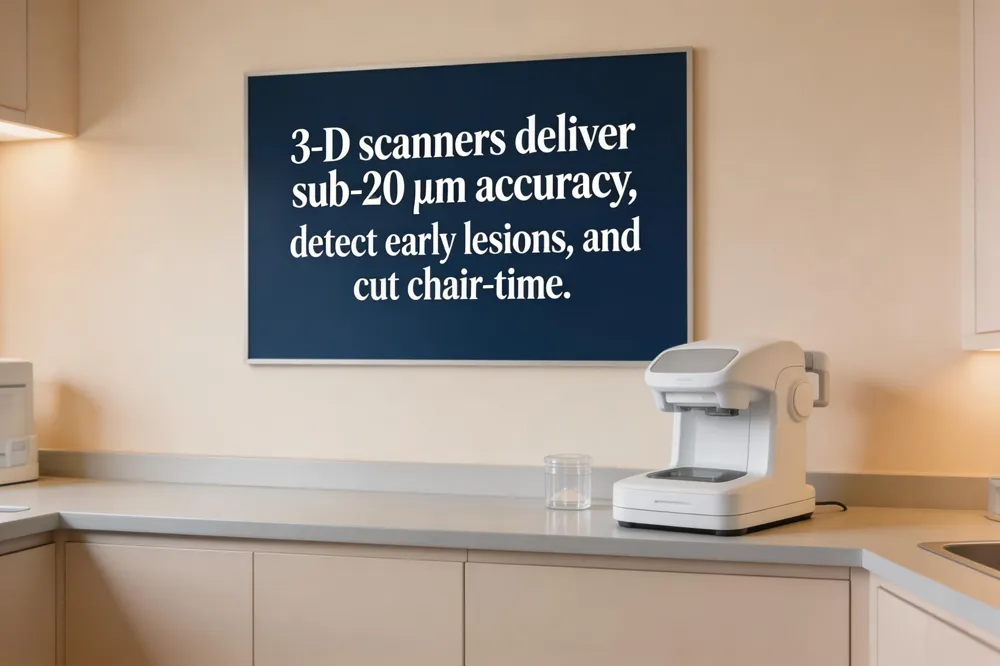 Intra‑oral scanners capture three‑dimensional data by projecting structured light or laser beams onto the teeth and soft tissues and recording the reflected patterns with high‑speed cameras. Sophisticated software stitches each frame into a seamless, colour‑accurate digital model within seconds, eliminating the need for traditional impression trays and materials.
Because the scans are true 3‑D representations, they can be analysed for a range of diagnostic purposes. Systematic reviews have shown that intra‑oral scanners reliably detect tooth wear, early erosive lesions, nasolabial asymmetry in cleft‑lip/palate patients, and orthodontic changes such as transverse maxillary development. Studies using devices like TRIOS 3, iTero Element, and 3Shape TRIOS® 3 demonstrate accuracy comparable to, superior to conventional alginate or polyvinyl‑siloxane impressions, with marginal discrepancies often below 20 µm.
Compared with traditional impressions, digital scans reduce patient discomfort, gag reflex, and chair‑time, while providing instant visualisation for both clinician and patient. The workflow streamlines communication with laboratories, shortens turnaround times, and supports same‑day restoration fabrication. The result is a more precise, efficient, and patient‑friendly diagnostic process.
Workflow Efficiency, Cost Savings, and Choosing the Right Scanner
 Intraoral scanners dramatically cut chair‑time: a full‑arch scan takes 40‑60 seconds versus 10‑15 minutes for alginate trays, and the digital file is sent instantly to the laboratory, shrinking turnaround from weeks to days or even a single‑visit restoration. Financially, practices save on material waste, disinfection, and shipping costs; a typical digital impression is billed $100‑$250 per arch (or $200‑$300 for both), comparable to analog fees but with higher accuracy and faster delivery. Leading scanners include the iTero Primescan (sub‑micron accuracy, ergonomic handpiece), 3Shape TRIOS 5 (robust CAD/CAM integration, rapid capture), and Medit i700 (affordable price, excellent performance). The "best" scanner aligns with a practice’s workflow, budget, and patient‑comfort goals. Intraoral scanner benefits encompass precise, distortion‑free impressions, reduced gag reflex, immediate 3‑D visualizations for patient education, and streamlined lab communication—all of which enhance efficiency, lower material costs, and promote a comfortable, patient‑centered dental experience.
Radiation‑Safe Imaging: From Digital X‑Rays to CBCT
 Digital dental X‑ray sensors are highly sensitive, allowing a typical dose of 0.001–0.005 mSv per image—30–70 % less than film X‑rays and comparable to a few hours of natural background radiation. This low exposure means the diagnostic benefits far outweigh any minimal risk, and routine imaging often no longer requires lead aprons.
Despite these advantages, digital radiography has drawbacks: intra‑oral sensors can be bulkier, causing gagging for some patients; the initial purchase and ongoing software maintenance are costly; limited sensor size may require multiple shots for a full arch; and image quality can suffer from artifacts or sensor damage.
The latest imaging breakthrough is high‑resolution 3‑D cone‑beam computed tomography (CBCT), which delivers detailed volumetric views of teeth, roots, nerves and bone in a single, low‑dose scan. AI‑enhanced digital X‑rays and panoramic units now provide instant, crystal‑clear images, while integration of intra‑oral scanners with CBCT enables precise implant, orthodontic and surgical planning—making modern dental imaging safer, faster and far more informative.
Everyday Oral‑Health Practices Backed by Science
 Simple, evidence‑based habits keep any smile healthy.
How to take care of teeth naturally – Brush twice with a brush and fluoride toothpaste, using gentle circular motions and cleaning the tongue. Floss or use a water flosser for between teeth. Stay hydrated, chew sugar‑free gum, choose a diet rich in whole foods, and limit sugary snacks. Check‑ups catch problems early.
10 ways to keep your teeth healthy – 1) Brush twice a day and replace the brush every 3‑4 months; 2) Floss daily; 3) Use antimicrobial or fluoride mouthwash; 4) Limit sugary/acidic foods and avoid tobacco.
5 ways to take care of your teeth – Brush, floss, rinse with antimicrobial or fluoride mouthwash, limit sugar, and visit the dentist twice yearly.
Oral hygiene routine order – Rinse, floss, brush surfaces for two minutes, sweep tongue, finish with alcohol‑free therapeutic mouthwash.
What is 3‑3‑3 rule for teeth? – It suggests brushing three times, three minutes per session, and waiting three hours after meals before bed. Current research supports brushing twice for two minutes, flossing, and check‑ups; 3‑3‑3 rule is not scientifically validated.
Aesthetic Guidelines and Measurement Rules in Dentistry
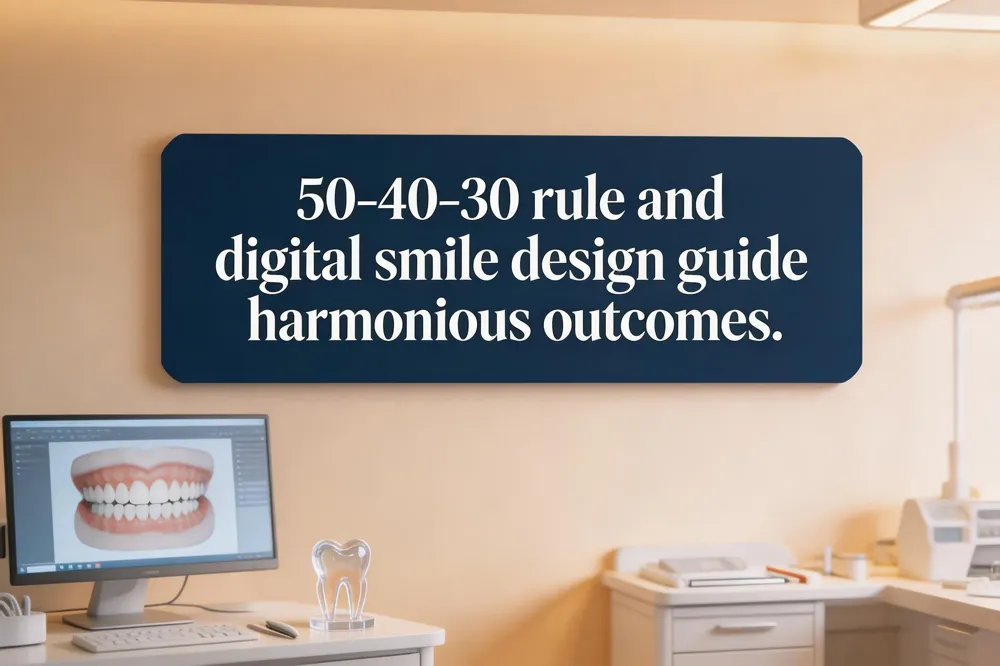 The 50‑40‑30 rule is a visual guideline that helps clinicians achieve harmonious smiles. It suggests that the apparent contact dimension (ACD) between the central incisors, between the lateral incisors, and between the lateral incisor and canine should represent approximately 50 %, 40 %, and 30 % of the total incisal display, respectively. While useful for planning, it is not a strict law and must be adapted to each patient’s unique anatomy.
The latest technology for dental imaging is high‑resolution 3‑D cone‑beam computed tomography (CBCT), which provides detailed volumetric views of teeth, roots, nerves, and bone with a low radiation dose. Modern intra‑oral scanners capture precise 3‑D surface data in seconds, and when merged with CBCT, they enable comprehensive digital smile design, implant planning, and orthodontic simulations. AI‑enhanced imaging further boosts diagnostic accuracy and reduces chair‑time, delivering faster, safer, and more informative care for patients and dentists alike.
Putting It All Together: Patient‑Centered Care at Southern Boulevard Dental
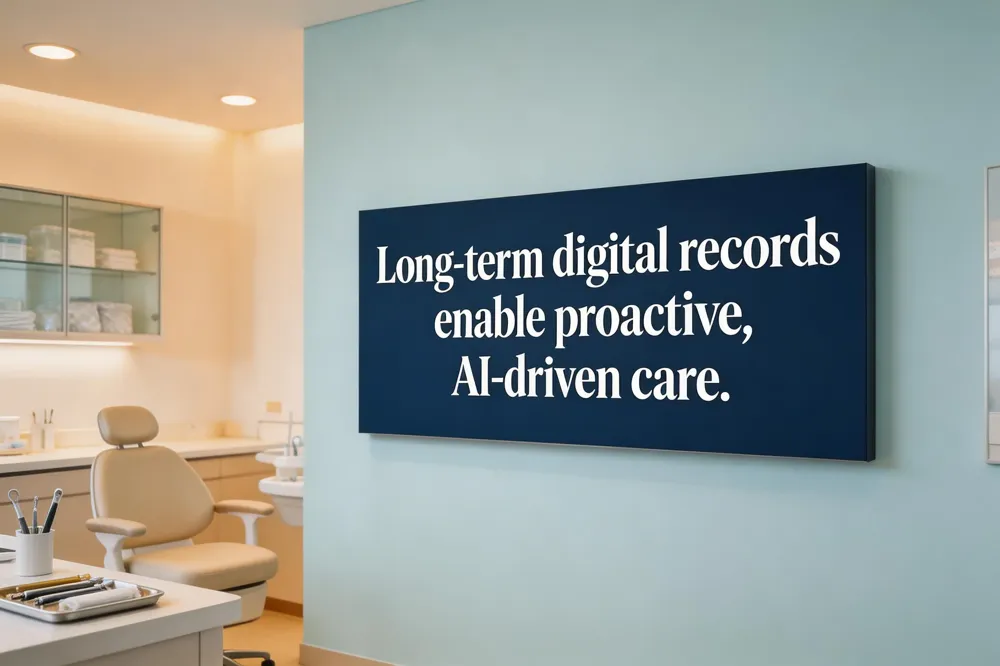 Because scans are stored electronically, clinicians can compare new images with baseline records over months or years. This longitudinal monitoring catches early erosive lesions, tooth wear or periodontal changes before they become symptomatic, supporting a proactive, preventive approach.
Future directions include AI‑driven diagnostics, tighter integration with CBCT for implant planning, and broader research to confirm accuracy across diverse oral diseases. Continued studies will refine protocols and expand clinical indications.
What is the best dental digital scanner? The best scanner balances accuracy, speed, ergonomics and cost. Leading options are iTero Primescan, 3Shape TRIOS 5 and Medit i700, each delivering sub‑micron precision. Choice depends on workflow fit and budget.
Digital impressions cost Typically $100‑$250 per arch (or $200‑$300 for both), comparable to analog impressions but offering faster turnaround, higher accuracy and greater patient comfort.
A Brighter, Safer Future for Dental Health
Digital intraoral scanners capture high‑resolution, three‑dimensional images of teeth and gums in seconds, eliminating the need for messy impression trays, reducing gag reflex and cutting chair‑time by up to 30 %. The resulting 3‑D models are instantly shared with labs, enable same‑day CAD/CAM restorations, and integrate with CBCT for comprehensive treatment planning, all while exposing patients to no additional radiation. At Southern Boulevard Dental we prioritize comfort and safety: our scanners use hygienic, closed‑window designs, and our workflow follows strict infection‑control protocols. We invite you to experience this gentle, accurate, and efficient care—schedule your visit and see how modern digital technology can make your smile healthier and your dental visit stress‑free.