Introduction to Same-Day Crowns and Their Growing Appeal
What Are Same-Day Crowns?
Same-day crowns are modern dental restorations designed and placed in just one appointment. Using advanced digital technology like CAD/CAM and intraoral scanning, dentists can create a permanent crown onsite without the need for traditional molds or multiple visits.
The Single-Visit Procedure
The process starts with a precise digital impression of the damaged tooth, followed by computer-aided design of the crown. The crown is then milled directly in the dental office from high-quality ceramic or porcelain materials. This entire procedure typically takes about 1.5 to 2 hours, allowing patients to leave with their new crown the same day.
Why Patients Prefer Same-Day Crowns
Same-day crowns offer significant convenience by eliminating multiple appointments and the discomfort of temporary crowns. They provide a natural look, durable materials, and a precise fit that preserves more of the natural tooth structure. These advantages make same-day crowns a popular choice for busy patients seeking fast, effective dental care without sacrificing quality or aesthetics.
Understanding the Technology Behind Same-Day Crowns
What are same-day crowns and how are they made?
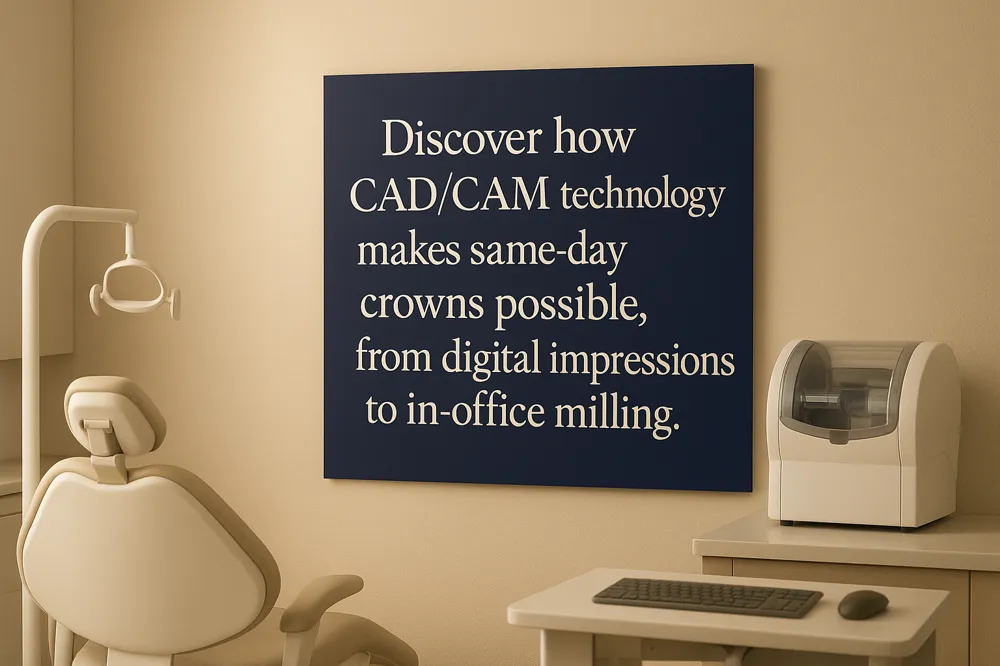
Same-day crowns, often called CEREC crowns technology, are permanent dental restorations created and placed in a single dental visit. The process begins with the dental professional preparing the tooth and capturing highly accurate digital impressions using an intraoral scanner, replacing traditional messy molds. Using CAD/CAM technology in dentistry, the dentist designs the crown digitally. Next, an in-office milling machine fabricates the crown from a solid block of high-quality ceramic, zirconia, or porcelain materials within 15 to 30 minutes. This enables patients to skip Eliminating Temporary Crowns and multiple visits, receiving durable, natural-looking crowns immediately.
What is the technology behind same-day dental crowns?
Same-day crowns rely on advanced digital dentistry tools. The digital scanner creates a 3D model of the tooth, which is processed by CAD software to design a precise crown that aligns perfectly with bite and teeth color. The milling unit quickly carves the crown from a ceramic or zirconia block to exact specifications. This high level of automation ensures a snug fit, reduces errors common with traditional impressions, and enhances patient comfort by eliminating extra steps. The streamlined workflow leads to faster treatment and minimized discomfort.
What is the latest technology in making dental crowns?
Modern crown fabrication benefits from CAD/CAM systems in crown production that integrate digital scanning, design, and milling technologies directly in dental offices. These advances produce crowns with excellent fit, texture, and color matching natural teeth closely. Materials like zirconia and lithium disilicate offer enhanced strength, durability, and aesthetics. Additionally, innovations such as nanotechnology are emerging to improve the crowns’ antimicrobial properties and longevity. 3D printing and improved surface finishing techniques also contribute to crowns that not only function well but also look and feel natural.
| Technology Aspect | Description | Benefit |
|---|---|---|
| Digital Impressions | 3D scanning of the prepared tooth | Comfort and accuracy, no messy molds |
| CAD Software Design | Computer-aided design of the crown | Precision fit and customized aesthetics |
| In-office Milling | Milling the crown from ceramic or zirconia blocks | Fast production, immediate placement |
| Advanced Materials | Use of zirconia, ceramic, porcelain | Durability, natural look, and strength |
| Emerging Innovations | Nanotechnology and 3D printing | Improved longevity and antimicrobial properties |
Comparing Same-Day and Traditional Crowns: Advantages and Limitations

How do same-day crowns differ from traditional crowns?
Same-day crowns streamline the dental restoration process by completing design, milling, and placement all in a single appointment, often within 2 to 3 hours. This contrasts with traditional crowns, which require multiple visits over 1-2 weeks. Traditional crowns involve taking physical impressions, sending them to a dental lab for fabrication, and fitting a temporary crown during the waiting period.
Advanced digital technology, such as digital scanning in dentistry, intraoral scanners and CAD/CAM software, underpins same-day crown procedures, enabling precise digital impressions without messy molds. This method avoids the discomfort of temporary crowns and reduces waiting times while providing a natural-looking, functional restoration.
What are the advantages and disadvantages of same-day crowns?
Advantages:
- One-visit convenience reduces disruption to daily life (Same-day crowns convenience).
- No need for temporary crowns, minimizing discomfort and risk of temporary crown failure (Eliminating Temporary Crowns).
- Digital design allows for preservation of more natural tooth structure (Natural tooth preservation).
- Durable ceramic materials provide a natural appearance and good longevity (ceramic dental crowns).
- Cost-effective by reducing the number of appointments and potential repairs (cost-effectiveness of same-day crowns.
Disadvantages:
- Slightly less precise fit compared to traditional lab-fabricated crowns, which can affect longevity (Precision of conventionally fabricated crowns.
- Material choices can be more limited than with traditional crowns, which include options like gold or porcelain-fused-to-metal (Materials used in conventional crowns.
- May not be suitable for complex dental cases, such as teeth with extensive damage below the gum line (Candidates for Same-Day Crowns.
Materials and durability considerations
Same-day crowns typically use high-quality ceramics such as zirconia or porcelain, offering durability and excellent aesthetics (Zirconia and lithium disilicate crowns). Traditional crowns, however, have a broader variety of materials—gold, metal alloys, or porcelain-fused-to-metal—chosen to maximize strength for molar teeth or meet specific aesthetic needs (Materials used in conventional crowns.
With proper care, same-day and traditional crowns can last anywhere from 5 to 20 years, but traditional crowns often outperform same-day crowns in terms of longevity and robust fit due to the controlled lab fabrication process (Longevity of traditional crowns, Longevity of Same-Day Crowns.
Suitability for different dental cases
Same-day crowns suit patients needing quick restorations, especially for cracked or moderately damaged teeth with sufficient structure (Dental crowns for damaged teeth). They are ideal for busy patients and those seeking to avoid multiple visits (Convenience of same-day crowns.
Traditional crowns remain the preferred choice for molars or teeth requiring enhanced durability, extensive restoration, or cases with complex dental anatomy (Conventional crowns for molar restorations. Dentists often recommend traditional crowns when precise fit and maximal strength are paramount (Choosing between conventional and same-day crowns.
In summary, both crown types offer benefits. Patients should consult with their dental professional to assess the best option, balancing convenience, durability, and individual oral health needs (Benefits of Same-Day Crowns.
Why Same-Day Crowns Are Especially Popular Among Busy Patients
Is it possible to get a dental crown in one visit?
Yes, thanks to advanced digital scanning in dentistry, CAD/CAM software for crown design, and in-office milling machines, patients can receive a permanent dental crown in one day. This technology allows dentists to design, mill, and fit the crown during one appointment, typically lasting about two hours.
What are the time-saving benefits of single-visit crowns?
Same-day crowns dramatically reduce treatment time by eliminating the need for multiple appointments. Traditional crowns require at least two visits spaced weeks apart, including the use of temporary crowns.
How does this convenience benefit patients?
By completing the entire process in one visit, same-day crowns minimize disruption to patients’ busy schedules. This Convenience of One-Visit Crowns means less time off work or school and fewer trips to the dental office, making dental care more accessible for those with tight calendars.
How is patient comfort improved?
Digital impressions replace messy traditional molds, making the scanning process faster and more comfortable. Eliminating temporary crowns also reduces discomfort and sensitivity between visits.
How does eliminating temporary crowns help?
Temporary crowns often cause irritation, fit issues, or even fall off, leading to extra visits and discomfort. Same-day crowns remove that risk by providing a permanent, durable restoration immediately.
Patients with busy lifestyles especially appreciate these benefits, finding same-day crowns a practical, comfortable, and efficient solution for dental restorations without the inconvenience of multiple appointments or temporary restorations.
The Patient Experience: Comfort, Aesthetics, and Durability
Patient Comfort During and After Procedure
Same-day crowns offer a more comfortable dental experience compared to traditional crowns. The procedure uses digital impressions taken with an intraoral scanner, eliminating the need for messy molds and reducing gag reflex issues. Local anesthesia is applied, making the treatment essentially Painless Crown Procedure. Because the crown is created and placed in a single visit, patients avoid discomfort linked to Eliminating Temporary Crowns and multiple appointments. Any post-procedure sensitivity typically subsides quickly, contributing to a smoother recovery.
Aesthetic Appeal of Same-Day Crowns
These crowns are crafted from Porcelain and Ceramic Crowns that replicate the translucence and color of natural teeth. CAD/CAM Crown Technology enable crowns to precisely match a patient’s natural tooth shade and shape for a seamless appearance. The custom fabrication ensures an attractive, natural-looking restoration that blends perfectly with the surrounding teeth, boosting patient confidence.
Durability and Lifespan of Crowns
Same-day crowns are made from durable materials such as ceramic, porcelain, zirconia, or composite ceramics. With proper care, they typically last between 10 to 15 years, rivaling the Longevity of traditional crowns. The precise fit achieved through Digital Technology in Dentistry reduces the risk of decay around the crown and potential complications, supporting long-term durability.
Maintenance and Care Tips
To extend the lifespan of same-day crowns, good oral hygiene is essential. This includes regular brushing and flossing, avoiding hard or sticky foods that could damage the crown, and attending routine dental check-ups. Patients are advised to contact their dentist promptly if they notice any issues like discomfort or loosening.
Are same-day crowns considered a good option compared to traditional crowns?
Same-day crowns are an excellent choice for patients seeking a quick, convenient, and aesthetically pleasing dental restoration. They preserve more natural tooth structure, eliminate No Need for Temporary Crowns, and reduce discomfort through advanced Digital impressions and CAD/CAM software. Overall, they provide durable, natural-looking restorations with fewer appointments, making them a highly effective alternative to Benefits of traditional dental crowns.
Cost Considerations and Insurance Coverage for Same-Day Crowns
Are same-day crowns more expensive than traditional crowns?
Same-day crowns, commonly called CEREC crowns technology, generally have a higher initial cost than traditional crowns. This premium reflects the advanced digital technologies—such as digital scanning in dentistry, CAD/CAM design, and in-office milling—that enable the entire crown creation and placement process to be completed in a single dental visit.
Traditional crowns tend to be less expensive upfront but require multiple visits, use of temporary crowns, and lab fabrication fees, which may increase overall time and cost. Despite the higher sticker price initially, same-day crowns often prove more cost-effective by saving patients time and reducing the inconvenience of repeated appointments.
What are the potential long-term cost benefits?
Same-day crowns provide durable, high-quality restorations that can last 10 to 15 years or more with proper care, similar to conventional crowns. By eliminating temporary crowns and reducing the chances of adjustments or repairs that sometimes arise with traditional methods, they can minimize long-term expenses.
How does insurance coverage affect patient decisions?
Most dental insurance plans in the United States cover same-day crowns similarly to traditional crowns, but coverage details can vary. Patients are encouraged to consult their dental providers and insurance companies to determine specific benefits and out-of-pocket costs. This understanding helps patients make informed choices balancing convenience, durability, and budget.
What factors influence patient decisions regarding costs?
Choosing between same-day and traditional crowns depends on several factors:
- Schedule demands: Busy patients often prefer the single-visit convenience of same-day crowns.
- Aesthetic and material preferences: Some may choose materials only available through traditional lab-fabricated crowns.
- Budget considerations: Initial cost differences and insurance coverage may guide decisions.
- Dental health needs: The extent of tooth damage and location can influence which crown type is recommended.
By working closely with dental professionals, patients can select the option that best fits their clinical needs and financial comfort.
| Aspect | Same-Day Crowns | Traditional Crowns | Notes |
|---|---|---|---|
| Initial Cost | Higher due to advanced technology | Usually lower upfront cost | Long-term savings possible with same-day crowns |
| Number of Visits | Single appointment | Multiple visits | Single visit reduces lost work/school time |
| Temporary Crowns | Not needed | Required | Eliminating temporary reduces discomfort |
| Insurance Coverage | Typically covered similarly to traditional | Covered by most plans | Verify individual plan details |
| Durability | Lasts 10–15 years with care | Similar longevity | Both offer long-lasting restorations |
| Material Options | Mostly ceramic, porcelain, zirconia | Wide variety including metals | Material choice may influence cost and fit |