

Introduction
Navigating insurance is a key step in planning any cosmetic dentistry journey. While most standard dental plans classify whitening, veneers, and similar enhancements as elective and therefore exclude them, they do cover procedures that restore function and health—such as crowns, implants, and orthodontic work that correct bite problems. Understanding this distinction helps patients identify which components of a smile makeover may qualify for partial reimbursement. The insurance landscape is a mix of traditional PPO/HMO plans with annual maximums of $1,000‑$2,500, optional cosmetic riders, and specialized programs like CarePlus Dental Plans that offer up to 20% savings on aesthetic work. By securing a pre‑determination, documenting medical necessity, and combining benefits with HSAs, FSAs, or financing options, patients can stretch their annual benefits, lower out‑of‑pocket costs, and achieve a healthier, more confident smile.
What Dental Insurance Typically Covers for Cosmetic Procedures
Coverage Summary
| Service Type | Coverage % | Conditions | Typical Out‑of‑Pocket |
|---|---|---|---|
| Preventive (cleanings, exams, X‑rays) | 100 % | No deductible for waiting period | $0 |
| Basic restorative (fillings, simple extractions) | 70‑80 % | After deductible | 20‑30 % of cost |
| Major restorative (crowns, bridges, implants) | ~50 % | After deductible & waiting period | ~50 % of cost |
| Cosmetic (whitening, veneers, bonding, gum‑contouring, smile makeovers) | None (elective) | Usually excluded unless rider | 100 % of cost |
| Supplemental/optional rider (e.g., CarePlus) | Limited discount or partial on underlying component | Depends on plan | Varies |
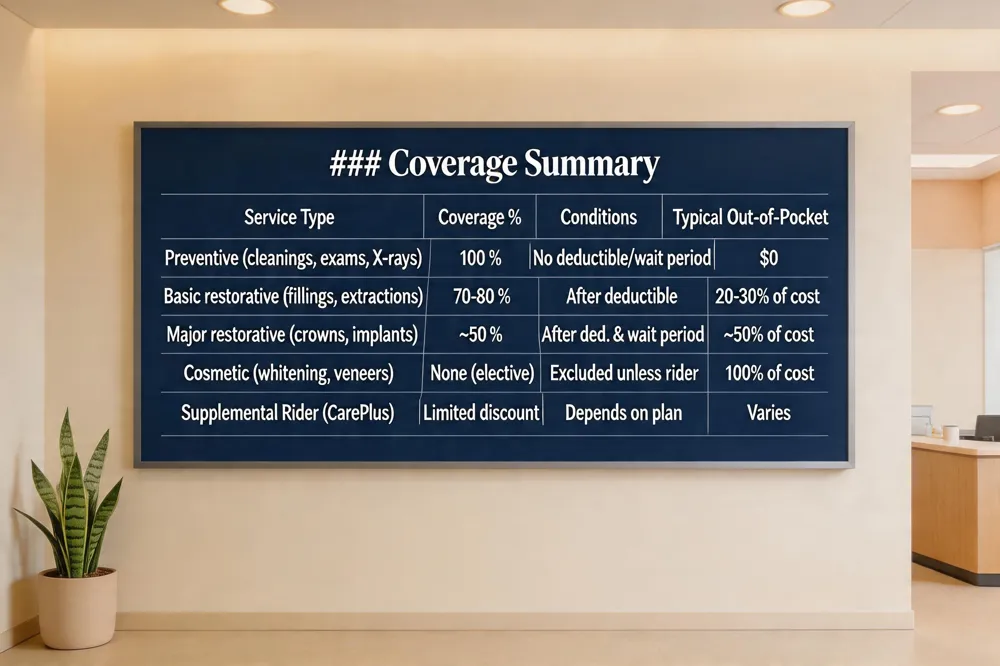
Dental insurance is organized into three benefit categories—preventive, basic, and major. Preventive services (cleanings, exams, X‑rays) are usually covered at 100 %, basic restorative work such as fillings and simple extractions at 70‑80 %, and major procedures like crowns, bridges, and implants at roughly 50 % after any deductible or waiting period. The key distinction is medical necessity versus elective (cosmetic) services. Procedures that restore function, treat disease, or repair damage—e.g., a crown placed after a root canal or an implant that replaces a missing tooth—are considered medically necessary and may receive partial reimbursement. Purely aesthetic treatments, including teeth whitening, veneers, bonding, gum‑contouring, or full smile makeovers are classified as elective and are generally excluded from standard coverage. Some specialty or supplemental plans (such as CarePlus Dental in Wisconsin) or optional riders may offer limited discounts or partial coverage for cosmetic work, but the reimbursement typically applies only to the underlying restorative component. Consequently, patients should anticipate paying most of the out‑of‑pocket cost for purely cosmetic procedures, while leveraging any functional benefits to maximize insurance contributions.
Delta Dental and Cosmetic Dentistry
Delta Dental Coverage Highlights
| Benefit Category | Coverage % | Notes |
|---|---|---|
| Preventive care | 100 % | Immediate, no waiting period |
| Basic restorative | 70‑80 % | After deductible |
| Major procedures (crowns, bridges, implants) | ~50 % | After deductible & waiting period |
| Elective cosmetic services | Not covered in standard plan | May be added via optional rider (higher premium, usage caps) |
| Cosmetic‑specific discount (e.g., CarePlus) | 20 % off | Limited to participating providers |

Delta Dental’s plan structure follows the typical tiered model—preventive care at 100 % coverage, basic restorative work at 70‑80 %, and major procedures such as crowns, bridges, and implants at roughly 50 % after any deductible or waiting period. While these major benefits help restore function, elective cosmetic services—teeth whitening, veneers, bonding—are not listed among the standard benefits. Some employers offer optional supplemental riders that add limited coverage for cosmetic treatments, but these riders come with higher premiums and specific usage caps. In practice, patients seeking purely aesthetic work should budget for out‑of‑pocket costs or explore a dedicated cosmetic‑dental plan, such as CarePlus, which offers a 20 % discount on cosmetic procedures. Always verify your individual Delta Dental policy or consult the insurer’s summary of benefits for precise coverage details.
Oral‑Hygiene Rules and Veneer Planning Guidelines
Oral‑Hygiene & Veneer Planning Rules
| Rule | Description |
|---|---|
| 2‑2‑2 rule | Brush twice a day, 2 minutes each; see dentist twice a year |
| 4‑8‑10 rule (veneers) | 4 veneers = central incisors only; 8 veneers = full front arch; 10 veneers = extend to first premolars |
| Goal | Preserve natural tooth structure, control costs, avoid over‑perfect appearance |
| Support | Good hygiene extends longevity of crowns, veneers, implants |
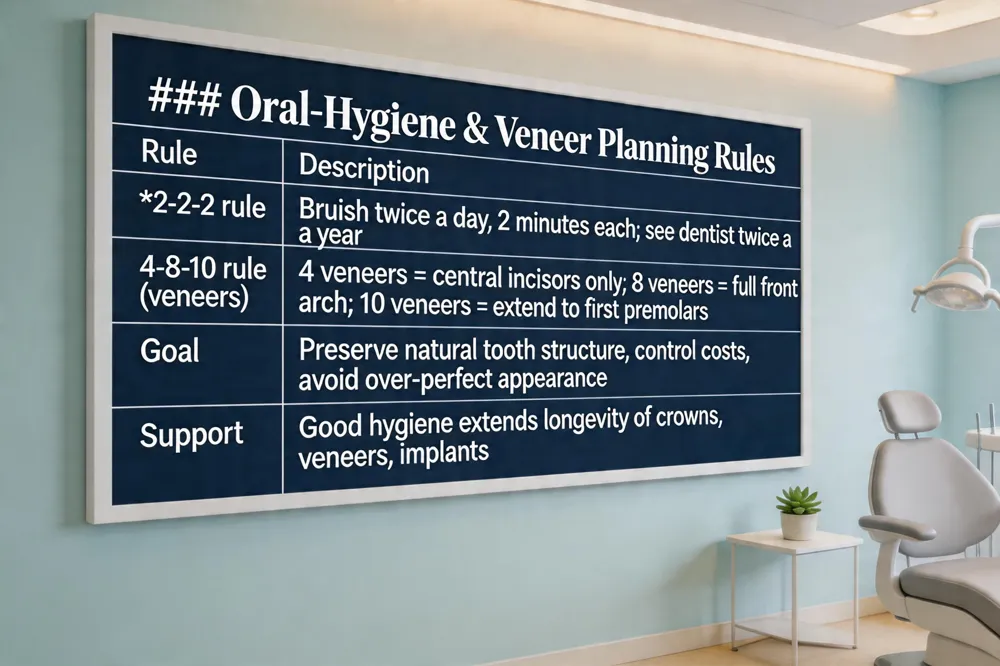
Our family‑oriented practice follows two simple guidelines that keep smiles healthy and cosmetic work long‑lasting. The 2‑2‑2 rule means brush twice a day for two minutes each session, and see the dentist twice a year for cleanings and check‑ups. This routine removes plaque, prevents decay, and catches problems early, creating a strong foundation for any aesthetic treatment. For veneer placement we use the 4‑8‑10 rule: four veneers correct only the central incisors for a subtle change; eight veneers cover the full front arch (upper and lower) for a classic smile; ten veneers extend to the first premolars for a broader, expressive look. Limiting coverage to these numbers preserves natural tooth structure, avoids an overly “perfect” appearance, and helps control costs. Good oral hygiene supports the durability of crowns, veneers, and implants, ensuring the beautiful results you expect.
Veneer Longevity and Full Smile Makeover Costs
Veneer Longevity & Smile Makeover Cost Estimates
| Item | Typical Lifespan | Average Cost |
|---|---|---|
| Porcelain veneers | 10‑15 years (up to 20 + with excellent care) | $1,765 per veneer |
| Full smile makeover (incl. whitening, veneers, crowns, implants, gum work) | 15‑40 years (depends on components) | $15,000‑$60,000 total |
| Clear aligners (full set) | 1‑2 years (treatment) | $5,000 |
| Dental crowns | 5‑15 years | $1,399 per crown |
| Dental implants | 20‑30 years | $2,695 per implant |
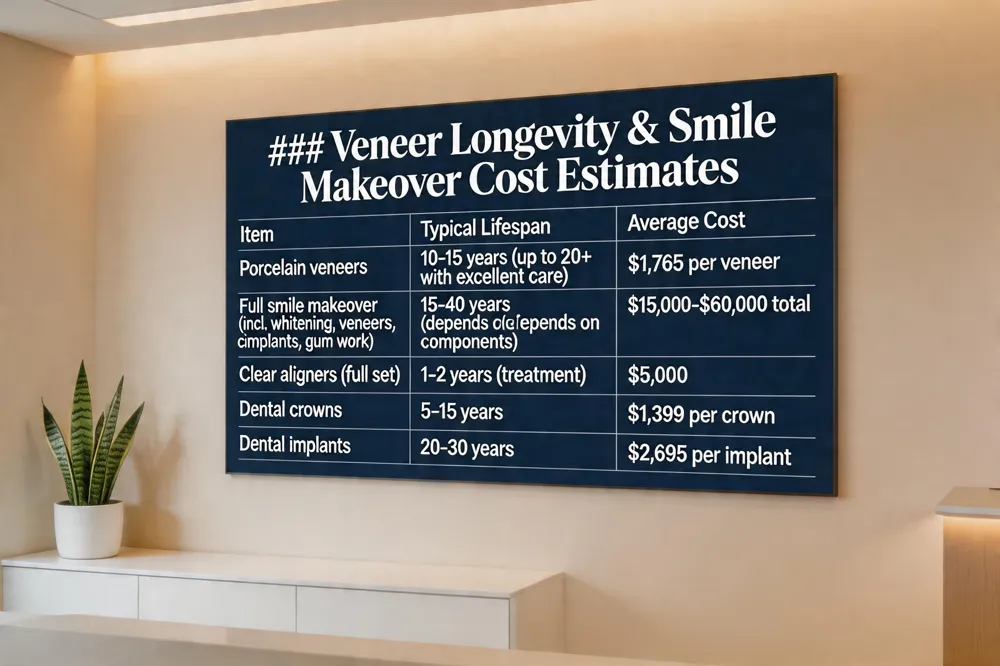
Patients often wonder how long porcelain veneers will last and what a complete smile makeover might cost.
How long do porcelain veneers typically last? Porcelain veneers generally last 10 to 15 years when cared for properly. Good oral‑hygiene habits, regular dental check‑ups, and avoiding heavy grinding or very hard foods can extend their functional and aesthetic life to 20 years or more. The durability hinges on the material’s strength and the quality of the bonding process. Factors that shorten lifespan include bruxism, smoking, and poor maintenance, which may cause chipping, staining, or bond loss. Routine professional cleanings and a night‑guard for grinders help maximize veneer longevity.What are the typical costs of a full smile makeover?
A full smile makeover—often combining whitening, veneers, crowns, implants, and gum‑line work—generally falls between $15,000 and $40,000, with many cases ranging from $20,000 to $60,000 when extensive reconstruction is needed. Prices vary by the number of teeth treated, material choices (porcelain vs. composite), and additional procedures such as clear aligners or gum contouring. Average procedure costs include $5,000 for a full set of clear aligners, $1,765 per porcelain veneer, $1,399 per crown, and $2,695 per implant. Anesthesia, facility fees, and the dentist’s expertise also influence the final total. Because every smile makeover is customized, patients receive a personalized quote after a comprehensive exam.
Financing Options for Cosmetic Dental Work
Financing Options Overview
| Financing Type | Typical Terms | APR / Interest |
——————————–|—————|—————|
| Third‑party lenders (CareCredit, Cherry, Proceed) | Up to 60 months, promotional 0 % APR 6‑12 months | 0 % (promo) or low‑interest thereafter |
| In‑office payment plans | 12‑24 months, often no credit check | Varies by office (often 0‑5 % APR) |
| Membership discounts | Reduced fees, monthly installments | Usually no interest |
| Eligibility | Quick online application, same‑day approval for many | Depends on creditworthiness |
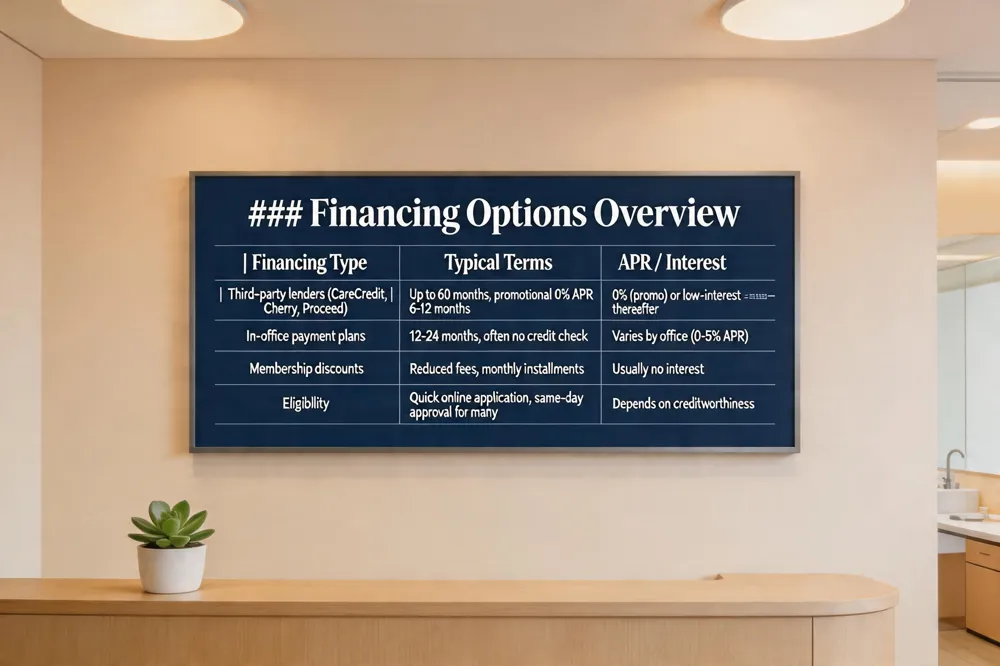
Most patients can spread the cost of a smile makeover instead of paying the full amount up front.
Third‑party lenders– Third‑party financing programs such as CareCredit, Cherry, and Proceed offer payment plans up to 60 months with promotional deferred‑interest periods for qualified applicants. These programs often offer 0 % APR for 6‑12 months or low‑interest plans up to 60 months, with quick online applications and same‑day approvals for many applicants.In‑office payment plans and membership discounts– In‑house payment plans created by a dental office’s financial coordinator can provide customized financing without credit checks or third‑party involvement. Patients can enroll in a membership program that reduces fees and set up monthly installments directly with the office.How to apply and typical terms– For third‑party financing, patients fill out a short form online or at the office; approval is usually immediate. In‑office plans are arranged with the financial coordinator, often with a modest down payment and 12‑ to 24‑month repayment schedules.Can a patient use financing for cosmetic dental work? Yes, patients can finance cosmetic dental work. Many practices, including Southern Boulevard Dental, partner with third‑party lenders such as CareCredit or offer in‑office payment plans that spread the cost over several months. Options like Cherry’s zero‑interest or low‑interest plans (up to 60 months) and 0 % APR financing for up to a year are also available for procedures like veneers, teeth whitening, and smile makeovers. The application process is usually quick, often completed online or at the office, and approval can be immediate for many patients. Financing lets you receive the cosmetic treatment you want while keeping monthly payments manageable and avoiding large upfront expenses.
Senior‑Focused Insurance Options and Waiting Periods
Senior Dental Insurance & Waiting Periods
| Plan Type | Coverage Highlights | Waiting Period |
|---|---|---|
| Medicare Advantage (Part C) | Optional dental rider, partial implant reimbursement, annual cap ~ $1,000 | 6‑12 months for major services |
| Private individual plans (e.g., Delta Dental) | Standard preventive & basic, cosmetic usually out‑of‑pocket | 6‑12 months for crowns/implants |
| Supplemental dental policies | Additional coverage for major work, may include veneers | Varies, often same as primary plan |
| Dental membership programs | Reduced fees, not insurance | No waiting period, but limited to discounts |

Seniors often rely on Medicare Advantage (Part C) for extra dental benefits. Standard Medicare (Parts A and B) does not cover dental implants, but many Advantage plans include optional dental riders that reimburse a percentage of implant costs after an additional premium and with annual caps (often around $1,000). To boost coverage, seniors can add a supplemental dental policy or choose a private individual plan from carriers like Delta Dental, which typically treats veneers and whitening as out‑of‑pocket. Discount dental membership programs also offer reduced fees, though they are not insurance. Most dental plans impose a 6‑12‑month waiting period for major services (crowns, bridges, implants) before full benefits kick in; preventive care is covered immediately. Some Advantage plans waive the waiting period when you transition from a comparable plan without a coverage gap.
Conclusion
Understanding how dental insurance works can turn a smile makeover into an investment. Key takeaways: 1) Identify procedures with a functional component—crowns, implants, orthodontics—because insurers often reimburse 50‑80 % of those costs. 2) Submit a predetermination request with clinical notes, X‑rays and photographs to clarify coverage before work begins. 3) Use HSAs or FSAs to pay any remaining out‑of‑pocket amount with pre‑tax dollars. 4) Consider splitting treatment across two calendar years to tap two annual maximums. Next steps at Southern Boulevard Dental: schedule a exam, request a treatment plan, and let our financial coordinator guide you through insurance verification and financing options so you can achieve a beautiful confident smile with confidence.