

Introduction
Oral health is a critical component of prenatal care because the mouth reflects and influences overall health. Hormonal shifts during pregnancy increase blood flow to gum tissue, making gums more susceptible to inflammation and plaque. As a result, 60%‑75% of expectant mothers develop gingivitis, the early stage of periodontal disease, and one in four women of child‑bearing age have untreated cavities. If left untreated, gingivitis can progress to periodontitis, which studies have linked to preterm birth and low birth‑weight infants. Moreover, untreated cavities in mothers raise the risk that their children will develop early childhood caries, a common chronic disease that can affect school attendance. Maintaining good oral hygiene, attending regular dental check‑ups, and seeking timely treatment protect both mother and baby.
Hormonal Impacts and Common Dental Concerns
Hormonal Impacts & Dental Concerns
| Hormone | Primary Effect on Oral Tissues | Prevalence of Gingivitis | Associated Pregnancy Risks |
|---|---|---|---|
| Estrogen & Progesterone | ↑ blood flow → gum swelling, inflammation | 60‑75 % of pregnant women | Preterm birth, low birth weight, pre‑eclampsia, gestational diabetes |
| Saliva changes (↓ pH, ↓ flow) | ↑ enamel erosion, cavity risk | — | — |
| Morning‑sickness acid exposure | Direct enamel demineralization | — | — |
| Hyperdontia (extra tooth) | Rare eruption under hormonal influence | — | May cause crowding or infection; assess with safe X‑ray |
Key Prevention: regular cleanings, fluoride, calcium‑rich diet, 3‑3‑3 brushing rule, timely dental visits.
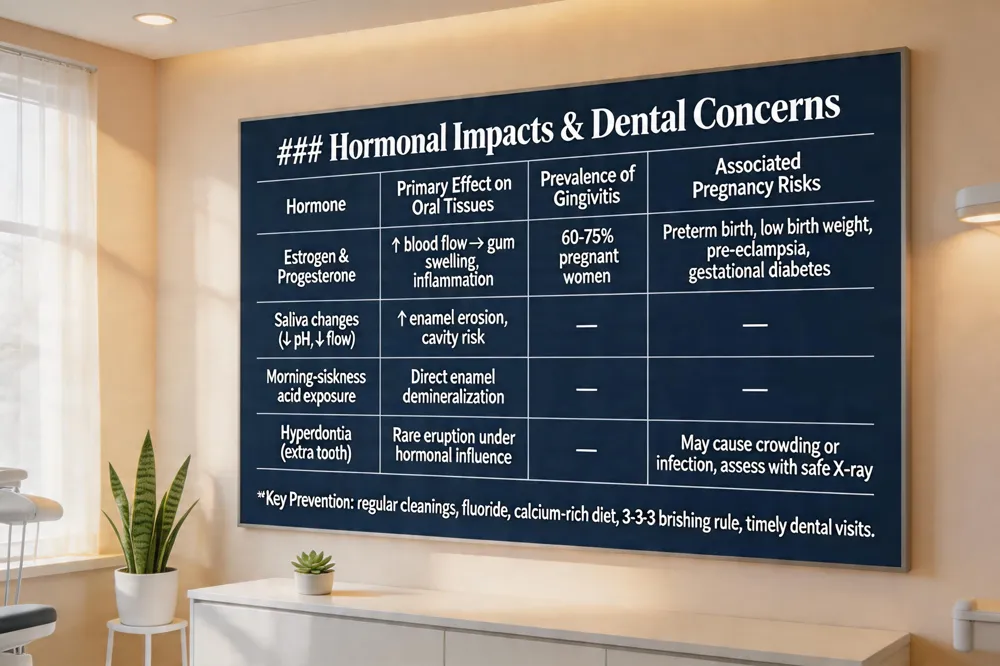
Pregnancy hormones—especially estrogen and progesterone—increase blood flow to gum tissues, making up more prone to gingivitis (affecting 60‑75% of pregnant women). If Untreated gingivitis can progress to periodontitis, linked to preterm birth and low birth weight, a condition linked to preterm birth, low birth weight, pre‑eclampsia, and gestational diabetes. Hormonal shifts also alter saliva composition and appetite, raising the risk of cavities, especially with frequent snacking and morning‑sickness acid exposure that erodes enamel.
Extra teeth (hyperdontia) are a developmental anomaly present from birth; pregnancy does not cause them, though rare cases report dormant extra teeth erupting under hormonal influence. If a new tooth appears, a dentist will assess it with safe X‑rays and consider removal if it causes crowding or infection.
The “Pregnancy and Oral Health” PDF emphasizes that preventive dental care—cleanings, fluoride, and necessary restorations—are safe at any gestational stage and crucial for maternal and infant health. Maintaining calcium intake, following the 3‑3‑3 rule (brush three times a day, three minutes each, within three minutes after meals), and seeking regular dental check‑ups protect both mother and baby.
Safe Dental Treatments by Trimester
Safe Dental Care Timeline
| Trimester | Safe Procedures | Elective Procedures to Postpone | Anesthesia & Imaging Notes |
|---|---|---|---|
| First (0‑13 wks) | Urgent care (pain, infection), diagnostic X‑rays with shielding | Cosmetic work, non‑urgent surgery | Lidocaine (Category B) preferred; limit dose |
| Second (13‑27 wks) | Ideal window: cleanings, exams, restorations, periodontal care | Cosmetic dentistry, extensive surgery | Continue Category B anesthetics; X‑rays safe with lead shielding |
| Third (28‑40 wks) | Routine cleanings, urgent care, extractions if needed | Elective cosmetic work (especially after midpoint) | Position left‑tilt, use pillows; local anesthetic safe |
Emergency Care: Treated at any stage with local anesthetic and proper shielding.
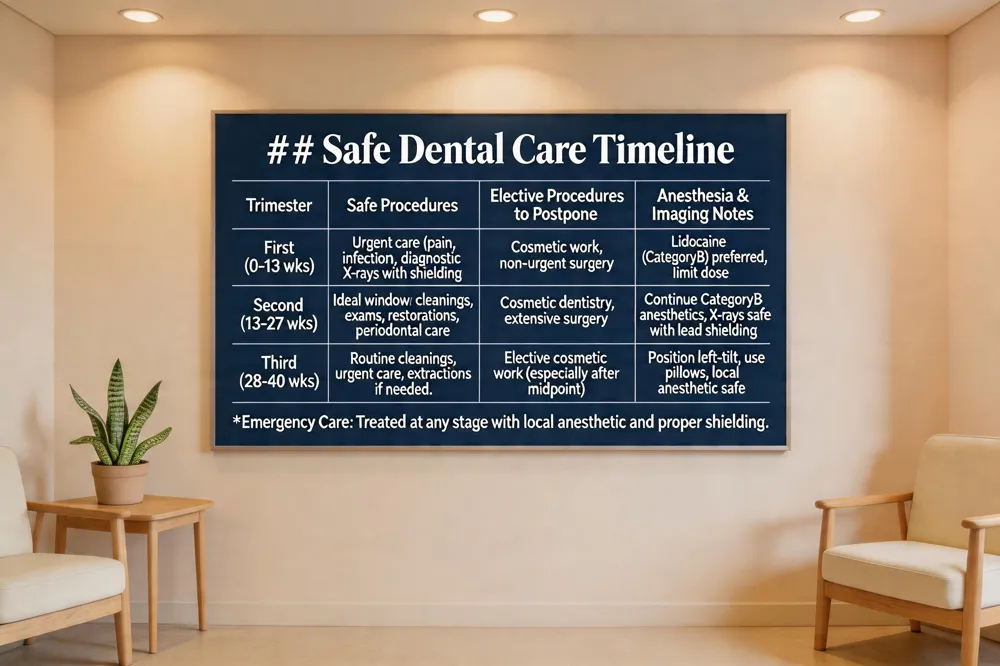
Dental treatment pregnancy third trimester– Routine cleanings and oral‑hygiene instruction are safe and encouraged. Scaling, polishing, and necessary periodontal care can be performed, but elective procedures (e.g., cosmetic dentistry) should be postponed after delivery, especially after the trimester’s midpoint. Emergencies such as painful cavities, infection, or extractions are treated promptly using local anesthetic (lidocaine) and proper X‑ray shielding. The dentist positions you comfortably, often with a pillow and left‑tilt, to avoid uterine pressure.Local anesthesia pregnancy first trimester– Lidocaine, a Category B anesthetic, is safe when the smallest effective dose is used. Other amide agents (prilocaine, mepivacaine) are also Category B and may include administered with low‑dose epinephrine. Limit total anesthetic volume and coordinate with your obstetrician if needed.Safe period for dental treatment in pregnancy– The second trimester (weeks 13‑27) is the most comfortable window for most dental work. Preventive cleanings, exams, and necessary restorations are safe throughout pregnancy; emergencies are treated at any stage. Elective or cosmetic work should wait until after delivery.What dental procedures should I avoid while pregnant?– Postpone elective cosmetic dentistry (teeth whitening, veneers), non‑urgent oral surgery, and procedures requiring heavy sedation or nitrous oxide. Routine care, diagnostic X‑rays with shielding, and urgent restorations are safe.Dental anesthetic for pregnant women– Lidocaine (often with low‑dose epinephrine) is the preferred safe anesthetic throughout pregnancy. Prilocaine is also acceptable. Septocaine (articaine) is Category C and should be used only when benefits outweigh risks.Septocaine pregnancy Category – Classified as Category C; animal studies show fetal risk, and human data are limited. Use only if essential, at the lowest effective dose, and with close monitoring.
Everyday Oral Hygiene Strategies
Daily Oral‑Hygiene Checklist
| Strategy | How to Do It | Frequency / Tips |
|---|---|---|
| Brushing | Soft‑bristled or child‑size brush, low‑foam fluoride toothpaste | 3 × day, 3 min each, within 3 min after meals (or when stomach settled) |
| Flossing | Gentle floss or interdental brushes | Daily, before brushing |
| Post‑vomiting care | Rinse with water or 1 tsp baking‑soda in 1 cup water, wait 30 min before brushing | After any morning‑sickness episode |
| Acid neutralization | Chew xylitol‑containing gum after meals | After meals/snacks |
| Nutrition | Calcium‑rich foods, vitamin D sources, limit sugary snacks/drinks | Ongoing |
| Hydration | Drink water throughout the day | As needed |
Additional: Regular dental check‑ups, safe X‑rays with shielding.
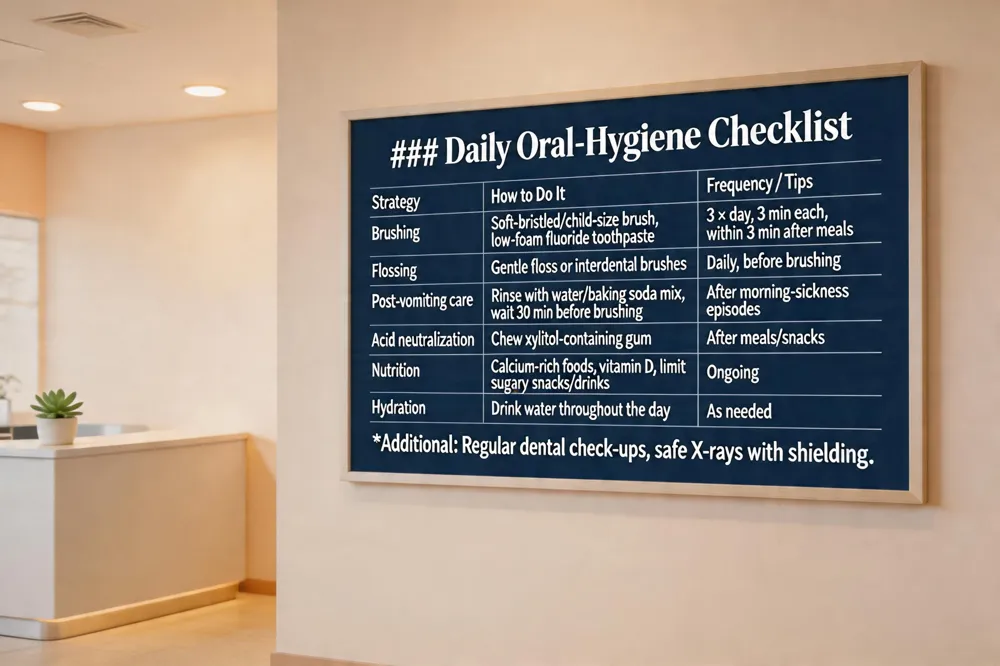
Pregnant women experience hormonal changes that raise the risk of gingivitis (60‑75 %) and cavities, so a solid oral‑care routine is essential. Use a soft‑bristled or child‑size toothbrush and a low‑foam, mild‑flavored fluoride toothpaste; if nausea triggers a gag reflex, brush after meals or later in the day when the stomach is calmer. After vomiting, wait 30 minutes and rinse with water or a diluted baking‑soda solution (1 tsp in a cup of water) to neutralize acid before brushing.
Balanced nutrition supports both mother and baby: aim for calcium‑rich foods (dairy, leafy greens, fortified plant milks) and vitamin D sources (fatty fish, fortified cereals, sunlight) to strengthen enamel and developing teeth. Limit sugary snacks and drinks, stay hydrated, and consider xylitol‑containing gum after meals to curb decay‑causing bacteria.
Common Questions
- Brushing teeth while pregnant makes me sick: Use a soft brush, mild toothpaste, and wait after vomiting; rinse first.
- How to protect your teeth during pregnancy: Brush twice daily, floss daily, rinse after acid exposure, eat a calcium‑rich diet, and keep regular dental visits.
- How to prevent dental problems while pregnant?: Good hygiene, limited sugar, adequate hydration, safe X‑rays with shielding, and prompt treatment of gum issues.
- Dental health during pregnancy: Daily brushing/flossing, routine cleanings, safe X‑rays, mercury‑free fillings, and early gingivitis treatment reduce preterm‑birth risk.
- Dangers of dental work while pregnant: Routine care is safe; postpone elective work until after delivery, use lead shielding for X‑rays, and rely on Category B anesthetics like lidocaine when needed.
Protecting Your Baby’s Future Smile
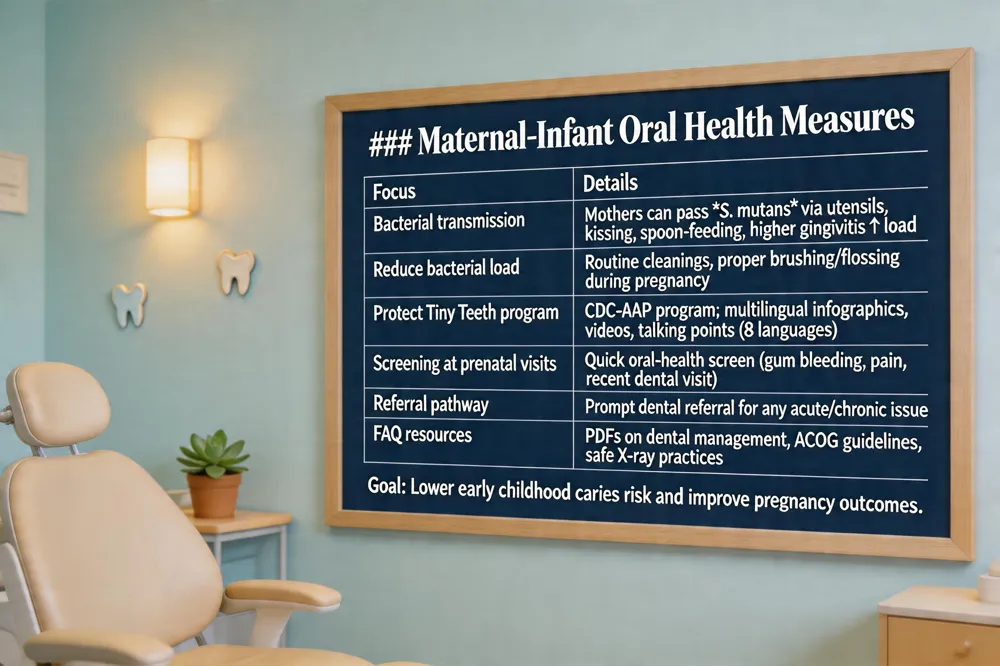
Maternal‑Infant Oral Health Measures
| Focus | Details |
|---|---|
| Bacterial transmission | Mothers can pass S. mutans via utensils, kissing, spoon‑feeding; higher gingivitis ↑ load |
| Reduce bacterial load | Routine cleanings, proper brushing/flossing during pregnancy |
| Protect Tiny Teeth program | CDC‑AAP program: multilingual infographics, videos, talking points (8 languages) |
| Screening at prenatal visits | Quick oral‑health screen (gum bleeding, pain, recent dental visit) |
| Referral pathway | Prompt dental referral for any acute/chronic issue |
| FAQ resources | PDFs on dental management, ACOG guidelines, safe X‑ray practices |
Goal: Lower early childhood caries risk and improve pregnancy outcomes.
Maternal bacterial transmission & early childhood caries
During pregnancy, hormonal shifts increase gingivitis and the load of cariogenic bacteria (e.g., Streptococcus mutans) in the mouth. Mothers can pass these microbes to their infants through shared utensils, spoon‑feeding, or kissing, raising the child’s risk of early childhood caries. Oral‑hygiene care and regular dental cleanings during pregnancy reduce the bacterial load, protecting both mom and baby.
Protect Tiny Teeth initiative The CDC‑AAP “Protect Tiny Teeth” program offers multilingual infographics, short videos, and talking points to help providers discuss oral health with pregnant patients. Materials are available in eight languages (English, Spanish, Arabic, Cambodian, French, Korean, Russian, Taiwanese) and emphasize safe dental care, proper brushing, flossing, and diet.Screening and referrals Prenatal visits should include a brief oral‑health screen (gum bleeding, pain, recent dental visit) and a prompt referral to a dentist for any acute or chronic issues. Early referral ensures timely treatment and prevents complications that could affect pregnancy outcomes.FAQ
- Dental management of pregnant patient PDF: Provides trimester‑specific guidelines, emphasizing emergency care in the first trimester, safe imaging and prophylaxis in the second, and completion of necessary treatment early in the third.
- Lidocaine during pregnancy for dental work: FDA Category B, safe at recommended doses; preferred for local anesthesia throughout pregnancy.
- Pregnancy and oral health PDF: Highlights hormonal impacts, links between periodontal disease and adverse outcomes, and offers clinician counseling points.
- ACOG dental care in pregnancy: Recommends routine dental visits and cleanings, preferably in the second trimester, with daily brushing, flossing, and limited sugary snacks.
Resources, Programs, and Next Steps
Key Resources & Next Steps
| Resource | Type | Access / Language |
|---|---|---|
| Protect Tiny Teeth | Infographics, videos, talking points | English, Spanish, Arabic, Cambodian, French, Korean, Russian, Taiwanese |
| ACOG Oral‑Health Guidance | Clinical opinion document | Online PDF (English) |
| CDC Oral‑Health PDF | Pregnancy‑specific oral‑health guide | Online PDF (English) |
| Medicaid Dental Coverage | State‑by‑state benefit info | Contact local Medicaid office |
| Lidocaine Safety Sheet | Anesthetic guidelines (Category B) | PDF, English |
| Dental Care PPT | Presentation for clinicians | Slides, English |
Action Items:
- Incorporate oral‑health screen into prenatal visit.
- Provide Protect Tiny Teeth materials in patient’s preferred language.
- Verify dental coverage and assist with appointments.
- Schedule preventive cleaning in the second trimester.
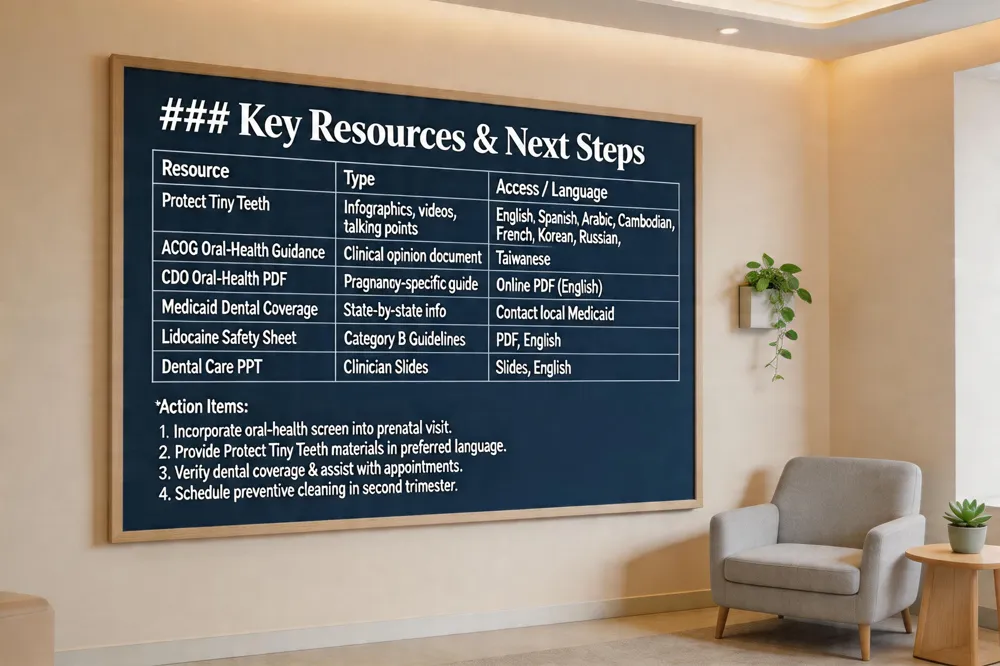
The CDC’s Protect Tiny Teeth initiative equips prenatal teams with multilingual infographics, videos and talking points (English, Spanish, Arabic, Cambodian, French, Korean, Russian, Taiwanese) to educate expectant mothers about oral hygiene and safe dental care. Collaboration between obstetricians and dental providers—screening for gum bleeding, cavities and referring patients early—ensures timely treatment while coordinating insurance benefits. Many states’ Medicaid programs cover dental exams and cleanings during pregnancy, though coverage varies; clinicians should verify benefits and assist families in accessing care.
Lidocaine during pregnancy:** FDA Category B; safe for routine dental anesthesia, especially in the second trimester, when combined with low‑dose epinephrine.
** Dental care during pregnancy PPT:Highlights hormonal impacts on gums, safe timing (second trimester), radiation shielding, anesthesia safety, morning‑sickness oral care, nutrition and postpartum follow‑up. Dental health during pregnancy:** Emphasizes twice‑daily brushing, daily flossing, regular cleanings, safe X‑rays with lead shielding, and mercury‑free restorations to protect mother and baby.
Conclusion
Pregnant patients should brush twice daily with a soft‑bristled brush and fluoride toothpaste, floss once a day, and rinse after vomiting or acidic foods with a baking‑soda solution before waiting 20‑30 minutes to brush. Limit sugary snacks and stay well‑hydrated, choose calcium‑rich foods, and keep regular dental appointments—ideally at least once each trimester. Early screening for gingivitis or cavities allows safe treatment, which can reduce the risk of preterm birth and early childhood caries. The team at Southern Boulevard Dental welcomes expectant mothers, offers gentle positioning, and coordinates care with your obstetric provider. Call (555) 123‑4567 or visit www.southernboulevarddental.com to schedule a prenatal dental exam and protect both your health and your baby’s future smile. We accept dental insurance plans, including Medicaid where available, to make care affordable for all families.